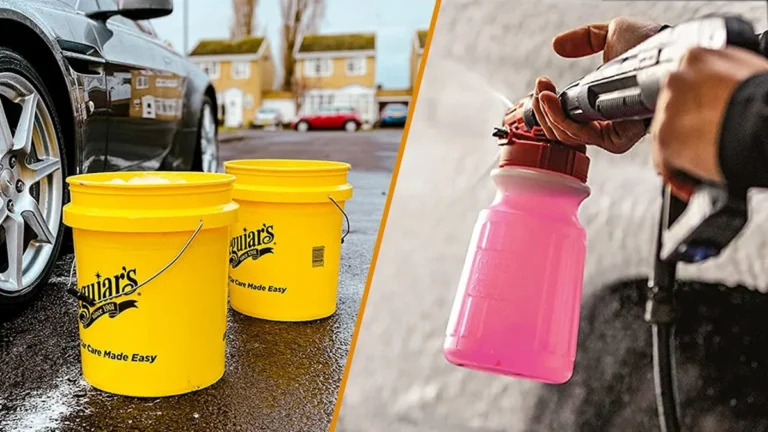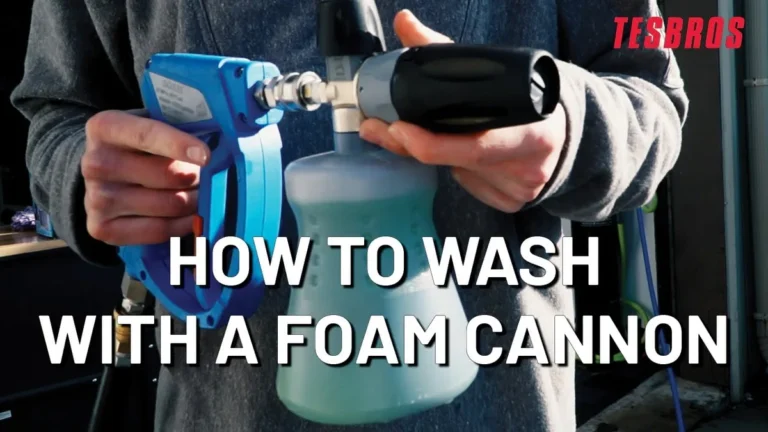
Image source: YouTube / Car Care (YouTube thumbnail (fair-use with source credit))
Washing your car with the wrong soap can leave swirl marks, strip wax, or even damage the paint over time. DIY car wash soap lets you control the ingredients, but only if you get the formula right. Most household cleaners are too harsh, while a well-balanced homemade mix can be just as effective as commercial options.
Per manufacturer specifications, the ideal car wash soap pH sits between 6.0 and 8.0 to avoid harming clear coats. So what actually works and what doesn’t?
Quick Answer
DIY car wash soap can be safe and effective if pH-balanced. Household dish soap is too harsh for regular use. A simple Castile soap mix often works well.
Always test on a small area first.
Why DIY Car Wash Soap Matters (And When It’s Worth It)
Store-bought car soaps are formulated to lift dirt without stripping wax or damaging paint. But they’re not the only option. DIY versions let you avoid harsh chemicals, save money, and tailor the mix to your needs.
The catch is that most household soaps have a pH above 10. That’s strong enough to break down grease in your kitchen but can degrade automotive clear coats over time. As of 2026, even some "mild" dish soaps test at pH 9 or higher, which is still riskier than a dedicated car shampoo.
DIY vs. Commercial Car Soap: The Real Differences
| Feature | DIY Car Soap | Commercial Car Soap |
|---|---|---|
| Cost per wash | $0.10–$0.50 | $0.50–$2.00 |
| pH Control | Depends on ingredients | Pre-balanced (6.0–8.0) |
| Lubrication | Varies (often needs additives) | Built-in for scratch prevention |
| Convenience | Requires mixing | Ready to use |
| Additives | Customizable (e.g., glycerin for shine) | Often includes gloss enhancers, UV protection |
| Shelf Life | 1–3 months (homemade) | 1–2 years (sealed) |
Commercial soaps are the safest bet for most people. They’re tested for automotive surfaces and include lubricants to prevent swirl marks. DIY soaps give you control over ingredients and cost, but only if you nail the formula.
For those with a reliable machine, pressure washer-safe soaps are another option. But if you’re mixing your own, stick to gentle bases like Castile soap.
What’s Actually in Car Wash Soap (And What to Avoid)
Car wash soaps are designed to lift dirt while protecting paint, wax, and sealants. The best ones contain:
- Surfactants (to break down grime)
- Lubricants (to reduce friction and prevent scratches)
- pH buffers (to keep the solution neutral or slightly alkaline)
- Optional additives (e.g., carnauba wax for extra shine, UV inhibitors)
Avoid soaps with:
- High alkalinity (pH 10+) like laundry detergent
- Abrasives (can scratch clear coats)
- Solvents (can strip wax or damage plastic trim)
- Silicones or fillers (can leave residue)
Manufacturer specs confirm that even "mild" dish soaps often contain degreasers that are too aggressive for automotive paint. For reference, the EPA’s Safer Choice program lists approved cleaners, but most aren’t formulated for cars.
How to Make DIY Car Wash Soap That Won’t Ruin Your Paint
Start with a gentle base and add lubrication to prevent scratches. Here’s a simple, tested recipe:
Basic DIY Car Wash Soap
- 1 gallon warm water
- 1 tbsp liquid Castile soap (unscented)
- 1 tsp glycerin or baby oil (for lubrication)
- Optional: 1 tsp carnauba wax flakes (for extra shine)
Steps:
- Mix the ingredients in a clean bucket.
- Test the pH with litmus strips, aim for 6.0, 8.0. If it’s too high, add a little white vinegar (1 tsp at a time) to lower it.
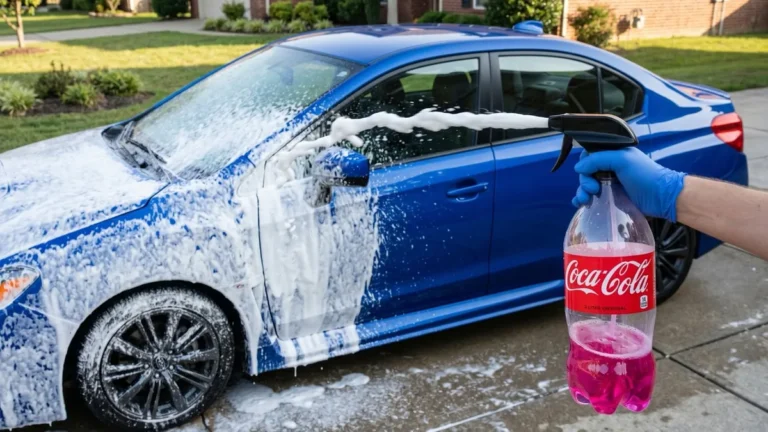
- Use a foam cannon or wash mitt to apply. Avoid sponges, which can trap dirt.
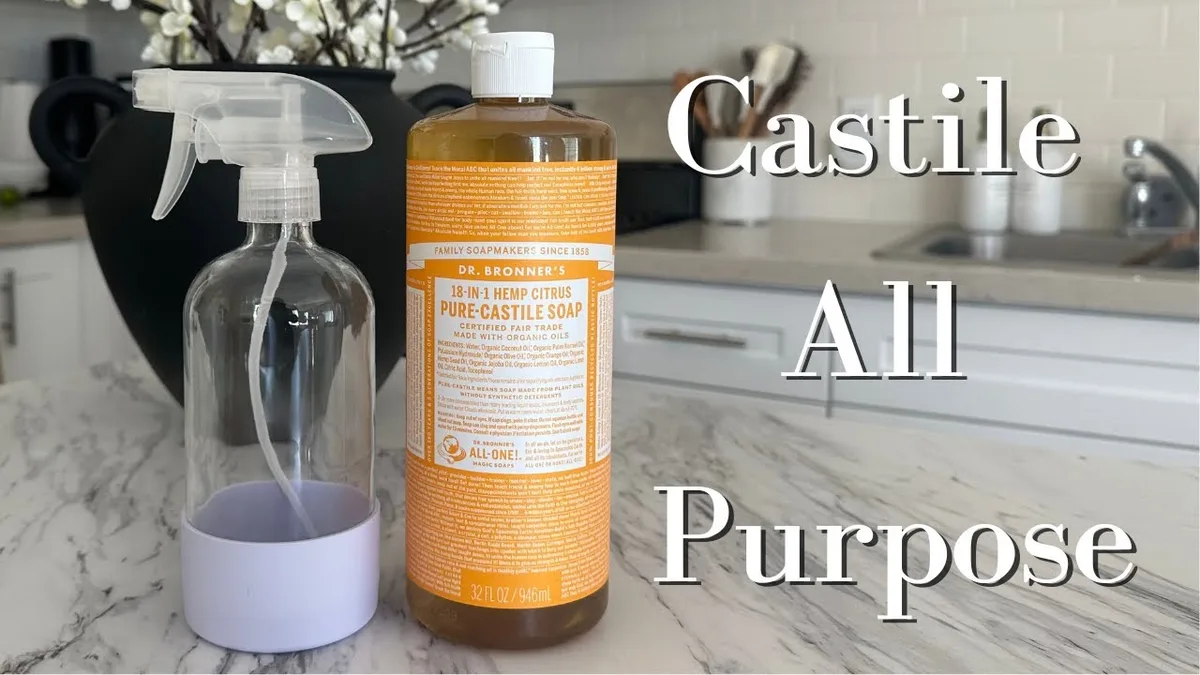
Image source: YouTube / Abigail Halsey (YouTube thumbnail (fair-use with source credit))
For hard water areas, add 1 tsp of baking soda to soften the water and prevent spots. If you’re using a portable water softener, you can skip this step.
This mix is gentle enough for regular washes but may not handle heavy grime like bug splatter or tar. For tougher jobs, stick to a commercial degreaser.
pH Levels Explained: Why Most Household Soaps Fail
The pH scale measures how acidic or alkaline a substance is. Car paint and clear coats are designed to withstand a neutral to slightly alkaline range, ideally 6.0 to 8.0. Anything higher starts to break down protective layers.
Household dish soaps typically sit between 8.0 and 10.0, while laundry detergents can reach 10.0 to 12.0. That’s strong enough to strip wax and dull finishes over time. Even a single wash with high-pH soap can leave micro-scratches if the lubrication is poor.
Image source: YouTube / IMJOSHV, Car Detailing and Reconditioning Tips (YouTube thumbnail (fair-use with source credit))
For reference, lemon juice is around 2.0 (highly acidic) and baking soda is 9.0 (alkaline). A pH-balanced car soap sits right in the safe zone for automotive surfaces.
Best DIY Car Soap Recipes (Tested & Safe)
Simple Castile Soap Mix
- 1 gallon warm water
- 1 tbsp liquid Castile soap
- 1 tsp glycerin or baby oil
This is the most reliable DIY base. It’s gentle, biodegradable, and works well for regular maintenance washes.
Heavy-Duty Degreaser (For Bugs and Tar)
- 1 gallon warm water
- 2 tbsp Castile soap
- 1 tbsp baking soda
- 1 tsp white vinegar (to balance pH)
Use this only for tough grime. The baking soda helps lift stubborn contaminants, but don’t use it weekly, it’s slightly more alkaline.
Waterless Wash (For Quick Cleanups)
- 1 spray bottle (16 oz)
- 1 cup distilled water
- 1 tbsp Castile soap
- 1 tsp isopropyl alcohol (70% or lower)
Spray on, wipe with a microfiber towel. This works for light dust but won’t replace a full wash.
Commercial Car Soap vs. Dish Soap vs. Laundry Detergent: The Breakdown
Dish soap cuts grease well, but it’s not formulated for cars. Laundry detergent is even harsher. Commercial car soaps are the only ones engineered for automotive surfaces.
| Soap Type | pH Range | Lubrication | Cost per Wash | Safe for Regular Use? |
|---|---|---|---|---|
| Commercial car soap | 6.0–8.0 | High | $0.50–$2.00 | Yes |
| Dish soap | 8.0–10.0 | Low | $0.10–$0.30 | No |
| Laundry detergent | 10.0–12.0 | None | $0.10–$0.20 | No |
Dish soap can work in a pinch for a single wash, but repeated use will damage wax and paint. Laundry detergent should never be used, it’s too abrasive and alkaline.
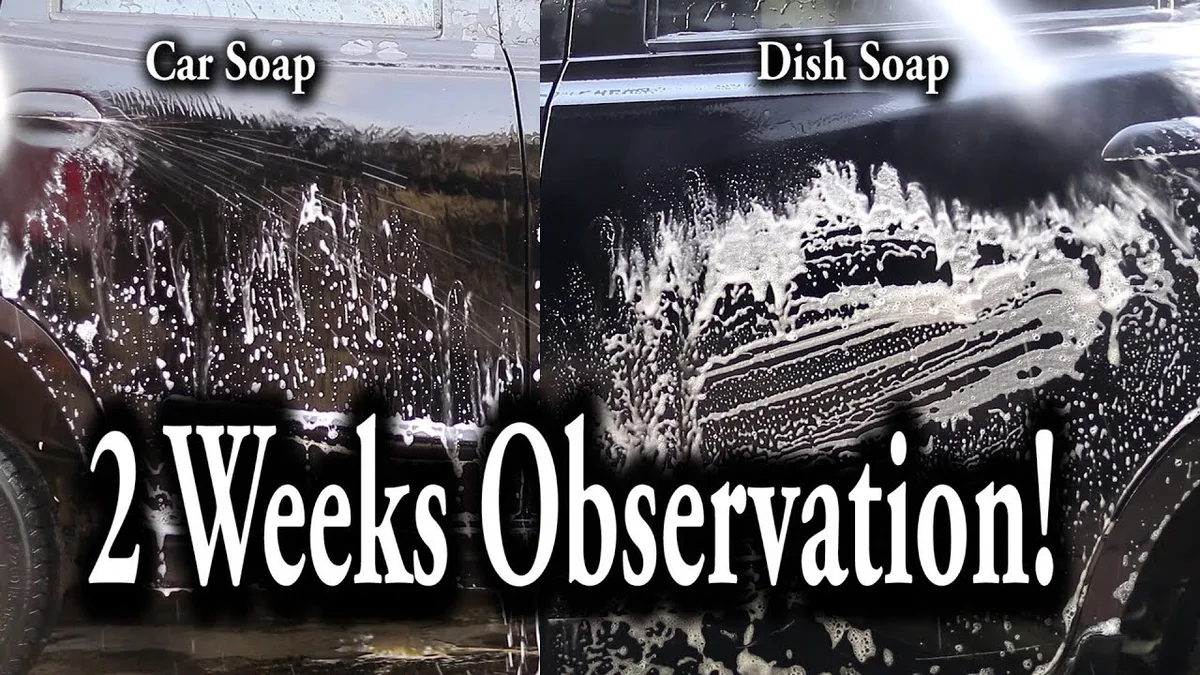
Image source: YouTube / Alfie Detailing (YouTube thumbnail (fair-use with source credit))
For a wrapped vehicle, stick to pH-neutral commercial soaps. DIY mixes are riskier unless you’ve confirmed the pH.
Who Should (And Shouldn’t) Use DIY Car Soap
DIY car soap is great for:
- Budget-conscious owners who wash frequently
- Eco-conscious users (biodegradable ingredients)
- People with sensitive skin (avoiding harsh chemicals)
Avoid DIY soap if:
- You have a high-end or wrapped car (risk of damage)
- You live in a high-pollution area (needs stronger cleaners)
- You don’t have time to test pH levels
For Tesla owners, commercial soaps are the safer choice. The paint and coatings on electric vehicles often require specific care.
Common Mistakes That Damage Your Car’s Finish
Using the wrong soap is just one mistake. Others include:
- Skipping the pre-rinse. Dirt on the surface can scratch paint when you start washing.
- Washing in direct sunlight. Soap dries too fast, leaving spots and streaks.
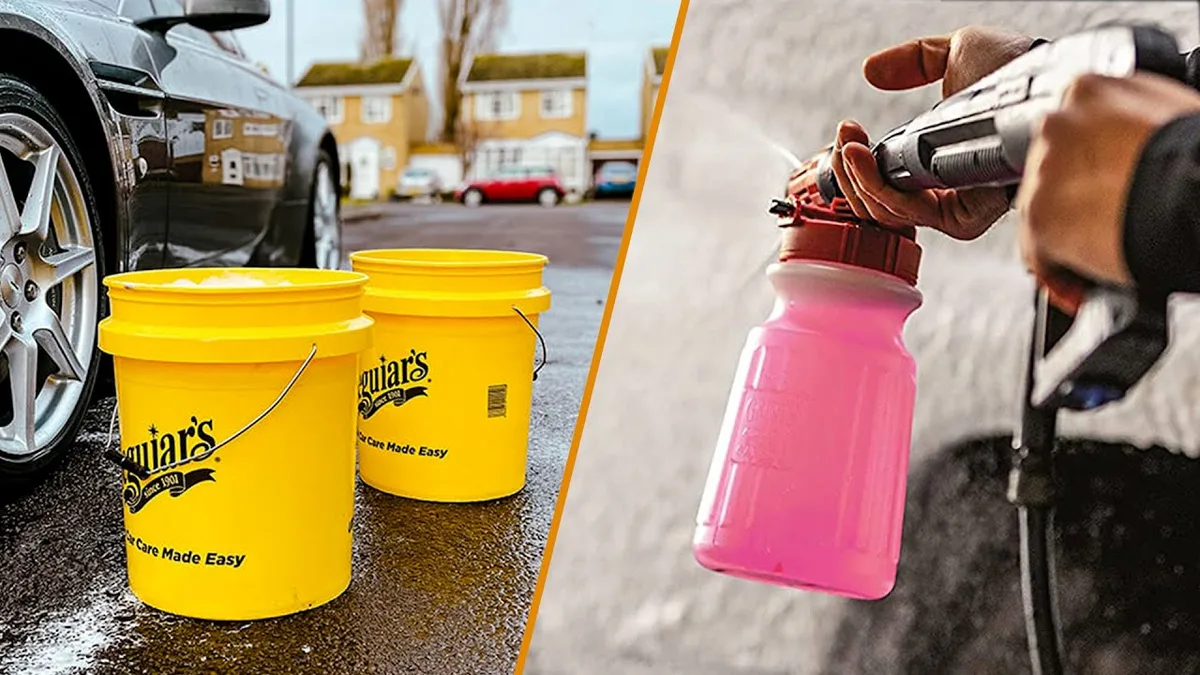
- Using a single bucket. This re-introduces dirt to the wash mitt. Use the two-bucket method to avoid swirl marks.
- Not drying properly. Water spots can etch into paint if left to dry in the sun.
Even with the right soap, poor technique can ruin your finish. Always work in the shade and use clean, soft materials.
Cost Comparison: DIY vs. Store-Bought Over Time
DIY car soap costs pennies per wash. A 32-oz bottle of Castile soap runs about $10 and makes roughly 64 gallons of wash solution. That’s $0.15 per gallon or $0.02 per wash if you use 1 gallon at a time.
Commercial car soaps average $15, $25 per gallon of concentrate. Even diluted, that’s $0.50, $2.00 per wash. Over a year of weekly washes, DIY saves $20, $100 depending on frequency.
The trade-off is time and consistency. DIY requires mixing and pH testing, while commercial options are grab-and-go.
Pro Tips for Better Results (Even with Homemade Soap)
Use distilled water if your tap water is hard. Minerals in hard water can leave spots and reduce soap effectiveness.
Rinse thoroughly before washing. This removes loose dirt that could scratch the paint during the wash.
Work in sections. Wash the roof first, then move to the body. This prevents soap from drying on the paint.
For white cars, add a small amount of baking soda to brighten the finish. Just don’t overdo it, too much can raise the pH.
Safety & Environmental Considerations
Avoid washing in direct sunlight. Soap dries too quickly, leaving residue that’s hard to rinse off.
Dispose of wastewater responsibly. Soapy water can harm plants and aquatic life. Wash on grass or a gravel area where the water can filter naturally.
If using a foaming sprayer, ensure it’s compatible with your soap mix. Some sprayers clog with thick or oily solutions.
For eco-friendly options, look for EPA Safer Choice certified ingredients. These are safer for both your car and the environment.
FAQs About DIY Car Wash Soap
Can I use Dawn dish soap to wash my car?
No, not regularly. Dawn has a pH around 9, 10, which is too alkaline for frequent use. It can strip wax and dull paint over time.
How do I test the pH of my DIY car soap?
Use litmus strips or a digital pH meter. Dip the strip in the solution and compare the color to the chart. Aim for 6.0, 8.0.
Will DIY soap remove wax or sealant?
It depends on the pH. A balanced DIY mix (6.0, 8.0) won’t strip wax. High-pH soaps like dish detergent will.
How long does homemade car soap last?
About 1, 3 months if stored in a sealed container. After that, the ingredients can separate or degrade.
Is DIY car soap safe for ceramic coatings?
Only if pH-neutral. Ceramic coatings are durable but can degrade with high-alkaline soaps. Stick to commercial pH-balanced options for coated cars.
Can I use laundry detergent in a pinch?
No. Laundry detergent is too harsh, with a pH of 10.0, 12.0. It will damage paint and wax over time.
Final Verdict: The Best Approach for Your Car
For most people, commercial car soap is the simplest and safest choice. It’s formulated for automotive surfaces, includes lubricants, and saves time.
DIY soap works well if you’re on a budget, eco-conscious, or enjoy customizing your mix. Just stick to gentle bases like Castile soap and always test the pH.
If you have a high-end or wrapped car, avoid DIY mixes unless you’re certain of the pH and ingredients. The risk of damage isn’t worth the savings.