ByMax Lee
Guide to Dust From Car on Dirt Road
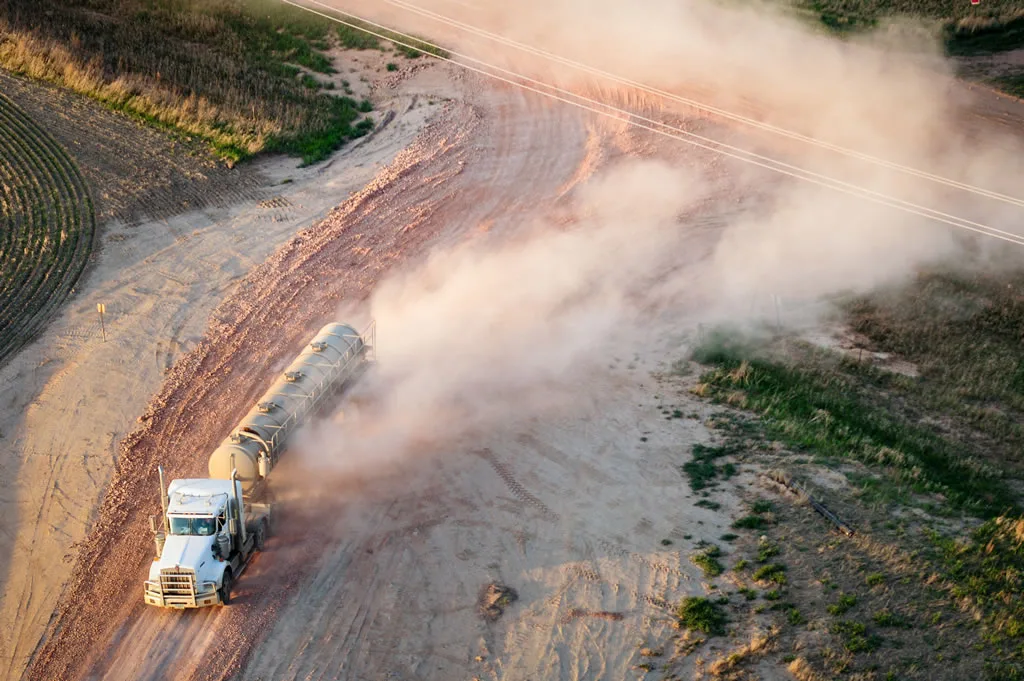
You pull onto your dirt road after a long day, and within seconds, a brown cloud of dust from a car on dirt road swallows your house, your porch, and everything you own that isn't behind a closed window. If you live on unpaved ground, you know this scene. You also know that dust isn't just a nuisance.
It's a health risk, a property depleter, and a neighborly grievance waiting to happen.
Research from the EPA's AP-42 emissions model shows that a single vehicle traveling at 30 mph on an untreated dirt road can loft over 1,000 pounds of particulate per mile per year. That's not dirt settling back down. It's air pollution.
And it's entirely manageable once you know what to do. The trick is picking the fix that actually matches your situation.
Bing (Web (fair-use with source credit))
What This Guide Covers (and When You Need It)
This isn't a one-size-fits-all article because dust control isn't a one-size-fits-all problem. What works for a seasonal farm road with three trucks a day is overkill for a private driveway. What works for a shared community road with twenty cars daily isn't strong enough for a construction haul route.
We built this as a decision tree. You figure out where you fall, find your branch, and get a solution that makes sense for your traffic, your budget, and your dirt type. If you're stuck with a dusty road and no clear next step, this is your starting point.
The Real Problem: Why Dust from a Dirt Road Isn't Just Annoying
When a car drives over loose dirt, the tires pulverize the surface layer. Fine particles (silt and clay mostly) get launched into the air and stay suspended for minutes or longer depending on wind. The bigger rocks stay put.
The fines are what you breathe, what coats your furniture, and what clogs your HVAC filters.
The health side is well documented. The EPA classifies PM10 (particles 10 micrometers or smaller) and PM2.5 as inhalable particulate matter. They aggravate asthma, trigger allergies, and over time contribute to reduced lung function.
Kids playing near the road and older adults with respiratory conditions are hit hardest.
There is a financial angle too. Dust settling on solar panels cuts their efficiency by as much as 30% according to agricultural extension studies. It abrades car paint over time, especially if you wash it off without proper technique.
And if you've ever tried to keep a white car clean on a dirt road, you already know the frustration firsthand.
Quick Fixes That Work for a Day (and Why They Fail)
The simplest solution is getting a water truck or dragging a hose and soaking the road. Water works. For about two hours in summer heat.
Maybe less.
Water controls dust through surface tension. Each droplet sticks to the fines and weighs them down. But as soon as that moisture evaporates (which happens fast in dry climates), the fines are airborne again.
You end up on an exhausting cycle: water every morning, dust by afternoon, repeat forever.
Other quick fixes people try:
Used motor oil. Horrible idea. Contains heavy metals and carcinogens. Illegal in most places. Kills soil biology and can contaminate groundwater. Do not do this.
Hay or straw. Sounds reasonable but breaks down fast, attracts rodents, and traps moisture that softens the road into mud.
Gravel topping on existing dirt. Works better than raw dirt but only if you put down enough depth (four inches minimum, six is better). The fines underneath still migrate up over time.
Just driving slower. Dust generation drops exponentially below 25 mph. On a shared road you can't control everyone's speed, but lowering your own helps.
None of these are long-term solutions. They are band-aids. Band-aids get expensive when you reapply them every single day for months.
The First Decision: What's Your Dust Situation?
Before you spend a dime, take five minutes to assess your actual conditions. The right fix depends on three variables.
Traffic volume. Count the number of vehicles per day. A private driveway might see two trips daily. A shared road might see twenty.
A haul road for construction can see a hundred. Traffic volume is the single biggest factor.
Soil type. Take a handful of your road's surface material and wet it. Rub it between your fingers. If it feels gritty with little sticky residue, that's sandy soil (less dust but erodes easily).
If it feels slippery and forms a ribbon when squeezed, that's clay (the worst offender because fine particles stay suspended). Loam is somewhere between.
Primary concern. Are you worried about respiratory health? Visibility? Is it purely cosmetic?
The answer changes what you prioritize.
Once you know those three things, you can pick your branch.
Branch 1: Low Traffic, Low Budget – Water & Driving Habits
If your road sees fewer than five vehicles per day and you have access to water, you can manage dust without chemicals. But you need to do it right.
Watering technique matters more than you think. Don't just blast the surface with a hose. That creates a skin of wet dirt over dry powder underneath. The first car breaks that skin open and releases everything.
You need to penetrate the top inch or two. A spray bar on a truck or tractor-mounted tank works best. For a short driveway, a sprinkler left running for an hour beats a handheld sprayer every time.
Timing matters. Water in the early morning before the sun heats the surface. You get longer evaporation times and less waste. Late afternoon watering works too if you're trying to keep dust down for evening traffic.
Speed reduction is free and shockingly effective. The EPA's own data shows that doubling speed from 20 to 40 mph increases dust emissions by roughly a factor of four. Driving 15 mph on your dirt road cuts dust by an order of magnitude compared to 35 mph. If you control the road, post a speed limit sign.
If you're just the driver, slow down.
Consider your tires. Aggressive mud-terrain treads grab more surface material and throw it higher and farther than highway-terrain or all-season tires. Switching to a less aggressive tread pattern reduces dust output for light trucks and SUVs. It's not practical for everyone but worth knowing if you're shopping for tires.
Who this branch is for: Private driveways, weekend cabin roads, low-traffic farm lanes. Budget under $200 annually for water costs. Time investment: 10 minutes of watering per day during dry season.
Branch 2: High Traffic, Moderate Budget – Chemical Dust Suppressants
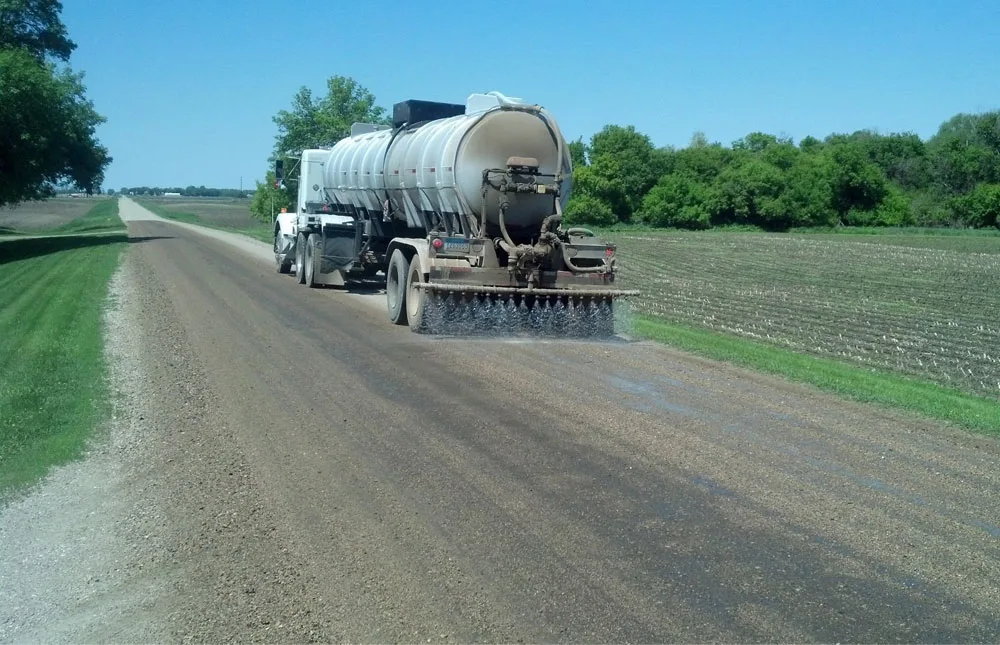
Above ten vehicles per day, water stops being practical. You can't keep a road wet enough. Chemicals are the next step up, and they are far more effective if applied correctly.
The two main players are calcium chloride and magnesium chloride. Both work the same way: they are hygroscopic salts that pull moisture from the air and hold it in the road surface. The fines stay damp and heavy, so they don't become airborne.
| Factor | Calcium Chloride | Magnesium Chloride |
|---|---|---|
| Cost per linear foot (per treatment) | $0.50 – $1.00 | $0.75 – $1.50 |
| Effective humidity range | Down to about 30% relative humidity | Needs higher humidity (40%+) |
| Application rate | 0.3–0.5 gallons per square yard | 0.4–0.6 gallons per square yard |
| Reapplication interval | 4–8 weeks depending on rain | 6–10 weeks |
| Corrosion potential | Moderate (high for bare steel) | Lower than calcium |
| Curing time before traffic | 12–24 hours | 24–48 hours |
Application matters almost as much as product choice. You don't just spray it on top and call it done. The standard workflow per state DOT manuals is:
- Grade the road to restore drainage crown and remove washboarding.
- Pre-wet the surface lightly so the chemical doesn't sit on dry dirt.
- Apply the liquid suppressant at the recommended rate through a spray bar.
- Mix it into the top two to three inches. A disc or harrow works. A grader blade set shallow can work too.
- Compact the surface with a roller or drive over it repeatedly for a few days.
- Keep traffic off for the full curing time. Curing is non-negotiable. If vehicles drive on it before it sets, you waste product.
Reapplication timing. Rain washes the chemical out eventually. Heavy rain strips it faster. In dry climates you might get eight weeks between treatments.
In wetter areas, plan on four to six weeks. Most suppliers will tell you the expected lifespan for your region.
Who this branch is for: Shared private roads, community driveways, rural school bus routes, farm-to-market roads with moderate traffic. Budget: $2,000, $8,000 per mile per treatment depending on road width and local chemical pricing.
Bing (Web (fair-use with source credit))
Branch 3: Maximum Control, Long-Term – Road Resurfacing & Paving Alternatives
Sometimes chemicals aren't enough. High traffic, heavy vehicles, or simply a desire for a permanent fix push you toward resurfacing options.
Chip seal is the most cost-effective semi-permanent solution. A layer of liquid asphalt binder gets sprayed down, then covered with small aggregate chips that get rolled into the surface. It's not full asphalt pavement but it's close.
Dust disappears entirely. The road holds up for seven to twelve years before needing a new seal coat. Cost runs $3, $8 per square yard compared to $10, $20 for full paving.
Re-graveling with proper base material works if the existing road has good drainage. You bring in four to six inches of crushed stone with a mix of particle sizes. The fines in the gravel act as a natural binder.
This costs $1, $3 per square yard and eliminates dust for a couple of years until the fines break down.
The break-even calculation. Suppose you treat a half-mile road with chemicals twice per year at $1,500 per treatment. That's $3,000 annually. Over ten years, that's $30,000.
Chip seal on the same road might cost $15,000 and last ten years. Paving might run $40,000 and last twenty years. At that traffic level, chip seal pays for itself compared to chemicals.
Below ten vehicles per day, chemicals are cheaper over the long term.
Who this branch is for: High-traffic roads, subdivision entries, commercial access roads, homeowners willing to invest for permanent peace. Budget starts around $10,000 for a short road and goes up from there.
Branch 4: The Neighbor Problem – When You Don't Own the Road
This is the worst situation: you're dealing with dust from a road you have no control over. The county owns it. A neighbor owns it.
Or it's a shared easement where nobody agrees on maintenance.
Your first step is documentation. Record video of the dust. Note time of day and frequency. Check if your state has a nuisance dust ordinance (most do, enforced by the county health department or air quality agency).
Filing a formal complaint. Start with the county road department if it's a public road. Be specific: "A half-mile stretch of Smith Lane between County Road 12 and the Johnson property produces visible dust plumes that settle on my home daily. I have documentation of twenty instances over the past month." That gets more traction than "I'm tired of dust."
If the road is private and the owner won't act, your options narrow. A certified letter requesting dust mitigation (citing local air quality regulations) sometimes scares people into action. Small claims court for nuisance damages is possible but expensive and time-consuming.
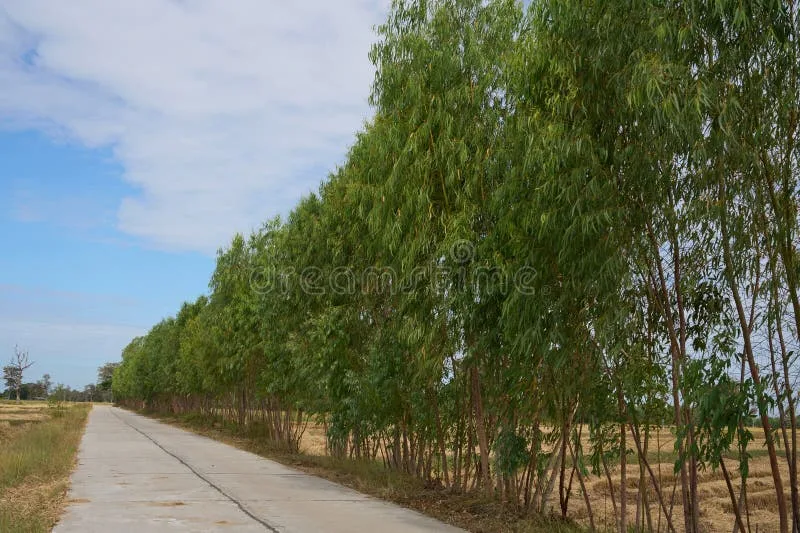
What you can do on your own property. Plant a vegetative windbreak. A dense row of shrubs or trees along your property line (especially evergreen varieties) traps dust before it reaches your house. USDA studies show that a properly designed windbreak can reduce downwind dust concentrations by 60, 80% depending on height and density.
Native species work best.
Bing (Web (fair-use with source credit))
Also consider sealing your house better. Weatherstripping, door sweeps, and sealing around windows cut indoor dust infiltration significantly. High-MERV HVAC filters help too.
Switch to MERV 11 or 13 if your system can handle the airflow restriction.
Who this branch is for: Renters or homeowners stuck on a road they don't control. Budget for windbreak: $200, $1,000 for native shrubs plus labor. House sealing: $100, $500 for DIY.
You can't fix the road, but you can build a barrier between it and your life.
Mistakes That Cost You Time, Money, or Your Road
Even with good intentions, people mess this up. Here are the most common errors from county road maintenance records.
Overwatering. Wetting a road until it turns to mud is worse than dry dust. Mud creates ruts, destroys the road surface, and when it dries, the fines recrystalize into harder, more compacted dust. Apply water until the surface darkens evenly but no puddles form.
Applying chemicals at the wrong time of year. Don't treat right before heavy seasonal rains. The rain washes out your suppressant. Late spring or early summer is ideal in most climates.
Fall treatments can work but freeze-thaw cycles break down chloride effectiveness.
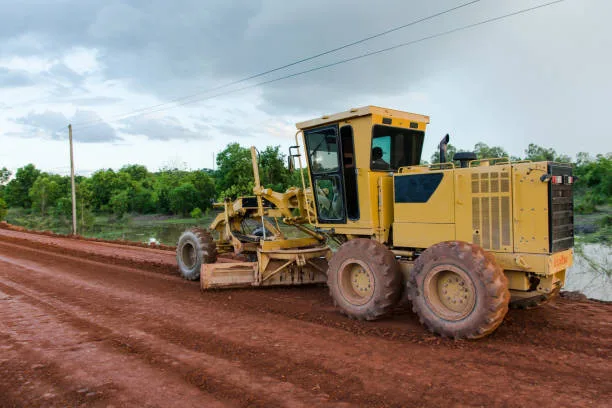
Grading too deep. Dragging a grader blade six inches down brings up coarse material from below and mixes it with the fines on top. That makes dust worse for a while. Shallow grading (one to two inches deep) preserves the compacted base and just smooths the surface.
Ignoring drainage. A road that holds water fails fast. Water pooling on the surface softens the fines, creates mud, and when it evaporates leaves a crust that breaks into dust. Your road should have a crown (a gentle rise in the center so water runs to the sides).
Two to three inches of crown on a twenty-foot road is standard.
Bing (Web (fair-use with source credit))
Using the wrong gravel for top dressing. Clean, washed gravel has no fines. It doesn't pack. It doesn't bind.
It's terrible for dust control. You want "crusher run" or "dense-grade" gravel that includes fines from the crushing process. Those fines cement the surface together when compacted.
A Quick Reference: Which Solution Fits Your Scenario
Use this table to find your spot based on what you told us about your road.
| Traffic Level | Soil Type | Primary Concern | Recommended Approach |
|---|---|---|---|
| 0–5 cars/day | Sandy | Cosmetics, occasional dust | Water + speed reduction |
| 0–5 cars/day | Clay | Health, heavy dust | Chemical suppressant, low rate |
| 5–15 cars/day | Any | Consistent dust | Chemical suppressant, standard rate |
| 15+ cars/day | Any | All factors | Chip seal or re-graveling |
| Shared road, no ownership | Any | Personal exposure | Windbreak + house sealing |
If you're between two rows, lean toward the more aggressive solution if health is your main concern or if you have heavy trucks using the road.
Pro Tips from Someone Who's Done This
A few things you won't find in manufacturer brochures.
The hand-test for moisture. Grab a handful of road surface from the top inch. Squeeze it hard. If water drips out, it's too wet for anything but compaction work.
If it holds a ball shape and your palm feels damp, that's perfect moisture content (typically 8, 12%). If it crumbles immediately, it's too dry. Any treatment will need more volume to penetrate.
Timing your chemical application for cost savings. Most suppliers charge the same per gallon regardless of season, but effectiveness varies. Applying in early summer when temperatures are moderate and humidity is higher (above 40%) extends treatment life by weeks compared to mid-summer when humidity bottoms out. That timing shift saves 20, 30% on annual chemical costs because you reapply less often.
The one tool every dirt road owner should own. A box grader or land plane grading attachment for a tractor. These cost a few hundred dollars. They spread surface material evenly, maintain your crown, and prevent washboarding.
A decent box grader pays for itself the first season you don't need to hire a contractor.
Safety & Liability You Can't Afford to Ignore
Dust control isn't optional if you're generating visible dust plumes onto a public roadway. Reduced visibility from road dust causes accidents. In some states, the party generating the dust can be held liable.
Visibility accidents. If a car drives through your dust cloud and hits another vehicle, or if a cyclist swerves to avoid your dust and falls, you could face negligence claims. Insurance adjusters see cases involving unpaved road dust every year.
Regulatory exposure. The EPA regulates fugitive dust under the Clean Air Act through state implementation plans. Most states delegate enforcement to county air quality districts. In areas classified as "non-attainment" for PM10, fines for excessive visible dust can reach thousands of dollars per day.
As of 2026, stricter enforcement in counties like Maricopa, AZ, and San Joaquin Valley, CA means more citations are being issued.
Chemical use near water. Calcium chloride and magnesium chloride are generally safe for unpaved roads, but runoff into streams, ponds, or wells is a real concern. The National Pollutant Discharge Elimination System (NPDES) permit program covers stormwater discharges from construction and industrial activities. For a private residential road, you're usually fine keeping the chemical a minimum of 100 feet from any surface water.
Check your state's specific setback requirements.
Frequently Asked Questions
How long does chemical dust suppressant last on a dirt road?
Four to eight weeks between applications. Heavy rain shortens that window. Very dry conditions extend it.
The product label gives a range based on your climate zone.
Can I use gravel to completely stop dust?
Gravel alone won't stop dust if the underlying fines are still there. You need at least four inches of dense-grade gravel with proper compaction. Even then, dust returns as the gravel breaks down.
Is calcium chloride safe for pets and livestock?
Calcium chloride is considered low-toxicity for mammals at standard application rates. Keep animals off the road during application and for 24 hours afterward. Don't let them drink from puddles on a freshly treated surface.
What's the cheapest dust control option?
Driving slower costs nothing and reduces dust significantly. Watering is next cheapest if you already have a water source. Both require daily effort.
Over a full season, a single chemical application is cheaper than daily watering.
Do I need a permit to apply dust suppressants?
Most private roads don't require permits for standard chemical applications. Check with your county environmental health department. If you're within 100 feet of a stream or wetland, you may need a buffer or a different product.
The Bottom Line: Your Next Three Steps
You don't need to solve the whole problem at once. You just need to start.
Step one: Identify your branch using the table above. Traffic count, soil type, and ownership status give you the answer.
Step two: Choose the right solution for that branch. If you're in Branch 1, start watering correctly and post a speed limit sign. If you're in Branch 2, get a quote from a local supplier and have your road graded before application.
If you're in Branch 3, talk to a paving contractor about chip seal pricing. If you're in Branch 4, call your county road department and start planting a windbreak.
Step three: Execute one season of whatever you chose and evaluate. Most dust solutions show results within two weeks. If it's working, keep going.
If it's not, revisit your branch assignment. You might have misjudged traffic or soil type.
Dust control isn't rocket science. It's just dirt, water, and a little knowledge. You've got the knowledge now.
The rest is just doing it.