Quick Answer
Guam vehicle registration plate colors and special designations use color coding for instant recognition. White backgrounds mark private passenger vehicles. Blue plates indicate government use.
Green or white with insignia denote military vehicles. Purple or black backgrounds signal death record plates. Yellow or orange plates are for commercial vehicles.
The Guam Plate Language: Why Color Matters
Guam’s license plate system relies on visual shorthand to communicate authority and purpose. Unlike many states that use alphanumeric codes alone, Guam’s plates leverage color and design to convey meaning immediately. This approach speeds up identification for traffic enforcement, toll systems, and public awareness.
The system also reflects Guam’s unique status as a US territory with a significant military presence. Plates for military personnel, government vehicles, and special designations like death record plates serve specific administrative and ceremonial roles.

How to Read Guam Plates by Color: The Quick Reference
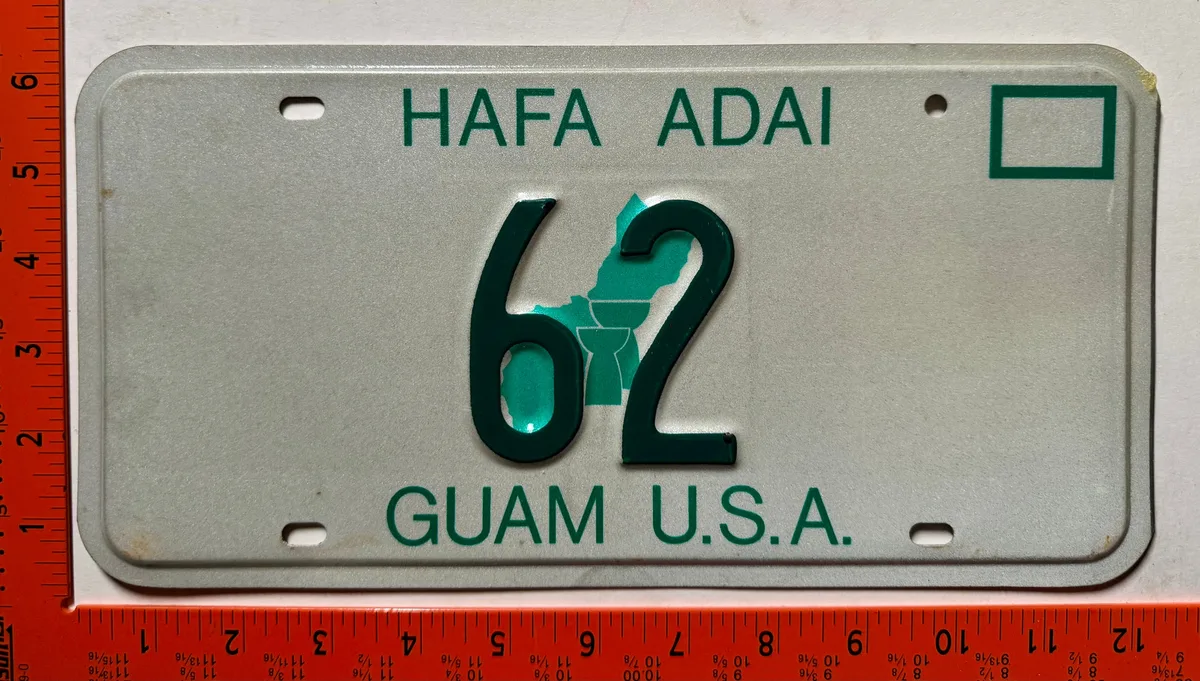
Guam’s standard passenger plates are the most common and easiest to spot. They feature a white background with black or dark blue text, often including the Guam seal or a simple “GUAM” banner. These plates are issued to private vehicle owners for everyday use.
For quick identification, focus on the background color first, then check for emblems or additional text. This two-step approach helps avoid confusion between similar-looking plates.
Visual Guide: What Each Color and Design Means
Standard Plates
White background plates are for private passenger vehicles. They typically display black or dark blue alphanumeric characters with a clean, uncluttered design. The Guam seal or a “GUAM” banner often appears at the top or bottom.
These plates are the baseline for comparison. Any deviation in color or added emblems usually signals a special designation.
Government Plates
Government plates use a blue background, often with white or silver text. They may include official seals or agency identifiers to denote their use by Guam’s government departments. The blue color is a clear visual cue for official vehicles.
These plates are reserved for vehicles owned or operated by government entities. Misuse can result in penalties under local regulations.

Military Plates
Military plates are green or white with branch-specific insignia. Active-duty personnel stationed in Guam, such as those at Andersen Air Force Base or Naval Base Guam, receive these plates. The insignia helps identify the service branch, such as the Army, Navy, or Air Force.
These plates often include additional markings to denote rank or unit affiliation. They are distinct from veteran or death record plates, which serve different purposes.

How to Distinguish Between Similar-Looking Plates
Some Guam plates look similar at first glance. A blue government plate and a blue military plate can confuse even experienced observers. The key differences lie in the emblems and text layout.
Government plates typically feature the Guam seal or an agency identifier. Military plates display branch insignia like the Army, Navy, or Air Force emblems. These markings are usually positioned at the top center or bottom of the plate.
Another distinction involves the text style. Government plates often use simpler, more formal lettering. Military plates may include additional designation codes to indicate the service branch or unit.

Common Visual Mistakes People Make
One frequent error is confusing blue government plates with blue military plates. While both use blue, government plates often have a simpler design without branch insignia. Military plates, on the other hand, include service-specific emblems.
Another mistake is overlooking the significance of the Guam seal or “GUAM” banner. These elements help confirm the plate’s origin and legitimacy. Without them, a plate might be misidentified or even suspected of being counterfeit.

Lighting conditions also play a role. At sunset or under streetlights, white plates can appear yellowish. Blue government plates may look dark purple in low light.
Always check multiple features before making a determination.
Guam Plate Design Evolution: What Changed and Why
Guam’s plate designs have shifted over the years to improve recognition and security. Early plates used simpler color schemes with basic alphanumeric formats. Modern designs incorporate holographic elements, reflective sheeting, and more intricate emblems to prevent counterfeiting.
Design changes often align with federal guidelines and international standards for vehicle identification. The Guam Department of Revenue and Taxation periodically updates plate specifications to maintain clarity and durability.
These evolution trends reflect broader changes in American territory vehicle registration systems. Understanding historical designs helps identify older plates that may still be in circulation.
Visual Reference Guide: Side-by-Side Plate Comparisons
Government vs. Military Plates
Government plates use a blue background with white or silver text. They display agency-specific markings or the Guam seal. Military plates may feature green or white backgrounds with branch insignia.
The insignia placement is a reliable differentiator.
Color alone doesn’t always tell the full story. Always check for emblems and text patterns when distinguishing these categories.
Standard vs. Specialty Plates
Standard passenger plates have plain white backgrounds with minimal decoration. Specialty plates include commemorative designs, veteran honors, or organizational affiliations. These variations often feature unique color combinations and additional graphics.
The “GUAM” banner position can also signal plate type. Standard plates usually place it prominently at the top.
Commercial vs. Passenger Plates
Commercial plates use yellow or orange backgrounds for high visibility. Passenger plates remain white for standard identification. The color contrast helps traffic enforcement quickly differentiate vehicle types.
Size and format may also vary. Commercial plates sometimes use larger dimensions or dual-sticker arrangements.
How to Identify Guam Plates in Real-World Conditions
Reading plates under different lighting conditions requires practice. In bright daylight, colors appear vivid and details are sharp. At night, reflective elements become more prominent, while some colors may look darker than expected.
Dirty or faded plates can obscure important details. Water spots, mud, and sun bleaching often affect color perception. Prioritize checking emblems and text over background color when plates are compromised.
Using a vehicle’s license plate is essential for verification, and understanding proper cleaning methods can help maintain plate visibility and longevity. A quality hose filter for car washing can prevent water spots that might otherwise obscure plate details.
Distance also affects identification. At close range, you can read small details like serial numbers and emblems. From afar, focus on the overall color block and general design pattern.
Costs, Registration Fees, and Requirements
Plate fees in Guam vary by category. Standard passenger plates typically cost around $25 to $40 for annual registration. Government plates may have different fee structures depending on the agency.
Military plates often carry reduced or waived fees for active-duty personnel. Death record plates usually require a one-time application fee and proof of military service or death.
Specialty plates can range from $50 to $150 or more. Some commemorative plates include additional fees that support specific causes or organizations.
Registration renewals generally happen annually. The renewal sticker placement and year designation must remain visible. Out-of-date stickers or missing plates can result in fines.
Final Tips: Reading Guam Plates Like a Local
The fastest way to read Guam plates is to memorize the color hierarchy. White equals private. Blue equals government.
Green or white with insignia equals military. Purple or black equals death record. Yellow or orange equals commercial.
When in doubt, look for secondary cues. Emblems, text layout, and serial number formats all provide confirmation. Government plates usually have official seals.
Military plates show branch markings.
Practice makes perfect. Spend time observing plates at traffic stops, parking lots, and on highways. Over time, you’ll develop an intuitive sense for quickly identifying plate types.
Frequently Asked Questions
What color is a Guam government plate?
Guam government plates typically have a blue background with white or silver text. They display agency identifiers or the official Guam seal to denote their official status.
How do I know if a plate is military versus veteran?
Military plates feature active service branch insignia and may be green or white. Veteran or death record plates use dark purple or black backgrounds with memorial markings. The design elements clearly separate these categories.
What do red Guam plates mean?
Red plates on Guam usually indicate specific government or official vehicles. They are less common than blue government plates and may denote particular agencies or departments.
Are Guam plates different from other US states?
Yes, Guam plates follow a distinct territorial system with unique color coding. Unlike many states that use uniform designs, Guam emphasizes visual differentiation through background colors and emblems.
How can I tell if a Guam plate is authentic?
Authentic Guam plates include proper Guam seal placement, reflective materials, and consistent color application. They also display official serial numbers and renewal stickers as required by territorial regulations.
Where can I find official Guam plate information?
The Guam Department of Revenue and Taxation provides official details on plate types, fees, and registration requirements. You can also contact local DMV offices for specific questions.