ByMax Lee
Honolulu’s 7¢/lb Vehicle Weight Tax Explained
The Honolulu county weight tax of 7 cents per pound for passenger vehicles catches many car owners off guard when they renew registration. You might budget for a flat fee, but this charge grows with your car's curb weight. That surprise bill can add hundreds of dollars to annual ownership costs.
Per Honolulu County Code Chapter 8, the rate is fixed at $0.07 per pound of manufacturer curb weight for every passenger vehicle on Oahu as of 2026. A typical 4,000-pound SUV therefore owes $280 yearly, separate from plate and safety fees.
Quick Answer
The Honolulu county weight tax of 7 cents per pound for passenger vehicles applies to Oahu registrations. It charges $0.07 per pound of curb weight annually. Passenger cars, SUVs, and light trucks qualify.
Commercial vehicles and motorcycles are exempt. The tax funds county transportation projects.
What Honolulu’s 7-Cent-Per-Pound Vehicle Weight Tax Actually Means
Honolulu County levies a local tax on passenger vehicles based purely on weight. The rate is 7 cents per pound, set by county ordinance. This is not a state-wide Hawaii tax; it only applies on Oahu.
The legal anchor is Honolulu County Code, Chapter 8, under motor vehicle taxation. The Hawaii Revised Statutes §249-31 gives counties the power to assess such taxes.
Many folks confuse this with a registration fee. It is a separate annual charge. You pay it when you renew your tags, but the money flows to county infrastructure, not the state DMV.
| Charge | Basis | Rate | Collected by |
|---|---|---|---|
| Weight tax | Curb weight | $0.07 per lb | Honolulu County |
| Registration fee | Flat + class | Varies | State of Hawaii |
Who Pays the Tax and Who Doesn’t
The tax hits any passenger vehicle registered in Honolulu County. That includes sedans, SUVs, crossovers, and light trucks under 10,000 pounds GVWR. New residents moving to Oahu with out-of-state cars must pay it at first registration.
Used car buyers in the county inherit the tax at renewal. Fleet managers with company passenger vehicles pay per unit.
Some groups escape the charge:
- Pays: Passenger cars, SUVs, light trucks under 10k GVWR
- Pays: New Oahu residents, used buyers, fleet owners
- Exempt: Motorcycles, mopeds, trailers
- Exempt: Commercial trucks over 10k GVWR, off-highway vehicles
Unlike some classic plate exemptions seen elsewhere, Honolulu gives no weight tax break for antique cars. A 1965 Mustang still owes tax on its factory curb weight.
How the Tax Is Calculated (With Real Examples)
The formula is simple: Multiply manufacturer curb weight in pounds by $0.07. That gives your annual weight tax due.
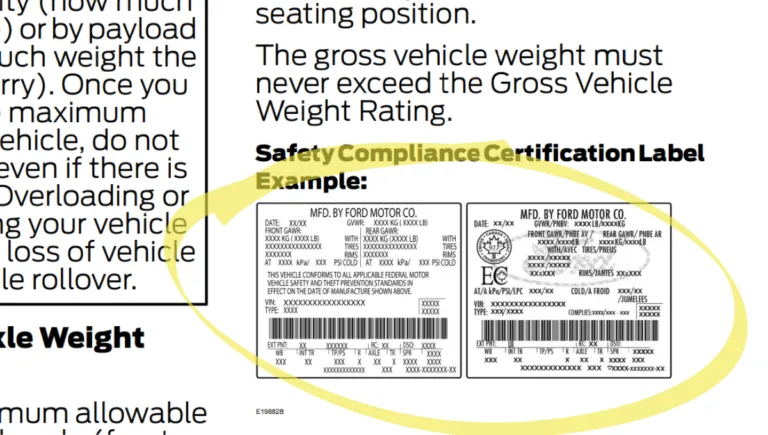
Curb weight is the vehicle's weight with standard equipment, fluids, and a full tank, no passengers or cargo. You can find it on the driver's door jamb label or in the owner's manual.
| Vehicle type | Curb weight | Annual tax |
|---|---|---|
| Compact sedan | 3,000 lb | $210 |
| Midsize SUV | 4,200 lb | $294 |
| Full-size pickup (light) | 5,000 lb | $350 |
A dispute can arise if the county records a wrong weight. Always bring your door jamb sticker or spec sheet as proof. The division accepts manufacturer data for verification.
Where the Money Goes and Why It Exists
The tax revenue stays with Honolulu County. It funds road repair, bridge maintenance, and public transit support on Oahu. This is a dedicated transportation funding stream, not general county spending.
The weight-based design indirectly nudges buyers toward lighter cars. Heavier vehicles cause more road wear, so the tax follows a user-impact logic.
Step-by-Step: When and How You’ll Pay It
You will face this tax at every annual renewal. The steps below show the workflow from notice to receipt:
- County sends renewal notice with assessed weight tax.
- Check the listed curb weight against your door jamb.
- Pay online, by mail, or in person at a DMV branch.
- Keep the paid receipt and proof of weight for records.
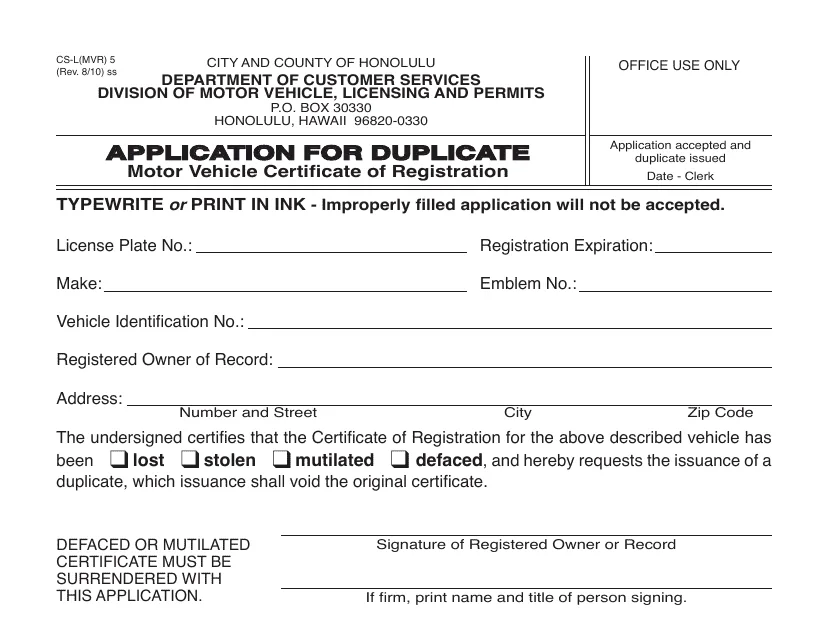
Payment methods include the county's online portal, phone, and physical offices. Late payment triggers penalties.
Unpaid balances can place a hold on future registration. You can't legally drive until cleared.
Common Mistakes That Cost Owners Extra
The most frequent error is ignoring the weight listed on your renewal notice. County clerks sometimes pull outdated or incorrect data from old records. Always cross-check against your door jamb sticker.
Another pitfall is assuming hybrids or EVs get a break. The tax applies to all passenger vehicles regardless of fuel type. A 4,500-pound electric SUV still owes $315 annually.
Some owners try to game the system by underreporting weight. This risks penalties and registration holds. The county can verify specs through manufacturer databases.
How It Compares to Other Hawaii Counties and States
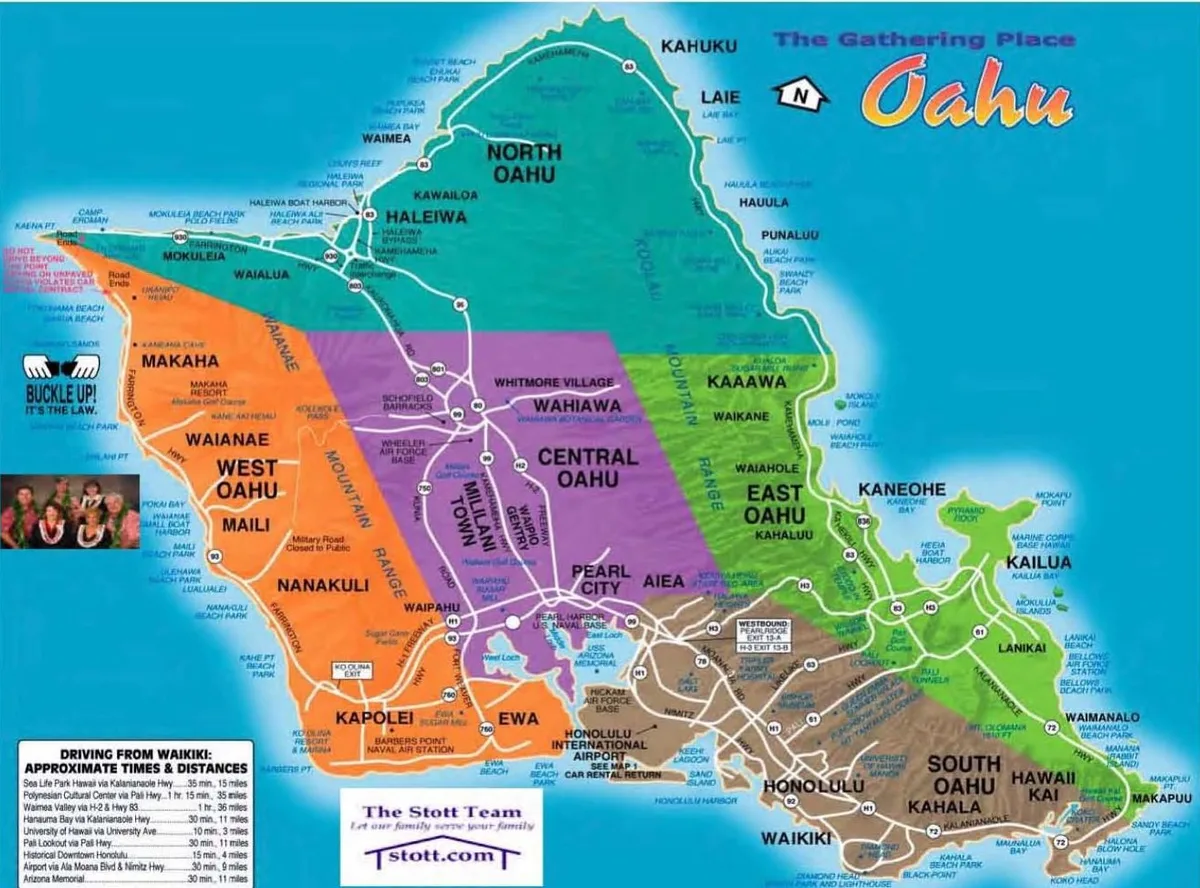
Honolulu is the only Hawaii county with a weight-based vehicle tax. Maui, Kauai, and the Big Island use flat registration fees instead.
| Location | Annual charge | Basis |
|---|---|---|
| Honolulu County | $280 | Weight (4,000 lb SUV) |
| Maui County | $45 | Flat |
| California | ~$150 | Value |
| Texas | $50.75 | Flat + small weight fee for trucks |
For Oahu residents, the weight tax adds a predictable but significant cost. It is higher than most mainland states for heavier vehicles.
What Happens If You Don’t Pay (Penalties and Risks)
Late payment triggers a 10% penalty after 30 days. After 60 days, the penalty jumps to 20%. These fees compound quickly on larger vehicles.
Unpaid balances block registration renewal. You cannot legally drive with expired tags in Hawaii. Police can cite you for this violation.
The county may also place a lien on the vehicle. This prevents sale or transfer until all taxes and penalties are cleared.
Pro Tips to Double-Check Your Bill
Always verify the curb weight on your renewal notice. Compare it to your door jamb label or owner's manual. Discrepancies happen more often than you think.
Take a photo of your weight label when you first buy the car. This provides proof if the county's records are wrong.
If you modify your vehicle, note that aftermarket parts can change curb weight. Lift kits, heavy bumpers, or added armor may push you into a higher tax bracket. The county uses manufacturer specs, not modified weights.
Frequently Asked Questions
Does the weight tax apply to motorcycles?
No. The tax only covers passenger vehicles under 10,000 pounds GVWR. Motorcycles, mopeds, and scooters are exempt.
Can I appeal the assessed weight?
Yes. Bring your door jamb label or manufacturer specs to a DMV office. They will update the records if your documentation shows a different weight.
Are there any exemptions for seniors or low-income owners?
No. The tax applies uniformly to all passenger vehicles in Honolulu County. There are no income-based or age-related exemptions.
How is curb weight different from GVWR?
Curb weight is the vehicle's weight with standard equipment and fluids. GVWR includes passengers, cargo, and towing capacity. The tax uses curb weight only.
What if I move off Oahu?
You stop paying the weight tax once you reregister in another county or state. The charge is tied to Honolulu County registration.