Black Friday deals are live on Amazon · limited-time discounts, grab them before they’re gone
Grab the deals

ByMax Lee
How Often Should I Wash My Black Car: Ultimate Care Guide
A black car usually needs washing every one to two weeks under normal conditions. Wash it weekly—or sooner when necessary—if you drive through rain, snow, road salt, construction zones, dusty roads, or areas with heavy pollen.
The calendar is only part of the answer. Bird droppings, tree sap, bug residue, and road salt can damage or stain automotive paint if they remain on the surface. A careful washing routine matters just as much as frequency because improper technique can create swirl marks that are especially visible on black paint. For more on this, see our guide on oklahoma antique car registration guide for 25 year.
The Best Washing Schedule for a Black Car
Use this as a practical starting point:
| Driving and parking conditions | Recommended schedule |
|---|---|
| Light use, garage parking, mild weather | Every 2–3 weeks |
| Normal daily driving | Every 1–2 weeks |
| Dusty roads, heavy pollen, or frequent rain | About once a week |
| Snow, road salt, or winter brine | Weekly, with prompt underbody rinsing |
| Parked beneath trees or outdoors | Weekly or whenever contamination appears |
| Bird droppings, sap, fuel, or bug residue | Spot-clean as soon as possible |
A black car does not automatically require daily washing. Washing too frequently with dirty equipment, harsh chemicals, or excessive pressure can create more marks than it removes. In practice, a thorough wash every week or two is safer than repeated careless rinses.
When to wash immediately
Do not wait for the next scheduled wash after noticing:
- Bird droppings
- Tree sap
- Dried insects
- Road salt or de-icing brine
- Fuel or oily residue
- Construction dust or overspray
- Mud packed into wheel arches
Remove these contaminants while they are still soft. Never scrape dried material from the paint with a fingernail, credit card, or abrasive sponge. For more on this, see our guide on ny antique car registration guide for 25 year.
Why Black Paint Shows Dirt and Scratches So Clearly
Black paint is not necessarily softer than lighter paint, but its dark, reflective surface creates strong contrast. Dust, mineral deposits, dried shampoo, and fine swirl marks are easier to see against a black finish.
A common mistake is assuming that a black vehicle needs stronger scrubbing. The opposite is usually true: the safer approach is to loosen contamination with water and lubrication, then glide a clean wash mitt over the surface with minimal pressure.
Black paint commonly reveals:
- Fine circular swirl marks
- Water spots and mineral rings
- Dried shampoo residue
- Dust and pollen
- Bird-dropping etching
- Oxidized or faded clear coat
- Scratches caused by automatic brushes or dirty towels
Regular washing helps prevent contamination from bonding to the clear coat, but it cannot repair existing scratches. Polishing, paint correction, or professional refinishing may be required for established defects.
What Can Happen If You Leave a Black Car Dirty?
Dirt itself does not instantly ruin paint, but certain contaminants become more troublesome as they sit and bake onto the surface.
Bird droppings
Bird waste can contain acidic and abrasive components. When exposed to sunlight, it may dry tightly against the clear coat and leave an etched outline. Soak it with a lubricated microfiber towel or a dedicated detailer, then lift it away without rubbing aggressively.
Tree sap
Sap can harden into a sticky, chemically active deposit. A car-safe tar-and-sap remover is preferable to household solvents. Test any chemical in an inconspicuous area and follow its label.
Road salt and winter grime
Salt residue can remain in wheel wells, behind wheels, along rocker panels, and underneath the vehicle. Rinse these areas thoroughly after winter driving. A clean exterior does not replace inspection of the underside, where grime can remain trapped.
Dust and sand
Dry wiping a dusty black car is one of the fastest ways to create fine scratches. Sand particles act like abrasive grit between the towel and paint. Always rinse or properly lubricate the surface before touching it.
Water spots
Water spots form when mineral-rich water evaporates and leaves deposits behind. They are more likely when you wash in direct sun or allow rinse water to dry on warm panels.
How to Wash a Black Car Without Creating Swirl Marks
1. Choose the right conditions
Wash in shade, preferably when the panels are cool. Avoid strong wind, which can blow grit onto freshly cleaned surfaces. Early morning or late afternoon is often easier than midday, but temperature and shade matter more than the clock.
2. Gather clean equipment
Use:
- A pH-balanced automotive shampoo
- A separate bucket for wheels
- At least one clean microfiber wash mitt
- Several high-quality drying towels
- A hose or pressure washer used at a safe distance
- A soft wheel brush
- A grit guard if using buckets
- A dedicated glass towel
- A mild detail spray for safe spot cleaning
A two-bucket wash setup helps separate dirty rinse water from shampoo solution. It does not make a dirty mitt harmless, so rinse the mitt frequently and replace towels that become visibly contaminated.
3. Rinse before touching the paint
Start by rinsing the entire vehicle from top to bottom. Spend extra time on rocker panels, wheel arches, bumpers, and the lower doors, where abrasive grit collects.
If using a pressure washer, keep the nozzle moving and maintain a sensible distance. High pressure can force water past damaged trim, lift loose emblems, or worsen existing paint chips.
4. Clean the wheels separately
Wheels and tires carry brake dust, road film, and gritty particles that should not reach the paintwork. Use separate tools and, ideally, wash them before the body so splashes can be rinsed away.
5. Wash from top to bottom
Work one small section at a time:
- Wash the roof and upper glass.
- Move to the hood, trunk, and upper doors.
- Clean the middle panels.
- Finish with rocker panels, bumpers, and the rear of the vehicle.
- Rinse the mitt frequently in plain water.
Use straight, light passes rather than pressing in circles. Rinse the vehicle before the shampoo dries.
6. Rinse thoroughly
Flush shampoo from panel gaps, mirrors, handles, badges, wiper areas, and trim. Residue left in these places can run onto clean paint later and leave streaks.
7. Dry without dragging grit
A clean, absorbent microfiber drying towel is safer than an old bath towel or synthetic chamois. Lay the towel flat and blot or gently glide it over the surface without applying pressure.
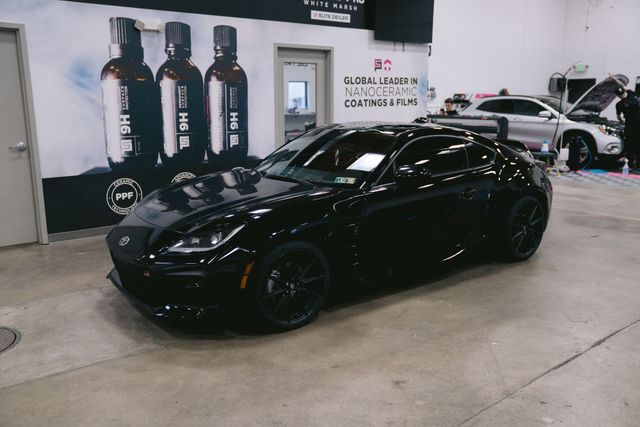
A blower or clean compressed air can remove water from mirrors, grilles, badges, door handles, and panel gaps. If you use compressed air, check the equipment’s duty cycle and use clean, dry air so you do not spray moisture or compressor oil onto the finish.
Credit: www.baltimoredetail.com
Inspect trim, glass, and film edges while drying so trapped water does not leave marks.
Products to Avoid on Black Automotive Paint
Avoid products that are designed for unrelated household surfaces or that contain aggressive solvents. In particular, do not use:
- Dishwashing liquid as a regular car shampoo
- Abrasive kitchen sponges
- Household glass cleaner on painted surfaces
- Paper towels for paintwork
- Dirty brushes or old bath towels
- Undiluted degreasers on clear coat
- Automatic car washes with visibly worn brushes
- Dry dusting on a visibly dirty vehicle
Dish soap may remove wax and leave the surface less protected; it is not a preferred maintenance shampoo. A purpose-made automotive wash product provides lubrication and is generally safer for routine cleaning.
When cleaning around exterior window film, avoid scrubbing the film edge or allowing harsh chemicals to dwell on it. Guidance about protecting exterior window areas can also be useful when detailing glass and trim.
How to Reduce Washing Frequency Safely
A protection layer will not prevent your car from getting dirty, but it can make contamination easier to remove.
Wax or sealant
A wax or synthetic sealant can add gloss and make routine washing easier. Apply it only to clean, dry paint and follow the product’s curing instructions. Protection needs periodic renewal; it is not permanent.
Ceramic coating
A professionally applied or correctly installed ceramic coating can improve chemical resistance and water behavior. It does not make the car scratch-proof, eliminate washing, or justify using dirty towels. Coated vehicles still need gentle, regular maintenance.
Garage or covered parking
Indoor parking reduces exposure to ultraviolet light, tree sap, bird waste, and rain contamination. If a garage is unavailable, shade helps, but do not park beneath trees solely for shade if birds and sap are a frequent problem.
Car covers
Use a breathable, properly fitted cover only when the vehicle is clean and the cover’s inside surface is free of grit. Putting a cover over dust can rub particles across the paint whenever the fabric moves.
Quick rinsing
A clean-water rinse can remove loose dust and salt, but it is not always a substitute for a shampoo wash. Never dry-wipe the vehicle after a rinse if grit remains on the surface.
Black-Car Care in Rain, Heat, Snow, and Dust
Rainy weather
Rain does not clean a car reliably. It can carry airborne dirt onto the paint and leave mineral deposits after evaporation. After a dirty storm, rinse or wash the vehicle when practical rather than assuming the rain did the job.
Hot weather
Heat accelerates drying and increases the chance of streaks and water spots. Keep panels cool, work in smaller sections, and do not allow shampoo to dry.
Winter conditions
Wash more frequently when roads are treated with salt or brine. Focus on the underside, wheel wells, suspension areas, and lower body panels. Rinsing salt away promptly is more important than achieving a perfect show-car finish.
Dusty or sandy environments
Rinse generously before using a mitt. If the vehicle is heavily coated, a touchless pre-wash or professional wash may be safer than immediately hand-washing it.
Pollen season
Pollen can be rinsed away relatively easily when fresh. Do not use a dry towel to wipe pollen from black paint because the surface may also contain fine airborne grit.
Touchless, Automatic, or Hand Washing?
Hand washing
A careful hand wash offers the most control and the lowest risk of brush-induced marring. It requires clean equipment, suitable space, and more time.
Touchless automatic washing
Touchless systems avoid physical brushes, which reduces the chance of contact scratches. However, their stronger detergents may reduce wax or sealant durability, and they may not remove every bonded contaminant.
Brush automatic washing
Convenient tunnel brushes can hold grit from previous vehicles. They may leave visible swirl marks, especially on dark paint. If preserving a glossy black finish is a priority, avoid systems with shared contact brushes.
Professional detailing
A reputable detailer is useful when paint has heavy contamination, water spots, or widespread marring. Ask how the vehicle will be washed, whether towels and mitts are dedicated, and whether the shop uses separate tools for wheels and paint.
When a Rinse Is Enough—and When It Is Not
A rinse may be enough when the vehicle has only loose dust or salt and you can dry it without rubbing. It is not enough when the surface feels gritty, has oily film, or contains dried insects, sap, or bird waste.
Use this simple test after rinsing: lightly place a clean plastic bag over your fingertips and feel the paint. If it feels rough after a proper wash, bonded contamination may need a clay treatment or professional decontamination. Do not repeatedly scrub harder; that increases the chance of marring.
A Simple Black-Car Maintenance Routine
After every drive in harsh conditions
- Remove bird droppings and fresh sap promptly.
- Rinse salt and mud from lower panels.
- Inspect headlights, glass, and license-plate areas.
- Avoid wiping dry dust from the paint.
Weekly
- Wash if the car is exposed to road grime, pollen, or outdoor contamination.
- Clean wheels and wheel arches with separate tools.
- Dry mirrors, badges, handles, and panel gaps.
Every two to four weeks
- Perform a complete wash under suitable conditions.
- Inspect the paint for water spots, roughness, and new chips.
- Check whether the protective layer still sheds water consistently.
Several times a year
- Reapply wax or sealant according to the product instructions.
- Clean door jambs and less visible trim.
- Consider professional decontamination if the paint feels rough after washing.

Credit: www.reddit.com
Dark paint shows the difference between a clean, dry finish and leftover water spotting.
Environmental Considerations When Washing at Home
Runoff from vehicle washing can carry detergent, oil, brake dust, and heavy metals into storm drains. Where possible, wash on a permeable surface, use a commercial wash facility that manages wastewater, and choose a biodegradable automotive product without assuming that “biodegradable” makes any runoff harmless.
Local rules vary. The U.S. Environmental Protection Agency provides general information about stormwater and runoff concerns, while your local water authority may have more specific requirements.
Frequently Asked Questions
How often should I wash my black car for the best appearance?
For most vehicles, every one to two weeks is a practical target. Wash weekly when the car is driven daily, parked outdoors, or exposed to pollen, dust, rain, salt, or tree sap. Spot-clean damaging contaminants as soon as you notice them.
Is washing a black car every week too often?
No, not if you use proper automotive shampoo, clean wash media, and gentle drying methods. The main risk is not the weekly schedule; it is using dirty equipment, harsh chemicals, automatic brushes, or excessive pressure.
Can washing damage black paint?
Washing can create swirl marks when grit is dragged across the surface. Reduce the risk by rinsing first, washing from top to bottom, using separate wheel tools, changing or rinsing towels often, and drying with clean microfiber.
Should I wash my black car after it rains?
Wash it after dirty rain, especially if the vehicle has visible film, mud, or water spots. A clean rinse may be sufficient for loose dust, but rainwater alone does not reliably remove bonded contamination.
What is the best time of day to wash a black car?
Choose a shaded period when the panels are cool and there is little wind. Morning or evening often works well, but avoid washing if direct sunlight will dry each panel before you can rinse it.
Does a ceramic coating mean I no longer need to wash the car?
No. A ceramic coating can make contamination easier to remove and may improve resistance to some environmental exposure, but the vehicle still needs regular washing with compatible products.
Is a touchless car wash safer for black paint?
It avoids contact brushes, so it can reduce brush-induced scratches. Its detergents may be stronger than those used in a careful hand wash, and it may leave some contamination behind. It is a useful maintenance option when hand washing is impractical.
Final Recommendation
Wash a black car every one to two weeks, adjusting to how and where you drive. Move to a weekly schedule during pollen season, winter salt exposure, dusty weather, or frequent outdoor parking, and remove bird droppings, sap, bugs, and fuel residue immediately.
The safest routine is simple: rinse first, use lubricated automotive shampoo, keep wheel tools separate, wash from top to bottom, and dry with clean microfiber. That combination preserves gloss and prevents the avoidable swirl marks that make black paint look dull.








