Black Friday deals are live on Amazon · limited-time discounts, grab them before they’re gone
Grab the deals


ByMax Lee
How to Remove Maxi-Cosi Car Seat Cover for Washing: Easy Step-by-Step Guide
Food, milk, sunscreen, and dirt can quickly build up on a Maxi-Cosi car seat cover. Fortunately, most removable covers can be cleaned at home—but removing one safely requires more care than simply pulling at the fabric.
The exact process varies by model, including the Maxi-Cosi infant, convertible, booster, and travel-system seats. Always use your model’s current manual and care label as the final authority. In particular, do not remove or wash harness components unless Maxi-Cosi specifically permits it. You can also read our guide on best shampoo for car seats.
This guide explains how to remove a Maxi-Cosi car seat cover for washing, clean it without damaging the fabric, and reinstall it correctly.
Before You Start: Confirm Your Maxi-Cosi Model
Maxi-Cosi uses different cover attachments across its product range. Some covers are held by elastic, hooks, snaps, or fabric tabs, while others require the headrest or harness to be repositioned first. You can also read our guide on how to wash a car seat.
Find the model name and model number on the seat label or base. Then consult the instructions available through the official Maxi-Cosi website before removing anything.
The manual may specify:
- Whether the cover is machine washable
- The permitted water temperature and cycle
- Whether the cover must be hand-washed
- Which inserts can be removed
- Whether the harness may be detached
- How the cover must be routed around the buckle and straps
- Which parts must never be washed or submerged
A common mistake is assuming that all Maxi-Cosi covers come off in the same way. If your seat’s manual conflicts with a general instruction in this guide, follow the manual. You can also read our guide on how to remove dust from car without washing.
What You Will Need
Prepare a clean, spacious work area before taking the cover off. A table, clean floor, or large towel will help prevent small components from becoming dirty or lost.
You may need:
- The Maxi-Cosi instruction manual
- A phone or camera for reference photos
- Mild, fragrance-free detergent
- A basin or washing machine, if approved by the care label
- A clean towel or drying rack
- A small container for clips and loose tabs
- A soft brush for crumbs and surface dirt
Avoid screwdrivers, knives, sharp tools, fabric softener, bleach, stain removers containing solvents, and adhesive cleaners. A tool can tear the cover or damage plastic parts, and forcing a cover is usually a sign that another attachment has not yet been released. You can also read our guide on what is too cold to wash your car.
Photograph the Seat Before Disassembly
Before loosening anything, photograph the front, back, sides, buckle area, and harness routing. Take close-up photos of:
- The harness passing through each slot
- The chest clip orientation
- The buckle position
- Elastic loops and fabric tabs
- The underside of the cover
- Any removable headrest or infant insert
These photos are useful because a cover can look symmetrical when it is actually routed differently on the left and right. Keep the cover and small parts together rather than mixing them with other laundry.

The cover should be inspected and photographed before any tabs or elastic are released.
Credit: www.maxi-cosi.com
How to Remove a Maxi-Cosi Car Seat Cover
1. Remove the Seat From the Vehicle
Take the car seat or carrier out of the vehicle and place it on a clean, stable surface. Removing the cover inside the car makes it harder to see the back of the seat and increases the chance of losing a clip or twisting a strap. You can also read our guide on why do car washes cover back wiper.
If the seat was installed with a vehicle belt or lower anchors, you do not normally need to remove those components from the child seat itself. Keep the installation hardware together and do not use the seat again until it has been securely reinstalled.
Families checking an installation in a particular vehicle can also review the relevant vehicle fit requirements before putting the seat back into service. You can also read our guide on how to fix car key after washing machine.
2. Remove the Child and Loose Accessories
Remove the child, toys, cup holders, inserts, canopy, and other accessories that are approved to come off. Set each item aside and note its original position.
Do not remove aftermarket accessories unless the manufacturer’s instructions address them. Unapproved cushions, strap covers, inserts, or liners can alter the way the harness fits. You can also read our guide on how to put graco car seat back together after washing.
3. Loosen the Harness
Press the harness-release button and pull the shoulder straps forward to create slack. Open the harness buckle and chest clip.
Do not pull aggressively on the straps. The goal is to create enough room for the cover to move, not to stretch or detach the harness. You can also read our guide on how to remove evenflo infant car seat cover to wash.
4. Remove the Headrest or Infant Insert Only If Required
Some Maxi-Cosi models have a headrest or infant insert that blocks the cover. Remove it only if the manual instructs you to do so.
If the headrest height is adjustable, record its setting before changing it. Some models allow the cover to be removed without taking the headrest off, while others require the headrest to be raised or detached. You can also read our guide on can you use regular car wash after ceramic coating.
Never force a headrest, foam insert, or plastic guide. If it does not move as described in the manual, stop and check the model-specific instructions.
5. Release the Cover’s Elastic and Tabs
Start at the top or sides of the seat and work around it slowly. Look for:
- Elastic edges tucked around the shell
- Fabric loops around plastic hooks
- Snaps or push fasteners
- Tabs underneath the seat
- Openings around the buckle and harness slots
Release one attachment at a time. Use your fingers rather than a screwdriver. Pull the fabric close to the attachment point instead of pulling from the middle of the cover, which can stretch the material.
A useful technique is to leave one or two attachments connected until you understand how the cover is positioned. This keeps the cover aligned while you inspect the remaining connections.
6. Work the Cover Around the Harness
This is usually the part that requires the most patience. Feed the cover around the buckle and harness rather than pulling the harness through by force.
Important precautions:
- Do not twist the harness
- Do not pry open the buckle
- Do not cut elastic or fabric
- Do not detach the harness from its splitter plate unless the manual specifically requires it
- Do not remove shoulder pads if they are not designed to come off
- Do not pull the buckle through a narrow opening at an angle
On many seats, the cover can be removed by loosening the harness and releasing the cover openings without disconnecting the harness itself. Removing harness straps unnecessarily can make correct reassembly difficult and may affect safety.
7. Remove the Cover and Separate Approved Inserts
Once all fasteners are released, lift the cover away from the shell. Remove only the padding or foam pieces that the manual identifies as removable.
Do not wash the seat shell, harness webbing, buckle, or energy-absorbing foam unless the manufacturer expressly says it is allowed. Foam and harness materials can be damaged by water, heat, detergent, or agitation.
Place removable inserts next to the cover and check whether each one has its own washing instructions.
Inspect the Cover Before Washing
Spread the cover out in good light and check for:
- Tears or stretched seams
- Damaged elastic
- Missing snaps or hooks
- Fraying around harness openings
- Excessive fading or thinning
- Mold or persistent odor
- Food trapped inside seams
A small loose thread may be harmless, but a damaged harness opening or broken attachment should not be ignored. Contact Maxi-Cosi for model-specific replacement guidance rather than sewing a structural area yourself.
If you are cleaning after a collision, do not assume that washing solves the problem. Follow the manufacturer’s crash-replacement guidance and check any applicable child-restraint rules for your location.
How to Wash the Maxi-Cosi Cover
Check the Care Label First
The care label and manual override general cleaning advice. Some covers are machine washable, while others require hand washing.
If machine washing is permitted:
- Close any zippers, snaps, or hook-and-loop fasteners.
- Place the cover in a mesh laundry bag if it has loose straps or delicate trim.
- Use cold or lukewarm water according to the label.
- Select a gentle or delicate cycle.
- Use a small amount of mild detergent.
- Wash the cover separately from heavily soiled clothing.
Do not use bleach, fabric softener, disinfectant, stain solvents, or strong fragrance boosters. These products can leave residue against a child’s skin and may weaken fabric or elastic.
Treat Stains Gently
For milk, food, or sunscreen marks, blot first with cool water. Apply a small amount of mild detergent to the stain and gently work it into the fabric with your fingers or a soft cloth.
Avoid aggressive scrubbing. Scrubbing can roughen the fabric and damage the finish, especially around the harness openings.
For vomit or other biological messes, remove solid material, rinse according to the care instructions, and wash promptly. If an odor remains after proper washing, inspect the seams and padding rather than repeatedly applying stronger chemicals.
Dry the Cover Completely
Air-dry the cover unless the manufacturer specifically permits tumble drying. Lay it flat or hang it in a shaded, well-ventilated location.
Avoid:
- Radiators and heaters
- Hair dryers
- Direct high heat
- Hot car interiors
- Ironing
- Reinstalling the cover while damp
Heat can shrink the fabric or deform elastic. Moisture trapped beneath the cover can also create an odor or encourage mildew. The cover should feel completely dry at the seams, around the buckle opening, and inside any padded sections before reassembly.
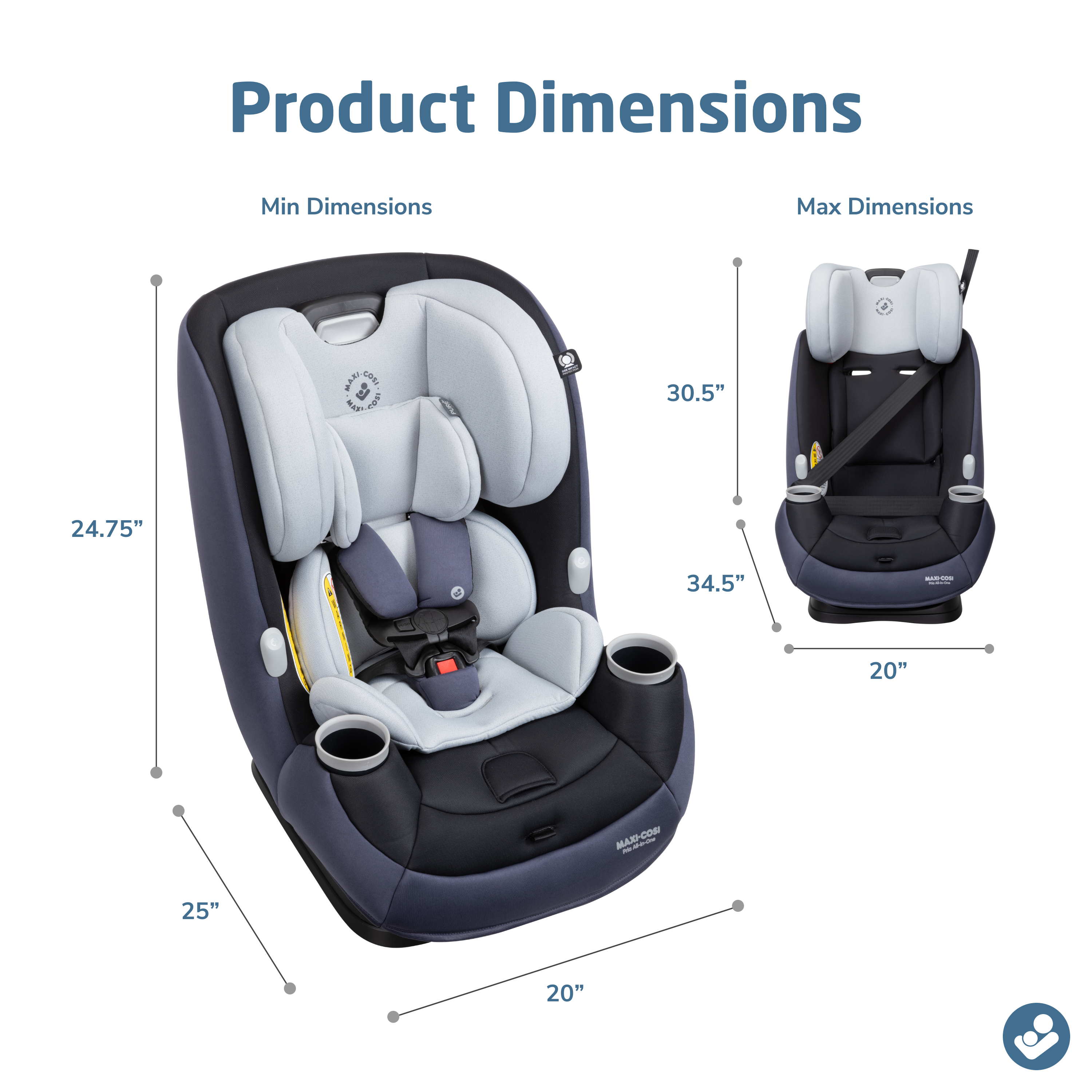
Allow the washed cover to dry fully before fitting it back onto the seat.
Credit: maxicosi.com
How to Clean Parts That Should Not Go in the Washer
The seat shell, buckle, harness, and foam usually require separate care.
Plastic Shell
Wipe the shell with a soft cloth and mild soap solution if permitted by the manual. Remove crumbs from grooves with a soft brush or vacuum attachment. Do not soak the shell or use abrasive cleaners.
Harness Straps
Clean harness webbing only as directed by Maxi-Cosi. In general, avoid bleach, strong chemicals, machine washing, ironing, and scrubbing. Do not remove the straps simply to make cleaning easier unless the manual provides a removal and reinstallation procedure.
If the webbing is cut, frayed, badly stained, or contaminated with an unknown substance, seek manufacturer guidance.
Buckle
Crumbs can prevent a buckle from latching properly. Use the manufacturer’s approved method for cleaning it. Do not oil the buckle, use household lubricants, or submerge it unless the instructions specifically allow that treatment.
After cleaning, the buckle should click, latch, and release normally. If it does not, stop using the seat until the issue is resolved.
Foam and Inserts
Do not machine-wash or wring foam unless the care instructions specifically permit it. Foam can tear, change shape, or retain moisture. Surface-clean approved inserts and allow them to dry completely.
How to Reinstall the Maxi-Cosi Cover
Reassembly is the reverse of removal, but it should be treated as a safety check rather than a cosmetic step.
1. Refit the Foam and Padding
Return each insert to its original position. Make sure it lies flat and is not folded, compressed, or covering a harness path.
2. Position the Cover
Start at the top of the seat and work downward. Align every opening with the corresponding harness slot, buckle, headrest guide, and adjustment area.
Smooth the fabric as you go. A cover that is twisted or bunched can interfere with harness movement.
3. Reconnect Every Tab, Hook, and Elastic Loop
Check the front, sides, back, and underside of the seat. It is easy to miss an attachment underneath the shell.
Do not stretch elastic farther than necessary. If a tab will not reach its attachment point, remove the cover and check its orientation rather than forcing it.
4. Refit the Headrest and Approved Inserts
Return the headrest, infant insert, shoulder pads, canopy, or other approved components to their original positions. Confirm that none of them blocks a harness slot or buckle.
5. Check Harness Routing
The harness should lie flat and follow the original route shown in the manual and your reference photos. Check that:
- The left and right straps are not crossed
- The straps are not twisted
- The chest clip faces the correct direction
- The buckle is not trapped under the cover
- The harness slides smoothly
- No fabric is caught in the adjustment mechanism
Do not guess if the harness routing looks different from your photos. Consult the manual before using the seat.
6. Test the Buckle and Harness
Insert the buckle tongues and listen for the expected clicks. Pull gently on each side to confirm that the buckle holds, then release it using the normal button.
Tighten the harness as you would for a child and perform a visual check. The cover should be smooth, secure, and free of slack around the harness openings.
For broader vehicle safety preparation, an inspection checklist such as these general safety standards can be useful, but it does not replace the Maxi-Cosi manual or a professional child-passenger safety check.
Final Safety Checklist
Before placing the seat back in the vehicle, confirm:
- The cover is completely dry
- All elastic loops, tabs, and snaps are attached
- The harness is routed exactly as specified
- The straps are flat and untwisted
- The chest clip is correctly positioned
- The buckle latches and releases normally
- No foam or padding is folded
- No cleaning product remains on the fabric
- The seat shell and harness show no new damage
- The seat is reinstalled according to the vehicle and car-seat instructions
If you are unsure about the harness, buckle, or installation, do not use the seat for travel until the issue has been checked. A clean cover is helpful, but correct restraint function comes first. For families reviewing all aspects of vehicle readiness, practical travel safety guidance can provide additional context beyond seat cleaning.
Common Mistakes to Avoid
Removing the Harness Without Instructions
Many covers can be removed without disconnecting the harness from the seat. Detaching it unnecessarily creates a greater risk of incorrect routing.
Washing the Entire Seat
Never put the complete car seat in a washing machine or immerse the shell, harness, buckle, or foam. Clean only the removable parts approved by the manufacturer.
Using Harsh Chemicals
Bleach, disinfectant, solvents, and fabric softener may damage the cover or leave irritating residue. Mild detergent is usually the safer choice when washing is permitted.
Applying Heat
A hot dryer, radiator, or hair dryer can shrink the cover and weaken elastic. Air-drying is the safer default unless the care label says otherwise.
Reinstalling a Damp Cover
Damp fabric can develop an odor and may not fit correctly until it has fully dried. Wait until seams and padded areas are dry as well as the surface.
Ignoring Damage
Cleaning is a good opportunity to inspect the cover, harness, buckle, and shell. Replace or repair components only through approved manufacturer guidance; do not improvise with tape, stitching, glue, or replacement hardware from another model.
Frequently Asked Questions
Can I remove the Maxi-Cosi harness to wash the cover?
Usually, you should not remove the harness unless your specific Maxi-Cosi manual instructs you to do so. Many covers are designed to come off after the harness is loosened and the cover tabs are released. Removing the harness unnecessarily can lead to incorrect routing during reassembly.
Can I machine-wash a Maxi-Cosi car seat cover?
Some Maxi-Cosi covers are machine washable, but not all. Check the sewn-in care label and model manual first. If machine washing is approved, use the specified gentle cycle, water temperature, and mild detergent.
Can I put the Maxi-Cosi cover in a dryer?
Air-drying is the safest general approach. Use a dryer only if the care label or official model instructions specifically permit it and state the appropriate setting.
Can I wash the foam insert?
Only wash or submerge a foam insert if the manufacturer’s instructions explicitly allow it. Otherwise, surface-clean it and let it dry completely.
What should I do if the cover will not come off?
Stop pulling and inspect the back, sides, underside, and harness openings for a hidden elastic loop, snap, or tab. Compare the seat with the model manual and your photographs. Never cut the cover or force a plastic component.
How often should I wash the cover?
Wash it when it is visibly dirty, stained, or odorous, and spot-clean small messes between full washes. Frequent harsh washing can wear fabric and elastic, so use the gentlest approved method.
Can my child use the seat while the cover is drying?
No. The seat should not be used without its required cover and correctly installed components. Plan the cleaning for a time when the seat can remain out of service until it is fully dry and reassembled.
Conclusion
Removing a Maxi-Cosi car seat cover for washing is manageable when you work slowly, document the original routing, and follow the instructions for your exact model. Loosen the harness, release the cover’s tabs and elastic, avoid unnecessary harness removal, wash only approved materials, and air-dry the cover completely.
Before the next trip, check every attachment, strap, buckle, insert, and harness opening. If anything does not fit or operate exactly as it did before cleaning, stop and consult Maxi-Cosi rather than improvising. A properly cleaned and correctly reassembled seat keeps the child comfortable without compromising the restraint system.








