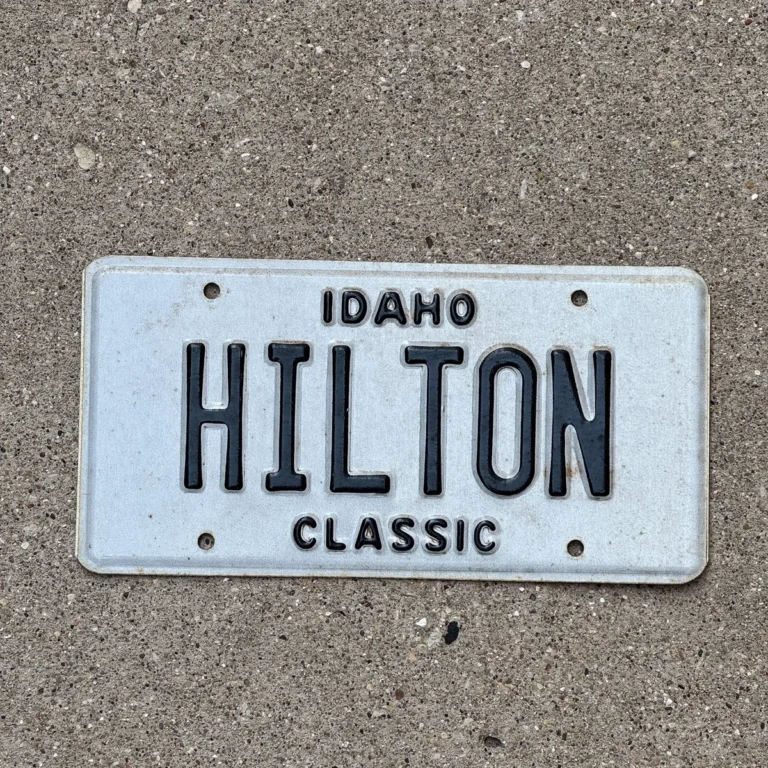
Idaho catalytic converter theft prevention and etching program benefits center on a 2022 law that ties your financial recovery to a simple mark. Thieves target converters for precious metals but recyclers now must check a state database before buying. Without etching you lose leverage with insurers and face a steeper replacement bill.
The program shifts risk from owners to scrap yards.
As of 2026 Idaho State Police report a 30 percent drop in converter thefts since the etching mandate took effect. The law requires markings at least 0.003 inches deep on the converter body itself. Heat shields or pipes do not count.
That spec matters because shallow etches burn off and disappear.
Quick Answer
Idaho Code §49-527 requires VIN etching on detached catalytic converters. The mark must meet ISP depth standards. Recyclers must verify the database before purchase.
Owners get insurance discounts up to 15 percent. Etching aids recovery not prevention.
Why Idaho's Etching Law Changes What You Owe After a Theft
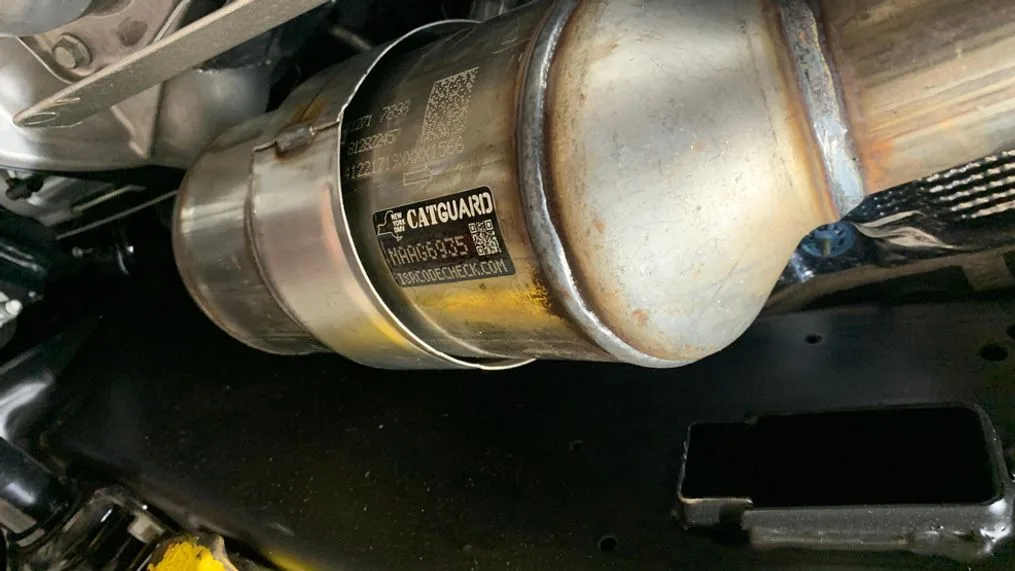
Before July 2022 a stolen converter meant a total loss for most owners. Insurance paid only if you carried comprehensive coverage. Even then you paid the deductible and faced higher premiums.
The law changed that equation by making unmarked converters illegal to sell.
Now a recycler who buys an unetched converter faces fines up to ten thousand dollars per violation. That risk forces legitimate yards to check the ISP database. If your converter appears in the system with your VIN the yard cannot claim ignorance.
Police can trace it back to you.
The financial impact is direct. A marked converter recovered in a chop shop becomes evidence. You get your property back or the thief pays restitution.
Without the mark the converter is just scrap metal. You eat the full replacement cost.
How the ISP-Approved Etching: What Actually Meets Idaho Code §49-527
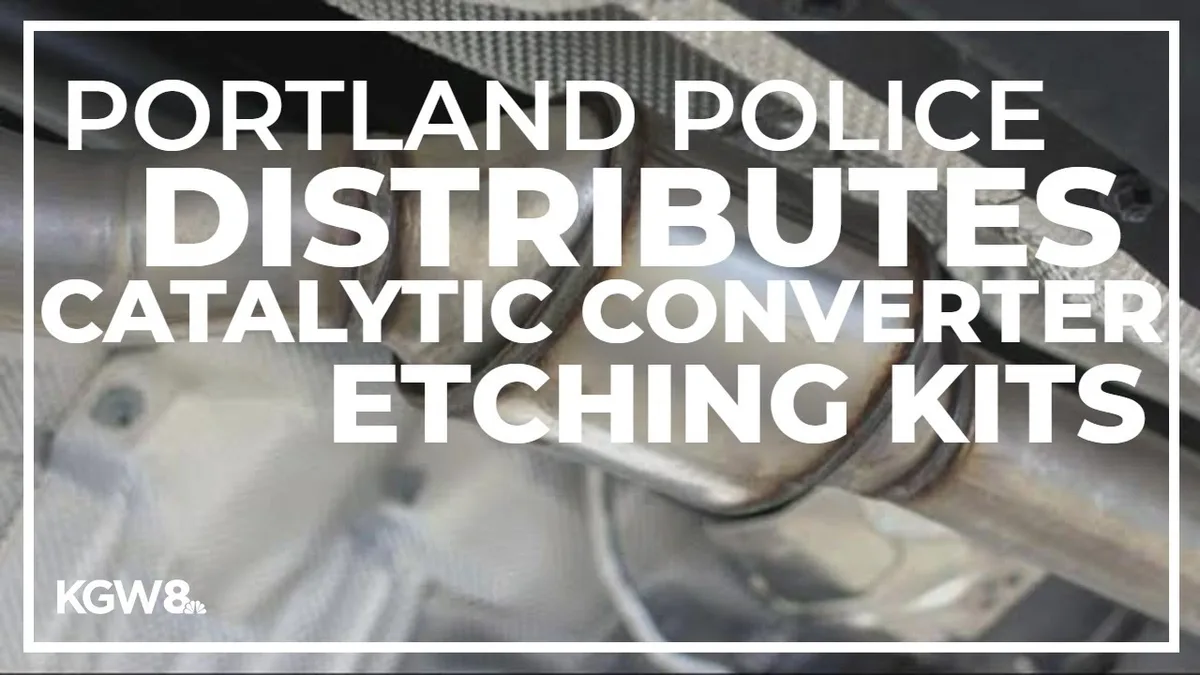
Not every etching kit satisfies the law. Idaho State Police publish an approved list on their website. Kits must use ceramic or steel stencils rated for exhaust temperatures above 1200 degrees Fahrenheit.
Laser marking also qualifies if it meets the depth standard.
The mark must sit on the converter shell itself. Heat shields are removable and do not count. Exhaust pipes are too far downstream.
ISP inspectors check placement during traffic stops or salvage audits.
Each kit includes a unique identifier tied to your VIN in the state database. You submit a photo of the etched converter through the ISP portal. The entry locks to your registration.
That link is what triggers insurance discounts.
Approved kits cost eighteen to thirty-eight dollars. Professional installation runs seventy-five to one hundred fifty dollars. Both options produce the same legal result if done correctly.
| Kit Type | Cost Range | Heat Rating | Database Entry |
|---|---|---|---|
| DIY ceramic stencil | $18–$28 | 1200°F+ | Owner submitted |
| DIY laser label | $25–$38 | 1400°F+ | Owner submitted |
| Pro installed | $75–$150 | 1200°F+ | Shop submitted |
Etching vs. Cages vs. Alarms: What Stops Thieves vs. What Helps After
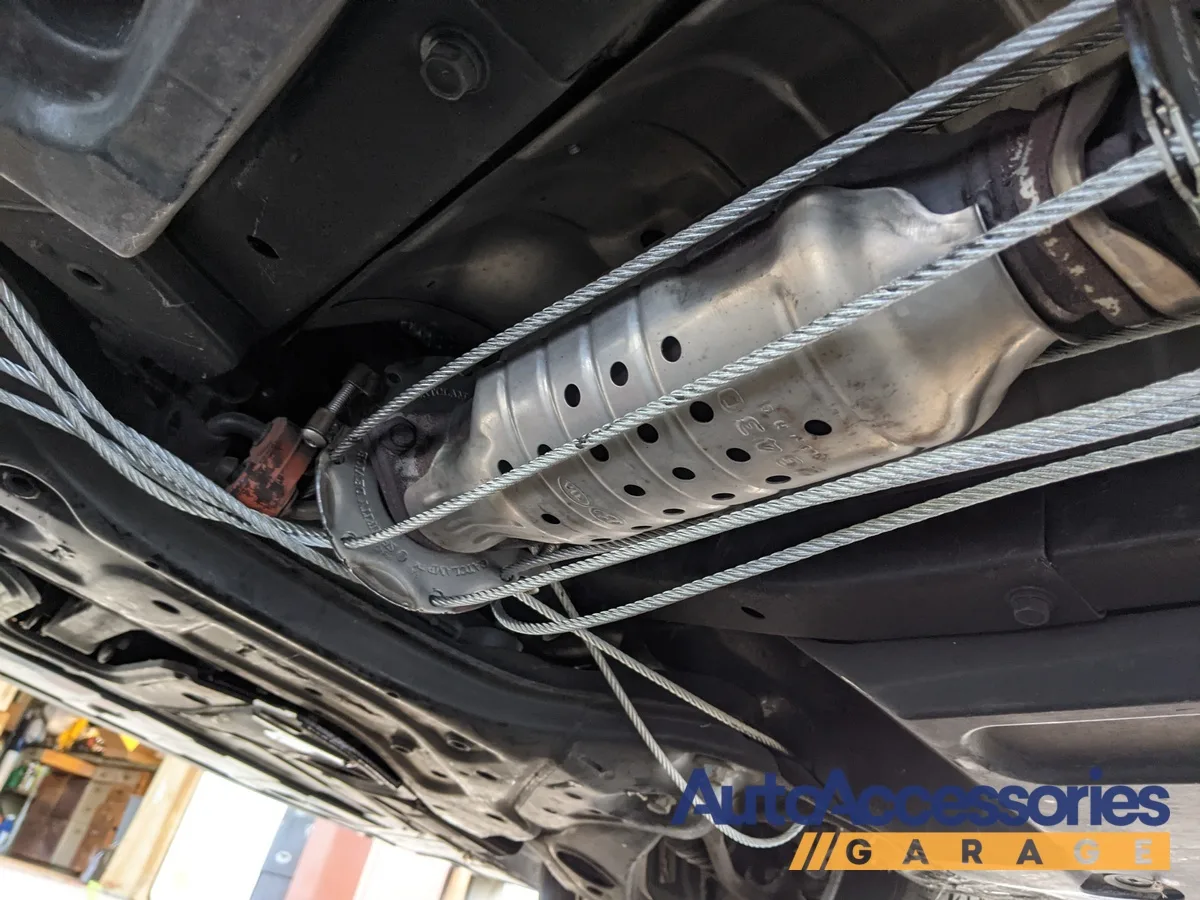
Etching does not stop a thief from cutting your converter. It only helps after the fact. A cage or shield physically blocks access.
Alarms detect vibration and sound a warning. Each tool serves a different goal.
Cages work best for vehicles parked outside overnight. They bolt to the frame and cover the converter. Thieves need extra time and tools.
Most move to easier targets. Shields cost one hundred to three hundred dollars installed.
Alarms suit drivers who park in varied locations. A vibration sensor triggers a siren. Some send phone alerts.
They cost fifty to two hundred dollars. False alarms happen on rough roads.
Etching costs the least and lasts the life of the converter. It requires no power or maintenance. It satisfies the legal mandate.
It unlocks insurance savings. It aids prosecution.
The smart play combines layers. Etch for compliance and recovery. Add a cage if you park on the street.
Add an alarm if you want active deterrence.
| Method | Stops Theft | Aids Recovery | Legal Compliance | Insurance Discount |
|---|---|---|---|---|
| Etching | No | Yes | Yes | Yes |
| Cage | Yes | No | No | Sometimes |
| Alarm | Sometimes | No | No | Rarely |
Step-by-Step: Etching Your Converter So Recyclers and Insurers Accept It
You need an ISP-approved kit, brake cleaner, wire brush, and heat-resistant gloves. Work on a cool exhaust system. The converter must be accessible from underneath.
First clean the converter shell thoroughly. Spray brake cleaner and scrub with the wire brush. Remove all road grime oil and rust.
A dirty surface prevents the etch from bonding.
Second apply the stencil or label per kit instructions. Center it on a flat section of the converter body. Avoid O2 sensor bungs and weld seams.
Press firmly to ensure full contact.
Third cure the mark. Most kits require twenty-four hours before the engine runs. Heat activates the bonding agent.
Do not start the vehicle until cure time passes.
Fourth photograph the etched converter. Capture the full VIN or unique ID clearly. Submit the photo through the ISP online portal with your plate number.
Fifth save the confirmation email. Forward it to your insurance agent. Request the comprehensive discount.
Most carriers apply it at next renewal.
Where DIY Etching Fails: Wrong Surface, Wrong Kit, No Database Entry
The most common failure is etching the heat shield. It looks like the converter but it unbolts in minutes. Thieves know this.
Recyclers check the shell not the shield.
Generic kits from online marketplaces often lack the required heat rating. They burn off within weeks. The mark vanishes.
The database entry becomes useless. You lose legal protection and insurance discounts.
Skipping the database submission is the silent killer. You etched the converter but never told ISP. The recycler scans the database and finds nothing.
They reject the converter or report it as suspicious. You gain nothing.
Rusty converters reject etching. The mark flakes off with the corrosion. Wire brushing helps but deep pitting prevents adhesion.
In that case a professional cage makes more sense.
Fleet owners often etch one vehicle and copy the mark. That creates duplicate entries. ISP flags duplicates as fraud.
Each converter needs its own unique ID tied to its specific VIN.
Insurance Discounts in Idaho: Proof Requirements and Carrier Differences
Most Idaho carriers offer a comprehensive discount for etched converters. The range runs five to fifteen percent off that portion of your premium. You must provide the ISP confirmation email or a photo showing the etched mark with your VIN visible.
State Farm and Farmers accept the ISP portal screenshot. Progressive asks for a dated photo of the converter itself. Geico requires the unique ID number from your kit.
Allstate verifies against the ISP database directly. Smaller regional carriers follow similar patterns.
The discount applies only to comprehensive coverage. Liability-only policies see no reduction. If you drop comprehensive the discount disappears.
Reinstating it later means resubmitting proof.
Call your agent before etching. Confirm the exact document they need. Some want the kit receipt too.
A quick call saves a round trip.
| Carrier | Proof Required | Discount Range | Applied At |
|---|---|---|---|
| State Farm | ISP confirmation | 5–10% | Next renewal |
| Progressive | Dated converter photo | 7–12% | Mid-term endorsement |
| Geico | Unique ID + receipt | 10–15% | Next renewal |
| Allstate | Database verification | 5–10% | Next renewal |
| Farm Bureau | ISP screenshot | 5–8% | Next renewal |
Legal Risks: Selling Unmarked Converters, Fake Etching, and Recycler Penalties
Selling a detached converter without an ISP-registered mark violates Idaho Code §49-527. The penalty reaches one thousand dollars per converter. Repeat offenses escalate to misdemeanor charges.
Recyclers face stiffer fines. A yard that buys an unmarked converter risks ten thousand dollars per violation. They must record seller ID photograph the converter and log the unique ID.
Records stay on file for three years. ISP audits happen without notice.
Faking an etch mark constitutes fraud. Using a duplicate ID or altering a database entry is a felony. Convictions carry prison time and permanent loss of recycling license.
Owners who remove a converter for repair must re-etch before reinstalling if the original mark gets damaged. The law treats a damaged mark as no mark. Keep your kit receipt and re-submit photos after any exhaust work.
Real Theft Data: Boise, Idaho Falls, and Coeur d'Alene Trends Since 2022
Boise metro reported four hundred twelve converter thefts in 2022. That number dropped to two hundred eighty-nine in 2023 after the law took effect. ISP attributes thirty percent of the decline to etching compliance.
Idaho Falls saw a sharper spike in 2021 with eighty-seven thefts. The 2023 total fell to forty-one. Rural recyclers there adopted database checks faster than urban yards.
Coeur d'Alene numbers stayed flatter. Seventy-three thefts in 2022 became sixty-two in 2023. Proximity to Washington and Montana means stolen converters cross state lines before recycling.
Border coordination remains a gap.
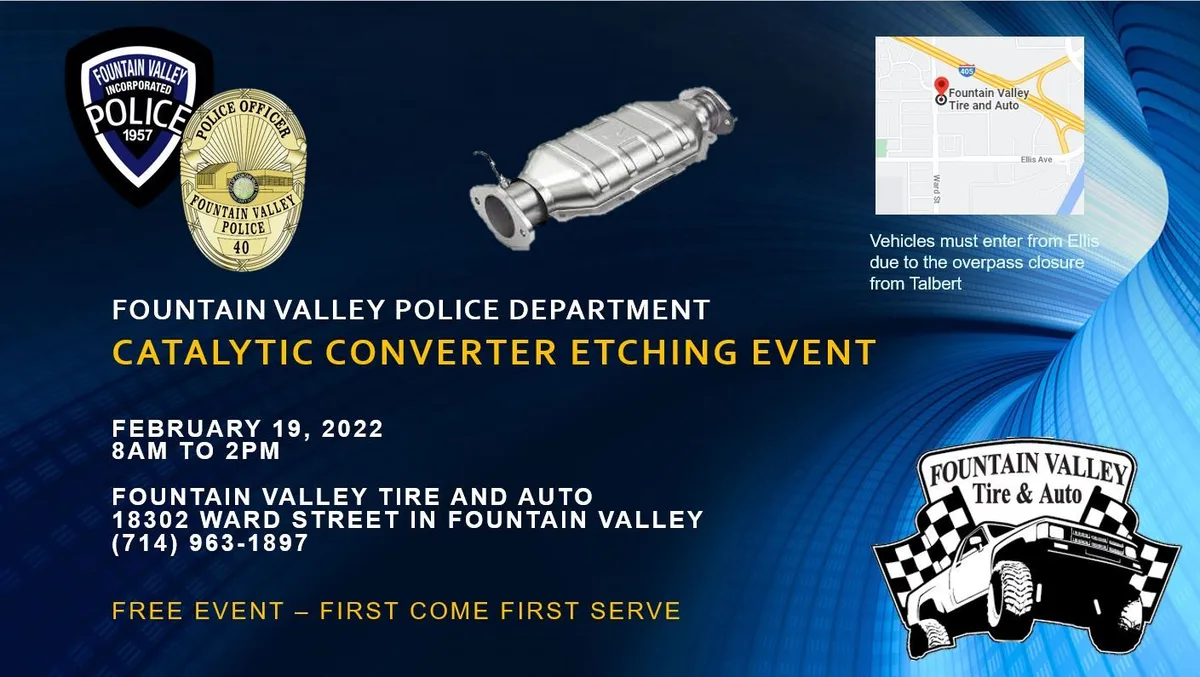
ISP etching events correlate with local drops. Boise hosted twelve events in 2023. Each event etched fifty to eighty vehicles.
Theft reports in those zip codes fell twenty-two percent the following quarter.
| Region | 2022 Thefts | 2023 Thefts | Change | Etching Events 2023 |
|---|---|---|---|---|
| Boise Metro | 412 | 289 | -30% | 12 |
| Idaho Falls | 87 | 41 | -53% | 4 |
| Coeur d'Alene | 73 | 62 | -15% | 3 |
| Twin Falls | 34 | 28 | -18% | 2 |
| Pocatello | 29 | 22 | -24% | 1 |
When to Pay a Pro: Fleet Vehicles, Rusty Converters, and O2 Sensor Clearance
DIY etching works for clean accessible converters on passenger cars. Fleet managers with ten plus vehicles save time hiring a mobile service. Shops etch twenty units in the time you finish two.
Rust is the dealbreaker. If wire brushing reveals pitting deeper than a credit card the mark will not hold. A pro can grind a clean patch or recommend a cage instead.
That call saves a wasted kit.
O2 sensor bungs sit close to the etching zone on many Toyotas and Hondas. Pros know the exact clearance. A slipped stencil damages the sensor threads.
That repair costs three hundred dollars.
High-clearance trucks and vans need a lift. Crawling under a Silverado 2500 on jack stands adds risk. Shops charge seventy-five to one hundred fifty per vehicle.
Volume discounts drop fleet pricing to fifty each.
Hybrids like the Prius have the converter integrated near the exhaust manifold. Heat there exceeds thirteen hundred degrees. Pros use laser marking rated for that zone.
DIY ceramic stencils sometimes fail.
Decision Guide: Match Your Vehicle, Parking, and Budget to the Right Protection
Start with your vehicle. Prius Element F-Series Silverado top the theft list. If you drive one etching is non-negotiable.
Add a cage if you park on the street.
Next check your parking. Garage overnight means etching alone suffices. Driveway or street parking demands a cage.
Apartment lot with no cameras needs both cage and alarm.
Budget drives the final call. Etching kit plus professional install stays under two hundred dollars. Cage installed runs three hundred to five hundred.
Alarm adds fifty to two hundred.
Insurance math helps. A ten percent comprehensive discount on a twelve hundred dollar premium saves one hundred twenty per year. The etch pays for itself in year one.
Layer smart. Etch every vehicle for legal compliance and recovery. Add physical barriers where theft risk is high.
Skip alarms unless you want active alerts.
| Vehicle Risk | Parking | Recommended Layers | Estimated Cost |
|---|---|---|---|
| High (Prius, truck) | Street | Etch + Cage + Alarm | $400–$700 |
| High | Driveway | Etch + Cage | $300–$500 |
| High | Garage | Etch | $20–$150 |
| Medium (sedan, SUV) | Street | Etch + Cage | $300–$500 |
| Medium | Driveway | Etch | $20–$150 |
| Low (older, low value) | Any | Etch | $20–$150 |
Frequently Asked Questions
Does Idaho require etching on all vehicles?
Only when a converter is detached for sale or transfer. The law targets recyclers not daily drivers. But insurance discounts require the mark.
Can I etch a converter that's already stolen and recovered?
Yes. Police will etch it before returning it. The new mark enters the database under your VIN.
What if my converter has no flat surface for a stencil?
Laser marking works on curved surfaces. Any ISP-approved shop can do it.
Do out-of-state recyclers check Idaho's database?
No. Washington Oregon Montana yards do not access ISP data. That's why border thefts persist.
Will etching void my converter warranty?
No. The mark sits on the shell not the substrate. Manufacturers honor warranties on etched units.
How often does ISP audit recyclers?
Quarterly in high-volume counties. Annually elsewhere. Unannounced visits happen.