ByMax Lee
Idaho Move Over Law: What Drivers Must Know
Bing (Web (fair-use with source credit))
You’ve seen the flashing lights ahead but aren’t sure what Idaho law requires. The Idaho move over law for emergency service and highway maintenance vehicles mandates specific actions to protect workers and first responders. This isn’t just courtesy, it’s the law, and ignoring it can cost you.
As of 2023, the rule now explicitly covers highway maintenance vehicles, not just police and ambulances. Violations carry fines up to $1,000 and points on your license, so knowing the details matters.
Quick Answer
The Idaho move over law for emergency service and highway maintenance vehicles requires you to move to the farthest lane away from stopped emergency or maintenance vehicles with flashing lights. If you can’t move over safely, you must slow down by 20 mph below the posted speed limit. The law applies to all multi-lane roads.
It covers police, fire, EMS, tow trucks, and ITD maintenance vehicles.
Why This Law Exists (And Why It’s Not Just for Police)
This law saves lives. Every year, first responders and highway workers are injured or killed by passing vehicles. The National Highway Traffic Safety Administration reports that, nationwide, a tow truck driver is killed every six days in a roadside incident.
Idaho expanded the law in 2023 to include highway maintenance vehicles after a rise in near-misses involving ITD crews. The logic is simple: if a vehicle is stopped with flashing amber, red, or blue lights, it’s a hazard zone. Your job is to give it space.
The 2023 Update: Highway Maintenance Vehicles Now Included
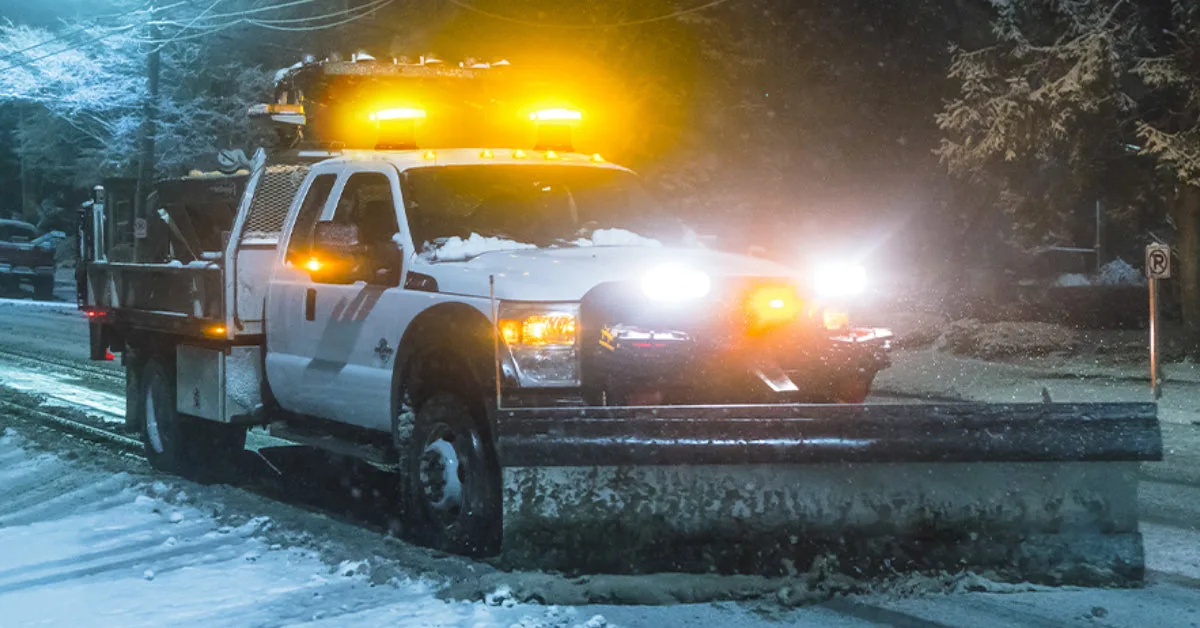
Before July 1, 2023, Idaho’s move over law only applied to emergency vehicles like police cars, fire trucks, and ambulances. Now, it also covers Idaho Transportation Department vehicles and other highway maintenance crews working with amber flashing lights.
Bing (Web (fair-use with source credit))
This change reflects a growing trend. Many states have broadened their laws to protect all roadside workers, not just emergency responders. In Idaho, the update was a direct response to incidents where maintenance workers were nearly hit while setting up cones or repairing guardrails.
The rule is clear: if you see amber lights, treat it the same as red or blue. Move over or slow down.
Who and What the Law Covers
The law applies to these vehicles when they’re stopped with flashing lights:
- Police cars
- Fire trucks
- Ambulances and EMS vehicles
- Tow trucks
- Idaho Transportation Department maintenance vehicles
- Any other authorized emergency or service vehicle
It doesn’t matter if the vehicle is on the shoulder, in a lane, or partially blocking traffic. If the lights are flashing, you must react.
Note that the law only applies on roads with at least two lanes traveling in the same direction. On single-lane roads, you’re still required to slow down and proceed with caution, but the move-over rule doesn’t technically apply.
What You Must Do as a Driver
Your actions depend on traffic and road conditions. Here’s the step-by-step:
Check for flashing lights ahead. Look for red, blue, or amber signals on the roadside.
If you can safely change lanes, move to the lane farthest from the stopped vehicle. On a four-lane highway, that means moving two lanes away if possible.
If you can’t move over, slow down to 20 mph below the posted speed limit. This isn’t a suggestion, it’s a legal requirement.

Bing (Web (fair-use with source credit))
Maintain a safe speed until you’ve completely passed the vehicle. Don’t speed up again until you’re well clear of the scene.
When You Can’t Move Over: The 20 MPH Rule
If traffic or road conditions prevent you from changing lanes, you must slow down. The law requires a 20 mph reduction below the posted speed limit.
This isn’t optional. Even in heavy traffic, you’re still responsible for adjusting your speed. The 20 mph rule applies whether you’re on I-84 near Boise or a rural highway outside Coeur d’Alene.
Where the Law Applies (And Where It Doesn’t)
The move over law applies on all multi-lane roads in Idaho. This includes interstates, U.S. highways, and state routes with two or more lanes in the same direction.
On single-lane roads, you’re not required to move over, but you must still slow down and proceed with caution. The law doesn’t apply in parking lots or private property.
Penalties for Breaking the Law in Idaho
Violating the move over law is a civil infraction. The fine can reach up to $1,000, depending on the court.
You’ll also receive 3 points on your driving record. If your violation causes injury to a worker or first responder, the penalties escalate to misdemeanor charges, with higher fines and possible jail time.

Bing (Web (fair-use with source credit))
Idaho State Police actively enforce this law. Officers can pull you over on the spot if they observe a violation.
Common Mistakes That Get Drivers Ticketed
Many drivers assume the law only applies to police cars. That’s outdated. Since 2023, it includes all emergency and highway maintenance vehicles with flashing lights.
Another mistake is slowing down without moving over when it’s safe. The law prioritizes changing lanes first, slowing down second. If you can move over but don’t, you’re still in violation.
Distraction is a major factor. Drivers focused on phones or GPS often miss flashing lights until it’s too late. Stay alert, especially in work zones.
Real-Life Scenarios: How to Handle Tough Situations
You’re in the left lane of I-90 and see a maintenance truck with amber lights on the right shoulder. Move to the far left lane if possible. If not, slow to 20 mph below the limit.
You’re on a two-lane highway with a police car pulled over on your side. Move to the opposite lane if it’s clear. If oncoming traffic prevents this, slow down by 20 mph.
You’re in stop-and-go traffic near an accident scene with emergency vehicles. Maintain a safe speed below the limit and don’t weave between lanes. The move over rule still applies even in congestion.
How Enforcement Works in Idaho
Idaho State Police and local law enforcement actively patrol for move over violations. Officers can pull you over immediately if they see you fail to move over or slow down.
Automated cameras are increasingly used in work zones to capture violations. These systems photograph license plates and issue citations by mail. You won’t always get a warning.
The law is strictly liability-based. Ignorance isn’t a valid defense. If you violate the rule, you’re responsible regardless of whether you knew about it.
FAQs About Idaho’s Move Over Law
Does the law apply if the emergency vehicle is moving?
No. The law only applies when the vehicle is stopped with flashing lights activated. If it’s moving with lights on, normal traffic rules apply.
What if I’m in the farthest lane already?
Stay in your lane and maintain your speed. You’ve already complied with the move over requirement. Don’t swerve or brake suddenly.
Are there any exceptions for bad weather?
No. The law applies in all conditions. If visibility is poor, you’re still required to move over or slow down when safe.
Can I get a warning instead of a ticket?
Possibly, but it’s at the officer’s discretion. Many departments issue warnings for first-time offenders. Repeat violations typically result in fines.
Does this law apply to funeral processions?
No. The move over law specifically covers emergency and highway maintenance vehicles with flashing lights. Funeral processions don’t qualify.
Quick Reference: Do’s and Don’ts
Do:
- Move to the farthest lane from stopped emergency or maintenance vehicles
- Slow down by 20 mph if you can’t change lanes
- Stay alert in work zones and near accident scenes
Don’t:
- Assume the law only applies to police cars
- Speed up after passing the vehicle
- Use your phone or other distractions in work zones
- Ignore amber flashing lights from maintenance vehicles