ByMax Lee
How to Report a Traffic Accident to Idaho Police for Damages
Idaho reporting a traffic accident to local law enforcement for damages triggers two separate legal duties that catch many drivers off guard. You must notify police immediately at the scene. You must also file a written report with the Idaho Transportation Department within ten calendar days.
Missing either step can suspend your license for up to a year and cost you a thousand dollars in fines.
The property damage threshold sits at fifteen hundred dollars as of 2026 and that number includes damage to fences guardrails and buildings not just vehicles. Any injury or death requires reporting regardless of damage amount. Understanding these thresholds and deadlines keeps you compliant and protects your insurance claim.
Quick Answer
Idaho law requires immediate police notification and a written ITD report within ten days for crashes involving fifteen hundred dollars in damage or any injury. The ITD-3201 form must be filed separately from any police report. Failure to report can result in license suspension up to one year and fines up to one thousand dollars.
Why Getting Idaho Accident Reporting Right Protects Your License and Wallet
A single missed deadline can cascade into serious consequences. The Idaho Transportation Department tracks every reportable crash. When you fail to file the ITD-3201 form the department flags your record.
That flag triggers an automatic license suspension process. Reinstatement requires a reinstatement fee plus proof of financial responsibility filing. Most drivers end up needing an SR-22 certificate for three years.
Insurance companies check the accident database when you file a claim. If no report exists they may deny coverage citing policy conditions that require prompt police notification. Uninsured motorist claims become nearly impossible without an official report number.
The report also creates a timestamped record that protects you if the other party later changes their story or claims injuries that didn't happen at the scene.
Commercial drivers face steeper penalties. A failure to report in a commercial motor vehicle triggers a one year CDL disqualification for a first offense. That means zero income from driving for twelve months.
Employers with fleet vehicles share liability when employees skip reporting. The company can face fines and increased insurance premiums across the entire fleet.
The Two Legal Duties: Notify Police at Scene and File ITD-3201 Within 10 Days
Idaho Code 49-1301 establishes the immediate notification duty. You must stop at the scene. You must render reasonable assistance to anyone injured.
You must give your name address registration and insurance information to the other driver and to any police officer. You must notify the nearest law enforcement agency by the quickest means possible. That means calling 911 for injuries or blocking traffic.
It means calling the non emergency line for minor crashes.
Idaho Code 49-1302 creates the separate written report duty. Every driver involved in a reportable accident must file Form ITD-3201 with the Idaho Transportation Department within ten calendar days. The ten day clock starts the day after the crash.
Weekends and holidays count. The form goes to ITD Accident Records at 3311 West State Street Boise Idaho 83707. You can also submit online through the ITD portal.
These are not alternative options. You must do both. The police officer's crash report does not satisfy your ITD filing obligation.
The officer files a report for the agency. You file a report for the department. They serve different purposes.
The officer's report documents the investigation. Your ITD report updates the state safety database and triggers financial responsibility verification.
When You Must Report: $1,500 Damage Threshold, Any Injury, or Death
The fifteen hundred dollar threshold applies to total property damage from the crash. That includes damage to all vehicles involved. It includes damage to fences mailboxes guardrails buildings utility poles and any other property.
A single bent guardrail section can exceed the threshold on its own. Do not guess. If you think damage might be close call it in.
Any injury triggers the reporting requirement regardless of damage amount. A complaint of neck pain counts. A bruised knee counts.
The other driver saying they feel fine at the scene then claiming injury two days later still counts. The reporting duty attaches at the moment of impact not at the moment symptoms appear. When in doubt report it.
Death requires immediate notification and a written report. There is no damage threshold for fatal crashes. The investigating officer will handle most documentation but you still must file your ITD-3201 within ten days.
The form includes a fatality checkbox that alerts the department to coordinate with the coroner and vital statistics.
Out of state drivers have the same obligations. Your home state license does not exempt you from Idaho law. If you crash in Idaho you follow Idaho reporting rules.
The ITD will forward the report to your home state through the Driver License Compact. Your home state may impose additional penalties on top of Idaho penalties.
| Trigger | Reporting Required | ITD-3201 Deadline |
|---|---|---|
| Property damage ≥ $1,500 | Yes | 10 calendar days |
| Any injury | Yes | 10 calendar days |
| Death | Yes | 10 calendar days |
| Property damage < $1,500, no injuries | No | Not required |
"Move It" Law vs. Reporting Duty: Why Relocating Your Car Doesn't Replace Filing
Idaho Code 49-620 is the Move It law. It applies only when three conditions are met simultaneously. No one is injured.
All vehicles are drivable. Total property damage appears to be under fifteen hundred dollars. If all three are true you should move vehicles out of travel lanes to a safe location.
Take photos first. Then move.
The Move It law does not eliminate the reporting requirement. It only authorizes relocation without waiting for police. If damage turns out to be fifteen hundred dollars or more you still must report.
If anyone develops symptoms later you still must report. Moving the cars simply prevents secondary crashes and keeps traffic flowing.
Many drivers mistakenly believe that because they moved their cars under the Move It law they don't need to call police or file the ITD form. That is wrong. The law explicitly states that relocation does not relieve any driver of the duty to report under Idaho Code 49-1301 and 49-1302.
You still must notify law enforcement. You still must file ITD-3201 if thresholds are met.
Police may not respond to Move It eligible crashes. Dispatchers often tell drivers to exchange information and file the ITD form themselves. That is fine.
You still call the non emergency number. You still get a case number. You still file the form.
The only difference is no officer comes to the scene. Your photos and notes become the primary evidence.
Rural vs. Urban Response: Who Shows Up — ISP, Sheriff, or City Police
Jurisdiction determines which agency responds. Idaho State Police has primary authority on interstates and state highways. County sheriff offices cover unincorporated county roads.
Municipal police departments handle streets within city limits. In Ada and Canyon counties consolidated dispatch routes calls based on GPS coordinates.
On I-84 I-15 I-86 US-95 and state highways call ISP dispatch at star ISP star (star 477). For county roads outside city limits call the county sheriff non emergency line. Inside city limits call the city police non emergency line.
If you are unsure call 911 and let dispatch sort it. They will transfer you to the correct agency.
Rural areas often have longer response times. ISP troopers cover huge territories. A trooper may be forty minutes away.
In the meantime secure the scene. Set up flares or reflective triangles if you have them. Take extensive photos.
Get witness contact information. Exchange insurance and driver details. Do not leave until you have spoken to dispatch and received a case number.
Tourist corridors see many out of state drivers. The rules don't change. ISP handles the interstate.
Local agencies handle the off ramp roads. If you are visiting Idaho and crash save the non emergency numbers for the area you are traveling through. Boise Police non emergency is 208-377-6790.
Ada County Sheriff is 208-577-3000. ISP District 3 (Southwest Idaho) is 208-884-7000.
Step-by-Step: From Crash Scene to Submitting Form ITD-3201
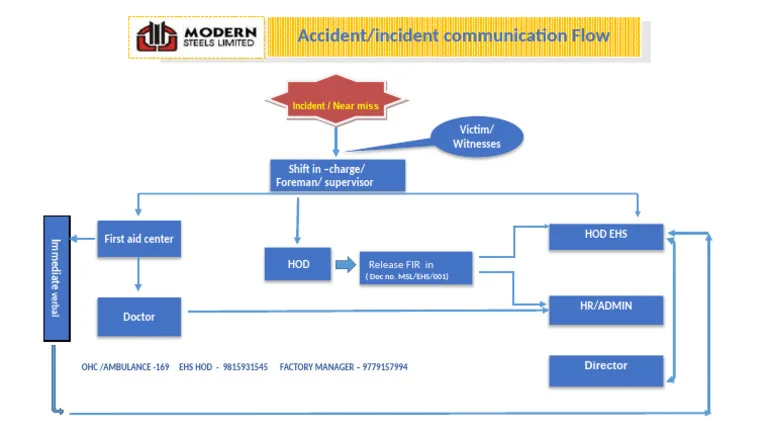
Stop immediately. Do not move vehicles unless the Move It law conditions are met and you have photographed the scene first. Check for injuries.
Call 911 if anyone is hurt or if vehicles block traffic. Call the non emergency line for minor crashes. Give the dispatcher your location using mile markers cross streets or landmarks.
Exchange information with the other driver. Get their full name address phone number driver license number license plate state and insurance company with policy number. Give them the same.
Take photos of their documents if they allow it. Photograph all vehicle damage from multiple angles. Photograph the road scene including skid marks debris and traffic controls.
Get the responding officer's name badge number and agency. Ask for the case or incident number. Write it down.
If no officer responds note the dispatch call time and the name of the dispatcher you spoke with. You need this for the ITD form.
Complete Form ITD-3201 within ten calendar days. The form asks for date time location weather lighting road conditions and a narrative description. Include the other driver's information your insurance details and a damage estimate.
Be factual. Do not speculate on fault. Sign and date the form.
Submit the form three ways. Mail to ITD Accident Records 3311 West State Street Boise Idaho 83707. Fax to 208-334-8195.
Or submit online through the ITD portal at itd.idaho.gov/dmv/accident-records. Keep a copy for your records. Keep a copy for your insurance company.
The online portal generates a confirmation number. Save it.
| Step | Action | Deadline |
|---|---|---|
| 1 | Stop check injuries call police | Immediately |
| 2 | Exchange info photograph scene | At scene |
| 3 | Get officer name case number | At scene |
| 4 | Complete ITD-3201 | Within 10 days |
| 5 | Submit to ITD keep copies | Within 10 days |
Penalties That Escalate Fast: Fines Suspension and Hit-and-Run Felonies
Failure to report a reportable accident is a misdemeanor under Idaho Code 49-1304. The court can impose a fine up to one thousand dollars. The Idaho Transportation Department will suspend your license for ninety days to one year.
Reinstatement requires a fee of twenty five dollars plus proof of financial responsibility. That usually means filing an SR-22 for three years.
Hit and run penalties are far steeper. Leaving the scene of a property damage only crash is a misdemeanor punishable by up to six months in jail and a one thousand dollar fine. Leaving the scene of an injury crash is a felony punishable by up to five years in prison and a five thousand dollar fine.
Leaving the scene of a fatal crash is a felony punishable by up to fifteen years in prison and a fifty thousand dollar fine.
The law requires you to stop and remain at the scene until you have fulfilled all duties. That means exchanging information rendering aid and waiting for police if they are coming. Driving away because you think damage is minor or because you are scared does not protect you.
Cameras witnesses and vehicle debris tie you to the scene.
A conviction for failure to report or hit and run stays on your driving record for years. Insurance premiums typically double or triple. Some carriers will non renew your policy.
Employers who run driving record checks will see it. Commercial drivers lose their CDL. The financial impact far exceeds the original fine.
Commercial Drivers: CDL Disqualification Risk for Failure to Report
Federal Motor Carrier Safety Regulations tie CDL status to state reporting compliance. A conviction for failure to report an accident in a commercial motor vehicle triggers a mandatory one year CDL disqualification for a first offense. A second offense brings a lifetime disqualification.
Reinstatement after lifetime disqualification is possible only after ten years and requires a hearing.
The disqualification applies even if you were driving your personal vehicle at the time. Any failure to report conviction while holding a CDL puts your commercial privilege at risk. Employers are notified through the Commercial Driver License Information System.
Most carriers will terminate a driver who loses CDL eligibility.
Commercial drivers must also report accidents to their employer per 49 CFR 391.27. The employer must keep the record for three years. Failure to report to the employer is a separate violation.
The employer faces fines for not maintaining accurate driver qualification files.
If you drive a CMV in Idaho carry the ITD-3201 form in your cab. Know the ten day deadline cold. File the report even if the company says they will handle it.
The legal duty is yours. The CDL penalty is yours. Protect your livelihood by filing yourself and keeping the confirmation.
How the Report Protects Your Insurance Claim and Uninsured Motorist Coverage
Insurance policies contain a cooperation clause requiring prompt notice of any accident. Most specify notification within twenty four hours or as soon as practicable. The police report and ITD-3201 satisfy this requirement.
Without them the insurer can deny coverage for late notice. They can also deny uninsured motorist claims if no official report exists.
Uninsured motorist coverage in Idaho requires proof the other driver was uninsured. The ITD report triggers the department to verify the other driver's insurance status. If they were uninsured the report becomes your primary evidence.
Without it you are relying on the other driver's word which they may later change.
The report also preserves diminished value claims. If your vehicle loses market value after repairs you need documentation of the original damage severity. The ITD report and police photos create that baseline.
Insurers often dispute diminished value without independent documentation.
Subrogation works better with a report. Your insurer pursues the at fault driver's carrier using the official report as evidence. The report contains the officer's diagram witness statements and citations.
That carries more weight than your version alone. Faster subrogation means faster recovery of your deductible.
Report Confidentiality: What Stays Private and Who Can Access It
Idaho Code 49-1305 makes accident reports confidential. They are not public records. They cannot be used as evidence in civil trials.
The report you file with ITD and the officer's report are both protected. This encourages honest reporting without fear that your statements will be used against you in a lawsuit.
Access is limited to specific parties. You and your attorney can get a copy. The other driver and their attorney can get a copy.
Insurance companies for any involved party can get a copy. Law enforcement agencies can access them. The Idaho Transportation Department uses them for safety analysis.
That is the complete list.
Media cannot request them. Private investigators cannot request them. Employers cannot request them unless you authorize it.
The confidentiality statute has been upheld by the Idaho Supreme Court. In Doe v. Idaho Transportation Department the court affirmed that the privacy interest outweighs public curiosity.
You can request your own report through the ITD Accident Records Unit. There is a fee of seven dollars per report. You can order online by mail or in person.
Allow seven to ten business days for processing. The report you receive will have some personal information redacted for the other parties involved.
Out-of-State Drivers: Same Rules Same Consequences
Your home state license does not exempt you from Idaho reporting law. If you crash in Idaho you follow Idaho rules. The fifteen hundred dollar threshold ten day deadline and hit and run penalties all apply.
Idaho Transportation Department forwards the report to your home state through the Driver License Compact. Forty six states participate. Your home state may impose additional penalties on top of Idaho penalties.
Rental car drivers have the same personal duty. The rental agreement does not override state law. You must notify police and file ITD-3201.
The rental company will also file their own report. Both are required. Do not assume the rental company handles it for you.
Common Mistakes That Trigger License Suspension or Denied Claims
Assuming insurance claim filing satisfies legal reporting duty. It does not. The ITD-3201 is a separate legal requirement.
Missing the ten day deadline because the officer took a report. The officer's report does not replace your ITD filing. Underestimating damage.
The fifteen hundred dollar threshold includes all property damage not just vehicle repair. Leaving the scene before police arrive on a reportable crash. That is hit and run even if you exchanged information.
When to Call an Attorney: Hit-and-Run Disputed Fault or Serious Injury
Call an attorney immediately if you are accused of hit and run. Do not speak to police without counsel. Call an attorney if fault is disputed and damages exceed policy limits.
Call an attorney if serious injury occurs. Idaho modified comparative fault bars recovery if you are fifty percent or more at fault. An attorney protects your rights during the investigation.
Verified Quick-Reference: Thresholds Deadlines Forms and Contact Numbers
| Item | Detail |
|---|---|
| Damage threshold | $1,500 total property damage |
| Injury threshold | Any injury |
| ITD-3201 deadline | 10 calendar days |
| Max fine failure to report | $1,000 |
| License suspension | 90 days to 1 year |
| Hit and run property | Misdemeanor 6 months jail $1,000 |
| Hit and run injury | Felony 5 years prison $5,000 |
| Hit and run fatal | Felony 15 years prison $50,000 |
| ITD mailing address | 3311 W State St Boise ID 83707 |
| ITD fax | 208-334-8195 |
| ITD online portal | itd.idaho.gov/dmv/accident-records |
| ISP dispatch | *ISP (*477) |
| Boise Police non emergency | 208-377-6790 |
| Ada County Sheriff | 208-577-3000 |
Frequently Asked Questions
Do I need to file ITD-3201 if police came to the scene?
Yes. The officer's report does not replace your duty to file Form ITD-3201 with the Idaho Transportation Department within ten days.
What if damage looks minor but turns out to be over $1,500?
File the report. The threshold is based on actual damage not your estimate. Late filing is better than no filing.
Can I file ITD-3201 online?
Yes. The Idaho Transportation Department portal accepts electronic submission and generates a confirmation number.
Does the Move It law mean I don't have to report?
No. The Move It law only allows vehicle relocation. Reporting duties under Idaho Code 49-1301 and 49-1302 still apply if thresholds are met.
What happens if I miss the ten day deadline?
File anyway. Late filing may reduce penalties. The department tracks compliance and can suspend your license for non filing.
Do out of state drivers follow Idaho rules?
Yes. Idaho law applies to anyone driving in Idaho. Reports are forwarded to your home state through the Driver License Compact.