If you're standing on the side of a highway or in a parking lot after a crash, one question usually hits first: "Do I need to call the police?" When it comes to Illinois reporting a traffic accident to local police for damages over $1500, the answer isn't always as straightforward as you'd hope. Your decision in the next few minutes can save you a huge headache, or land you in a legal mess that takes months to fix.
Under the Illinois Vehicle Code (625 ILCS 5/11-401), any crash causing property damage over $1,500 is a reportable accident. You have a strict 10-day window to file a written report with the Secretary of State if a police officer doesn't do it on scene. Let's break down exactly why this $1,500 number matters and what you need to do to stay legal.
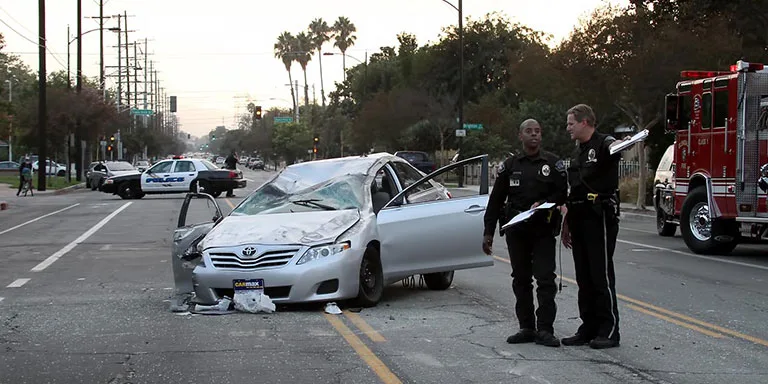
Quick Answer
Yes, you must report any Illinois crash causing over $1,500 in damage. Call local police or the state police immediately. If they don't respond, file form SR 1050 yourself.
You have 10 days from the crash date. Missing this deadline can suspend your license.
Why the $1,500 Reporting Rule Matters More Than You Think
Most drivers assume a small fender bender doesn't warrant a call to the police. The problem is that $1,500 in damage is a lot lower than most people realize. A modern bumper replacement with sensors, a cracked taillight assembly, or a dented door panel all easily cross that line.
If you underestimate the damage and drive away without reporting, you're taking a serious risk. Your insurance company will almost certainly ask for a police report number or a copy of your filed SR 1050 form. Without it, your claim can stall or be denied outright.
Beyond the insurance headache, Illinois law treats this as a violation of your duty to report. If the other driver files a report and you didn't, you look like you were trying to hide something. That puts you in a weak position legally and financially.
In our research, we found that most drivers don't realize the $1,500 threshold applies to the total repair estimate, not just what you can see. A cracked bumper cover might look fine, but the repair bill for painting and blending easily hits $1,000. Add in a parking sensor or a trim piece, and you're over the limit.
Don't let a simple oversight escalate into something bigger. The same way paying a toll bill on time matters when traveling, keeping up with local reporting laws is just part of responsible driving. You wouldn't want to pay steep reinstatement fees for a registration suspension, and the same principle applies here.
What the Law Says About Reporting Accidents in Illinois
Let's look at the actual text. Illinois law (625 ILCS 5/11-401) requires the driver of any vehicle involved in a crash resulting in injury, death, or property damage over $1,500 to immediately file a report.
"Immediately" means by the quickest means available. That usually means calling 911. If a police officer responds and writes an official report, that generally satisfies the written reporting requirement on your behalf.
But here's the catch: the law technically requires you, the driver, to ensure a written report is filed with the Illinois Secretary of State within 10 days.
Most drivers assume the officer's report covers everything. In most cases, it does. But if the officer's report is delayed or never gets filed, the responsibility falls back on you.
This is where we see a lot of confusion. The legal requirement is about getting a written record of the crash into the state's hands. The police report is the most common way that happens, but it's not the only way.
The state's main concern is having a crash report on file, period.
The full statute is available on the Illinois General Assembly website if you want to read the exact wording. For a closer look at how different states handle driver responsibilities, you can see how Connecticut handles license suspensions for non-payment. The rules vary widely, but the core idea of personal responsibility is the same.

Is My Accident Reportable? The $1,500 Threshold Explained
The $1,500 figure is the key to the whole process. Here's what counts toward that total:
- Damage to your vehicle
- Damage to the other driver's vehicle
- Damage to property like fences, mailboxes, or utility poles
- Damage to public infrastructure like guardrails or signs
It's the total combined damage. If your car has $800 in damage and the other car has $800, you're at $1,600. That's a reportable accident.
Labour rates and parts costs vary across Illinois. A repair shop in Chicago might quote higher than one in Springfield. The law bases the threshold on the actual repair cost, not your estimate.
If a body shop writes an estimate for $1,525, it's reportable.
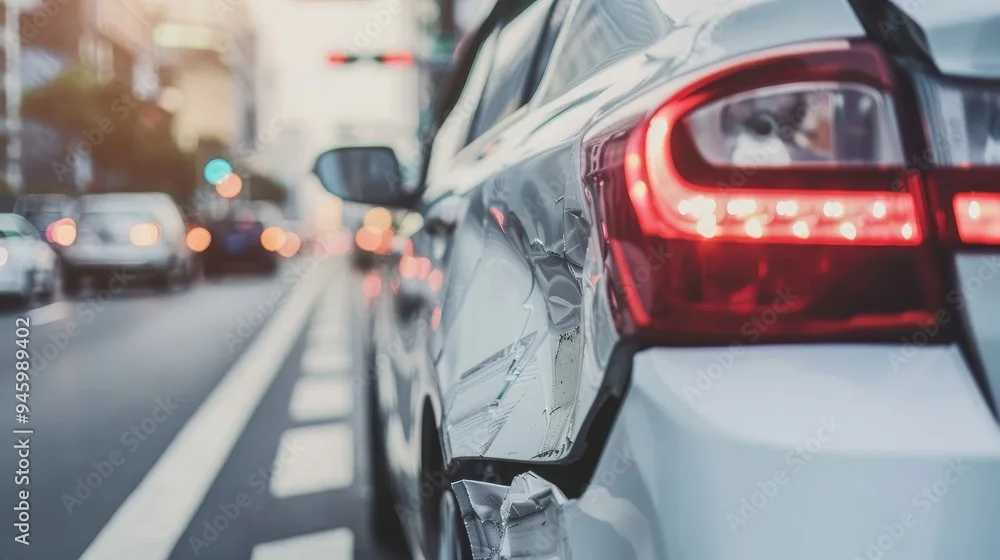
What about injuries? Even if only one person has a minor claim of injury, the accident is immediately reportable regardless of the damage amount. The $1,500 threshold only applies to property-damage-only crashes.
We recommend getting a professional estimate if you're unsure. Many body shops will provide a free written estimate. If that estimate is over $1,500, file the report.
It's better to be safe than to face a suspension. If you're new to the state, you might want to check out our guide on the Florida 10-day insurance grace period for new residents to understand how these state-specific rules often catch drivers off guard.
Step-by-Step: How to Report Your Accident
Here is the exact process you should follow if you are involved in a crash in Illinois.
| Step | Action | Key Detail |
|---|---|---|
| 1 | Stop safely | Turn on hazards, check for injuries. Do not leave the scene. |
| 2 | Call 911 | Tell the dispatcher your location and any injuries. |
| 3 | Exchange info | Get name, phone, insurance company, policy number, plate number. |
| 4 | Document everything | Take photos of all vehicles, damage, plates, and the surrounding area. |
| 5 | Wait for police | If they respond, get the officer's name and report number. |
| 6 | File SR 1050 if needed | If no officer responds, file the driver crash report yourself. |
| 7 | Contact your insurer | Provide the report number. Start the claims process. |
Step 1: Stop and assess. Your legal obligation starts the moment you know an accident happened. Even a minor tap requires you to stop.
Step 2: Call 911. This satisfies the "immediately" requirement. Tell them if anyone is hurt. If there are no injuries, explain it's a property damage crash.
Step 3: Exchange information. This is standard. Get the other driver's license, registration, and insurance. Take a photo of their insurance card.
Step 4: Take photos. Photos are your best evidence. Get wide shots of the scene and close ups of the damage. This helps both police and insurance.
Step 5: Police response. In many parts of Illinois, police will not respond to property-damage-only crashes if there's no obstruction. This is common in Chicago. If they don't come, you move to step 6.
Step 6: Self-report. This is the step most people miss. The next section covers this in detail.
Step 7: Insurance. Your insurer needs the report number to process the claim efficiently.
Avoid the same missteps that cause so many drivers trouble. If you learn how other states operate, like the Florida penalties for driving without PIP and PDL insurance, you start to appreciate how straightforward Illinois's process really is.
When Police Don't Come: Filing the Driver's Crash Report (SR 1050)
This is arguably the most important part of understanding Illinois accident reporting. If a police officer doesn't show up, the state still expects a written report.
The form you need is the Illinois Crash Report, also known as the SR 1050. You can file it online through the Illinois Secretary of State website or download, print, and mail it to the address on the form.
The deadline is strict: 10 days from the date of the crash. If the 10th day falls on a weekend or holiday, you should aim to file before that date. Late filings are subject to penalties.
What information do you need for the SR 1050?
- Your driver's license number
- Your insurance policy information
- The other driver's information
- The date, time, and location of the crash
- A description of the damage
- A diagram of how the accident happened
The form asks for a lot of detail, but it's straightforward. Filling it out accurately protects you.
We see drivers get into trouble because they assume no police means no obligation. That assumption can lead to a license suspension. The state cross-references SR 1050 filings with police reports.
If your crash is reported by the other driver or discovered through a repair estimate, the state will check if you filed.
This is where knowing the rules pays off. A simple 15-minute online form can save you from months of bureaucracy and the cost of a suspension reinstatement. Similar to how improper toll operation can lead to charges, failing to file this form triggers a chain of financial penalties that pile up quickly.
The Most Common Reporting Mistakes Drivers Make
We see the same errors repeat again and again. Knowing them in advance keeps you out of trouble.
Mistake 1: Assuming "minor damage" means under $1,500. You are not a body shop estimator. A quarter panel scratch that needs blending and clear coat can run $800 alone. When you add up all vehicles and property, the total climbs fast.
When in doubt, estimate high.
Mistake 2: Driving away because no police showed up. This is the biggest trap. Just because an officer never arrived does not mean you have no obligation. You still need to file the SR 1050 yourself within 10 days.
Waiting for a call that never comes is not a legal excuse.
Mistake 3: Thinking the at-fault driver decides. Both drivers have a duty to report, not just the person who caused the crash. If you were rear-ended, you still must ensure a report is filed. The other driver might not do their part.
Mistake 4: Forgetting to get a police report number. If an officer does respond, get the report number before leaving. Without it, your insurance claim slows down. Write it down or take a photo.
Mistake 5: Filing the report late. The 10-day clock starts the day of the crash. Not the day you get the repair estimate. Not the day you talk to your insurance.
The crash date.
What Happens If You Don't Report: Penalties and Suspensions
Illinois does not take this lightly. Failure to file a crash report when required is a Class A misdemeanor. The more immediate consequence is a driver's license suspension.
Here is what the penalty structure looks like:
| Violation | Consequence |
|---|---|
| Failure to report a crash | Class A misdemeanor (up to 364 days jail, fine up to $2,500) |
| License suspension for not reporting | Up to 12 months suspension or until report is filed |
| Additional reinstatement fee | Current fee is $70 (subject to change by SOS) |
The license suspension happens automatically in many cases. The Illinois Secretary of State cross-references reports. If your crash appears in a repair database or the other driver files a report and you did not, the system flags you.
A suspended license affects more than just driving. It can impact your job, your insurance rates, and your ability to handle everyday tasks. The reinstatement process requires paying a fee and filing the overdue report.
That can take weeks.
Take this seriously. The same principle applies when you look at Florida's penalties for driving without insurance. Missing a requirement can snowball into bigger financial and legal problems.
Special Cases: Hit-and-Run, Single-Vehicle, and Unattended Accidents
What about a hit-and-run? The rules still apply. If another driver hits you and leaves, you must still report the crash if the damage exceeds $1,500. Call the police immediately.
File the SR 1050 with all the information you have, including the license plate if you got it.
What about single-vehicle crashes? Yes. If you slide off the road and hit a tree, and your car has over $1,500 in damage, you must report it. The law does not require another vehicle to be involved.
Property damage includes damage to your own car.
What about hitting an unattended vehicle or property? If you hit a parked car, a mailbox, a fence, or a structure, stop and locate the owner. Leave a note with your contact and insurance info. Then file a report with the police.
If the property damage exceeds $1,500, the written report is mandatory.
What about crashes on private property? Parking lots are included. Even if the crash happens in a shopping center parking lot, the reporting law applies. Private property does not exempt you.
Frequently Asked Questions About Illinois Accident Reporting
Do I need to call police for a minor accident in Illinois?
You must call police if there is any injury or death. For property damage only, call 911. Even if the damage looks small, let the dispatcher decide.
This also creates a record you may need.
What if I hit a parked car and there is no owner?
Leave a visible note with your name, phone number, and insurance details. Then contact the local police. If the damage exceeds $1,500, you must file the SR 1050 within 10 days.
How do I get a copy of my Illinois accident report?
If police responded, get the report number. You can request a copy from the law enforcement agency that wrote it. The fee is usually $5 to $10.
If you filed an SR 1050, contact the Illinois Secretary of State.
Can I file the crash report online?
Yes. The Illinois Secretary of State offers online filing for the SR 1050. You can also download the form and mail it.
Online filing is faster and gives you a confirmation number.
What if I discover more damage later?
If you estimate the damage under $1,500 and later find it is over that amount, file a report as soon as possible. Explain the situation. It is better to file late than never, but penalties may apply.
Does the $1,500 threshold include rental car damage?
Yes. If you damage a rental car and the total damage exceeds $1,500, the reporting requirement applies. Contact the rental company and then follow the standard reporting process.
Your Accident Reporting Checklist: 7 Steps to Stay Legal
Use this checklist after a crash to make sure you cover everything Illinois requires.
- Stop and check for injuries. Call 911 if anyone is hurt.
- Call 911 for property damage over $1,500. Tell the dispatcher the location and that you need a report.
- Exchange information with the other driver. Get license, registration, insurance.
- Document the scene with photos. Take wide shots and close-ups of all damage.
- Get the officer's report number. If police respond, write it down immediately.
- File the SR 1050 if no officer responded. Do it online at the Illinois Secretary of State website. Do not wait.
- Contact your insurance company. Give them the report number. Start the claims process.
Keep a copy of your filed report and any correspondence. Store it digitally and in a folder at home. That paperwork is your proof of compliance if the state ever asks about that crash.
Once you complete these steps, you have met your legal duty. The rest is up to the insurance companies and the repair shops. You can move on with less stress knowing you did everything right under Illinois law.
Use this checklist after a crash to make sure you cover everything Illinois requires.
- Stop and check for injuries. Call 911 if anyone is hurt.
- Call 911 for property damage over $1,500. Tell the dispatcher the location and that you need a report.
- Exchange information with the other driver. Get license, registration, insurance.
- Document the scene with photos. Take wide shots and close-ups of all damage.
- Get the officer's report number. If police respond, write it down immediately.
- File the SR 1050 if no officer responded. Do it online at the Illinois Secretary of State website. Do not wait.
- Contact your insurance company. Give them the report number. Start the claims process.
Keep a copy of your filed report and any correspondence. Store it digitally and in a folder at home. That paperwork is your proof of compliance if the state ever asks about that crash.
Once you complete these steps, you have met your legal duty. The rest is up to the insurance companies and the repair shops. You can move on with less stress knowing you did everything right under Illinois law.