ByMax Lee
Illinois Tint Legal Limits: 35% VLT Rule
Illinois window tinting legal limits and 35 percent light transmission rules trip up more drivers than any other vehicle regulation. If you get it wrong, you can expect a fine, a mandatory removal order, and a potential headache with your insurance provider. As of 2026, Illinois law sets a minimum visible light transmission (VLT) of 35 percent for front side windows on passenger vehicles.
That number is a hard legal limit that officers can verify on the spot with a handheld tint meter.
The rules are different depending on whether you drive a sedan or an SUV. Understanding the difference matters. A 20 percent tint on your sedan's rear windows could get you a ticket.
The same film on an SUV is perfectly legal. This guide covers the exact limits, how enforcement works, and what to do if you already have a violation.
Wikimedia Commons / Copyrighted by Paramount International. Artists(s) not known.
Quick Answer
Illinois requires front side windows to allow more than 35 percent light transmission. Rear side and rear windows on sedans must allow at least 15 percent. SUVs, vans, and trucks have no restrictions on rear windows.
Windshield tint is limited to the top 6 inches. Reflectivity on front windows cannot exceed 25 percent.
Why Getting This Wrong Could Cost You
A lot of drivers assume any tint is fine as long as it looks reasonable. That assumption leads to tickets. Illinois law enforcement can check your tint at a traffic stop, during a safety inspection, or at a roadside checkpoint.
If your tint measures below the legal limit, expect a fine of $50 to $100 for a first offense, plus court costs.
The bigger cost comes from the fix-it order. You must remove or replace the illegal tint and provide proof to the court. That means paying for removal or a new legal film on top of the ticket.
Some drivers end up spending several hundred dollars to resolve an avoidable violation.
There is also an insurance angle. If you are in an accident and your tint violates state law, your insurance company could deny or reduce a claim. They may argue the illegal tint contributed to limited visibility.
Most drivers never consider this risk until after a crash.
Illinois Legal Limits by Vehicle Type – The Sedan vs. SUV Split
This is where most confusion happens. The legal limit depends on what kind of vehicle you drive. Illinois makes a clear distinction between passenger cars and multi-purpose vehicles like SUVs, vans, and pickup trucks.
Wikimedia Commons / Federal Bureau of Investigation
Passenger Cars (Sedans, Coupes, Convertibles)
| Window Location | Legal VLT Limit |
|---|---|
| Front side windows | 35% or higher |
| Rear side windows | 15% or higher |
| Rear window | 15% or higher (can be darker if vehicle has outside mirrors on both sides) |
| Windshield strip | Non-reflective, top 6 inches only |
SUVs, Vans, and Trucks
| Window Location | Legal VLT Limit |
|---|---|
| Front side windows | 35% or higher |
| Rear side windows | No restriction |
| Rear window | No restriction |
| Windshield strip | Non-reflective, top 6 inches only |
One important note: the VLT percentage refers to total light transmission of the window with the film applied. Factory privacy glass already reduces light. Adding film on top of factory glass can drop the combined VLT below the legal threshold, even if the film itself is rated as legal.
Always measure the final result, not just the film rating.
What About the Windshield? The AS-1 Line Strip Rule
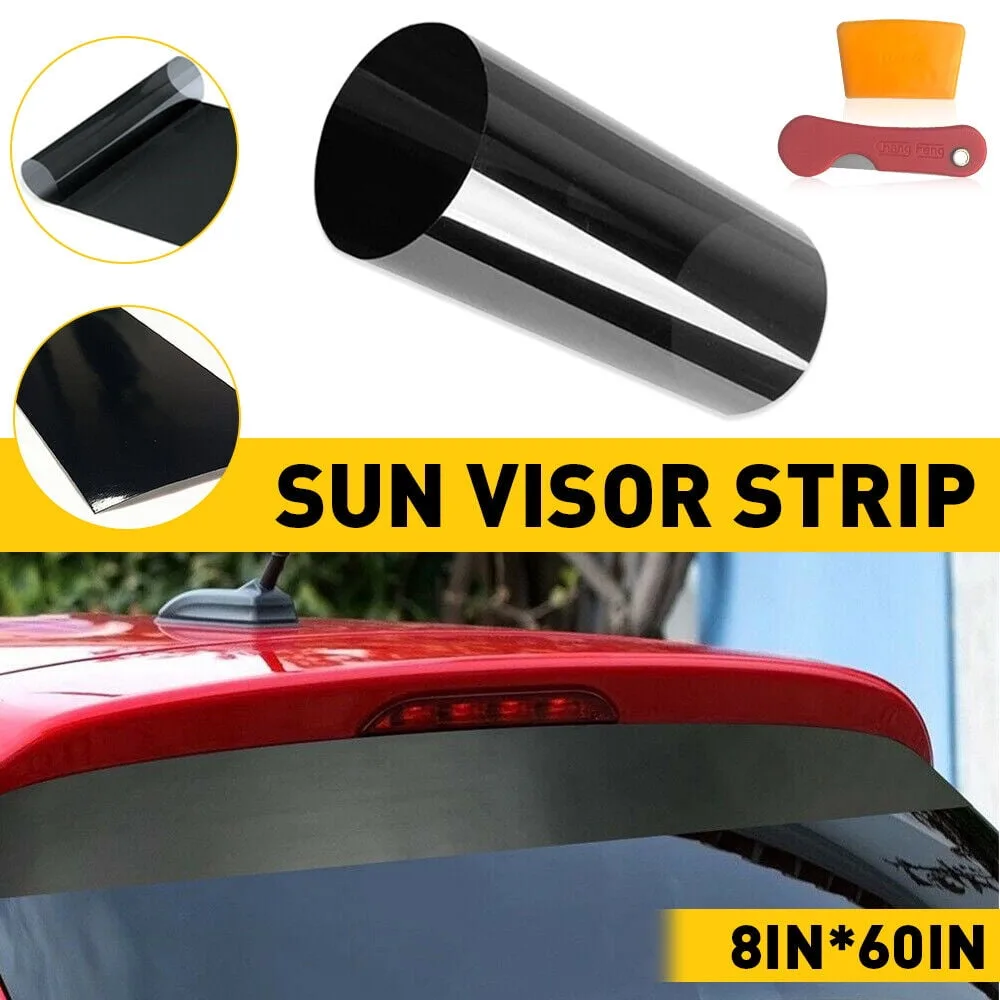
Windshield tint gets its own set of rules because visibility matters most through the front. Illinois allows a non-reflective tint strip at the top of the windshield. The strip cannot extend more than 6 inches down from the top, or below the AS-1 line, whichever is closer to the roof.
Bing (Web (fair-use with source credit))
The strip must be non-reflective. You cannot use a mirrored or metallic film on the windshield. The strip can be any darkness, but it cannot block your view of traffic signals, signs, or pedestrians.
Applying any tint below the AS-1 line or below the 6-inch mark is illegal. Full windshield tint requires a medical exemption. Law enforcement takes windshield violations seriously because they directly affect your field of view at night and in bad weather.
The Reflectivity Rule You Might Miss (25% Cap)
Most drivers focus on darkness and forget about reflectivity. Illinois caps the reflective properties of window tint on the front side windows at 25 percent. That means the film cannot reflect more than 25 percent of incoming light.
Highly reflective tint can blind other drivers, especially in bright sunlight or when headlights hit the windows at certain angles. It also interferes with law enforcement approaching your vehicle.
Most tint film packaging lists the reflectivity percentage. Ceramic and carbon films typically have lower reflectivity than metallic films. Some metallic films push right up against the 25 percent limit or exceed it.
Confirm the reflectivity number before installation if you choose a metallic film.
Medical Exemptions: When You Can Go Darker and How to Get Approved
Illinois allows darker tint for drivers with qualifying medical conditions. The process requires a formal application through the Illinois Secretary of State. Your physician must complete a certification form that explains why darker tint is medically necessary.
Conditions that commonly qualify include lupus, albinism, photosensitivity disorders, and some skin cancer treatments. The documentation requirements are similar to what you would find for other vehicle-related medical hardship waivers.
Once approved, you receive a certificate and a decal that must be displayed on the vehicle. The exemption does not allow 5 percent limo tint on every window. The law still requires enough light for safe driving.
You must renew the exemption before expiration.
The Real Risks of Illegal Tint – Fines, Removal Orders, and Insurance Gaps
A ticket for illegal tint is not just about paying a fine. First-offense fines vary but often start around $50 to $100. Court costs can push that higher.
The bigger issue is the removal order. You must strip the illegal film and show proof to the court within 30 days. Failure to comply can lead to registration suspension or additional fines.
Insurance implications are another hidden risk. If you are in a collision and your tint violates state law, the other driver's insurance company may argue your visibility was compromised. That can delay a claim or reduce the payout.
Your own provider might also raise rates after finding out about the violation.
How Police Actually Check Your Tint – Tint Meters and Probable Cause
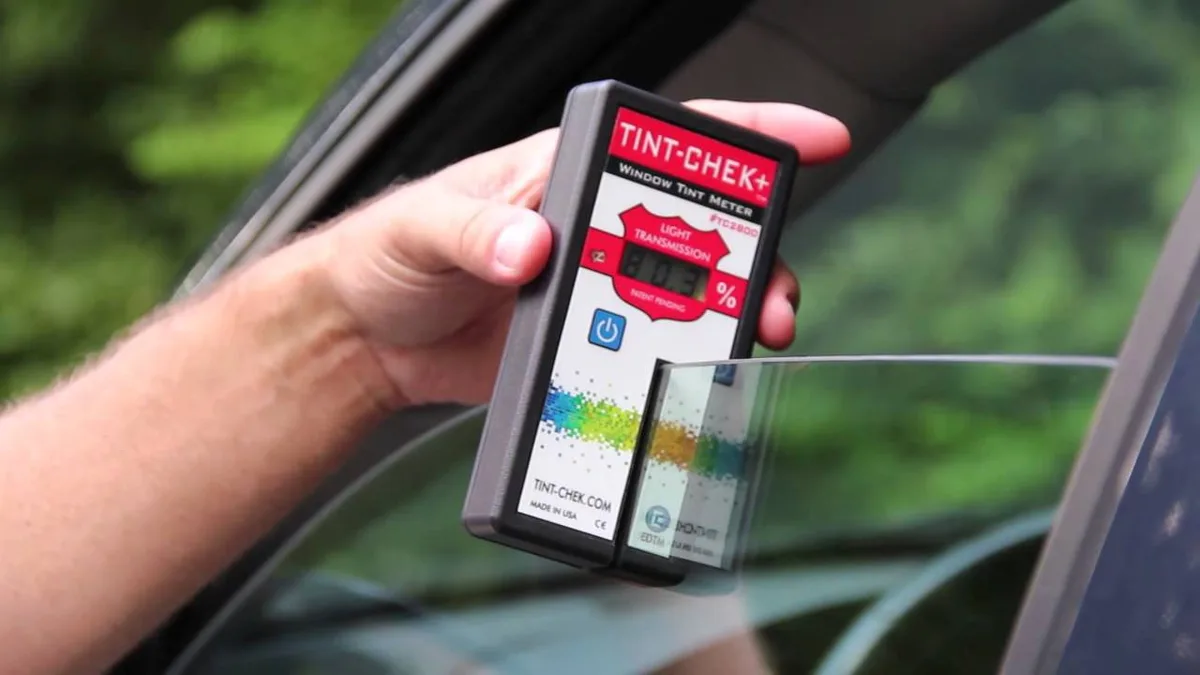
Many drivers wonder how officers know their tint is illegal without a measuring device. The answer is a handheld tool called a tint meter.
Bing (Web (fair-use with source credit))
The officer places the meter on the closed window and presses a button. A digital reading shows the exact VLT percentage. If it measures below 35 percent on a front side window, you are in violation.
An officer does not need the meter to pull you over. They can visually suspect the tint is too dark and stop you based on that observation. The meter confirms the violation on the spot.
Calibration records must be maintained by the agency. If you challenge the reading in court, you can request those records. Most officers carry certified meters and log regular calibrations.
How to Make Sure Your Tint Is Legal Before You Install
The easiest route is to get it right from the start. Confirm your vehicle type. Sedans and SUVs have different rear-window limits.
Choose film rated for at least the required VLT: 35 percent for front windows on any vehicle, 15 percent for sedan rear windows.
Test the film on your glass if you have factory tint already in place. The combined VLT of the glass plus the film may drop below the legal threshold. A professional installer can measure the final number before cutting.
Ask your installer for a written guarantee that the installation meets Illinois law. Keep that documentation along with the receipt. If you are ever questioned, the paper trail shows you acted in good faith.
I Got a Ticket for Illegal Tint – What Now? (Step-by-Step Action Plan)
Start by reading the citation carefully. Note the statute cited and the response deadline. Next, have your windows measured independently at a tint shop.
You need an accurate VLT reading from a calibrated meter.
If the tint is illegal, remove it entirely or replace it with legal film. Keep the receipt and take a dated photo of the result.
Appear in court or submit proof of compliance before the deadline. Many judges reduce or dismiss the fine if you show you fixed the issue.
If you believe the meter reading was wrong, request the calibration records and training documentation for the officer. It is a long shot but has worked for some drivers.
After the violation is resolved, confirm with your insurance provider that no surcharge has been applied to your policy. Keeping a clean driving record helps you avoid higher premiums.
Pro Tips from Installers and Enforcement That Most Drivers Don't Know
Do not trust your eyes to judge 35 percent film. Properly installed 35 percent film on clear glass looks nearly transparent up close. If your tint looks dark from across a parking lot, it is probably below 35 percent.
Ceramic tint costs more but blocks heat and UV without needing a very dark film. You can stay cooler and stay legal at the same VLT.
Factory privacy glass combined with aftermarket film can create a darker final VLT than you expect. Always measure the final number, not just the film rating.
Keep the certification sticker on the driver's side door jamb visible and legible. Officers sometimes check for it during stops.
Frequently Asked Questions
What happens if I move to Illinois with tint that was legal in my previous state?
You have 90 days to bring your tint into compliance with Illinois law. Out-of-state tints that are darker than Illinois allows must be replaced or removed.
Can I get a ticket for tint on my rear windshield if I have side mirrors?
Yes. On passenger cars, the rear window must allow at least 15 percent light transmission unless the vehicle has outside mirrors on both sides. Even with mirrors, the law still requires a minimum of 15 percent for sedan rear windows.
Does Illinois law apply to out-of-state drivers passing through?
Yes. Any vehicle on Illinois roads must comply with Illinois tint laws. There is no temporary exemption for visitors.
If your home state allows darker tint, you still need to meet Illinois limits while driving here.
Do I need a medical exemption for UV-blocking clear film?
No. Clear film that blocks ultraviolet light but has a high VLT does not reduce visible light. It does not require a medical exemption.
But confirm the VLT number before installation because some clear films still drop transmission slightly.
How much does a medical exemption cost?
The application fee to the Illinois Secretary of State is typically $10 to $20. The bigger cost is the physician visit and certification form, which varies by provider.
Final Verified Takeaway – Double-Check Before You Apply
The simplest way to stay clean is to know your vehicle type and choose the right film from the start. Front windows on any vehicle in Illinois require 35 percent or lighter. Rear windows depend on whether you drive a sedan or an SUV.
Reflectivity cannot exceed 25 percent.
A little planning now saves you fines, removal costs, and insurance complications later. When in doubt, have a shop measure your glass before you commit to any purchase.