Black Friday deals are live on Amazon · limited-time discounts, grab them before they’re gone
Grab the deals

ByMax Lee
Is It Bad to Get a Car Wash Everyday? Expert Insights Revealed
Washing your car every day is not automatically harmful, but it is usually unnecessary—and the technique matters more than the calendar. A gentle rinse after driving through road salt is very different from scrubbing a dusty vehicle with a dirty brush every morning.
The main risks of daily washing are micro-scratches, water spots, premature loss of wax or sealant, chemical residue, and unnecessary cost. However, a carefully performed rinse or touchless wash can be appropriate when your vehicle is exposed to salt, mud, bird droppings, tree sap, or industrial fallout. You can also read our guide on how to keep a black car clean between washes.
Is It Bad to Get a Car Wash Every Day?
For most vehicles, a full wash every day is not the best routine. Repeated contact between wash media and the paint creates more opportunities for abrasive particles to be dragged across the clear coat. Over time, that can produce swirl marks and reduce gloss.
The problem is not simply that water touches the vehicle too often. Modern automotive paint is designed to withstand regular cleaning. The greater concern is the combination of:
- Dirt trapped in a mitt, brush, or towel
- Excessive pressure while scrubbing
- Harsh or poorly diluted chemicals
- Automatic brushes that contact many vehicles
- Drying with a contaminated towel
- Allowing mineral-rich water to evaporate on the paint
A daily low-contact rinse can be much safer than a weekly hand wash performed with poor tools. In practice, clean equipment, lubrication, and drying technique determine whether frequent washing protects or harms the finish. You can also read our guide on will automatic car wash remove ceramic coating.
How Daily Washing Can Damage a Vehicle
1. Abrasive particles can create micro-scratches
Road dust, sand, brake dust, and grit are harder than they look. If these particles remain on the paint and a sponge or brush moves them across the surface, they can leave fine marks in the clear coat.
These marks are often called swirl marks. They may be difficult to see on a silver vehicle but become obvious on black or dark-colored paint under direct sunlight. You can also read our guide on best car wash for paint protection.
A common mistake is using one towel or sponge for the entire vehicle. The lower doors, wheel arches, bumpers, and rocker panels usually contain more contamination than the roof. Using the same wash media everywhere transfers that grit to cleaner panels.
A safer approach is to use separate tools for:
- Wheels and tires
- Lower body panels
- Upper painted surfaces
- Glass
- Drying
The two-bucket washing method also helps separate shampoo solution from the bucket used to rinse dirty wash media.
2. Frequent contact can reduce gloss over time
A single careful wash will not wear away a healthy clear coat. Paint damage generally develops gradually through repeated friction, contaminated wash materials, aggressive brushing, or polishing.
This distinction matters. Washing does not “scrape off” the paint every time, but poor washing can introduce defects that accumulate. Once scratches are visible, removing them may require machine polishing, which removes a very small amount of clear coat to level the surrounding surface.
Daily cleaning is therefore most risky when it involves:
- A stiff brush
- A dry or nearly dry wash mitt
- Strong pressure
- Scrubbing before rinsing loose dirt
- Automatic friction brushes
- Reusing towels after they fall on the ground
3. Wax and sealants may not last as long
Car wax, paint sealants, and spray protectants are sacrificial layers. Frequent exposure to detergents, heat, road chemicals, and repeated cleaning may shorten their service life.
That does not mean every daily wash immediately removes all protection. Product durability depends on the formulation, dilution, water quality, wash method, and environmental exposure. A pH-balanced car shampoo used correctly is generally less aggressive than household dish detergent or an industrial degreaser.
If the vehicle has a ceramic coating, daily washing usually does not remove the coating when the correct maintenance products are used. However, harsh chemicals, automatic brushes, and neglected contamination can still damage the coating’s appearance or create staining on top of it.
4. Water spots can etch the finish
Water spots form when droplets dry and leave behind dissolved minerals. Hard water is especially likely to cause spotting. If minerals remain on the paint repeatedly, they can become difficult to remove and may eventually etch the clear coat.
Daily washing can increase the number of opportunities for spotting if the car is washed in direct sun or left wet after rinsing.
To reduce the risk:
- Wash when the panels are cool.
- Work in the shade when possible.
- Rinse thoroughly.
- Use a clean microfiber drying towel or filtered air.
- Do not let wash water dry on the vehicle.
- Treat stubborn mineral deposits with a product intended for automotive finishes.
5. Chemical residue can affect trim and finishes
Incorrect products can stain rubber, fade unpainted plastic, dry out trim, or leave a film on glass. Household cleaners may contain solvents or detergents that are unsuitable for automotive paint.
Use products labeled for the specific surface:
- Automotive shampoo for painted panels
- Dedicated wheel cleaner for wheels
- Glass cleaner designed for vehicle windows
- Trim dressing sparingly on exterior plastics
- Manufacturer-approved products for coated or wrapped vehicles
Never assume that a stronger cleaner is a better cleaner. Strong chemistry is useful for a specific contaminant, but routine washing should be as mild as practical.

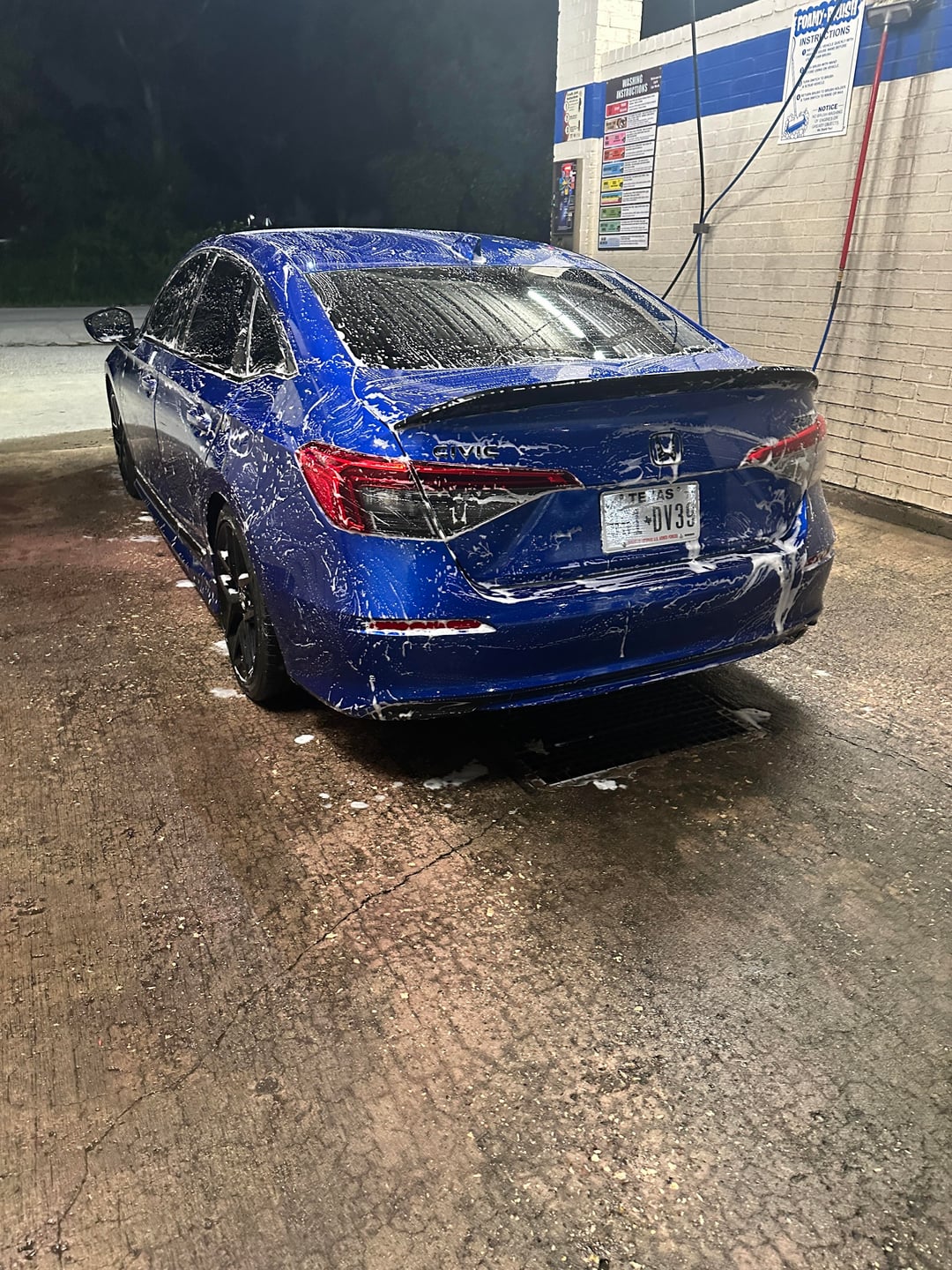
Gentle technique and clean wash media help limit fine scratches in the clear coat.
Credit: www.yahoo.com
When a Daily Car Wash Makes Sense
Daily washing can be reasonable when contamination is actively threatening the finish or safety of the vehicle. In these cases, removing the contaminant promptly is often better than allowing it to remain for several days.
Consider a same-day rinse or wash after exposure to:
- Road salt and brine
- Fresh mud
- Bird droppings
- Insect remains
- Tree sap
- Construction dust
- Cement or concrete dust
- Industrial fallout
- Coastal salt spray
Bird droppings and bug residue can be acidic or chemically aggressive, particularly when baked onto hot paint. You do not always need a complete wash; carefully soaking and removing the affected area may be enough.
Road salt deserves special attention because it can collect underneath the vehicle. A periodic underbody rinse is useful in winter, but avoid directing high-pressure water at electrical connectors, damaged seals, or sensitive components from extremely close range.
If you regularly travel through severe winter conditions, planning an undercarriage rinse can be more valuable than washing the roof every day. For broader vehicle preparation before mountain travel, review the guidance on vehicle requirements for mountain roads.
How Often Should You Wash Your Car?
There is no universal schedule. The right interval depends on weather, parking conditions, paint protection, driving distance, and the type of contamination.
| Driving and storage conditions | Practical starting point |
|---|---|
| Covered parking and mild weather | Every two to four weeks |
| Normal city driving | Every one to two weeks |
| Dusty rural roads or frequent rain | About weekly |
| Winter roads treated with salt | As soon as practical after significant exposure |
| Frequent mud, sap, or bird droppings | Spot-clean immediately; wash as needed |
| Show vehicle or daily dust exposure | Gentle maintenance cleaning as needed |
These are starting points rather than strict rules. A car that looks clean may still have a film of road pollution, while a visibly dirty car may only need a careful rinse.
The best routine is usually:
- Remove harmful contamination promptly.
- Perform a full wash when the surface has a visible film.
- Use a maintenance rinse or rinseless method for light dust.
- Avoid unnecessary scrubbing.
The Safest Way to Wash a Car Frequently
Step 1: Inspect the contamination
Determine whether the vehicle has loose dust, bonded grime, salt, mud, sap, or bird droppings. Loose dust may require only a rinse. Heavy mud should be softened before any contact washing.
Step 2: Rinse from top to bottom
Use water to remove loose particles before touching the paint. Begin with the roof and upper panels, then move downward. The dirtiest areas should receive the longest rinse.
Do not immediately wipe a dry, dusty panel. Lubrication and pre-rinsing reduce the chance of dragging grit across the finish.
Step 3: Use automotive shampoo and clean media
Choose a car shampoo with suitable lubrication and follow its dilution instructions. Use a clean microfiber mitt or another paint-safe wash tool.
Work in small sections, rinsing the mitt frequently. Avoid pressing hard; let the solution and wash media do the work.
Step 4: Keep wheels separate
Brake dust and road grit can quickly contaminate a wash mitt. Clean wheels and tires with separate brushes and towels. If possible, wash them before the painted body so any splashes can be rinsed away.
Step 5: Rinse thoroughly
Soap left behind can create streaks and attract dirt. Pay attention to mirrors, trim gaps, door handles, grille openings, and the area around the license plate.
Step 6: Dry without dragging contamination
Use a clean, absorbent microfiber towel and blot or gently glide it over the surface. Replace the towel when it becomes saturated or dirty.
A drying aid can improve lubrication, but follow its label and avoid layering incompatible products. Compressed air can help clear water from mirrors, badges, grilles, and panel gaps. If you use an air compressor for vehicle work, confirm that its tank and duty-cycle capacity suits continuous use.
Is a Hand Wash Better Than an Automatic Car Wash?
Neither option is automatically safe or unsafe. The quality of the process matters.
Hand washing
A careful hand wash offers the greatest control over:
- Wash pressure
- Product selection
- Towel cleanliness
- Contact with sensitive areas
- Treatment of wheels and trim
It is often the best choice for a well-maintained or dark-colored vehicle, but only when the wash media is clean and the vehicle is thoroughly rinsed first.
Touchless automatic washing
Touchless systems avoid direct brush contact and can be useful for removing salt or loose grime quickly. Their trade-off is stronger detergents and high-pressure water. Repeated use may reduce the life of some waxes or sealants, especially if the wash program uses aggressive chemistry.
Automatic friction washes
These are convenient, but shared brushes can carry grit from other vehicles. Older or poorly maintained equipment presents a greater risk of fine scratches. If preserving maximum paint gloss is a priority, a touchless or carefully performed hand wash is generally preferable.
For any automatic wash, check whether the program includes an underbody rinse, wheel cleaning, drying aids, or strong detergents. Select the least aggressive option that removes the contamination you actually have.
Are Rinseless Washes Safe for Frequent Cleaning?
Rinseless products can work well for light dust and lightly soiled vehicles when used with sufficient solution and clean towels. They are not a substitute for a high-volume rinse when the vehicle is covered in sand, mud, salt, or abrasive road grit.
A safe rinseless routine includes:
- Mix the product at the manufacturer’s stated dilution.
- Use multiple clean microfiber towels.
- Soak the panel thoroughly.
- Wipe in one direction with minimal pressure.
- Fold to a clean towel section after each pass.
- Stop if the panel contains heavy or gritty contamination.
- Dry with a separate clean towel.
Do not use a rinseless method on heavy mud simply because it saves water. Softening and removing abrasive material safely is more important than minimizing the number of steps.
Does Daily Washing Affect Tires, Glass, or Underbody Parts?
The painted body receives most of the attention, but other surfaces also need appropriate care.
Tires and wheels
Frequent cleaning can be helpful when wheels accumulate corrosive brake dust. However, harsh wheel cleaners and stiff brushes may discolor finishes or damage delicate wheel coatings. Use a wheel-safe product and allow the wheel to cool before cleaning.
Glass
Glass can develop streaks when shampoo or drying products are left behind. Use a clean glass towel and avoid products that contain ingredients unsuitable for window tint.
If your vehicle has aftermarket tint, the cleaning method matters as much as the frequency. You can review window-film care and legal considerations before choosing a cleaner or planning modifications.
Undercarriage
An underbody rinse can remove salt and mud, but do not treat high-pressure water as harmless everywhere. Avoid forcing water into damaged rubber boots, open connectors, wheel-bearing seals, or areas with known electrical problems.
Cleaning the underside also gives you an opportunity to notice leaks, loose shields, damaged liners, or corrosion. Washing is not a substitute for an inspection, but it can make developing problems easier to see.
Car Wash Water and Runoff
Soap and contaminated runoff should not be allowed to flow untreated into storm drains where local rules prohibit it. Stormwater systems often discharge to waterways without the same treatment used for household wastewater.
Follow local requirements and use a commercial wash facility when appropriate. The U.S. Environmental Protection Agency provides general information about stormwater pollution and responsible management. Commercial facilities may be designed to manage wash water more effectively than an improvised driveway setup.
Signs You Are Washing Too Aggressively
Your routine may be causing more harm than good if you notice:
- Circular swirl marks in direct sunlight
- A hazy or dull appearance
- Streaks that remain after drying
- Water spots that resist normal washing
- Faded exterior plastic
- Dry, discolored tire sidewalls
- Shortening protection life after every wash
- Scratches concentrated on lower panels
- Dirty or gritty wash towels
If defects are already visible, stop increasing wash frequency and improve the process first. More washing will not correct scratches. A paint-safe decontamination and polishing plan may be necessary, depending on the severity.
Should You Wash a Car Before Applying Wax or Sealant?
Yes. Protection should be applied to a clean, dry surface. If the paint contains bonded contamination, simply washing may not be enough; a suitable clay or chemical decontamination step may be required.
Before applying wax or sealant:
- Wash and rinse thoroughly.
- Dry the vehicle completely.
- Inspect the paint in good lighting.
- Remove bonded contamination if necessary.
- Apply the product according to its instructions.
- Allow the recommended curing or drying time.
A protected vehicle usually becomes easier to clean, which can reduce the need for aggressive scrubbing. Protection is not a license to use dirty towels or harsh chemicals, however.
Frequently Asked Questions
Is washing a car every day bad for the paint?
It can be if every wash involves friction, contaminated tools, harsh chemicals, or poor drying. A gentle rinse or carefully performed low-contact wash is much less likely to cause damage than daily scrubbing.
Can daily car washes remove clear coat?
Normal washing should not quickly remove a properly maintained clear coat. The greater risk is micro-scratching from abrasive dirt and wash media. Repeated polishing to correct those scratches is what gradually removes measurable clear-coat thickness.
Does washing every day remove wax?
Frequent washing can shorten the life of wax, especially with strong detergents or automatic wash programs. A properly diluted, paint-safe shampoo is generally less aggressive, but no protective product lasts indefinitely.
Is a touchless wash safe every day?
A touchless wash avoids brush-induced scratches, but it may use strong chemicals and high pressure. Occasional use for salt or heavy contamination can be practical; daily use may reduce protection faster than a gentle hand wash.
Can I rinse my car every day without shampoo?
Yes, if the vehicle has loose dust or salt and you use enough water to flush the surface without rubbing. Do not wipe a gritty, poorly rinsed vehicle with a towel, because that can create scratches.
How often should a black car be washed?
A black car does not necessarily need more washing, but it shows dust, water spots, and swirl marks more clearly. Wash it when contamination requires removal, using careful rinsing, clean microfiber tools, and shade whenever possible.
Is it better to wash bird droppings immediately?
Yes. Soak the area and remove the material gently as soon as practical. Do not dry-wipe bird droppings from the paint, because they may contain abrasive particles and can bond more firmly as they dry.
What is the best car-wash schedule for winter?
Rinse road salt and brine from the painted surfaces and underbody whenever practical after significant exposure. Prioritize salt removal over cosmetic washing, and use a touchless or low-contact process when the vehicle is heavily contaminated.
Final Verdict: Should You Get a Car Wash Every Day?
For most drivers, a full daily car wash is unnecessary. Washing every one to two weeks—or whenever the vehicle is visibly contaminated—is usually a practical starting point. Adjust that schedule for road salt, mud, dust, bird droppings, tree sap, and other contaminants that should not remain on the finish.
If daily cleaning is necessary, choose the least aggressive method that works:
- Rinse loose salt and dust instead of scrubbing immediately.
- Use automotive shampoo rather than household detergent.
- Keep wheels and lower panels separate from paint-safe tools.
- Wash in the shade when possible.
- Dry with clean microfiber towels.
- Avoid shared friction brushes when paint preservation matters.
- Use rinseless products only for light contamination.
A clean car is easier to inspect and maintain, but frequent washing is beneficial only when it removes contamination without adding new damage. Build a gentle routine around your climate, driving conditions, and vehicle finish—not an arbitrary daily schedule.








