Black Friday deals are live on Amazon · limited-time discounts, grab them before they’re gone
Grab the deals

ByMax Lee
Is It Safe to Wash Engine at Car Wash? Expert Tips Revealed
Washing an engine bay can remove oil film, road salt, dust, and leaves—but using a car wash does not automatically make the process safe. Modern vehicles are designed to handle rain and normal road spray, yet they also contain exposed connectors, sensors, fuse boxes, alternators, and air-intake components that can be damaged by concentrated water or harsh chemicals.
So, is it safe to wash an engine at a car wash? Sometimes, but only when the facility permits engine-bay cleaning and you use a controlled, low-pressure method. In many cases, a careful hand-cleaning at home or a professional detailer is safer than directing a high-pressure wand into the bay. You can also read our guide on are brushless car washes better.
The Short Answer
An engine bay can usually tolerate a light rinse when the engine is cool and sensitive components are protected. However, avoid:
- High-pressure spraying at close range
- Washing a hot engine
- Directing water into the air intake, alternator, fuse box, or electrical connectors
- Strong degreasers on rubber, plastic, paint, or wiring
- Starting the vehicle while water may have entered the intake or ignition system
A car wash’s standard exterior program is not necessarily designed for engine compartments. Before using a self-service bay, ask whether engine cleaning is allowed and whether the facility provides low-pressure equipment. You can also review the differences between wash systems in this guide to compare touch-free equipment before choosing a location.
What Engine-Bay Washing Actually Involves
Engine cleaning is more than spraying water over the engine. The engine bay contains several systems packed into a small area:
- Engine components and belts
- Alternator and starter wiring
- Battery terminals and cables
- Electronic control modules
- Fuse and relay boxes
- Ignition coils and spark-plug wells
- Air-filter housing and intake ducts
- Sensors and waterproof electrical connectors
- Rubber hoses, seals, and plastic covers
Most connectors are designed to resist rain and splash, but water resistance is not the same as pressure-washer resistance. A sealed connector may withstand ordinary moisture while still allowing water through when a jet is held inches away. You can also read our guide on how to wash a car engine at the carwash.
In practice, the biggest problems usually come from water forced into places that normally remain dry, not from a gentle rinse over the painted or plastic surfaces.
Is It Safe to Use a Car Wash on an Engine?
When it may be reasonably safe
Engine-bay cleaning is generally lower risk when:
- The engine is completely cool.
- The vehicle’s owner’s manual does not prohibit it.
- The facility allows engine-bay washing.
- You use a low-pressure rinse rather than a concentrated jet.
- The air intake and electrical components are shielded.
- You use a diluted, vehicle-safe cleaner.
- You dry the bay thoroughly afterward.
A professional detailer may use steam or a controlled mist instead of flooding the compartment. That approach provides more control than a self-service pressure wand. You can also read our guide on how to get a spot free car wash at home.
When a car wash is a poor choice
Avoid washing the engine at a typical car wash if:
- The only option is a powerful pressure washer.
- The nozzle cannot be adjusted or kept at a safe distance.
- The engine is hot from driving.
- The engine already has a misfire, electrical fault, or starting problem.
- Wiring insulation is damaged or connectors are loose.
- The air-filter housing is cracked or poorly sealed.
- You cannot identify the air intake.
- Oil or fuel is leaking heavily.
- The facility does not permit engine cleaning.
A common mistake is assuming that “waterproof” means “safe to pressure wash.” It does not. Manufacturers protect vehicles against weather exposure, but they do not necessarily approve unrestricted high-pressure cleaning.
What Can Go Wrong?
| Risk | What may happen | Warning signs |
|---|---|---|
| Water in the air intake | Water may reach the filter or intake system | Rough running, restricted airflow, stalling |
| Wet ignition components | Moisture can interfere with spark delivery | Misfire, shaking, check-engine light |
| Electrical intrusion | Water can enter connectors, relays, or fuse boxes | No-start condition, warning lights, intermittent faults |
| Alternator contamination | Water and detergent may affect bearings or electrical parts | Charging warning, battery discharge |
| Corrosion | Trapped moisture can oxidize terminals and fasteners | Green or white deposits, intermittent faults |
| Chemical damage | Degreaser may dry rubber, stain aluminum, or dull finishes | Brittle hoses, faded plastics, residue |
| Belt contamination | Cleaner or water can reach drive belts | Squealing or belt slip |
| Thermal shock | Cold water on hot components can stress materials | Cracks, rapid contraction, or premature wear |
The risk is not limited to the engine block. Sensors, wiring, belts, and electronic modules may be more vulnerable than the metal engine itself. You can also read our guide on best psi for pressure washing car.

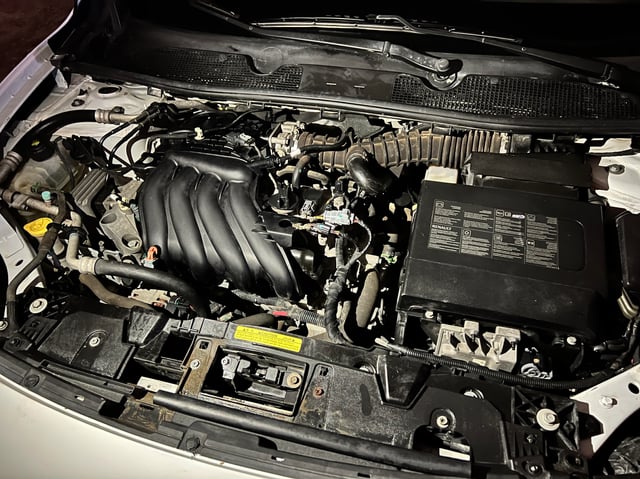
Electrical connectors, intake openings, and fuse boxes need protection before any rinse.
Credit: www.reddit.com
Which Parts Should You Protect?
Before applying water, locate and shield the components most likely to cause trouble.
Air intake and air-filter housing
The intake opening, snorkel, and filter housing should stay dry. Water that reaches the filter can restrict airflow, while water pulled farther into the intake can cause serious engine damage.
Do not cover an intake that is hot, running, or difficult to seal safely. If you cannot identify the intake, do not rinse the engine bay.
Alternator
The alternator contains electrical windings, bearings, and ventilation openings. Avoid aiming water directly at it. A light incidental splash is different from holding a pressure nozzle against it.
Fuse and relay boxes
Check that the covers are fully latched. If a cover is cracked, missing, or loose, postpone washing until it is repaired. Wrapping a damaged fuse box with a plastic bag is not a reliable substitute for a proper cover.
Ignition coils and spark-plug wells
On many gasoline engines, ignition coils sit directly over spark plugs. Water around the coils or inside plug wells can produce misfires. Avoid flooding the top of the engine, especially around coil packs and plug openings.
Battery and exposed terminals
A modern battery is generally sealed against ordinary moisture, but its terminals and nearby connections should not be soaked unnecessarily. Never spray aggressively around damaged cables or a battery with visible cracking or leakage.
How to Wash an Engine Bay More Safely
The safest method is controlled cleaning rather than a fast, forceful rinse.
1. Read the owner’s manual
Look for instructions concerning engine-bay cleaning, water exposure, battery removal, and air-intake protection. Manufacturer guidance takes priority over generic detailing advice.
The National Highway Traffic Safety Administration is also a useful official starting point for vehicle-safety information, although the owner’s manual remains the best source for model-specific cleaning precautions.
2. Choose a cool, dry engine
Park in a shaded area and let the engine cool naturally. Do not pour cold water onto a hot exhaust manifold, turbocharger, cylinder head, or other heat-soaked component.
Cooling may take longer than expected after highway driving or heavy traffic. The surfaces should be comfortable to approach without radiant heat.
3. Remove loose debris by hand
Use a soft brush, vacuum, or low-pressure air to remove leaves, sand, and loose dust. This reduces the amount of muddy residue created when cleaner and water are added.
Keep air pressure away from connectors and seals. High-pressure air can push debris into sensitive areas just as high-pressure water can.
4. Protect vulnerable areas
Use plastic covers only on cool, dry components and secure them so they cannot fall into belts or fans. Protect:
- The air-filter intake
- Exposed electrical connectors
- The alternator
- Fuse and relay boxes with questionable seals
- Aftermarket electronics
- Opened fluid reservoirs
Do not wrap the entire engine bay tightly. Trapping cleaner or moisture underneath plastic can make drying more difficult.
5. Apply a diluted, compatible cleaner
Use a product labeled for engine bays or automotive surfaces, diluted according to its instructions. Apply it to a cloth or soft brush where possible rather than soaking the entire compartment.
Avoid strong solvent-based degreasers on:
- Rubber hoses
- Belts
- Painted surfaces
- Aluminum components
- Wiring insulation
- Plastic reservoirs
- Electrical connectors
Test an inconspicuous area first if the product is unfamiliar.
6. Agitate gently
Use a soft detailing brush or microfiber cloth. Work in small sections, starting with the least dirty areas and leaving heavy oil deposits for last.
If you find an active oil or fuel leak, stop cleaning and arrange an inspection. Washing can hide the source temporarily without fixing the mechanical problem.
7. Rinse with minimal water
Use a gentle stream or fine mist, not a concentrated pressure-washer jet. Keep the nozzle moving and maintain generous distance from electrical parts, belts, seals, and the intake.
At a self-service facility, select the lowest practical pressure and do not use the engine-bay rinse as if it were an exterior panel. Ask staff whether the equipment is appropriate; some facilities prohibit engine cleaning because of chemical runoff or damage concerns. Understanding the equipment and operating limits discussed in this self-service bay guide can help you choose a more suitable facility.
8. Dry thoroughly
Remove standing water with microfiber towels. A blower can help clear moisture from seams and connectors, but use controlled airflow rather than blasting directly into electrical housings.
An air compressor can be useful if pressure is regulated and the nozzle is kept back. This overview of air-system capacity and duty cycle explains why tank size alone does not determine whether a compressor is suitable for controlled drying.
Leave the hood open until the bay is visibly dry. Do not close the hood over trapped moisture.
9. Start the vehicle only after inspection
Check that:
- The air intake cover is secure
- Plastic protective bags are removed
- No cloth is near belts or fans
- Fluid caps are installed
- No standing water remains around coils or connectors
Start the vehicle and let it idle while watching for warning lights, rough running, belt noise, or unusual smells. If the engine misfires or the check-engine light appears, switch it off and allow the components to dry. Persistent symptoms require professional diagnosis.
Car Wash Versus Home Cleaning
Using a car wash
Advantages
- Convenient access to water and drainage
- Often less mess than cleaning in a driveway
- Some facilities have trained staff or dedicated detailing services
- Water may pass through a managed collection system
Disadvantages
- Pressure may be too high
- Staff may not know the vehicle’s sensitive components
- Harsh chemicals may be intended for exterior surfaces
- Engine cleaning may violate the facility’s rules
- You have less time and control
A standard exterior wash is not the same as a dedicated engine-bay service. Touch-free or automatic systems are designed around exterior panels, so do not assume that a wash program suitable for paint is suitable for an engine compartment. This explanation of automatic wash effects is useful for understanding that different wash processes are built for different vehicle surfaces.
Cleaning at home
Advantages
- Better control over pressure and product choice
- More time to cover sensitive parts
- Easier to stop when something looks unsafe
- Lower risk of careless direct spraying
Disadvantages
- Runoff may carry oil and chemicals into storm drains
- You need suitable towels, brushes, and drying equipment
- Local rules may restrict outdoor vehicle washing
- Poorly controlled wastewater can harm the environment
If cleaning at home, avoid storm drains and follow local wastewater requirements. For a paint-safe exterior wash afterward, the two-bucket cleaning method can reduce the chance of transferring grit back onto the bodywork.
When Steam Cleaning May Be Better
A professional steam-cleaning service can use less water and target small areas more precisely. It may be a better choice when the engine bay has oily residue but the electrical system, intake, and belts need to remain as dry as possible.
Steam is not risk-free. Excessive heat or close application can damage labels, plastics, adhesives, and electrical components. Choose a detailer who understands the layout of modern engine compartments and can explain how the intake and electronics will be protected.
How Often Should You Clean the Engine Bay?
There is no universal schedule. Most vehicles do not need routine engine washing if the bay is dry, free of leaks, and not exposed to unusual contamination.
Clean it when:
- Oil or coolant has spilled after a repair
- Road salt or mud has accumulated
- Leaves are blocking drains or collecting near hot parts
- You need to inspect a suspected leak
- You are preparing a vehicle for sale, inspection, or detailing
Routine inspection is more valuable than frequent washing. Check fluid levels, hoses, belts, wiring, and leaks with the engine off and cool. A clean surface can make a new leak easier to identify, but washing should never replace mechanical maintenance.
What to Do If the Engine Runs Poorly After Washing
If the vehicle starts but runs roughly:
- Turn it off if the misfire is severe.
- Check for water around ignition coils and spark-plug wells.
- Inspect the air-filter housing and intake for moisture.
- Look for wet fuse boxes or loose electrical connectors.
- Let the bay dry naturally with the hood open.
- Do not repeatedly restart the vehicle if water may have entered the intake.
- Contact a mechanic if the problem continues or warning lights remain on.
Do not remove electrical connectors while the ignition is switched on. If the vehicle will not start, has a strong fuel smell, or shows multiple warning lights, professional diagnosis is safer than continued attempts.

An inspection after cleaning helps identify moisture near wiring, belts, and intake components.
Credit: www.youtube.com
Frequently Asked Questions
Is it safe to wash an engine at a self-service car wash?
It can be safe only with permission, a cool engine, low water pressure, protected sensitive components, and careful drying. A high-pressure wand held close to the engine is not a safe method.
Can water damage a modern car engine?
Yes. The metal engine itself is usually less vulnerable than its electrical and air-intake components. Water can contribute to misfires, no-start conditions, corrosion, charging problems, and sensor faults when it is forced into sensitive areas.
Should I cover the battery before washing?
Protecting the battery area is sensible when terminals or nearby wiring are exposed, but covering the battery does not protect the alternator, fuse box, ignition coils, or air intake. Those areas must be identified and managed separately.
Can I wash the engine while it is warm?
Wait until the engine has cooled naturally. Cold water on hot components can create thermal stress, and a warm engine dries unevenly while increasing the risk of burns.
Is degreaser safe for an engine bay?
Only use a diluted product labeled for automotive or engine-bay use. Strong degreasers can stain aluminum, dry rubber, damage plastics, and affect wiring insulation. Never allow cleaner to remain trapped around electrical components.
Should I use a pressure washer?
Avoid pressure washers unless you can regulate the pressure, maintain distance, and control the spray precisely. For most owners, a gentle rinse, damp cloth, and soft brush offer a safer balance between cleanliness and risk.
Final Verdict: Should You Wash Your Engine at a Car Wash?
Yes, an engine bay can sometimes be cleaned safely—but a typical car wash is not automatically the right place to do it. The safest approach is a cool engine, minimal water, gentle cleaner, protected intake and electronics, and thorough drying.
Choose professional cleaning when the bay is heavily contaminated, the vehicle has exposed or damaged wiring, or you cannot identify the air intake and sensitive components. If the goal is simply to remove dust, use a damp microfiber cloth and soft brush instead of flooding the compartment.
A clean engine bay can make inspections easier, but preventing water intrusion matters more than achieving a showroom finish.








