Black Friday deals are live on Amazon · limited-time discounts, grab them before they’re gone
Grab the deals

ByMax Lee
How to Wash a Black Car in the Sun: Expert Tips for a Flawless Shine
Washing a black car in direct sunlight is possible, but it leaves little room for error. Dark paint absorbs heat, so water and soap evaporate quickly. As they dry, minerals can remain behind as white spots, streaks, or hazy patches. A dirty wash mitt can also drag grit across the paint, creating fine scratches that are especially visible on black panels.
The safest approach is to control heat, keep every surface wet, work in small sections, and dry immediately. This guide explains how to wash a black car in the sun without damaging the finish, what equipment to use, and how to deal with water spots when they appear. For more on this, see our guide on oklahoma antique car registration guide for 25 year.
Why Black Cars Are Difficult to Wash in Sunlight
Black paint does not necessarily scratch more easily than other colors, but scratches, swirl marks, dust, soap residue, and mineral deposits are much easier to see against a dark, reflective surface.
Direct sunlight creates four main problems:
- Hot panels evaporate water quickly. Water can disappear before you have time to rinse or dry it.
- Minerals remain after evaporation. Hard-water minerals may form circular deposits or cloudy patches.
- Soap can bake onto the paint. Dried shampoo may leave streaks or a dull film.
- Heat makes waxes and detailing sprays difficult to spread. Some products can smear or flash unevenly on hot paint.
In practice, the biggest mistake is washing the entire vehicle before rinsing it. By the time you reach the final panel, the hood and roof may already be covered in dried water spots. A shaded location is always preferable, but careful technique makes a sunny wash manageable. For more on this, see our guide on used car from ca arizona registration sales tax.
Choose the Best Time and Location
Shade is better than cooler air
A shaded driveway, carport, or garage entrance is ideal. Avoid washing beneath trees if birds, sap, or loose debris are likely to fall onto the vehicle. Shade keeps the panels cooler and slows evaporation, giving you more time to rinse and dry.
If shade is unavailable, wash:
- Early in the morning
- Late in the afternoon
- On a cloudy day with mild temperatures
- When there is little wind
Do not rely only on the outside temperature. A black hood can be significantly hotter than the surrounding air, especially after sitting in direct sun.
Test the panel before applying soap
Place the back of your hand near—but not on—the panel. If the surface feels uncomfortably hot, move the vehicle or wait. Never begin applying soap to a panel that is hot enough to dry water almost immediately.
Turn the car so that the section you are washing is out of direct sunlight whenever possible. You can also use a clean, purpose-made vehicle wash canopy, but never let a dirty cover touch the paint.
Gather the Right Supplies
Prepare everything before opening the hose. Searching for towels while water dries on the paint is how many otherwise careful washes develop spots.
You will need:
- pH-balanced car wash shampoo
- A clean hose with a gentle spray nozzle
- Two wash buckets with grit guards if available
- One soft microfiber wash mitt for painted surfaces
- A separate mitt or brush for wheels and tires
- Two or more plush, clean drying towels
- A soft detailing brush for emblems and trim
- A dedicated wheel cleaner, if needed
- A drying aid or quick-detailing spray compatible with your paint protection
- A spray bottle filled with clean water for emergency re-wetting
A proper two-bucket setup is more reliable than using a single bucket. One bucket holds shampoo solution; the other is for rinsing dirt from the mitt.
Do not use dishwashing liquid, household glass cleaner, abrasive sponges, bath towels, or old cotton rags. These products may strip protection, leave lint, or introduce grit to the paint.
Step-by-Step: How to Wash a Black Car in the Sun
1. Inspect the vehicle before washing
Walk around the car and identify:
- Bird droppings
- Tree sap
- Road tar
- Insect remains
- Mud packed behind the wheels
- Heavy dust or sand
- Existing water spots
Do not rub dried bird droppings or gritty dirt with a dry towel. Soak them first and allow the water or a paint-safe cleaner to soften the residue.
Raise the windows, close the doors, and remove personal items that may get wet. If the car is extremely dirty, plan to rinse it more thoroughly rather than trying to remove everything with a mitt.
2. Clean the wheels first
Wheels and tires usually carry the heaviest contamination, including brake dust, road film, and oily residue. Clean them before washing the body so that dirty runoff does not splash onto freshly washed paint.
Use separate tools for wheels. Never use a wheel brush or mitt on painted panels afterward.
Rinse the wheels, apply a suitable cleaner if necessary, agitate gently, and rinse thoroughly. If the wheels are hot, allow them to cool before applying chemical cleaner. Product instructions take priority because some wheel finishes are more sensitive than others.
3. Rinse the body from top to bottom
Start with a gentle, thorough rinse. Work from the roof downward so loosened dirt flows toward the ground rather than across already-clean areas.
Pay particular attention to:
- Wheel arches
- Lower doors
- Rocker panels
- The rear bumper
- Grilles and emblems
- Gaps around mirrors and trim
The pre-rinse removes loose grit before your wash mitt touches the paint. It will not remove bonded contamination, but it substantially reduces the amount of abrasive material you drag across the surface.
If the vehicle is covered in sand or fine dust, spend extra time rinsing. A quick splash is not enough.
4. Mix the shampoo correctly
Fill the wash bucket with the amount of shampoo recommended on the bottle, then add water to create the solution. Avoid guessing with highly concentrated products; too much soap can make rinsing difficult and leave residue.
Fill the second bucket with clean water. Place a grit guard in each bucket if available. The guard gives dirt a place to settle below the mitt rather than allowing it to remain in the washing solution.
Keep the buckets in the shade and out of the path of dirty runoff.
5. Wash one small section at a time
Begin with the roof or another upper panel. Dip the mitt into the shampoo bucket, then gently glide it across the surface using straight, overlapping passes.
Do not scrub aggressively. Let the lubrication and the mitt lift contamination. Rinse the mitt in the clean-water bucket after each small section, inspect it, and reload it with shampoo.
A practical section size in direct sun is approximately:
- Half the roof
- One windshield pillar
- Half the hood
- One door
- One quarter of a large SUV or truck
The exact size depends on heat and wind. If the water begins disappearing before you finish the section, make the section smaller.
Use a separate mitt for the lower bodywork, where grit is heavier. Keep the wash order from cleanest to dirtiest:
- Roof
- Glass and upper pillars
- Hood and trunk
- Upper doors and fenders
- Lower doors and bumpers
- Wheels and tires
6. Rinse each section immediately
Do not allow shampoo to dry on the car. After washing one section, rinse it completely before moving on.
Use a gentle flow rather than a forceful jet wherever possible. A free-flowing stream can help sheet water from the panel, leaving fewer droplets to dry. Start at the top and guide the water downward.
If a section begins drying, stop washing and re-wet it. Never wipe a half-dry panel with a dry towel to “save time.” That is a common cause of micro-scratches and streaks.
For water conservation and runoff guidance, consult the U.S. Environmental Protection Agency for current information relevant to residential vehicle washing in your area.
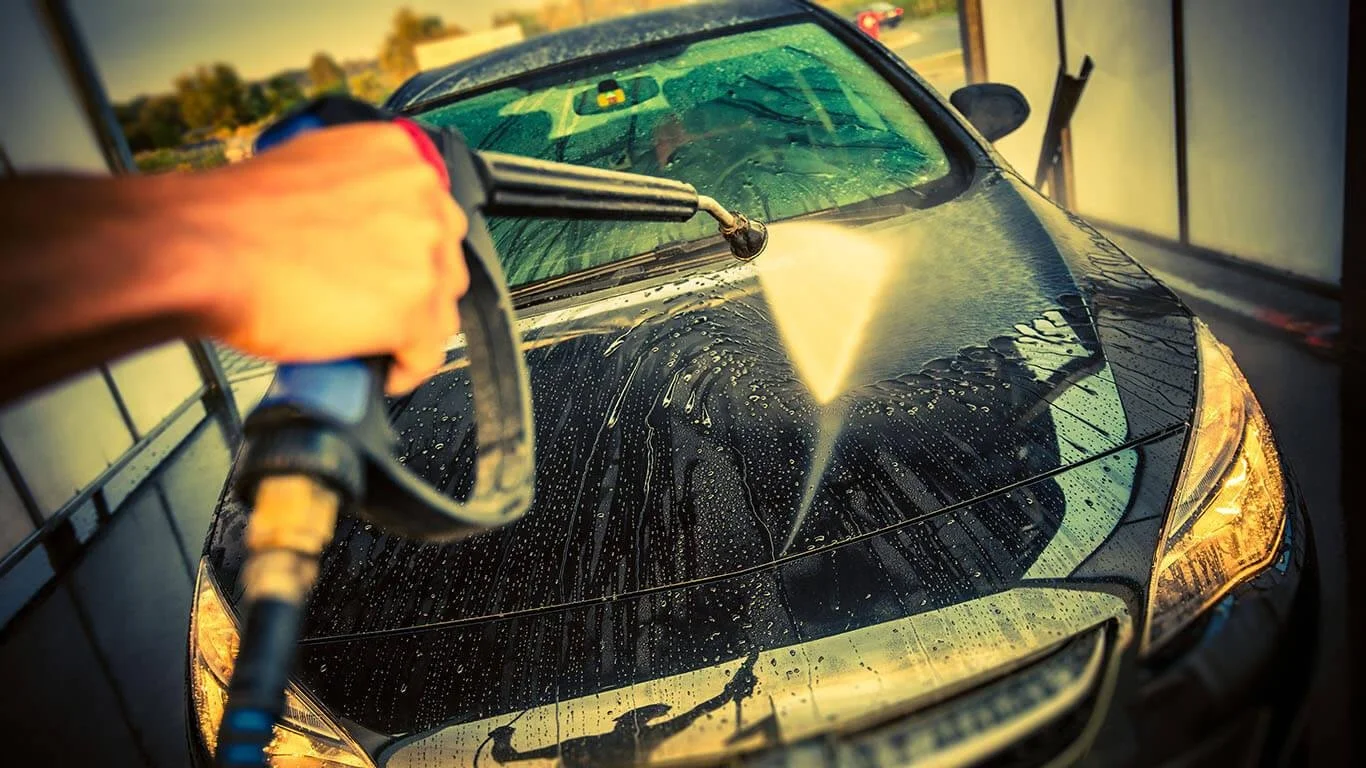
Use a clean microfiber mitt and work in manageable sections to prevent dried soap and grit marks.
Credit: www.extremecleanhandwash.com
7. Dry the car without dragging dirt
Dry immediately after the final rinse. Begin with glass and the upper panels, then work downward.
Use a large, plush microfiber drying towel. Lay it flat on the surface and gently pull it toward you, or lightly pat the panel dry. Avoid pressing hard and avoid circular scrubbing.
Use a second towel for:
- Lower body panels
- Door jambs
- Wheels
- Exhaust areas
- Trims and badges
A towel that touches the ground should no longer touch the paint. Shake out each towel and inspect it for grit. If it becomes saturated, replace it rather than continuing to push water around.
If you use an air blower or compressed air to clear water from mirrors, badges, grilles, and panel gaps, choose equipment appropriate for the job; this compressor sizing guide can help explain tank capacity and duty cycle considerations. Keep the nozzle clean and do not blast debris across the paint.
8. Dry hidden water from gaps
Water trapped in mirrors, door handles, emblems, fuel doors, and trim can run out later and create fresh streaks. Open the doors and trunk briefly, then dry the jambs with a separate towel.
A gentle air blower is useful here. If you do not have one, drive slowly around the block after drying, then inspect the vehicle again. Do not let water from a dirty lower area run onto a clean panel without wiping it away.
9. Apply a drying aid only if the surface is cool enough
A drying aid or compatible quick detailer can add lubrication and reduce towel drag. Apply it sparingly to a cool, wet or slightly damp panel according to the label.
Do not spray a large amount onto hot paint. Excess product can smear, attract dust, or become difficult to buff off. Work one panel at a time with a clean towel and turn the towel frequently.
What to Do About Water Spots
Fresh water spots
If water has just begun drying, mist the panel with clean water or a compatible detailer and gently dry it. Do not use a dry towel on visible mineral residue.
Light mineral deposits
Once the car is cool and clean, use a product specifically labeled for automotive water spots. Test it on an inconspicuous area first, follow the dwell-time instructions, and rinse or wipe it off as directed.
Avoid household vinegar, abrasive powders, and aggressive scrubbing unless you fully understand the product’s effect on the paint and existing protection. Acidic products may help with mineral deposits, but they must be used carefully and should not be allowed to dry.
Etched water spots
If the mineral deposits have chemically etched the clear coat, washing will not remove them. A mild finishing polish may improve the appearance, but deeper etching may require machine polishing by an experienced detailer.
Polishing removes a small amount of clear coat. It is not a routine substitute for washing, so use it only when cleaning and chemical removal are insufficient.
Should You Wax or Polish a Black Car in the Sun?
Waxing and polishing are different processes:
- Wax or sealant: Adds or renews a protective layer and improves gloss.
- Polish: Uses fine abrasives to refine or remove defects such as haze and light swirls.
- Ceramic coating: Forms a longer-lasting protective layer that requires careful preparation and product-specific maintenance.
Apply wax or sealant only after the vehicle is clean, dry, and cool enough for the product to spread evenly. Work in small areas and follow the manufacturer’s cure and removal instructions.
Never polish a hot panel in direct sunlight. Heat can make the product flash too quickly, hide residue, and make it harder to judge the finish. If the car needs correction, move it into shade or indoors.
Protection does not make a black car immune to water spots. It can make routine cleaning easier, but proper drying is still essential.
Cleaning the Glass and Trim Safely
Use a clean glass towel and an automotive glass cleaner for windows. Spray the product onto the towel rather than heavily onto the glass when working near dashboards, electronics, or freshly cleaned paint.
For exterior trim, use a product intended for plastic or rubber. Do not apply greasy tire dressing to painted panels because sling can leave dark, oily spots.
If your car has aftermarket window film, use an ammonia-free cleaner and follow the film manufacturer’s care instructions. Local tint laws are separate from cleaning technique; for example, drivers should verify applicable limits using a current window-tinting rules guide when maintaining modified glass.
Common Mistakes and Better Alternatives
| Mistake | Why it causes problems | Better approach |
|---|---|---|
| Washing the whole car before rinsing | Soap dries on earlier panels | Wash and rinse one section at a time |
| Using one bucket | Grit remains in the wash solution | Use separate wash and rinse buckets |
| Rubbing a dry water spot | Minerals act like fine abrasive particles | Re-wet and use a suitable water-spot product |
| Washing hot panels | Water and shampoo evaporate too quickly | Move to shade or wait for the surface to cool |
| Using a household sponge | It can hold and drag abrasive dirt | Use a clean, plush microfiber mitt |
| Reusing a dropped towel | It may contain sand or grit | Set it aside and use a clean towel |
| Scrubbing bird droppings | Dried contamination can scratch clear coat | Soak and soften it before removal |
| Applying wax in strong sun | Product can smear or cure unevenly | Apply to cool paint in small sections |
| Using a wheel mitt on paint | Brake dust can scratch the finish | Keep wheel tools separate |
How Often Should You Wash a Black Car?
Wash when the vehicle is visibly contaminated rather than following a rigid calendar. Many daily-driven cars benefit from a careful wash every one to two weeks, but the correct interval depends on weather, parking conditions, road salt, dust, pollen, and how much the car is driven.
Wash sooner after:
- Bird droppings or insect impact
- Salt exposure
- Mud or heavy rain runoff
- Tree sap
- Construction dust
- Long highway trips
A quick-detailing spray is not a replacement for washing a gritty car. Use it only on lightly dusty surfaces and only with plenty of lubrication and clean microfiber towels.
Between full washes, remove bird droppings promptly by placing a damp microfiber towel over the area for several minutes. Let moisture soften the contamination instead of rubbing it into the clear coat.
A Fast Sunny-Day Wash Routine
When time is limited, use this order:
- Move the car into shade or orient one side away from the sun.
- Clean the wheels with dedicated tools.
- Rinse the entire vehicle thoroughly.
- Wash one small panel with a lubricating car shampoo.
- Rinse that panel immediately.
- Continue from the roof downward.
- Dry each panel as soon as the final rinse leaves it.
- Blow or wipe water from mirrors, badges, and trim.
- Inspect the paint from several angles for remaining spots.
- Apply a compatible drying aid or protection product only if the paint is cool.
The goal is not to rush. It is to prevent any panel from drying before it has been rinsed and dried properly.
Frequently Asked Questions
Can I wash a black car in direct sunlight?
Yes, but shade is safer and easier. If direct sunlight is unavoidable, work in small sections, keep the paint wet, rinse immediately, and dry without delay. Stop if water or soap begins drying before you can finish a section.
What is the best soap for a black car?
Use a pH-balanced automotive shampoo with good lubrication. Black paint does not require a special black-car soap, and tinted shampoos do not repair scratches. The quality of your mitt, rinsing process, and drying technique matters more than the color of the soap.
How do I prevent water spots in the sun?
Use clean water, rinse in small sections, and dry immediately with a clean microfiber towel. A filtered or softened water supply can reduce mineral spotting, but it does not eliminate the need to dry the vehicle.
Should I use a pressure washer?
A pressure washer can improve the pre-rinse, but it is not required. Use an appropriate nozzle and maintain a safe distance from paint, trim, seals, badges, and damaged areas. Never use high pressure to replace gentle hand washing.
Can I use dish soap on a black car?
It is better to use automotive shampoo. Dish soap is formulated to remove kitchen grease and may reduce or remove wax and other surface protection. It also does not provide the same paint-safe lubrication as a dedicated car wash product.
Is it safe to wipe a black car with a wet towel between washes?
Only if the surface is lightly dusty, well lubricated, and the towel is clean. A wet towel alone will not safely remove gritty dirt. For heavier contamination, rinse and wash the vehicle instead.
Can water spots be removed by washing again?
Fresh residue may disappear after another careful wash and immediate drying. Mineral deposits that remain after washing may require a dedicated water-spot remover. If the paint is etched, polishing—not additional washing—may be necessary.
Final Takeaway
The secret to washing a black car in the sun is controlling evaporation and reducing friction. Keep the panels as cool as possible, rinse loose dirt thoroughly, use separate wash and rinse water, clean small sections, and dry immediately with clean microfiber towels.
Avoid scrubbing dry contamination, using rough cloths, or allowing shampoo to bake onto hot paint. With the right sequence and a little preparation, you can wash a black car outdoors while preserving its gloss and minimizing water spots, swirl marks, and unnecessary paint correction.








