ByMax Lee
Kentucky Driver’s License: Step-by-Step Guide
If you’re moving to Kentucky or getting your first driver’s license, the process can feel overwhelming. Kentucky driver licensing requirements vary depending on your age, residency status, and the type of license you need, whether it’s a learner’s permit, intermediate license, or full Class D license. As of 2026, the Kentucky Transportation Cabinet (KYTC) enforces strict rules to ensure new drivers are prepared for the road.
One key detail: minors must hold a learner’s permit for 180 days before taking the road test. Missing this step or skipping required documents can delay your license by weeks. Below, we’ll break down exactly what you need, step by step, so you can avoid common mistakes and get on the road faster.
Quick Answer
Kentucky driver licensing requirements include a written test, vision screening, and road test for first-time drivers. Teens must hold a learner’s permit for 180 days before applying for an intermediate license. New residents have 30 days to transfer their out-of-state license.
A REAL ID requires extra documents but allows TSA airport access.
Who Needs a Kentucky Driver’s License? (And Which Type?)
Kentucky’s licensing process isn’t one-size-fits-all. Your path depends on whether you’re a first-time driver, a new resident, or applying for a specialty license like a CDL or motorcycle endorsement. Here’s who needs what:
- First-time drivers (teens and adults): Must start with a learner’s permit, then progress to an intermediate or full license.
- New Kentucky residents: Have 30 days to transfer an out-of-state license (no test required if valid).
- Military personnel and dependents: May qualify for extensions or exemptions.
- Non-U.S. citizens: Must provide proof of legal presence (visa, green card, etc.).
- CDL and motorcycle applicants: Require additional tests and endorsements.
If you’re transferring a license from another state, you’ll skip the written and road tests. Just bring your current license, proof of identity, and residency. For everyone else, the process starts with a learner’s permit.
Kentucky Driver’s License Types: Which One Fits You?
Kentucky offers five main license types, each with different rules and restrictions. The one you need depends on your age, experience, and driving goals.
| License Type | Minimum Age | Key Requirements | Restrictions |
|---|---|---|---|
| Learner’s Permit | 16 | Written test, vision test, parent consent (if under 18) | Must drive with a licensed adult (21+) in the front seat. |
| Intermediate License | 16.5 | Held permit for 180 days, completed 50 hours of practice (10 at night), road test | No driving between midnight and 6 a.m. unless for work or school. Only 1 non-family passenger under 20. |
| Full (Class D) License | 17 (or 18 if no intermediate) | Road test, no restrictions if 18+ | None if 18+. Minors follow intermediate rules until 18. |
| REAL ID | 16+ | Extra documents (proof of residency, Social Security, identity) | Required for TSA airport security (starting May 2025). |
| CDL/Motorcycle | 18+ (21+ for interstate CDL) | Written and skills tests, medical exam (CDL), motorcycle safety course (optional) | CDL: endorsements for hazmat, passenger, etc. Motorcycle: helmet laws apply. |
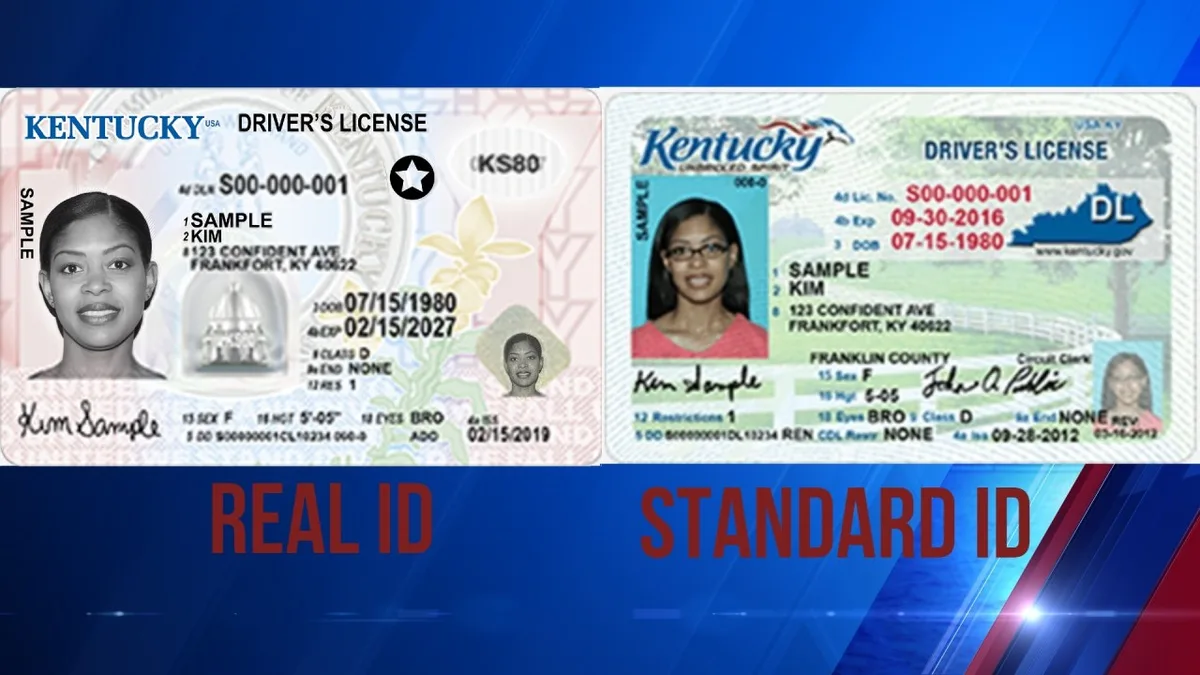
A REAL ID (marked with a gold star) is optional but required for domestic flights starting May 2025. If you don’t need to fly, a standard license works for driving and non-TSA ID purposes. Florida's ID process shows similar document rules in other states.
Documents You’ll Need: The Checklist (No Surprises)
Before you head to the DMV, gather these documents. Missing even one can mean a wasted trip. Kentucky requires three types of proof:
- Proof of identity (one document): U.S. birth certificate, valid U.S. passport, or permanent resident card.
- Proof of Social Security (one document): Social Security card, W-2 form, or pay stub with full SSN.
- Proof of Kentucky residency (two documents): Utility bill, lease agreement, or bank statement with Kentucky address.
Special cases:
- Minors (under 18): Need a parent or guardian to sign the application.
- Military personnel: Can use a military ID and orders as proof of residency.
- Non-U.S. citizens: Must provide a valid visa, I-94, or green card.
Pro tip: The KYTC website has a document checklist tool to verify your paperwork before you go. Address update rules in other states show why timing matters.
Before you head to the DMV, gather these documents. Missing even one can mean a wasted trip. Kentucky requires three types of proof:
- Proof of identity (one document): U.S. birth certificate, valid U.S. passport, or permanent resident card.
- Proof of Social Security (one document): Social Security card, W-2 form, or pay stub with full SSN.
- Proof of Kentucky residency (two documents): Utility bill, lease agreement, or bank statement with Kentucky address.
Special cases:
- Minors (under 18): Need a parent or guardian to sign the application.
- Military personnel: Can use a military ID and orders as proof of residency.
- Non-U.S. citizens: Must provide a valid visa, I-94, or green card.
Pro tip: The KYTC website has a document checklist tool to verify your paperwork before you go. Address update rules in other states show why timing matters.
Step 1: Passing the Kentucky Written Test (Without Stress)
The written test covers road signs, traffic laws, and safe driving practices. Here’s how to pass on your first try.
What’s on the Test?
25 multiple-choice questions (must score 80% or higher). Topics include road signs (shapes and colors), speed limits, right-of-way rules, and Kentucky-specific laws such as school bus stopping rules. Source: The Kentucky Driver Manual (free online or at any DMV office).
How to Study
- Read the manual (focus on chapters 3 to 5).
- Take practice tests (KYTC offers free ones on their site).
- Memorize road signs (shapes and colors indicate meaning, yellow means warning, red means stop).
What Happens If You Fail?
You can retake the test the next business day. After three failures, you must wait 30 days before trying again.
Common mistakes: Confusing similar road signs (yield vs merge) or misremembering speed limits (55 mph on rural highways unless posted otherwise).
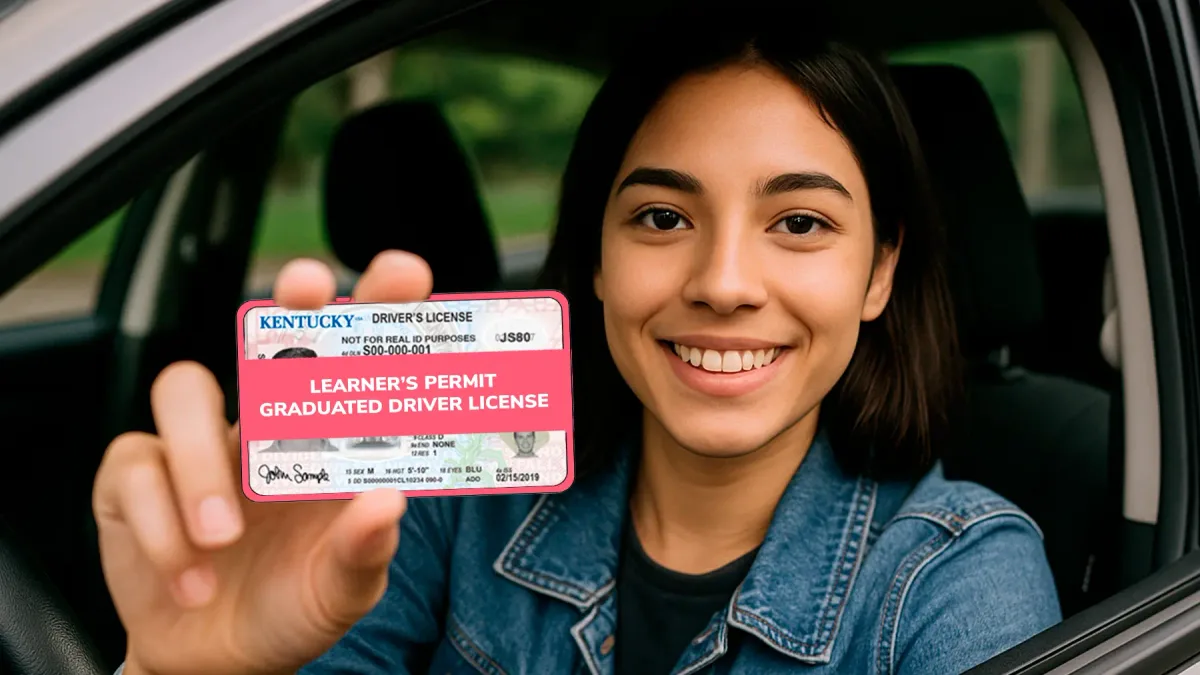
Step 2: Getting Your Learner’s Permit (First-Time Drivers)
Once you pass the written test, you’ll get a learner’s permit. Here’s what to expect.
Permit Rules (Minors vs. Adults)
| Rule | Under 18 | 18+ |
|---|---|---|
| Minimum age | 16 | 18 |
| Holding period | 180 days | None (can test immediately) |
| Supervised driving | Must drive with a licensed adult (21+) | No restrictions |
| Passenger limit | Only 1 non-family passenger under 20 | None |
What to Bring to the DMV
Proof of identity, Social Security, and residency (see checklist above). Parent or guardian consent form if under 18. Twelve dollar permit fee (cash, card, or check).
Pro tip: Schedule an appointment online to skip the line. Walk-ins can wait over two hours in busy locations like Louisville or Lexington.
Step 3: Behind-the-Wheel Practice (What Counts?)
Your learner’s permit is your ticket to real driving experience. Kentucky requires 50 hours of supervised practice for minors, including 10 hours at night.
What Counts as Practice?
- Daytime driving (40 hours): Focus on highways, residential streets, and parking lots.
- Nighttime driving (10 hours): Practice headlight use, judging distances, and spotting pedestrians.
- Bad weather (optional but smart): Rain, fog, and snow count toward your total.
Who can supervise you? A licensed driver 21 or older must sit in the front seat. They must be sober and alert.
A sibling or friend under 21 does not count.
Common mistakes that waste practice time: Driving the same route every time, ignoring parking lots, and skipping night driving. Many teens fail the road test because they’re not used to low visibility.
Step 4: Scheduling and Passing the Road Test
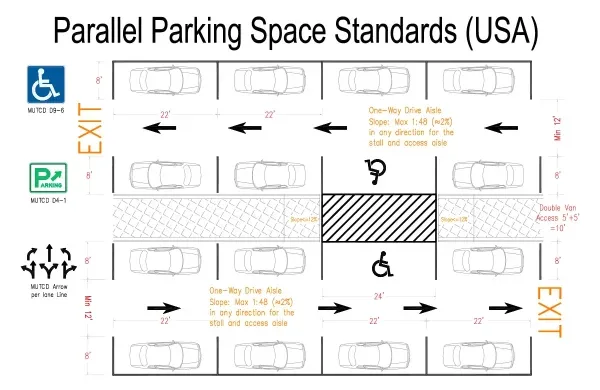
The road test is where most people get nervous. Kentucky’s test evaluates six key skills: parallel parking, three-point turns, lane changes, speed control, right-of-way rules, and overall vehicle control.
How to Book Your Test
Online: Use the KYTC scheduling portal to pick a date and time. Walk-in: Some DMV offices allow it, but expect longer wait times (up to three hours in Louisville). Third-party testers: Some driving schools offer road tests for a fee (around $50 to $75).
Pro tip: Schedule your test early in the day. Examiners are fresher, and you’ll avoid afternoon rush-hour traffic.
What the Examiner Looks For
- Parallel parking: Park within 18 inches of the curb without hitting cones.
- Three-point turn: Complete it in three moves or fewer without rolling backward.
- Lane changes: Check mirrors, signal, and move smoothly.
- Speed control: Stay within 5 mph of the limit (no speeding or crawling).
- Right-of-way: Yield correctly at stop signs, crosswalks, and four-way stops.
- Vehicle control: Smooth braking, steering, and acceleration.
Common Reasons People Fail
Rolling stops (must come to a full stop). Improper lane changes (forgetting to signal or check blind spots). Speeding (even 5 mph over can fail you).
Parallel parking errors (hitting the curb or too many attempts).
What to Bring
Your learner’s permit (must be valid). A registered and insured vehicle (no warning lights). Proof of 50 hours of practice if under 18.
Twelve dollar road test fee.
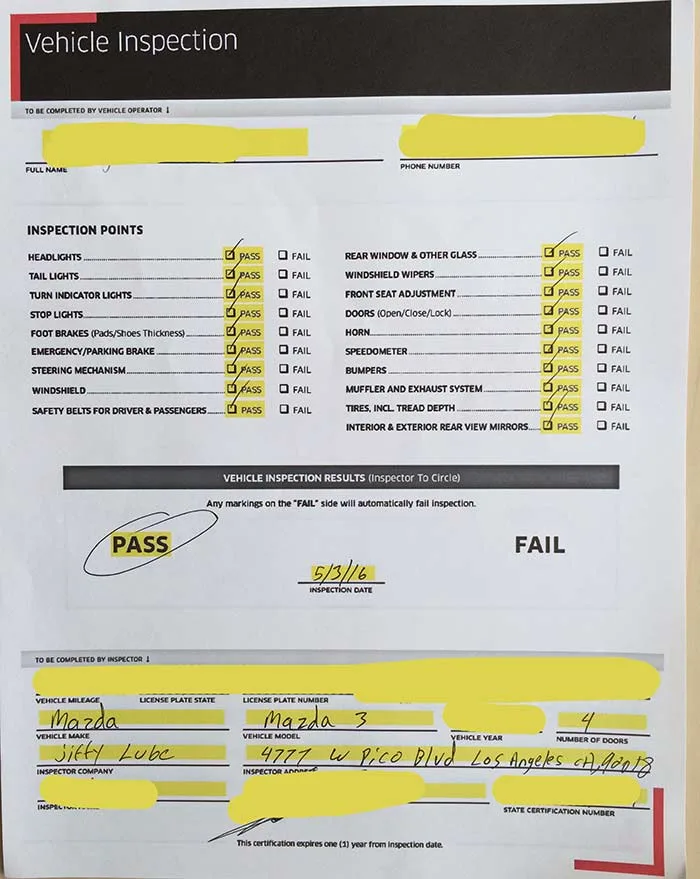
Pro tip: Do a pre-test inspection of your car. Check tire pressure, turn signals, brakes, and mirrors. Examiners won’t let you test in a car with broken lights.
Step 5: Getting Your License (Finally!)
You passed the road test. Here’s how to get your physical license and what to expect next.
Intermediate License Rules (If Under 18)
No driving between midnight and 6 a.m. unless for work, school, or emergencies. Only one non-family passenger under 20 allowed (unless a parent is present). No cellphone use (even hands-free) while driving.
These restrictions last until you turn 18.
Full License Privileges (18+)
No passenger or nighttime restrictions. Your license is valid for four years (or eight years if you opt for a REAL ID). You can drive anywhere in the U.S. with your Kentucky license.
How Long Until You Get Your Physical License?
You’ll leave the DMV with a temporary paper license (valid for 30 days). Your permanent license arrives by mail in 10 to 15 business days. If it doesn’t arrive, call the KYTC at 502-564-1257.
What If You Lose Your Temporary License?
Visit any Circuit Court Clerk’s office to get a replacement. Bring proof of identity (passport, birth certificate). The fee is $12.
Kentucky Driver’s License Fees (No Hidden Costs)
Kentucky’s licensing fees are straightforward. Here’s a breakdown of what you’ll pay at each stage.
| Service | Fee | Notes |
|---|---|---|
| Learner’s permit | $12 | Valid for 1 year. |
| Intermediate license | $12 | For drivers under 18. |
| Full (Class D) license | $20 to $48 | $20 for 4 years, $48 for 8 years (REAL ID eligible). |
| REAL ID upgrade | $15 | One-time fee added to license cost. |
| Road test retake | $12 | After failing first attempt. |
| License replacement | $12 | For lost, stolen, or damaged licenses. |
| Late renewal penalty | $5 to $10 | Added if you renew more than 30 days after expiration. |
Pro tip: Pay with a credit or debit card at the DMV. Some offices don’t accept cash. Fee structures in other states show similar variances.
Renewing or Replacing Your Kentucky License
Your Kentucky license isn’t forever. Here’s how to keep it current or replace it if lost or stolen.
Online vs. In-Person Renewal (Who Qualifies?)
Online renewal: Available if your license is not expired for more than 1 year and you’re not upgrading to a REAL ID. In-person renewal: Required if your license is expired for over 1 year or you need a REAL ID.
Pro tip: Renew online to skip the DMV line. The KYTC portal lets you do it in five minutes. Similar online systems work well in other states.
What If Your License Is Expired?
Less than 30 days: Renew as usual (no penalty). 30 to 365 days: Pay a $5 late fee. Over 1 year: You’ll need to retake the written and road tests.
Lost or Stolen License (How to Replace It)
- Visit any Circuit Court Clerk’s office.
- Bring proof of identity (passport, birth certificate).
- Pay the $12 replacement fee.
- Get a temporary paper license (valid for 30 days).
Pro tip: Report a stolen license to the police first. This helps prevent identity theft.
Name or Address Changes (Required Updates)
Address change: Must be updated within 10 days of moving. Do it online or in person. Name change: Requires legal documentation (marriage certificate, court order).
Visit a DMV office in person.
Pro tip: Update your vehicle registration at the same time to avoid extra trips.
Special Cases: Military, Immigrants, and Out-of-State Transfers
Kentucky makes exceptions for certain groups. Here’s what you need to know.
Military Personnel and Dependents
Extensions: Active-duty military get a 180-day grace period after returning to Kentucky to renew their license. Exemptions: No road test required if out-of-state license is valid. Dependents: Spouses and children can use the same extensions.
Pro tip: Bring your military ID and orders to the DMV to qualify.
Non-U.S. Citizens (Immigrants and Visa Holders)
Required documents: Passport, visa, I-94, and proof of Kentucky residency. Social Security: If you don’t have one, you’ll need a letter of ineligibility from the SSA. REAL ID: Immigrants can get one with same documents as citizens.
Pro tip: Check the KYTC website for latest document requirements. Rules change often.
Out-of-State Transfers (New Kentucky Residents)
30-day deadline: You must transfer your license within 30 days of moving to Kentucky. No test required if your out-of-state license is valid. Documents needed: Current license, proof of identity, Social Security, and Kentucky residency.
New resident deadlines in other states can be stricter, so act fast. Titling steps elsewhere follow similar proof rules.
Mistakes That Delay Your License (Avoid These!)
Even small mistakes can set you back weeks. Here are the most common ones and how to avoid them.
Missing Documents
Problem: Forgetting proof of residency or Social Security. Solution: Use the KYTC document checklist before your visit.
Failing the Road Test
Problem: Rolling stops, speeding, or improper lane changes. Solution: Practice with a licensed driver and review the Kentucky Driver Manual.
Ignoring Permit Restrictions
Problem: Driving at night or with too many passengers. Solution: Follow the rules. Violations can delay your intermediate license.
Not Scheduling Appointments
Problem: Long wait times at the DMV. Solution: Book online to save time.
Kentucky Driver’s License FAQs (Quick Answers)
Can I drive out of state with a Kentucky permit?
Yes, but you must follow Kentucky’s permit rules. A licensed adult 21 or older must supervise you.
What if I fail the written test?
You can retake it the next business day. After three failures, you’ll need to wait 30 days.
Do I need a REAL ID?
Only if you plan to fly domestically after May 2025. Otherwise, a standard license works for driving.
How long does it take to get my license in the mail?
Your permanent license arrives in 10 to 15 business days. The temporary paper license is valid for 30 days.
Can I renew my license online?
Yes, if your license isn’t expired for more than a year and you’re not upgrading to a REAL ID.