ByMax Lee
Maine School Bus Stop Law on Divided Highways
Maine school bus stop law for all drivers on divided highways can be confusing, especially when you're unsure if you need to stop for a bus on the other side of the road. The rules change based on the type of highway and your direction of travel, and getting it wrong can lead to fines or worse.
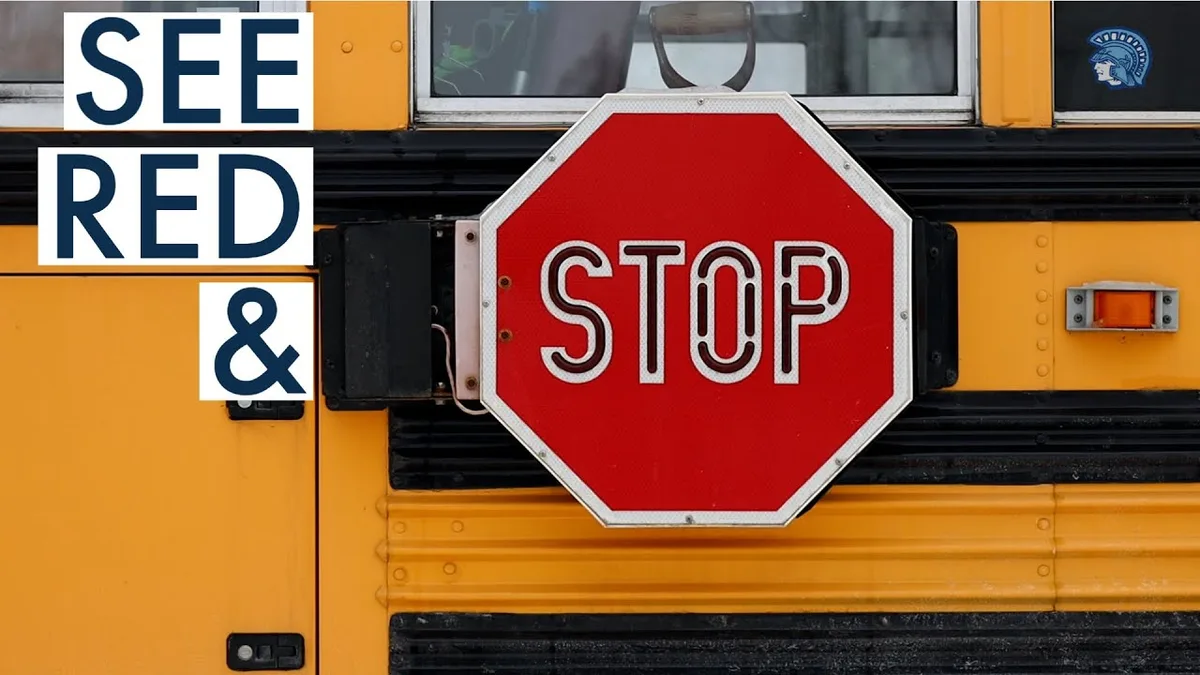
Per Maine Revised Statutes Title 29-A §2308, the law is clear: you must stop for a school bus with flashing red lights and an extended stop arm when traveling in the same direction, but the rules differ for divided highways.
YouTube / School District of Superior (YouTube thumbnail (fair-use with source credit))
Quick Answer
Maine school bus stop law for all drivers on divided highways requires you to stop only if you’re traveling in the same direction as the bus. Opposite-direction traffic does not stop on true divided highways. Flashing red lights and an extended stop arm mean stop.
The law applies to all public roads in Maine.
The Quick Answer: Do You Stop or Not?
You stop if you’re behind the bus or in the same lane of travel. You do not stop if you’re on the opposite side of a divided highway with a physical barrier. The rule is designed to protect children boarding or exiting the bus.
Violations can result in fines starting at $250.
How Divided Highways Change the Rule in Maine
A divided highway in Maine is defined as a road with a physical barrier or unpaved median separating traffic moving in opposite directions. This could be a concrete divider, grassy median, or other non-traversable separation.
On these roads, the school bus stop law treats opposite-direction traffic differently. If you’re on the opposite side of a divided highway, you are not required to stop for a school bus with flashing red lights. The physical barrier is what makes this exception possible, as it prevents children from crossing into your lane.
However, you should still slow down and remain alert for any unexpected movement.
YouTube / Dictionary (YouTube thumbnail (fair-use with source credit))
The Exact Conditions That Trigger a Stop
You must stop for a school bus in Maine when:
- The bus is displaying flashing red lights and has its stop arm extended
- You are traveling in the same direction as the bus, regardless of the number of lanes
- You are on a two-way road without a physical divider
The stop must be complete. You cannot proceed until the bus resumes motion, the stop arm retracts, and the red lights stop flashing.
What the School Bus Lights and Stop Arm Really Mean
School buses use a standardized light system to communicate with drivers:
- Flashing Amber Lights: The bus is preparing to stop. Slow down and be ready to stop, but do not pass the bus.
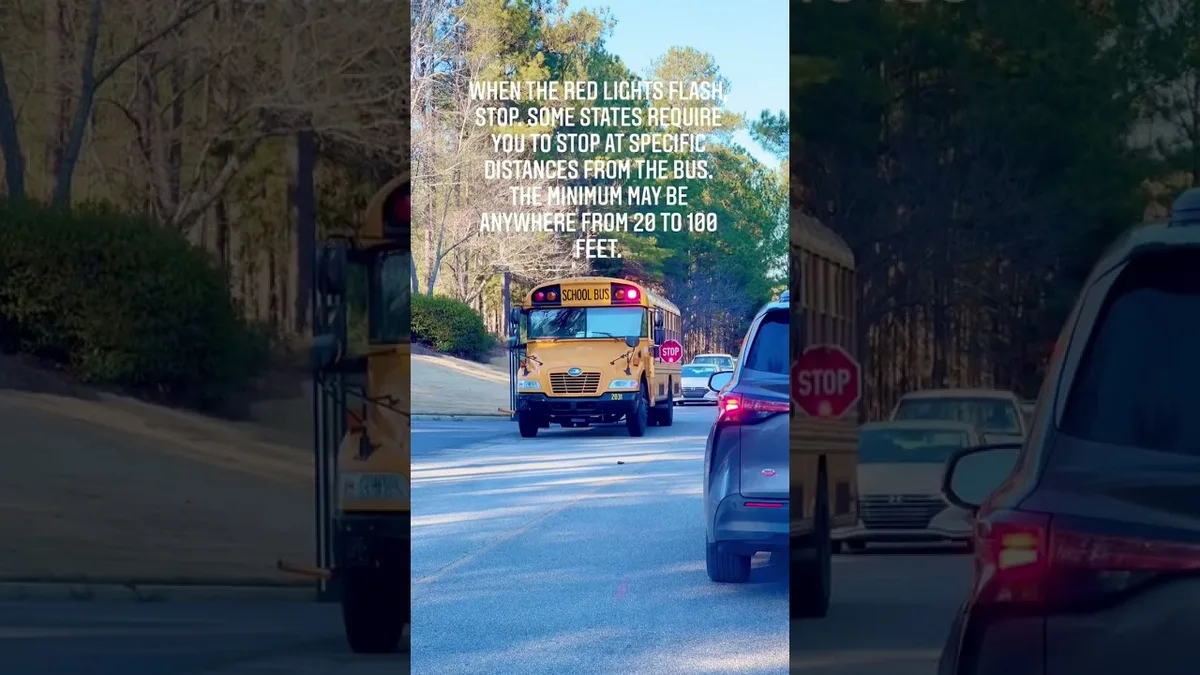
- Flashing Red Lights + Extended Stop Arm: The bus is stopped to pick up or drop off children. You must stop completely if you’re traveling in the same direction.
- No Lights: The bus is in normal operation, and you may proceed with caution.
The stop arm is a mechanical signal that extends from the side of the bus when it stops. It’s a clear visual indicator that children may be entering or exiting the vehicle.
YouTube / Canada Breeze (YouTube thumbnail (fair-use with source credit))
Opposite-Direction Traffic: When You Don’t Have to Stop
On a divided highway, traffic moving in the opposite direction is not required to stop for a school bus. This is because the physical barrier prevents children from crossing into the opposite lane.
However, there are a few important caveats:
- The highway must have a true physical divider (e.g., concrete barrier, grassy median). If the divider is just a painted line or a narrow strip of pavement, it may not qualify as a divided highway under Maine law.
- You should still slow down and stay alert. Children can be unpredictable.
- If you’re unsure whether the highway is considered divided, err on the side of caution and stop.
YouTube / The Driving Coach (YouTube thumbnail (fair-use with source credit))
The Legal Consequences of Getting It Wrong
Maine takes school bus stop violations seriously. The minimum fine for passing a stopped school bus is $250, and it can go up to $500 or more for repeat offenses. Your license could also be suspended if you’re caught multiple times.
These penalties exist because illegal passing puts children at direct risk. Law enforcement actively monitors school bus routes, especially in areas with frequent violations.
Common Mistakes Drivers Make (And How to Avoid Them)
Many drivers assume they must stop for a school bus no matter what. That’s not true on divided highways. The mistake is not recognizing the difference between a true divided highway and a regular two-way road.
Another common error is misjudging the bus’s signals. Some drivers stop for amber lights, but amber only means the bus is preparing to stop. You should slow down but aren’t required to stop until the red lights flash and the stop arm extends.
Confusion also arises at intersections. If you’re at a four-way stop and a school bus stops on the other side of the intersection, you must still stop if you’re traveling in the same direction.
Real-Life Scenarios: What to Do in These Situations
You’re driving on a divided highway with a concrete barrier. A school bus stops on the opposite side with flashing red lights. You do not need to stop, but you should slow down and watch for children.
You’re behind a school bus on a two-lane road. The bus activates its amber lights. You should prepare to stop but don’t have to stop yet.
When the red lights flash and the stop arm extends, you must come to a complete stop.
You’re approaching an intersection where a school bus has stopped on the cross street. If you’re turning right and the bus is on your left, you must stop. If you’re turning left and the bus is on your right, you must also stop.
Maine’s Official Definition of a Divided Highway
Maine defines a divided highway as a road with two or more roadways separated by a physical barrier or unpaved median. This barrier must be wide enough to prevent vehicles from crossing into the opposite lane.
Examples include highways with concrete dividers, grassy medians, or other non-traversable separations. Painted lines or narrow strips of pavement do not qualify as divided highways under Maine law.
If you’re unsure whether a road is considered divided, check for a physical barrier. When in doubt, stop.
FAQs About Maine’s School Bus Stop Law
Do I have to stop for a school bus on a divided highway in Maine?
No, you do not have to stop if you’re traveling in the opposite direction on a true divided highway with a physical barrier. You must stop if you’re in the same direction as the bus.
What’s the difference between flashing amber and red lights on a school bus?
Flashing amber lights mean the bus is preparing to stop. You should slow down but aren’t required to stop yet. Flashing red lights mean the bus is stopped, and you must stop if you’re traveling in the same direction.
Can I get a ticket for passing a school bus on a divided highway?
Yes, if you pass a school bus with flashing red lights and an extended stop arm while traveling in the same direction, even on a divided highway. The opposite-direction rule only applies when there’s a physical barrier.
What’s the fine for passing a stopped school bus in Maine?
The minimum fine is $250, and it can increase for repeat offenses. Your license may also be suspended if you’re caught multiple times.
Does the school bus stop law apply to private roads in Maine?
No, the law applies to public roads. However, private roads may have their own rules, so it’s best to check with the property owner or local authorities.
Final Checklist: Are You Following the Law Correctly?
Here’s a quick way to confirm you’re doing it right. First, check if you’re on a divided highway with a physical barrier. If yes, you don’t stop for opposite-direction buses.
Next, look at the bus signals. Amber lights mean slow down. Red lights and a stop arm mean stop if you’re behind or in the same lane.
Finally, remember the penalties. Passing a stopped bus can cost you $250 or more. When in doubt, stop.
It’s always the safer choice.