ByMax Lee
Maryland Uninsured Motorist Coverage Rules & Penalties
Maryland uninsured motorist coverage requirements and penalties can save you from financial disaster if you're hit by a driver with no insurance. About 12% of Maryland drivers are uninsured, so this coverage isn’t just recommended, it’s legally required for bodily injury.
Here’s what you need to know to stay protected and avoid costly mistakes.
Quick Answer
Maryland requires uninsured motorist bodily injury coverage at $30,000 per person and $60,000 per accident. Uninsured motorist property damage coverage is optional but must be offered. Driving without the required UMBI can lead to fines, license suspension, or registration suspension.
YouTube / The Ashutosh Technical (YouTube thumbnail (fair-use with source credit))
What Maryland’s Uninsured Motorist Coverage Actually Means
Uninsured motorist coverage steps in when the at-fault driver has no insurance or can’t be identified, like in a hit-and-run. It covers your medical bills, lost wages, and sometimes property damage.
Maryland splits this into two types. UMBI covers bodily injuries to you and your passengers. UMPD covers damage to your vehicle but isn’t mandatory.
Maryland’s Minimum UM Coverage Limits (And Why They Matter)
Maryland law sets the minimum UMBI limits at $30,000 per person and $60,000 per accident. These match the state’s bodily injury liability requirements.
UMPD isn’t required, but if you choose it, the minimum property damage limit is $15,000. This covers repairs or replacement if an uninsured driver damages your car.

YouTube / Concklin Insurance Agency (YouTube thumbnail (fair-use with source credit))
| Coverage Type | Minimum Limit (Per Person) | Minimum Limit (Per Accident) |
|---|---|---|
| UMBI | $30,000 | $60,000 |
| UMPD | N/A | $15,000 |
These are the bare minimums. Many drivers opt for higher limits to avoid out-of-pocket costs after a serious accident.
UMBI vs. UMPD: What’s Covered and What’s Not
UMBI covers medical expenses, lost wages, and pain and suffering for you and your passengers if the at-fault driver is uninsured. It may also cover you as a pedestrian or bicyclist.
UMPD covers damage to your vehicle caused by an uninsured driver. It often includes hit-and-run accidents, but you must report the incident to police.
What’s not covered:
- Damage to the at-fault driver’s vehicle
- Your own negligence
- Non-accident-related damage like theft or vandalism
Stacked vs. Non-Stacked UM Coverage: Which Should You Choose?
Stacked coverage combines the UM limits of all your insured vehicles. If you have two cars with $30,000 UMBI each, stacked coverage gives you $60,000 per person. It costs more but provides stronger protection.
Non-stacked coverage keeps the limits separate for each vehicle. It’s cheaper but offers less financial security in a severe accident.
Who should choose stacked?
- Drivers with multiple vehicles
- Those who want maximum protection
- People in high-risk areas with many uninsured drivers
Who can stick with non-stacked?
- Drivers with one vehicle and a tight budget
- Those with low-risk commutes
What Happens If You’re Hit by an Uninsured Driver in Maryland?
Your own UM coverage kicks in to pay for medical bills and property damage. You file a claim with your insurer, not the at-fault driver’s.
If you don’t have UM coverage, you may have to sue the at-fault driver directly. This is risky since many uninsured drivers lack assets to cover your costs.
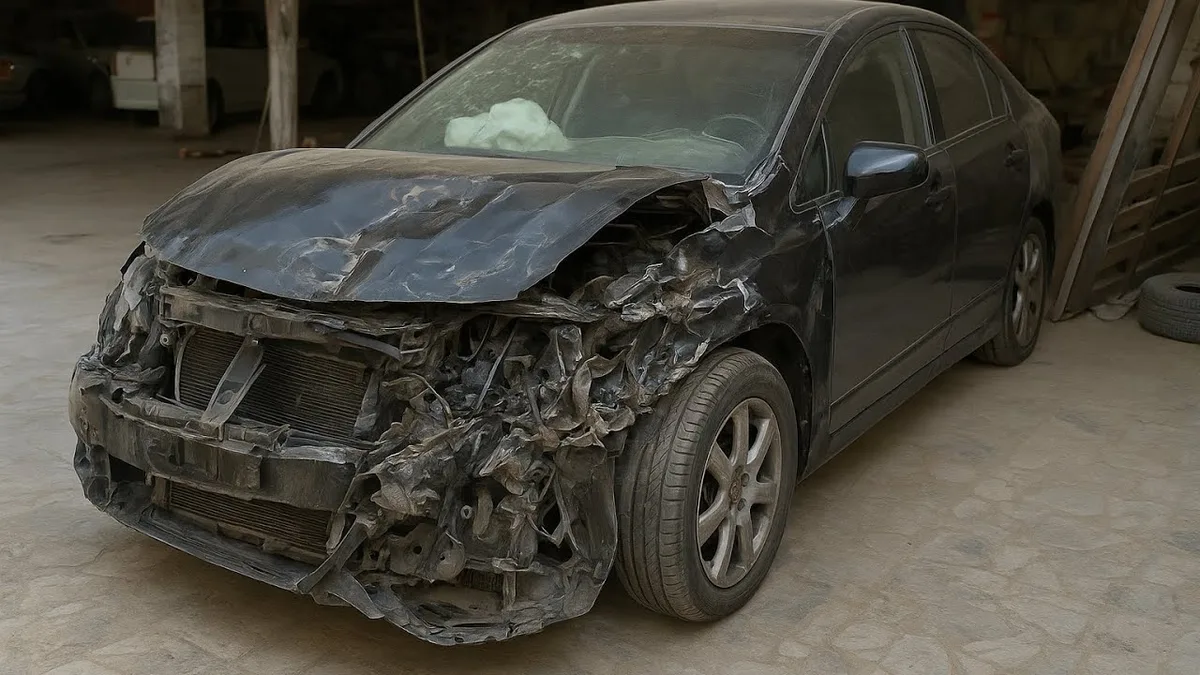
YouTube / Accident Master (YouTube thumbnail (fair-use with source credit))
Hit-and-run accidents are treated as uninsured motorist claims. You must report the incident to police within a reasonable time to qualify for UMPD coverage.
Step-by-Step: How to File an Uninsured Motorist Claim
First, call the police and document the accident scene. Get the other driver’s information if possible, or note their license plate if they flee.
Next, notify your insurance company as soon as possible. Provide the police report, photos, and any witness statements.
YouTube / CARE HEALTH (YouTube thumbnail (fair-use with source credit))
Your insurer will investigate and determine fault. If approved, they’ll pay up to your UM limits minus any deductible.
Penalties for Driving Without UM Coverage in Maryland
Driving without UMBI coverage is illegal. You’ll face a $150 fine plus $7 per day until you provide proof of insurance.
Your license and registration may be suspended. Reinstatement fees apply, and you’ll need to file an SR-22 in some cases.
Insurance companies may also charge higher premiums. Repeated offenses can lead to more severe penalties.
Common Mistakes That Get UM Claims Denied
Waiting too long to report the accident is a top reason for denial. Maryland has a 3-year statute of limitations for UM claims, but insurers prefer prompt reporting.
Failing to cooperate with your insurer’s investigation can also sink your claim. Provide all requested documentation and be honest about the details.
Another mistake is assuming UMPD covers everything. It often excludes non-accident damage like theft or vandalism.
When to Reject UM Coverage (And How to Do It Legally)
You can reject UMPD but not UMBI in Maryland. UMBI is mandatory, and insurers must include it in your policy.
To reject UMPD, you must do so in writing. Your insurer will provide a form for this purpose.
Rejecting UMPD saves money on premiums. But it leaves you vulnerable if an uninsured driver damages your car.
Maryland Hit-and-Run Rules and Your UM Policy
A hit-and-run is treated as an uninsured motorist claim under Maryland law. Your UM coverage applies if the at-fault driver can’t be identified.
You must report the incident to police immediately. Without a police report, your insurer may deny the UMPD portion of your claim.
UMBI still covers your injuries even if the driver is never found.
Cost of Uninsured Motorist Coverage in Maryland
UMBI typically adds $50 to $200 annually to your premium. The exact cost depends on your coverage limits and driving history.
UMPD is usually cheaper, often $20 to $100 per year. Higher limits or stacked coverage will increase the price.
Insurers may offer discounts if you bundle UM with other coverages. Shopping around can help you find the best rate.
Expert Tips to Maximize Your UM Protection
Increase your UM limits beyond the state minimum. Medical costs and vehicle repairs often exceed $30,000 per person.
Consider stacked coverage if you own multiple vehicles. This can double or triple your protection without a proportional premium increase.
Review your policy annually. As of 2026, Maryland’s uninsured driver rate remains steady, so maintaining strong UM coverage is wise.
Frequently Asked Questions
Does Maryland require uninsured motorist property damage coverage?
No, UMPD is optional in Maryland. However, insurers must offer it, and you must reject it in writing if you don’t want it.
Can I sue an uninsured driver in Maryland?
Yes, but it’s often not worth it. Many uninsured drivers lack the assets to pay a judgment, which is why UM coverage is so important.
How long do I have to file a UM claim in Maryland?
You have three years from the date of the accident to file a claim. However, notify your insurer as soon as possible to avoid delays.
Does UM coverage apply if I’m hit by an underinsured driver?
No, that’s a separate coverage called underinsured motorist. UM only applies when the at-fault driver has no insurance.
What if the uninsured driver is a family member?
Most policies exclude coverage for accidents involving household members. Check your policy’s exclusions carefully.