If you're wondering about the Nevada license plate frame law and state name visibility requirements, here's the bottom line. You can use a frame, but it must not obscure the state name or any part of the plate. Nevada law is specific about what must remain fully visible.
Per Nevada Revised Statutes 484A.470, your plate must show the state name and all numbers clearly. The law aims to prevent unauthorized alterations that hide identification. Let's break down exactly what's allowed and what isn't.
Quick Answer
Yes, you can use a license plate frame in Nevada. The frame cannot cover the state name or any numbers. It also cannot block registration stickers.
Violations can lead to fines or fix-it tickets. Check your frame before driving.
What Nevada's License Plate Frame Law Actually Says
Nevada's license plate frame law is straightforward: you can add a frame, but it must not hide any part of the plate. The relevant statute is Nevada Revised Statutes 484A.470, which requires that license plates be "mounted to display the state name and all numbers and letters." This means the frame can't cover the word "Nevada" at the top.
The law also prohibits frames that obscure registration stickers, which are placed on the upper right corner. If your frame blocks the sticker, you've violated the law.
| Allowed | Prohibited |
|---|---|
| Frames that leave the state name fully visible | Frames that cover any part of the state name |
| Frames that leave registration stickers unobstructed | Frames that cover registration stickers |
| Frames that leave all numbers and letters clear | Frames that cover numbers or letters |
Violations are typically treated as infractions, not misdemeanors. You'll likely receive a fix-it ticket, which means you can correct the problem and have the citation dismissed. However, repeat offenses could lead to fines.
Why does Nevada care about plate visibility? Clear plates help law enforcement identify vehicles quickly. They also ensure toll cameras and automated systems can read your plate correctly.
The Quick Rule: Can You Use a Frame in Nevada?
The short answer is yes, as long as the frame doesn't cover anything it shouldn't. Most factory-installed frames are designed to meet Nevada's requirements. However, many aftermarket frames are sold with decorative borders that are too wide.
Before buying a frame, measure the inner edge of the frame against the outer edge of the plate. The frame must not extend over the state name or any part of the numbers. If you're unsure, a safe choice is a slim, clear frame that sits within the plate's border.
You can also visit a local Nevada DMV office for guidance. Their official website provides detailed information on vehicle registration and compliance.
How Nevada Defines a Legal License Plate Frame
Nevada defines a legal license plate frame as one that leaves the state name, all numbers, and all letters fully visible. The frame can touch the plate's border but cannot overlap any printed text or graphics. This includes the registration stickers, which must remain accessible for inspection.
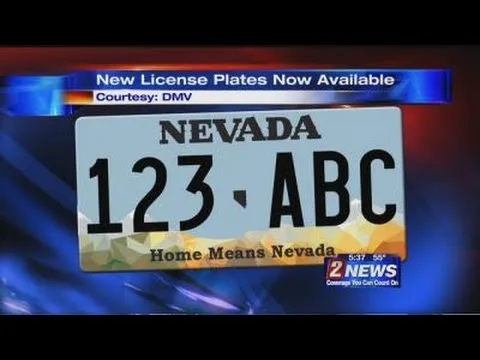
In practice, this means the frame's inner edge must be at least 1/8 inch away from the plate's outer edge. Any frame that covers even a small portion of the state name is considered non-compliant. Nevada law enforcement officers have discretion when issuing citations, but the standard is clear.
To avoid ambiguity, many drivers choose frames labeled "Nevada compliant" or "DMV legal." These frames are manufactured to meet the state's visibility requirements. However, it's always wise to double-check the fit on your specific plate.
What Must Stay Visible on Your Nevada Plate
When evaluating a license plate frame in Nevada, you need to check several key areas. The state name "Nevada" must be completely unobstructed at the top of the plate. This is non-negotiable; any frame that covers even part of the word can result in a citation.

Next, the registration sticker in the upper right corner must remain fully visible and accessible. This sticker proves your vehicle is currently registered. A frame that blocks the sticker is just as problematic as one that covers the state name.
Additionally, all numbers and letters on the plate must be clear. This includes the alphanumeric sequence, the county seal, and any decorative elements that are part of the official plate design.
Think of the plate as a whole. Every printed element must be readable from a distance, which is crucial for law enforcement and toll cameras.
Frames That Get You in Trouble (And Why)
Not all license plate frames are created equal. Some popular designs are explicitly illegal in Nevada because they hide critical plate information. These frames often feature thick borders, oversized logos, or custom text that extends over the plate.

A common offender is the "decorative" frame with a large state outline or slogan that covers the word "Nevada." Another problematic style is the frame with a tinted or reflective border that reduces readability. Even frames that appear slim can be illegal if they're mounted incorrectly and shift over the plate.
The risk isn't just a fine. An obscured plate can lead to failed vehicle inspections, especially if your state requires periodic checks. It can also cause issues with toll cameras and automated license plate readers, potentially resulting in misdirected citations.
To stay safe, avoid frames that are wider than 1/4 inch at the inner edge. Stick to frames made of clear or matte materials that don't reflect light.
How Nevada Enforces the Law
Nevada treats obscured license plates as a correctable violation. If an officer spots a non-compliant frame, you'll typically receive a fix-it ticket. This gives you a set period to remove or replace the frame and have the citation dismissed.

The state doesn't have a formal inspection program for all vehicles. However, law enforcement can issue citations during traffic stops or through automated camera systems. These cameras are increasingly used for toll collection and traffic monitoring.
If you receive a fix-it ticket, you'll need to visit a Nevada DMV office or an authorized inspection station. They'll verify that your plate is now fully visible. Bring your citation and vehicle registration to expedite the process.
Step-by-Step: Checking if Your Frame Is Legal
Start by examining your plate without the frame. Note the exact position of the state name, numbers, and registration sticker. These must remain completely unobstructed.
Next, hold your frame against the plate. The inner edge of the frame must not overlap any part of the state name or numbers. A simple way to test this is to look at the plate from a distance of 50 feet.
If any part is hard to read, the frame is likely illegal.

For a precise check, use a ruler. The frame's inner edge should be at least 1/8 inch away from the plate's outer edge. This ensures no part of the frame covers the state name or numbers.
If you're still unsure, visit a Nevada DMV office. They can provide a definitive answer and may even have a template to test your frame.
What Happens If Your Frame Breaks the Rules
If your frame violates Nevada's visibility requirements, you'll likely receive a fix-it ticket. This is not a fine but an order to correct the issue. You'll have a specified period, usually 30 days, to comply.
During this time, you must remove the non-compliant frame or replace it with a legal one. Once corrected, you'll need to have the plate inspected. The inspection can be done at a Nevada DMV office or an authorized station.
If you fail to correct the issue within the given time, the citation may convert to a fine. The fine amount can vary but typically ranges from $50 to $250. Repeated violations can lead to higher penalties.
Nevada vs. Other States: How the Laws Differ
License plate frame laws vary significantly across the United States. Some states have strict rules similar to Nevada's, while others are more lenient. Understanding these differences is crucial if you travel frequently or move to a new state.

California, for example, has stringent visibility requirements. Like Nevada, it prohibits frames that cover any part of the plate, including the state name and registration stickers. However, California also bans frames that alter the plate's appearance, such as those with colored borders.
In contrast, states like Texas and Florida are more relaxed. They allow frames as long as the plate's numbers and letters are visible. The state name and registration stickers can be partially covered in these states.
Here's a quick comparison of license plate frame laws in different states:
| State | State Name Visibility | Registration Sticker Visibility | Additional Requirements |
|---|---|---|---|
| Nevada | Must be fully visible | Must be fully visible | No obstruction of numbers or letters |
| California | Must be fully visible | Must be fully visible | No alteration of plate appearance |
| Texas | Can be partially covered | Must be fully visible | Numbers and letters must be visible |
| Florida | Can be partially covered | Must be fully visible | Numbers and letters must be visible |
If you frequently travel between states, it's wise to use a frame that meets the strictest requirements. This ensures compliance wherever you drive.
Where to Find the Official Rules
The official rules for Nevada's license plate frame law are found in the Nevada Revised Statutes. Specifically, NRS 484A.470 outlines the requirements for license plate visibility. This statute is the primary legal reference for what is and isn't allowed.
You can access the full text of NRS 484A.470 on the Nevada Legislature website. The website provides a searchable database of all Nevada laws.
The Nevada Department of Motor Vehicles also provides guidance on license plate requirements. Their official website includes information on vehicle registration, inspections, and compliance.
Frequently Asked Questions
Can I put a license plate frame on my Nevada plate?
Yes, you can use a license plate frame in Nevada. The frame must leave the state name, all numbers, and all letters fully visible. It also cannot cover the registration sticker.
What happens if my frame blocks part of the plate?
If your frame obscures any part of the plate, you may receive a fix-it ticket. You'll need to remove or replace the frame within 30 days. After correction, you must have the plate inspected to dismiss the citation.
Are tinted or reflective frames legal in Nevada?
Tinted or reflective frames are generally illegal in Nevada. They can reduce the readability of the plate, especially in certain lighting conditions. Stick to clear or matte frames that don't alter the plate's appearance.
Can I use a frame with a logo or slogan?
Frames with large logos or slogans are risky in Nevada. If the design extends over the state name or numbers, it violates visibility requirements. Choose slim frames without protruding elements to stay compliant.
Do I need to register my license plate frame with the DMV?
No, you don't need to register a license plate frame with the Nevada DMV. However, you're responsible for ensuring it meets state visibility requirements.
What if I move to Nevada from another state?
If you move to Nevada, you must comply with the state's license plate frame laws. Check your current frame against Nevada's requirements. You may need to replace it if it doesn't meet the visibility standards.