Nevada U turn laws at controlled intersections and highway crossovers vary depending on signage, signal type, and road design. Many drivers get confused about when a U-turn is legal versus when it triggers a citation. This guide breaks down exactly where and how you can make a U-turn without running afoul of state law.
Per Nevada Revised Statutes 484B.403, U-turns are permitted at signalized intersections unless a sign prohibits them. The visibility rule under NRS 484B.217 requires at least 200 feet of clear view in both directions. Understanding these rules matters whether you are navigating downtown Las Vegas or traveling Interstate 15.
Quick Answer
Nevada U turn laws at controlled intersections and highway crossovers allow turns unless signs prohibit them. You must have 200 feet of visibility in both directions. A green signal or green arrow permits the turn.
No U-Turn signs override all other conditions. U-turns on divided highways require designated crossovers only.

Nevada’s U-Turn Laws at a Glance
Nevada takes a permissive approach to U-turns compared to some neighboring states. The baseline rule is simple: U-turns are legal unless a sign or signal explicitly forbids them.
The core statute governing U-turns is NRS 484B.403. Two other statutes tie directly into U-turn safety and execution. NRS 484B.217 establishes the visibility requirement.
NRS 484B.413 mandates turn signal use before any turn or U-turn maneuver.
Here’s a quick reference for the main legal anchors:
| Statute | What It Covers |
|---|---|
| NRS 484B.403 | U-turn legality at intersections and roadways |
| NRS 484B.217 | Minimum 200-foot visibility requirement |
| NRS 484B.413 | Turn signal requirement before maneuver |
| NRS 484B.270 | Emergency vehicle exemptions |

Controlled Intersections: When You Can (and Can’t) U-Turn
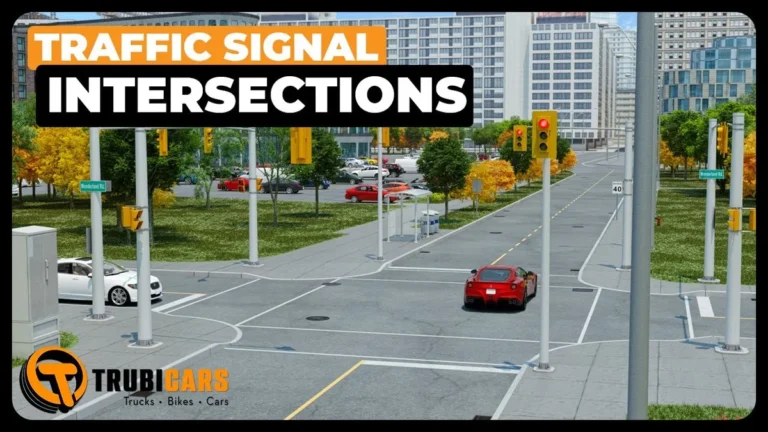
Controlled intersections are the most common U-turn opportunity in Nevada. A controlled intersection has traffic signals, stop signs, or other regulatory devices. The presence of control devices does not automatically allow or prohibit a U-turn.
Signage and signal phase do.
You can make a U-turn when the intersection has a green light or a green left-turn arrow. A solid red light prohibits the turn until the signal changes. A flashing yellow arrow requires a full stop and yield before proceeding.
A U-turn is illegal at a controlled intersection in three situations. First, a No U-Turn sign posted at the intersection makes the turn unlawful. Second, a red arrow signal prohibits the turn even if the through light is green.
Third, visibility below 200 feet in either direction makes the turn illegal regardless of signage.
Local ordinances add another layer. The City of Las Vegas enforces additional restrictions in high-traffic zones. Areas near the Strip, downtown corridors, and certain school zones carry extra signage.

Highway Crossovers: Special Rules for Divided Roads
Highway crossovers exist for a specific purpose. They provide legal U-turn opportunities on divided highways where medians prevent direct turns. Nevada maintains crossover points at regular intervals on Interstate 15, Interstate 80, and U.S.
Route 95.
You cannot make a U-turn anywhere across a median. Divided highways with physical medians prohibit U-turns except at designated crossover points. Attempting a U-turn over a concrete barrier or wide median creates a dangerous situation.
How do you identify a legal crossover? Look for paved openings in the median. Check for signage indicating the crossover location.
Some crossovers carry U-Turn Only signs. Others display No U-Turn signs despite being openings. Always read the sign.
Here is a comparison of crossover rules versus regular intersection rules:
| Scenario | Allowed? | Key Condition |
|---|---|---|
| Divided highway median | Only at crossovers | Physical barrier prohibits random turns |
| Control sign present | Follow the sign | No U-Turn overrides default permission |
| Solid green light | Yes | Yield to oncoming traffic |
| Red left arrow | No | Signal phase prohibits movement |
| Visibility under 200 feet | No | NRS 484B.217 blocks the turn |
Drivers new to Nevada should be especially careful on rural divided highways. Crossovers may be spaced several miles apart. The temptation to cross the median at an undesignated point is real.
Resisting that temptation matters.

The 3 Signs That Mean "No U-Turn" in Nevada
Signage controls U-turn legality more often than drivers realize. Nevada uses three primary sign types to prohibit or restrict U-turns.
The first sign is the standard No U-Turn symbol. This rectangular white sign with a black U-turn arrow crossed by a red circle and slash appears at intersections and highway crossovers. When this sign is posted, the U-turn is illegal regardless of signal phase or visibility conditions.
The second sign is a supplementary plaque reading U-Turns Prohibited. This rectangular white plaque mounts below a larger regulatory sign. It often appears with No Left Turn signs or at medians where left turns are allowed but U-turns are not.
The third sign is a U-Turn Only lane designation. This yellow warning sign with a black U-turn arrow indicates a lane reserved exclusively for U-turns.

Step-by-Step: How to Make a Legal U-Turn in Nevada
Making a legal U-turn requires following a clear sequence. Nevada law does not prescribe an exact turning radius or speed. The law requires proper signaling, yielding, and visibility.
Move into the lane closest to the centerline or median. On multi-lane roads, only the leftmost lane permits U-turns unless signage indicates otherwise.
Turn on your left turn signal at least 100 feet before the intersection. NRS 484B.413 requires this signal. Missing this step creates ambiguity for other drivers.
Check for No U-Turn signs. Confirm the traffic signal permits the turn. Look for oncoming vehicles within 200 feet.
Scan for pedestrians in crosswalks.
Yield to all oncoming traffic. Wait for a clear gap if needed. Do not stop in the intersection to wait.
When the way is clear, turn the wheel smoothly and complete the maneuver in one continuous motion.
Straighten the wheels. Check mirrors and blind spots. Cancel the turn signal.
Merge into the appropriate lane.
Visibility, Signals, and Right-of-Way: The Fine Print
U-turn legality depends on three overlapping requirements. You must signal early, yield properly, and maintain clear visibility.
NRS 484B.413 requires turn signal activation at least 100 feet before the intersection. The signal must be visible to traffic approaching from behind.
Right-of-way rules favor through traffic. U-turning drivers never have the right-of-way over vehicles traveling straight through a green light. You must yield to all oncoming traffic within your 200-foot visibility zone.
Pedestrians in crosswalks also have priority. Do not initiate the turn until the crosswalk is completely clear.
Visibility assessment requires checking both directions independently. Obstacles like parked trucks, construction barriers, or dense landscaping can create blind spots below the 200-foot threshold.
Common U-Turn Mistakes That Get Nevada Drivers Ticketed
Most citations stem from avoidable errors. Recognizing these mistakes helps drivers stay compliant.
Turning on red without stopping first remains the most frequent violation. Drivers treat red lights as yield signs instead of stop requirements.
Ignoring supplementary plaques causes repeated violations. A No U-Turn sign mounted below a green light confuses some drivers. The sign controls regardless of signal phase.
Failing to signal early enough creates rear-end collisions and citations. Many drivers activate signals only after entering the intersection.
Stopping mid-intersection to yield blocks traffic and invites tickets. The law requires you to complete the turn or wait before entering.
Misjudging visibility on curves and hills proves dangerous. If a curve or crest hides approaching vehicles, the U-turn is illegal.
Nevada vs. Other States: How U-Turn Laws Differ
Nevada's default-permission approach contrasts sharply with California's default-prohibition model. California requires explicit signage allowing U-turns at signalized intersections. Nevada requires explicit signage prohibiting them.
Arizona mirrors Nevada's permissive stance but adds a full-stop requirement at stop-controlled intersections. Utah bans U-turns within intersections entirely. Idaho and Washington share Nevada's permissive framework with minor variations.
Here is a quick comparison across five western states:
| State | Default at Signalized Intersection | Visibility Rule | One-Way U-Turns |
|---|---|---|---|
| Nevada | Allowed unless prohibited | 200 feet required | Permitted |
| California | Prohibited unless allowed | Distance unspecified | Restricted |
| Arizona | Allowed unless prohibited | Not specified | Permitted |
| Utah | Prohibited within intersection | 200 feet required | Permitted |
| Idaho | Allowed unless prohibited | Not specified | Permitted |
What Happens If You Break Nevada’s U-Turn Rules?
Illegal U-turns carry predictable consequences in Nevada. The baseline penalty is a traffic infraction. Nevada classifies illegal U-turn violations as infraction-level offenses under NRS 484B.403.
The typical fine ranges from 150 to 250 dollars depending on the county.
Do U-turn citations add points to your license? No. Nevada does not assess points for standalone U-turn infractions.
When does an illegal U-turn become a misdemeanor? If the violation causes a collision resulting in injury or property damage, prosecutors may charge reckless driving under NRS 484B.120.
What about insurance impacts? Most Nevada insurers do not raise rates for a single infraction without a collision.
Can you contest a U-turn ticket? Yes. Nevada allows defendants to plead not guilty and request a court hearing.

Real-Life Scenarios: U-Turns in Las Vegas, Reno, and on Highways
Scenario one involves a tourist making a U-turn on Las Vegas Boulevard near the Strip. The driver sees a green light and assumes the turn is legal. A No U-Turn sign mounted on the traffic signal pole prohibits the maneuver.
Scenario two occurs on Interstate 15 south of Las Vegas. A driver needs to reverse direction and attempts a U-turn over the concrete median. Nevada Highway Patrol observes the maneuver and initiates a traffic stop.
Scenario three takes place at a stop-controlled intersection in Reno. A driver slows to a near-stop but does not come to a complete halt before initiating the U-turn. The maneuver draws a citation for failure to stop at a stop sign.
These scenarios share a common thread. Most U-turn citations stem from driver assumption rather than ambiguous law.
Frequently Asked Questions
Can you make a U-turn on a red light in Nevada?
No. A solid red light requires a complete stop and prohibits the U-turn. You must wait for a green signal or green left-turn arrow before executing the maneuver.
Are U-turns illegal on all divided highways in Nevada?
Yes, except at designated crossover points. Physical medians prevent legal U-turns except where paved openings exist with appropriate signage.
How far must you see to make a legal U-turn in Nevada?
Nevada requires at least 200 feet of clear visibility in both directions. This standard appears under NRS 484B.217.
Do U-turn tickets add points to your Nevada driver license?
No. Nevada does not assess points for standalone illegal U-turn infractions.
Can emergency vehicles make illegal U-turns in Nevada?
Yes, under limited conditions. NRS 484B.270 exempts emergency vehicles operating with lights and sirens from certain traffic controls.
What is the fine for an illegal U-turn in Nevada?
Fines typically range from 150 to 250 dollars depending on the county. Additional court costs and fees can increase the total financial impact beyond the base fine.