ByMax Lee
New Mexico Car Seat Laws: Child Restraint Rules
YouTube / ONgov (YouTube thumbnail (fair-use with source credit))
If you've ever wondered whether your child's car seat meets New Mexico law, you're not alone. The New Mexico child restraint law and car seat requirements can feel confusing at first glance. You've got a kid to buckle in, a tight schedule, and a dozen rules that seem to overlap.
Here's the short version: as of 2026, New Mexico requires all children under 7 years old and under 60 pounds to ride in a federally approved car seat or booster. The law applies to every vehicle on the road, including taxis and rideshares. Getting it right is simpler than it sounds once you know the numbers.
Quick Answer: NM Car Seat Rules by Age and Size
New Mexico child restraint law and car seat requirements follow a simple rule: age and size determine the right seat. Children under 7 and under 60 pounds must use a car seat or booster.

YouTube / Baby Company (YouTube thumbnail (fair-use with source credit))
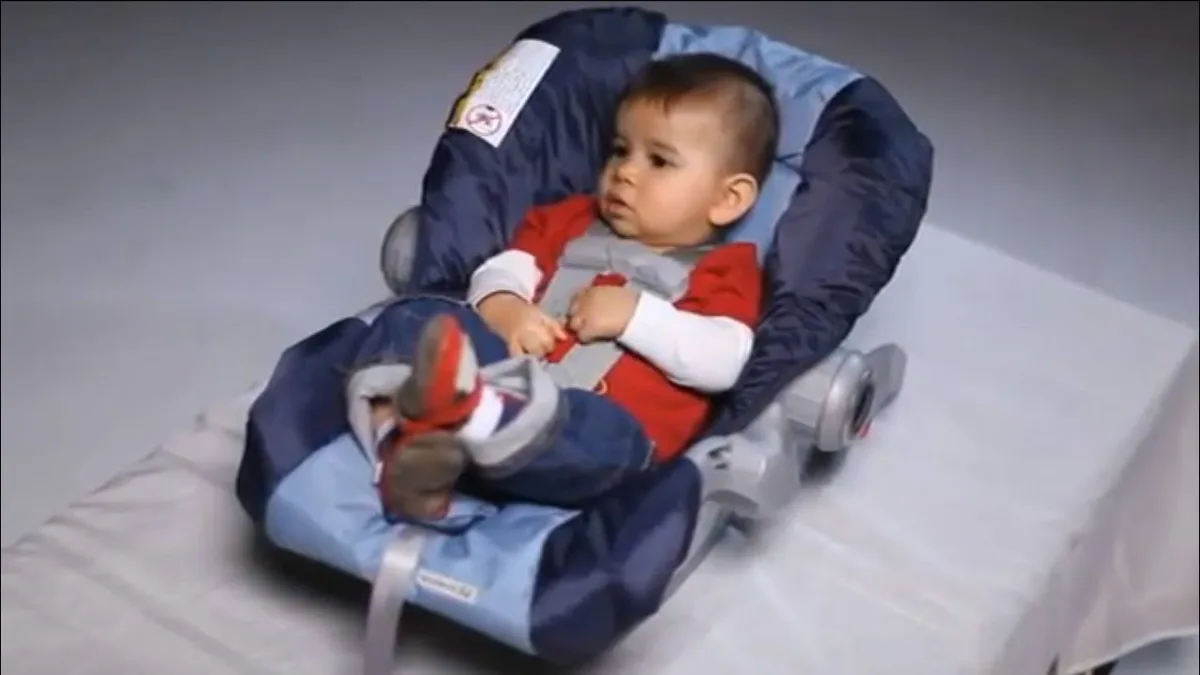
Children must ride in a rear-facing car seat from birth until they reach the seat's height or weight limit. Most convertible seats allow rear-facing up to 40 to 50 pounds. After that, they can move forward-facing until they outgrow the harness.
Then comes a booster seat. A booster keeps the seat belt positioned correctly across the child's body. Kids can switch to a regular seat belt when they reach age 7 or hit 60 pounds, whichever comes first.
What New Mexico’s Child Restraint Law Actually Requires
The state law lives under New Mexico Statute §66-7-369, officially called the Child Passenger Restraint Act. It covers every child riding in a motor vehicle on New Mexico roads.
Rear-facing car seats: Children under 1 year old or under 20 pounds must ride rear-facing. This is the absolute minimum. The American Academy of Pediatrics recommends keeping kids rear-facing until at least age 2, but the law only sets the floor, not the ceiling.
Forward-facing car seats: Once a child turns 1 and reaches 20 pounds, they can ride forward-facing. The child must use a harness system, like a 5-point harness built into the seat. This phase continues until the child outgrows the seat's limits.
Booster seats: Children under 7 years old or under 60 pounds must use a booster seat. The booster raises the child so the vehicle's seat belt fits properly. Without a booster, the belt sits across the neck and abdomen instead of the shoulders and hips.
Seat belts alone: Kids who are 7 years old or older, or who weigh 60 pounds or more, can use the vehicle seat belt. Some kids outgrow the weight requirement before the age requirement. The law treats either threshold as sufficient.
The fine for violating this law runs up to $25 for a first offense.
How New Mexico’s Law Compares to Safety Best Practices
Here's where things get interesting. New Mexico law sets minimum requirements, but safety experts recommend going beyond those minimums whenever possible.
The American Academy of Pediatrics advises keeping children rear-facing until at least age 2, or until they reach the highest height or weight limit allowed by their car seat. Most child safety seats on the market today support rear-facing well past age 2.
The National Highway Traffic Safety Administration recommends using a booster seat until the vehicle's seat belt fits properly on its own. That usually happens around age 8 to 12, or when the child reaches 4 feet 9 inches tall. New Mexico only requires a booster until age 7 or 60 pounds.
The gap between the law and best practice exists for a reason. Laws have to cover every situation, including edge cases. Safety guidelines focus on what gives the best protection for the widest range of kids.
Rear-Facing vs. Forward-Facing: When to Switch in NM
Rear-facing is the safest position for young children. The position cradles the head, neck, and spine during a crash. In a forward-facing seat, a young child's disproportionately large head can cause severe neck injury.

Wikimedia Commons / Anwar2 (CC BY-SA)
New Mexico law requires rear-facing for children under 1 year or under 20 pounds. The AAP says stay rear-facing as long as the seat allows.
The switch from rear-facing to forward-facing should happen when the child outgrows the rear-facing limits of their seat, not based on age alone. When you do switch to forward-facing, make sure the harness straps sit at or just below the child's shoulders. The chest clip should sit at armpit level.
The straps should be snug enough that you cannot pinch any slack at the shoulder.
Booster Seat Rules: High-Back, Backless, and When to Drop It
Booster seats bridge the gap between a harness-equipped car seat and a regular seat belt. They raise the child so the lap belt sits low across the hips and the shoulder belt crosses the middle of the chest and shoulder.

YouTube / Children's Healthcare of Atlanta Strong4Life (YouTube thumbnail (fair-use with source credit))
New Mexico requires a booster for children under 7 years old or under 60 pounds.
There are two main types of booster seats:
- High-back boosters have a backrest and head support. They position the shoulder belt correctly and offer side-impact protection.
- Backless boosters are compact and portable. They work well in vehicles that have headrests and proper shoulder belt positioning.
You can drop the booster when the child reaches age 7 or 60 pounds, whichever comes first. But here is the practical test most experts recommend: can the child sit all the way back against the vehicle seat with knees bending naturally at the edge of the seat, without slouching? Can the lap belt fit snugly across the upper thighs, not the stomach?
Can the shoulder belt cross the middle of the shoulder and chest, not the neck? If the answer is no to any of these, the child still needs a booster.
Step-by-Step: How to Choose the Right Car Seat for Your Child
Picking the right car seat can feel overwhelming. Here's a straightforward way to narrow it down.
Step 1: Know your child's current size. Weigh and measure your child. Note their age, weight, and height.
Step 2: Match the seat to your child's size, not their age. Age is a guideline. Weight and height are the real factors.
Step 3: Decide on seat type. If you have a newborn, an infant-only seat is the simplest choice. If you want one seat to last longer, a convertible seat handles rear-facing and forward-facing. An all-in-one seat goes from rear-facing to forward-facing to booster.
Step 4: Check your vehicle. Some seats are bulky and won't fit comfortably in your car, especially in smaller vehicles.
Step 5: Verify the seat isn't expired or recalled. Every car seat has an expiration date stamped on it, usually 6 to 10 years from the manufacture date. Check the NHTSA recall database before buying a used seat.
How to Install a Car Seat Correctly (And Avoid Common Mistakes)
A car seat that isn't installed properly is almost as dangerous as no car seat at all.

YouTube / Buckle Up for Life (YouTube thumbnail (fair-use with source credit))
The 1-inch rule. Grab the car seat at the belt path and try to move it side to side and front to back. If it moves more than 1 inch in any direction, it is not tight enough.
LATCH vs. seat belt installation. You can install a car seat using either the LATCH system or the vehicle seat belt. You generally cannot use both at the same time unless the manufacturer specifically allows it.
The top tether. Forward-facing seats should always use the top tether strap. It reduces forward rotation in a crash by up to 4 to 5 inches.
Harness strap position. Rear-facing: straps should sit at or below the child's shoulders. Forward-facing: straps should sit at or just below the child's shoulders. The chest clip goes at armpit level.
Recline angle for infants. Newborns need a more reclined position to keep their airway open. Most infant seats have a built-in level indicator or adjuster.
Taxi, Uber, and Rideshare Rules for Kids in New Mexico
New Mexico's child restraint law applies to all motor vehicles, including taxis, Uber, and Lyft. Drivers of rideshare and taxi services are legally responsible for ensuring children in their vehicles are properly restrained.
In practice, this creates a real problem. Most rideshare drivers do not carry car seats or booster seats. If you hail an Uber with a toddler who needs a car seat, the driver is not obligated to provide one.
You are responsible for bringing your own.
If you regularly use rideshare services with young children, consider these options:
- Bring a lightweight travel car seat or backless booster wherever you go.
- Keep a foldable car seat in your trunk for unexpected trips.
- Carpool with other parents and share the logistics of transporting children safely.
What Happens If You Break NM’s Child Restraint Law?
New Mexico treats child restraint violations as a traffic infraction. The penalty for a first offense is a fine of up to $25. Subsequent offenses within a 12-month period can increase the fine.
Beyond the fine, there are other consequences to consider. A violation appears on your driving record. More importantly, a citation means a law enforcement officer observed your child riding unrestrained.
Studies show that car seats reduce the risk of fatal injury by 71 percent for infants and 54 percent for toddlers. Booster seats reduce the risk of serious injury by 45 percent for children aged 4 to 8.
Where to Get a Free Car Seat Check in New Mexico
You do not have to figure out car seat installation alone. New Mexico has a network of certified child passenger safety technicians who provide free car seat checks.

YouTube / WJHL (YouTube thumbnail (fair-use with source credit))
To find a station near you, visit the NHTSA car seat check locator or contact the New Mexico Department of Transportation.
These sessions are usually held on a first-come, first-served basis. Some locations require an appointment. Bring your child with you so the technician can check the harness fit in real time.
Frequently Asked Questions
How old does my child have to be for a booster seat in New Mexico?
New Mexico law requires a booster seat for children under 7 years old who weigh less than 60 pounds. If your child is 6 years old and weighs 55 pounds, they still need a booster.
Can my child ride in a taxi without a car seat in New Mexico?
No. The New Mexico child passenger restraint law applies to all vehicles, including taxis. However, most taxis do not provide car seats.
If you hail a taxi with a young child, you are responsible for bringing an appropriate car seat or booster.
What is the difference between a high-back booster and a backless booster?
A high-back booster has a built-in backrest and head support. It helps position the shoulder belt correctly and offers side-impact protection. A backless booster is smaller and more portable but relies on the vehicle's headrest for support.
When can my child stop using a car seat and ride with just a seat belt?
A child can use a seat belt alone when they are 7 years old or weigh 60 pounds, whichever comes first. But the law is not the same as safety best practice. The American Academy of Pediatrics recommends keeping children in a booster until the seat belt fits properly.
Is it legal to use a secondhand car seat in New Mexico?
Yes, it is legal to use a secondhand car seat in New Mexico as long as it meets current federal safety standards and is installed correctly. However, you need to know the seat's full history, including whether it has been in a crash, whether it is expired, and whether it has been recalled.