New York horse drawn vehicle and animal rider highway sharing rules are not one-size-fits-all, and that mismatch trips up almost every user who looks them up. If you run a commercial carriage, ride recreationally, or just drive past equine road users, you’ve likely seen conflicting guidance that doesn’t match your exact situation. Getting the rules wrong leads to fines, liability exposure, or even preventable crashes.
We’ve sorted the latest state and local regulations into a clear decision workflow to match you to the right rules fast.
As of 2026, New York State Vehicle and Traffic Law § 1151 sets baseline slow-moving vehicle rules, but NYC adds far stricter local requirements for commercial operators that supersede state rules for Manhattan carriage routes. If you’re not sure which set of rules applies to you, the quick answer and decision branches below will narrow down your exact obligations in seconds.
Quick Answer
New York horse drawn vehicle and animal rider highway sharing rules split into two core sets: state baseline rules and stricter NYC local ordinances for commercial carriages. All equine road users must display a 16-inch slow-moving vehicle emblem, and motorists must give at least 3 feet of passing clearance. Prohibited routes include all New York State Thruway segments and NYC limited-access expressways.
Fines for non-compliance start at $500 for unpermitted commercial carriage operation.
The Big Problem With New York Equine Highway Sharing Rules (It’s Not One-Size-Fits-All)
The core issue with New York horse drawn vehicle and animal rider highway sharing rules is that there is no single, unified rulebook that applies to every user. Guidance splits along two lines: jurisdiction and user type. Jurisdiction matters first, because New York City enforces far stricter local carriage ordinances under the NYC Administrative Code, while upstate New York follows baseline state Vehicle and Traffic Law rules.
User type matters just as much. A commercial carriage operator in Manhattan has wildly different obligations than a recreational rider on an Adirondack backroad, or a motorist passing a horse-drawn farm cart on a state route.
Generic guides often mix these two sets of rules without flagging the split. That leads to costly mistakes. A recreational rider might follow NYC carriage rules that don’t apply to them.
A commercial operator might miss local permit requirements that carry fines of up to $1,000. As of 2026, there is no statewide consolidated guide that routes users to the correct rule set for their exact situation. The first step to staying compliant is pinpointing your exact user type and location before you review any specific requirements.
First: Pinpoint Your Exact User Type and Location (This Determines Every Rule That Applies to You)
All applicable rules for New York horse drawn vehicle and animal rider highway sharing rules depend on two non-negotiable variables: your operating location and your user type. Answer these two questions first to filter out irrelevant rules immediately.
First, confirm your jurisdiction. If you operate exclusively within New York City limits, you fall under NYC DOT and NYC Administrative Code regulations for all equine road activity. If you operate anywhere outside NYC city limits, including upstate state routes, Adirondack Park roads, or suburban Westchester County highways, you follow New York State Vehicle and Traffic Law baseline rules, plus any local town or park ordinance overlays.
Next, confirm your user type. The table below breaks down the three core user groups and the rule set that applies to each, as of 2026.
| Location | User Type | Governing Rule Set |
|---|---|---|
| New York City | Commercial carriage operator (for hire) | NYC Administrative Code § 19-176, NYC DOT carriage regulations, NYS VTL baseline |
| New York City | Recreational rider or led horse | NYC Administrative Code equine road use rules, NYS VTL baseline |
| Upstate New York | Commercial horse-drawn vehicle operator | NYS VTL § 1151, local town ordinances, park-specific rules |
| Upstate New York | Recreational mounted rider or farm cart operator | NYS VTL § 1151, local town ordinances, park-specific rules |
| All locations | Motorist sharing roads with equine users | NYS VTL § 1151, no local overlay exceptions |
Once you’ve matched your row in this table, you can move to the relevant decision branch for your user type below. If you fall into multiple categories, follow the stricter set of rules to avoid compliance gaps.
Decision Branch 1: You Operate a Commercial Horse-Drawn Carriage in New York City
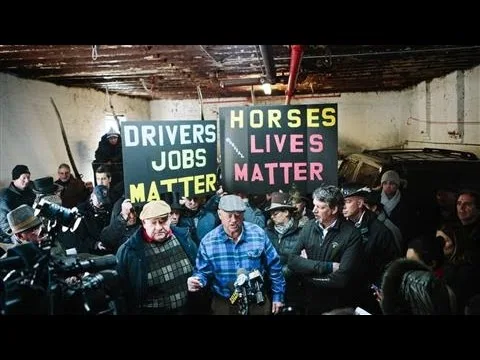
All commercial horse-drawn carriage activity in New York City falls under strict local regulations that override state baseline rules. Requirements cover permits, safety specs, operating zones, and fines for non-compliance.
Required NYC Carriage Permits, Licenses, and Allowed Operating Zones
First, all commercial horse-drawn carriage operators in New York City must hold a valid carriage hack license issued by the NYC Department of Consumer and Worker Protection, available via the agency’s official carriage license portal. As of 2026, the application fee for this license is $215, and applicants must pass a written test on NYC carriage rules, provide proof of liability insurance, and pass a vehicle safety inspection. Permits only allow operation in designated zones: the primary carriage stand is on Central Park South at 59th Street, with limited allowed routes through Central Park and select midtown streets.
Operating outside these allowed zones carries a $500 minimum fine.
Mandatory Safety Gear and Vehicle Specs for NYC Commercial Carriages
NYC requires all commercial carriages to meet stricter safety specs than the state baseline. All vehicles must have a working front white headlamp visible from at least 500 feet, a rear red reflector visible from 600 feet, and a fully functional brake system rated for the vehicle’s maximum loaded weight. Horses must wear harness safety straps to prevent them from breaking free if spooked, and all operators must carry a copy of their hack license and insurance proof on the vehicle at all times.
Slow-moving vehicle emblems are required for all carriages operating on streets with speed limits over 25 mph.
Prohibited Routes, Speed Limits, and Fines for Non-Compliant NYC Operators
NYC carriages are banned from all limited-access expressways and the New York State Thruway, same as all other equine road users. The maximum operating speed for any horse-drawn carriage in NYC is 15 mph, regardless of the posted speed limit for motor vehicles. Fines for non-compliance start at $500 for missing safety gear, and can reach $1,000 for operating without a valid hack license or in a prohibited zone.
Repeat violations can lead to permanent revocation of your carriage hack license.
Decision Branch 2: You’re an Upstate Equine Highway User (Mounted Rider, Horse-Drawn Vehicle Operator, or Farm Cart User)
If you operate outside New York City limits, you follow New York State Vehicle and Traffic Law baseline rules, plus any local town or park-specific overlays for your route. Rules vary slightly based on whether you’re a commercial operator, recreational rider, or farm worker using a horse-drawn cart. All upstate equine road users share the same baseline right-of-way and visibility requirements, outlined below.
How Upstate Rules Change Based on Your Specific Use Case
Recreational mounted riders and farm cart operators do not need a state-issued permit to use public highways in upstate New York, unless they are operating in a state park that requires a separate equestrian access pass. Commercial horse-drawn vehicle operators, such as wedding carriage services, may need a local business permit from their town or county clerk, depending on the municipality. All users must follow posted speed limits and yield to motorized traffic at intersections unless a local ordinance states otherwise.
Mandatory Visibility Gear, Speed Limits, and Right-of-Way Rules for All Upstate Equine Users
All horse-drawn vehicles and ridden horses using upstate public highways must display a slow-moving vehicle emblem that is at least 16 inches wide, with high-visibility reflective striping. Riders and carriage operators are also required to use front and rear lighting visible from at least 500 feet when operating in low-light conditions, including dawn, dusk, and nighttime hours. The maximum operating speed for any horse-drawn vehicle on upstate public highways is 15 mph, matching the NYC limit.
Motorists overtaking equine road users must give a minimum of 3 feet of passing clearance, and may not exceed 25 mph when passing a slow-moving equine user.
Where You’re Allowed (and Banned) From Operating on Upstate Public Highways
Equine road users are banned from all New York State Thruway segments and all limited-access expressways across upstate New York, per NYS VTL § 1151. Some local towns restrict equine use on specific high-traffic state routes, so you must check local ordinances before operating in a new area. State parks such as the Adirondack Park allow equine road use on designated routes, but require a separate equestrian access permit for commercial operators.
Recreational riders may use any public highway not explicitly banned for equine use, as long as they follow right-of-way rules.
Decision Branch 3: You’re a Motorist Sharing New York Roads With Equine Users
If you are a motorist driving on New York roads where equine users are present, you have specific legal obligations to avoid crashes and citations. These rules apply even if you never intentionally drive near horses or carriages, as many upstate and NYC routes have regular equine traffic. Failing to follow these rules can lead to fines, liability for crashes, or serious injury to equine users and other motorists.
Legal Passing, Speed, and Right-of-Way Rules You Must Follow
When overtaking a horse, ridden rider, or horse-drawn vehicle on any New York public road, you must give a minimum of 3 feet of clearance between your vehicle and the equine user. You may not exceed 25 mph when passing a slow-moving equine user, even if the posted speed limit is higher. If a horse is spooked and moves into your lane, you must slow down immediately and stop if safe to do so, rather than honking or accelerating past the animal.
Honking at a spooked horse can cause it to bolt into oncoming traffic or crash into your vehicle.
What to Do If You Encounter a Spooked or Loose Horse on the Highway
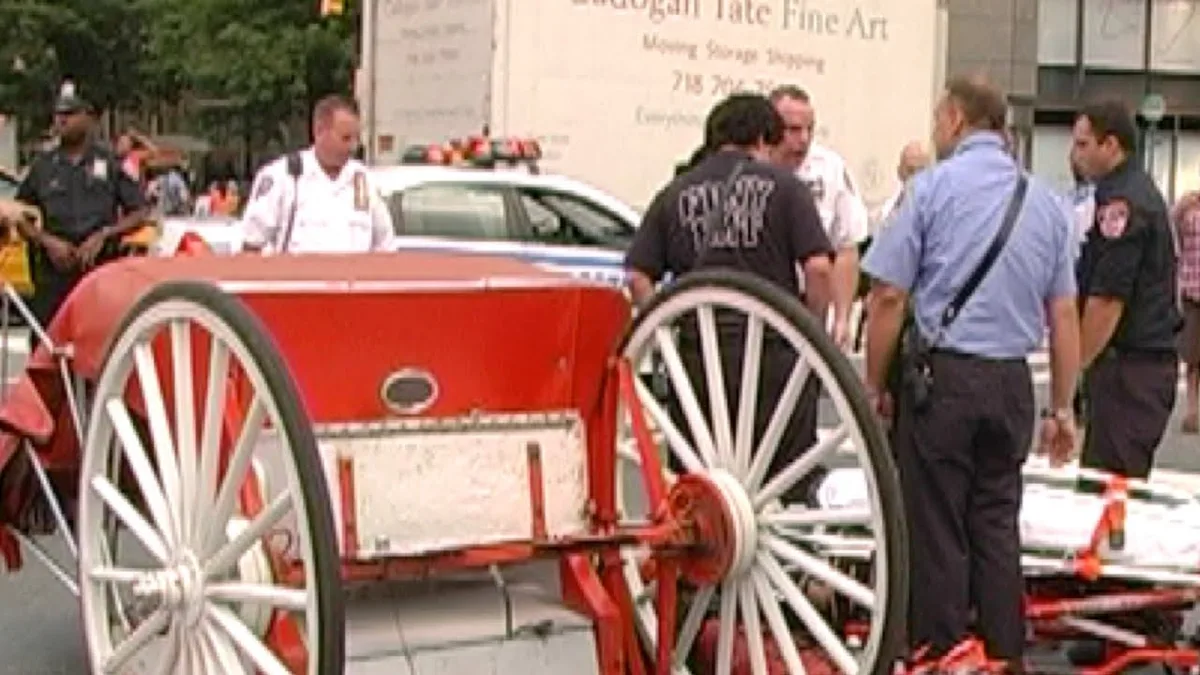
If you encounter a loose horse on the highway, do not honk or swerve suddenly. Slow down as quickly as safely possible, and pull over to the shoulder to give the horse space. Call 911 to report the loose animal, and stay in your vehicle until help arrives.
If you are in a crash involving a horse or horse-drawn vehicle, you must stop immediately, call 911, and exchange insurance information with the equine user, same as any other motor vehicle crash. Liability for crashes involving spooked horses is often assigned to the motorist if they were speeding, honking, or did not give the required 3 feet of passing clearance.
Common, Costly Mistakes All 3 User Groups Make (And the Fines or Injuries That Come With Them)
Nearly all compliance errors across the three user groups stem from mixing up jurisdiction rules or skipping required safety gear, with steep, avoidable costs as of 2026. The most frequent mistakes are split below by user group.
Commercial NYC carriage operators most often operate outside designated carriage zones without a valid hack license, or skip required safety gear like harness safety straps. Fines start at $500 for missing gear, and hit $1,000 for unlicensed operation or zone violations. Repeat offenses can lead to permanent license revocation.
Upstate equine users most often skip low-light visibility gear, or operate on banned routes like the New York State Thruway. A missing slow-moving vehicle emblem leads to a $150 citation, but the bigger risk is a crash caused by motorists not seeing the equine user in time. Recreational riders also frequently skip liability insurance for public road use, leaving them on the hook for all medical and property costs after a crash.
Motorists make two high-risk, consistent errors: failing to give the required 3 feet of passing clearance, and honking at spooked horses. Honking can cause a horse to bolt into oncoming traffic, leading to multi-vehicle crashes with severe injury risk. Illegal passing citations start at $150, but crash liability for illegal passing or honking can reach six figures for property damage and medical bills.

Final Decision Guide: Quick Rule Cheat Sheet For Every New York Equine Highway Scenario
Use the decision workflow below to match your exact situation to the correct rules in seconds. The workflow routes you based on location, user type, and activity to eliminate guesswork.

First, confirm your location: NYC or upstate? Next, confirm your user type: commercial carriage operator, upstate equine user, or motorist. NYC commercial operators need a hack license, allowed zone confirmation, and full safety gear.
Upstate equine users need a slow-moving vehicle emblem, low-light lighting, and liability insurance. Motorists must give 3 feet of passing clearance and never honk at a spooked horse.
Core requirements for each user group as of 2026:
- NYC commercial carriage operator: $215 hack license, harness safety straps, 500ft headlamp, 600ft rear reflector, 15 mph max speed, banned from NYC expressways and non-designated carriage zones.
- Upstate equine user (all types): 16-inch slow-moving vehicle emblem, low-light lighting for dusk/dawn/night, 15 mph max for horse-drawn vehicles, banned from Thruway and limited-access expressways.
- Motorist: No permit required, 25 mph max when passing equine users, 3 feet minimum passing clearance, no honking at spooked horses.
Frequently Asked Questions: New York Equine Highway Sharing Rules
Are horse-drawn carriages allowed on New York State highways?
Yes, most public highways outside NYC allow horse-drawn carriages as long as they display a 16-inch slow-moving vehicle emblem and follow posted speed limits. They are banned from all New York State Thruway segments and limited-access expressways per NYS Vehicle and Traffic Law § 1151, as of 2026.
What are the fines for breaking New York equine highway sharing rules?
Fines vary by user type and violation. NYC commercial carriage operators face $500 to $1,000 fines for unlicensed operation or missing safety gear, with possible permanent license revocation for repeat offenses. Upstate equine users face $150 citations for missing required emblems or operating on banned routes.
Motorists face $150 citations for illegal passing, and can be held liable for six-figure crash costs if they honk at a spooked horse or fail to give 3 feet of passing clearance.
Do I need a permit to ride my horse on public roads in upstate New York?
Recreational riders do not need a state-issued permit to ride on upstate public highways, as long as they follow NYS Vehicle and Traffic Law baseline rules. You will need a separate equestrian access permit if you are operating commercially or riding in a state park like the Adirondack Park that requires paid access for commercial equine activities, as of 2026.
Can motorists pass horse-drawn vehicles on New York highways?
Yes, motorists can pass horse-drawn vehicles and ridden horses on New York highways, but they must follow two strict rules: give a minimum of 3 feet of clearance between their vehicle and the equine user, and do not exceed 25 mph while passing, even if the posted speed limit is higher. Honking at a horse during or after passing is prohibited, as it can cause the animal to spook and crash.
What safety gear is required for horseback riding on New York public roads?
All ridden horses on New York public roads must display a 16-inch slow-moving vehicle emblem visible from the rear, plus front and rear lighting visible from 500 feet in low-light conditions. Riders should wear high-visibility tack and carry proof of liability insurance, as of 2026.
Are there any upcoming changes to New York equine highway rules for 2027?
No major regulatory changes are scheduled for 2027 as of late 2026, though the NYC DOT periodically updates carriage zone maps based on tourism volume. Check the NYC DOT official carriage rules page each year for updates to allowed routes or permit fees.
New York Horse Drawn Vehicle and Animal Rider Highway Sharing Rules
New York horse drawn vehicle and animal rider highway sharing rules are not one-size-fits-all, and that mismatch trips up almost every user who looks them up. If you run a commercial carriage, ride recreationally, or just drive past equine road users, you’ve likely seen conflicting guidance that doesn’t match your exact situation. Getting the rules wrong leads to fines, liability exposure, or even preventable crashes.
We’ve sorted the latest state and local regulations into a clear decision workflow to match you to the right rules fast.
As of 2026, New York State Vehicle and Traffic Law § 1151 sets baseline slow-moving vehicle rules, but NYC adds far stricter local requirements for commercial operators that supersede state rules for Manhattan carriage routes. If you’re not sure which set of rules applies to you, the quick answer and decision branches below will narrow down your exact obligations in seconds.
Quick Answer
New York horse drawn vehicle and animal rider highway sharing rules split into two core sets: state baseline rules and stricter NYC local ordinances for commercial carriages. All equine road users must display a 16-inch slow-moving vehicle emblem, and motorists must give at least 3 feet of passing clearance. Prohibited routes include all New York State Thruway segments and NYC limited-access expressways.
Fines for non-compliance start at $500 for unpermitted commercial carriage operation.
The Big Problem With New York Equine Highway Sharing Rules (It’s Not One-Size-Fits-All)
The core issue with New York horse drawn vehicle and animal rider highway sharing rules is that there is no single, unified rulebook that applies to every user. Guidance splits along two lines: jurisdiction and user type. Jurisdiction matters first, because New York City enforces far stricter local carriage ordinances under the NYC Administrative Code, while upstate New York follows baseline state Vehicle and Traffic Law rules.
User type matters just as much. A commercial carriage operator in Manhattan has wildly different obligations than a recreational rider on an Adirondack backroad, or a motorist passing a horse-drawn farm cart on a state route.
Generic guides often mix these two sets of rules without flagging the split. That leads to costly mistakes. A recreational rider might follow NYC carriage rules that don’t apply to them.
A commercial operator might miss local permit requirements that carry fines of up to $1,000. As of 2026, there is no statewide consolidated guide that routes users to the correct rule set for their exact situation. The first step to staying compliant is pinpointing your exact user type and location before you review any specific requirements.
First: Pinpoint Your Exact User Type and Location (This Determines Every Rule That Applies to You)
All applicable rules for New York horse drawn vehicle and animal rider highway sharing rules depend on two non-negotiable variables: your operating location and your user type. Answer these two questions first to filter out irrelevant rules immediately.
First, confirm your jurisdiction. If you operate exclusively within New York City limits, you fall under NYC DOT and NYC Administrative Code regulations for all equine road activity. If you operate anywhere outside NYC city limits, including upstate state routes, Adirondack Park roads, or suburban Westchester County highways, you follow New York State Vehicle and Traffic Law baseline rules, plus any local town or park ordinance overlays.
Next, confirm your user type. The table below breaks down the three core user groups and the rule set that applies to each, as of 2026.
| Location | User Type | Governing Rule Set |
|---|---|---|
| New York City | Commercial carriage operator (for hire) | NYC Administrative Code § 19-176, NYC DOT carriage regulations, NYS VTL baseline |
| New York City | Recreational rider or led horse | NYC Administrative Code equine road use rules, NYS VTL baseline |
| Upstate New York | Commercial horse-drawn vehicle operator | NYS VTL § 1151, local town ordinances, park-specific rules |
| Upstate New York | Recreational mounted rider or farm cart operator | NYS VTL § 1151, local town ordinances, park-specific rules |
| All locations | Motorist sharing roads with equine users | NYS VTL § 1151, no local overlay exceptions |
Once you’ve matched your row in this table, you can move to the relevant decision branch for your user type below. If you fall into multiple categories, follow the stricter set of rules to avoid compliance gaps.
Decision Branch 1: You Operate a Commercial Horse-Drawn Carriage in New York City
All commercial horse-drawn carriage activity in New York City falls under strict local regulations that override state baseline rules. Requirements cover permits, safety specs, operating zones, and fines for non-compliance.
Required NYC Carriage Permits, Licenses, and Allowed Operating Zones
First, all commercial horse-drawn carriage operators in New York City must hold a valid carriage hack license issued by the NYC Department of Consumer and Worker Protection, available via the agency’s official carriage license portal. As of 2026, the application fee for this license is $215, and applicants must pass a written test on NYC carriage rules, provide proof of liability insurance, and pass a vehicle safety inspection. Permits only allow operation in designated zones: the primary carriage stand is on Central Park South at 59th Street, with limited allowed routes through Central Park and select midtown streets.
Operating outside these allowed zones carries a $500 minimum fine.
Mandatory Safety Gear and Vehicle Specs for NYC Commercial Carriages
NYC requires all commercial carriages to meet stricter safety specs than the state baseline. All vehicles must have a working front white headlamp visible from at least 500 feet, a rear red reflector visible from 600 feet, and a fully functional brake system rated for the vehicle’s maximum loaded weight. Horses must wear harness safety straps to prevent them from breaking free if spooked, and all operators must carry a copy of their hack license and insurance proof on the vehicle at all times.
Slow-moving vehicle emblems are required for all carriages operating on streets with speed limits over 25 mph.
Prohibited Routes, Speed Limits, and Fines for Non-Compliant NYC Operators
NYC carriages are banned from all limited-access expressways and the New York State Thruway, same as all other equine road users. The maximum operating speed for any horse-drawn carriage in NYC is 15 mph, regardless of the posted speed limit for motor vehicles. Fines for non-compliance start at $500 for missing safety gear, and can reach $1,000 for operating without a valid hack license or in a prohibited zone.
Repeat violations can lead to permanent revocation of your carriage hack license.
Decision Branch 2: You’re an Upstate Equine Highway User (Mounted Rider, Horse-Drawn Vehicle Operator, or Farm Cart User)
If you operate outside New York City limits, you follow New York State Vehicle and Traffic Law baseline rules, plus any local town or park-specific overlays for your route. Rules vary slightly based on whether you’re a commercial operator, recreational rider, or farm worker using a horse-drawn cart. All upstate equine road users share the same baseline right-of-way and visibility requirements, outlined below.
How Upstate Rules Change Based on Your Specific Use Case
Recreational mounted riders and farm cart operators do not need a state-issued permit to use public highways in upstate New York, unless they are operating in a state park that requires a separate equestrian access pass. Commercial horse-drawn vehicle operators, such as wedding carriage services, may need a local business permit from their town or county clerk, depending on the municipality. All users must follow posted speed limits and yield to motorized traffic at intersections unless a local ordinance states otherwise.
Mandatory Visibility Gear, Speed Limits, and Right-of-Way Rules for All Upstate Equine Users
All horse-drawn vehicles and ridden horses using upstate public highways must display a slow-moving vehicle emblem that is at least 16 inches wide, with high-visibility reflective striping. Riders and carriage operators are also required to use front and rear lighting visible from at least 500 feet when operating in low-light conditions, including dawn, dusk, and nighttime hours. The maximum operating speed for any horse-drawn vehicle on upstate public highways is 15 mph, matching the NYC limit.
Motorists overtaking equine road users must give a minimum of 3 feet of passing clearance, and may not exceed 25 mph when passing a slow-moving equine user.
Where You’re Allowed (and Banned) From Operating on Upstate Public Highways
Equine road users are banned from all New York State Thruway segments and all limited-access expressways across upstate New York, per NYS VTL § 1151. Some local towns restrict equine use on specific high-traffic state routes, so you must check local ordinances before operating in a new area. State parks such as the Adirondack Park allow equine road use on designated routes, but require a separate equestrian access permit for commercial operators.
Recreational riders may use any public highway not explicitly banned for equine use, as long as they follow right-of-way rules.
Decision Branch 3: You’re a Motorist Sharing New York Roads With Equine Users
If you are a motorist driving on New York roads where equine users are present, you have specific legal obligations to avoid crashes and citations. These rules apply even if you never intentionally drive near horses or carriages, as many upstate and NYC routes have regular equine traffic. Failing to follow these rules can lead to fines, liability for crashes, or serious injury to equine users and other motorists.
Legal Passing, Speed, and Right-of-Way Rules You Must Follow
When overtaking a horse, ridden rider, or horse-drawn vehicle on any New York public road, you must give a minimum of 3 feet of clearance between your vehicle and the equine user. You may not exceed 25 mph when passing a slow-moving equine user, even if the posted speed limit is higher. If a horse is spooked and moves into your lane, you must slow down immediately and stop if safe to do so, rather than honking or accelerating past the animal.
Honking at a spooked horse can cause it to bolt into oncoming traffic or crash into your vehicle.
What to Do If You Encounter a Spooked or Loose Horse on the Highway
If you encounter a loose horse on the highway, do not honk or swerve suddenly. Slow down as quickly as safely possible, and pull over to the shoulder to give the horse space. Call 911 to report the loose animal, and stay in your vehicle until help arrives.
If you are in a crash involving a horse or horse-drawn vehicle, you must stop immediately, call 911, and exchange insurance information with the equine user, same as any other motor vehicle crash. Liability for crashes involving spooked horses is often assigned to the motorist if they were speeding, honking, or did not give the required 3 feet of passing clearance.
Common, Costly Mistakes All 3 User Groups Make (And the Fines or Injuries That Come With Them)
Nearly all compliance errors across the three user groups stem from mixing up jurisdiction rules or skipping required safety gear, with steep, avoidable costs as of 2026. The most frequent mistakes are split below by user group.
Commercial NYC carriage operators most often operate outside designated carriage zones without a valid hack license, or skip required safety gear like harness safety straps. Fines start at $500 for missing gear, and hit $1,000 for unlicensed operation or zone violations. Repeat offenses can lead to permanent license revocation.
Upstate equine users most often skip low-light visibility gear, or operate on banned routes like the New York State Thruway. A missing slow-moving vehicle emblem leads to a $150 citation, but the bigger risk is a crash caused by motorists not seeing the equine user in time. Recreational riders also frequently skip liability insurance for public road use, leaving them on the hook for all medical and property costs after a crash.
Motorists make two high-risk, consistent errors: failing to give the required 3 feet of passing clearance, and honking at spooked horses. Honking can cause a horse to bolt into oncoming traffic, leading to multi-vehicle crashes with severe injury risk. Illegal passing citations start at $150, but crash liability for illegal passing or honking can reach six figures for property damage and medical bills.
Final Decision Guide: Quick Rule Cheat Sheet For Every New York Equine Highway Scenario
Use the decision workflow below to match your exact situation to the correct rules in seconds. The workflow routes you based on location, user type, and activity to eliminate guesswork.
First, confirm your location: NYC or upstate? Next, confirm your user type: commercial carriage operator, upstate equine user, or motorist. NYC commercial operators need a hack license, allowed zone confirmation, and full safety gear.
Upstate equine users need a slow-moving vehicle emblem, low-light lighting, and liability insurance. Motorists must give 3 feet of passing clearance and never honk at a spooked horse.
Core requirements for each user group as of 2026:
- NYC commercial carriage operator: $215 hack license, harness safety straps, 500ft headlamp, 600ft rear reflector, 15 mph max speed, banned from NYC expressways and non-designated carriage zones.
- Upstate equine user (all types): 16-inch slow-moving vehicle emblem, low-light lighting for dusk/dawn/night, 15 mph max for horse-drawn vehicles, banned from Thruway and limited-access expressways.
- Motorist: No permit required, 25 mph max when passing equine users, 3 feet minimum passing clearance, no honking at spooked horses.
Frequently Asked Questions: New York Equine Highway Sharing Rules
Are horse-drawn carriages allowed on New York State highways?
Yes, most public highways outside NYC allow horse-drawn carriages as long as they display a 16-inch slow-moving vehicle emblem and follow posted speed limits. They are banned from all New York State Thruway segments and limited-access expressways per NYS Vehicle and Traffic Law § 1151, as of 2026.
What are the fines for breaking New York equine highway sharing rules?
Fines vary by user type and violation. NYC commercial carriage operators face $500 to $1,000 fines for unlicensed operation or missing safety gear, with possible permanent license revocation for repeat offenses. Upstate equine users face $150 citations for missing required emblems or operating on banned routes.
Motorists face $150 citations for illegal passing, and can be held liable for six-figure crash costs if they honk at a spooked horse or fail to give 3 feet of passing clearance.
Do I need a permit to ride my horse on public roads in upstate New York?
Recreational riders do not need a state-issued permit to ride on upstate public highways, as long as they follow NYS Vehicle and Traffic Law baseline rules. You will need a separate equestrian access permit if you are operating commercially or riding in a state park like the Adirondack Park that requires paid access for commercial equine activities, as of 2026.
Can motorists pass horse-drawn vehicles on New York highways?
Yes, motorists can pass horse-drawn vehicles and ridden horses on New York highways, but they must follow two strict rules: give a minimum of 3 feet of clearance between their vehicle and the equine user, and do not exceed 25 mph while passing, even if the posted speed limit is higher. Honking at a horse during or after passing is prohibited, as it can cause the animal to spook and crash.
What safety gear is required for horseback riding on New York public roads?
All ridden horses on New York public roads must display a 16-inch slow-moving vehicle emblem visible from the rear, plus front and rear lighting visible from 500 feet in low-light conditions. Riders should wear high-visibility tack and carry proof of liability insurance, as of 2026.
Are there any upcoming changes to New York equine highway rules for 2027?
No major regulatory changes are scheduled for 2027 as of late 2026, though the NYC DOT periodically updates carriage zone maps based on tourism volume. Check the NYC DOT official carriage rules page each year for updates to allowed routes or permit fees.