Black Friday deals are live on Amazon · limited-time discounts, grab them before they’re gone
Grab the deals


ByMax Lee
Rhode Island Slow Mover Pull-Out Law: Rural Road Safety Tips
The Rhode Island slow mover pull out law for rural road safety exists to cut crashes between slow-moving farm equipment, horse-drawn vehicles, and passenger cars on the state’s narrow rural routes. If you’ve ever gotten stuck behind a tractor doing 15 mph on Route 102 with no way to pass safely, you know how frustrating and dangerous that situation can get. This law sets clear rules for both slow-mover operators and civilian drivers to reduce that risk.
Per Rhode Island General Law § 31-22-6, slow movers must pull over when a queue of three or more vehicles builds up behind them, and they’re required to display a specific high-visibility emblem. We’ve pulled the latest requirements, compliance rules, and real crash data from state and federal sources to break down exactly what you need to know as of 2026. Let’s start with the core facts.
YouTube / VirginiaFarmBureau (YouTube thumbnail (fair-use with source credit))
Quick Answer
Rhode Island’s slow mover pull out law for rural road safety requires slow-moving vehicles to pull into designated lanes when three or more cars queue behind them. All qualifying vehicles must display a retroreflective fluorescent orange SMV emblem. The rule applies to farm equipment, horse-drawn vehicles, and low-speed construction gear on public rural roads.
Non-compliance can lead to $100 fines and civil liability for crashes. The law aims to cut head-on collisions from illegal passing on blind curves and hills.
Why Getting Rhode Island’s Slow Mover Pull-Out Law Right Saves Lives on Rural Roads
Rhode Island’s rural roads are uniquely high-risk for slow-mover crashes. Per the RIDOT 2023 Rural Road Safety Report, 127 slow-mover related crashes occurred on RI rural roads between 2018 and 2022. Twenty-two percent of those crashes happened on roads with no designated pull-out lanes.
Most of these incidents stem from passenger cars attempting to pass slow movers on blind curves or hill crests. That move often leads to deadly head-on collisions with oncoming traffic. The state’s narrow, winding rural routes, especially on Block Island and coastal stretches in Newport and Washington counties, leave almost no safe passing options.
Following the pull-out rule does more than avoid a fine. It cuts the crash risk that puts both slow-mover operators and civilian drivers in harm’s way. As of 2026, RIDOT is expanding pull-out lane designations on high-risk routes to reduce these numbers further.
The law also protects slow-mover operators, who are at extreme risk of serious injury if hit from behind by a passenger car traveling at full rural road speed. RIDOT’s 2025 rural road safety plan prioritizes slow-mover crash reduction as a top goal, with a target of cutting slow-mover related fatalities by 40% by 2030. These crashes also create long traffic backups that increase the risk of secondary crashes from following drivers not paying attention to stopped traffic ahead.
What Rhode Island’s Slow Mover Pull-Out Law Actually Says (No Guesswork)
Rhode Island’s slow mover pull-out rule is codified in Rhode Island General Law § 31-22-6. It sets two core requirements for all qualifying slow-moving vehicles operating on public roads.
First, every covered vehicle must display an un-faded retroreflective fluorescent orange Slow-Moving Vehicle (SMV) emblem. This emblem is standardized nationwide by the American Society of Agricultural and Biological Engineers (ASABE), so drivers recognize it instantly as a sign to slow down or pass with extreme caution. The emblem must be mounted on the rear of the vehicle, visible from 500 feet away in daylight.

YouTube / Hardline Products® (YouTube thumbnail (fair-use with source credit))
Second, operators must pull into a designated pull-out lane when a queue of three or more vehicles forms behind their slow mover. The law only applies to vehicles that cannot travel faster than 25 mph on level ground. That speed threshold is the line between a standard passenger vehicle and a regulated slow mover under state law.
The 25 mph limit is measured on flat, even terrain, vehicles that can only hit 25 mph on level ground but go faster downhill are still classified as slow movers under the law. Failing to display a valid SMV emblem is a separate citation offense that carries a $50 fine, in addition to the $100 fine for failing to pull over.
Who Has to Follow This RI Rule (And Who’s Exempt)
The pull-out requirement applies to any vehicle operating on RI public roads that cannot exceed 25 mph on level ground. That covers most common slow movers you’ll see on rural routes.
Use the table below to check if your vehicle falls under the rule:
| Covered Vehicles | Exempt Vehicles |
|---|---|
| Farm tractors, harvesters, and other agricultural equipment | Standard passenger cars, trucks, and motorcycles that can exceed 25 mph |
| Horse-drawn work and passenger vehicles, including carriage tours | Vehicles operating exclusively on private, non-public roads |
| Low-speed construction and landscaping equipment, e.g., skid steers, lawn mowers used on roadways | Pre-1975 farm tractors, exempt from turn signal requirements, but still subject to SMV emblem and pull-out rules if operating on public roads |
| Golf carts and neighborhood electric vehicles operated on public rural roads | Emergency and law enforcement vehicles responding to calls |
| Utility vehicles used by municipal public works crews for road maintenance | Vehicles operated on private farm or construction sites with no public road access |
The rule also applies to low-speed utility vehicles used by municipal public works crews for road maintenance, as long as they operate on public rural roads and cannot exceed 25 mph. Block Island has additional local rules for horse-drawn carriage operators, who make up a large share of slow-mover traffic on the island’s 17 miles of public roads. If you’re unsure whether your vehicle is classified as a slow mover, you can request a free compliance check from RIDOT’s Rural Road Safety Program as of 2026.
The Real Risks of Ignoring This Law on RI Rural Roads
Ignoring the pull-out rule creates risks for everyone on the road, not just the slow-mover operator. The most common danger comes from passenger cars attempting to pass slow movers on blind curves, hill crests, or in no-passing zones. These moves frequently cause head-on collisions with oncoming traffic, which are far more likely to result in serious injury or death than rear-end crashes.
Per RIDOT data, 15% of all rural road fatalities in Rhode Island between 2018 and 2022 involved slow-moving vehicles. Many of these crashes could have been avoided if the slow-mover operator had pulled over when a queue formed. Even if no crash happens, illegal passing can lead to road rage incidents, which increase the risk of aggressive driving and additional crashes.
Crashes involving slow movers are 3x more likely to result in a fatality than standard rural road crashes, per Federal Highway Administration (FHWA) data.
Operators also face personal legal risk if they ignore the rule. If a crash occurs because you refused to pull over for a queue of cars, you can be held liable for property damage, medical bills, and wrongful death claims. That liability applies even if the passing driver was breaking the law by crossing a double yellow line.
As of 2026, Rhode Island courts have upheld civil liability for slow-mover operators in three separate high-profile crash cases where pull-out non-compliance was a contributing factor. RIDOT issued 87 slow-mover related citations in 2024, most for failure to pull over when a queue formed. Even if a passing driver is cited for illegal passing, you can still be held partially liable for a crash if you refused to pull over when required.
What Slow Mover Operators Must Do to Stay Compliant and Safe
Staying compliant with Rhode Island’s slow mover pull-out law takes just a few simple, consistent steps. Follow this checklist to avoid citations and reduce crash risk:
- Inspect your SMV emblem every 30 days for fading, damage, or dirt buildup. Replace it immediately if the retroreflective coating is worn or the orange color is no longer bright. The emblem must be visible from 500 feet away in full daylight to meet state requirements.
- When a queue of three or more vehicles forms behind your slow mover, check for a designated pull-out lane within 1/4 mile ahead. If a lane is available and safe to access, signal and pull over as soon as possible.
- Never pull over at blind hill crests, intersections, sharp curves, or narrow road shoulders that can’t safely accommodate your equipment. If no pull-out lane is available within a safe distance, continue moving slowly until you find a safe, legal pull-over spot, or pull onto a side road or driveway if possible. Never stop in a travel lane to let cars pass, even if a pull-out lane is not immediately available, that move creates a rear-end crash risk for following vehicles.
- Complete the free RIDOT slow-mover safety training course to qualify for reduced farm vehicle registration fees and get up-to-date guidance on pull-out lane locations across the state. As of 2026, only 15% of RI slow-mover operators have completed this course, so you’ll be ahead of most peers on compliance.
- Plan your routes in advance during peak harvest, March to May, and planting, September to November, seasons to avoid high-volume rural routes during rush hour, when queues of three or more vehicles form most often.
Use this quick reference table to track your compliance timelines:
| Compliance Step | Required Timeline |
|---|---|
| Inspect SMV emblem for damage or fading | Every 30 days |
| Replace faded or damaged SMV emblem | Immediately upon noticing wear |
| Pull over when 3+ vehicles queue behind you | Immediately when safe to do so |
| Complete RIDOT slow-mover safety training | Voluntary, but required for reduced registration fees |
If you’re unsure whether a pull-out lane is safe to use, contact your local municipal public works department for guidance on local lane conditions and restrictions.
What Civilian Drivers Need to Know to Avoid Crashes With Slow Movers
If you drive RI rural roads, your response to slow movers is just as critical as the operator’s compliance. The moment you see a retroreflective orange SMV emblem on a vehicle ahead, reduce your speed and increase your following distance immediately. Tailgating a slow mover eliminates your ability to react if the operator stops suddenly or pulls over unexpectedly.
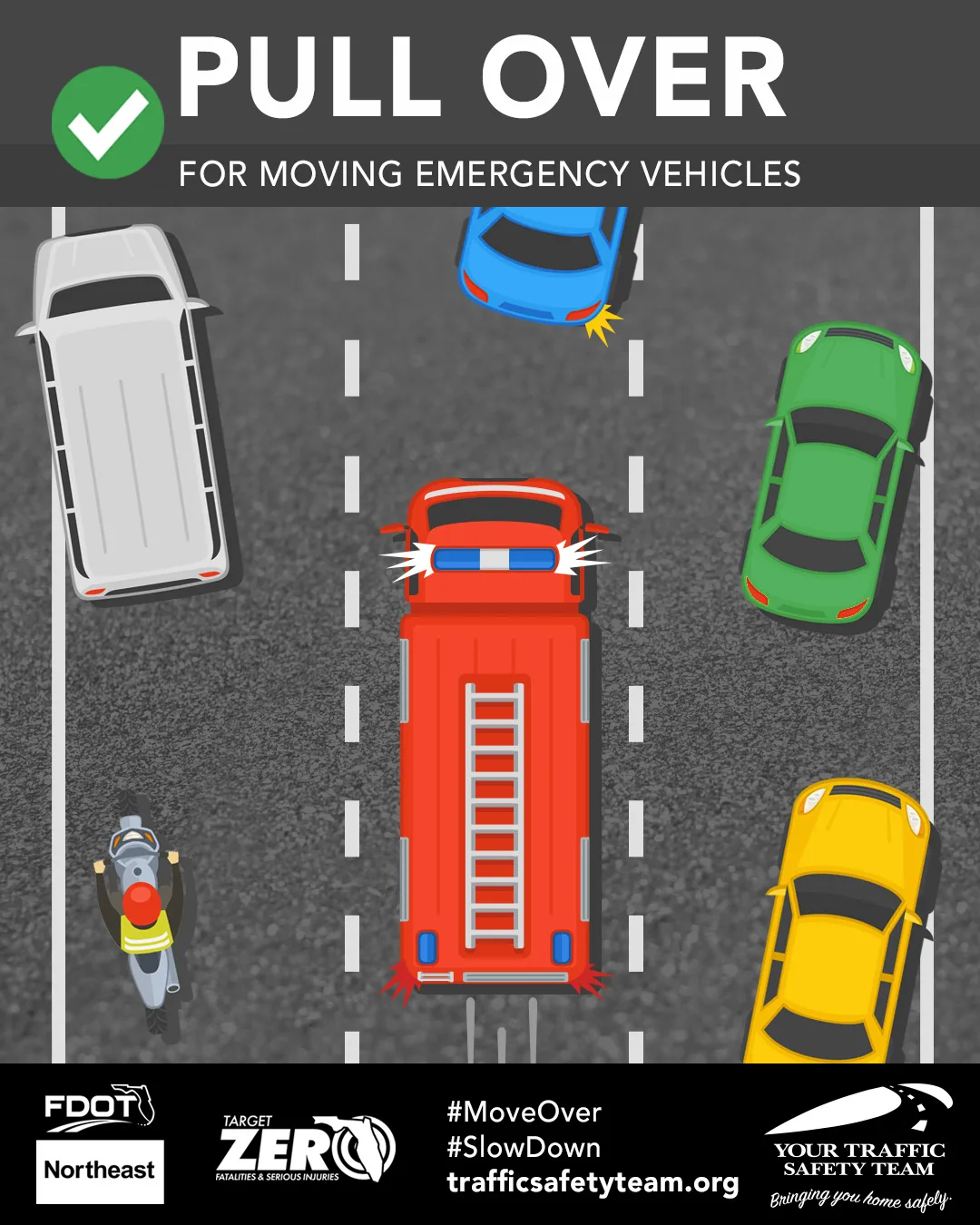
Never attempt to pass a slow mover on a blind curve, hill crest, or stretch of road with a double yellow line. RI law prohibits passing in these zones regardless of the slow mover’s speed, and illegal passing here is the leading cause of slow-mover related head-on crashes on rural routes. If a slow mover is actively pulling into a designated pull-out lane, wait until they are fully clear of the travel lane before passing.
Stay patient if a queue builds up, as the operator may be waiting for a safe, legal pull-over spot to avoid putting others at risk.
Common Mistakes That Lead to Citations or Wrecks Under This Law

YouTube / Law Lens Live (YouTube thumbnail (fair-use with source credit))
Both slow-mover operators and civilian drivers make predictable mistakes that lead to citations, crashes, or liability under RI’s pull-out law. Many of these errors stem from not knowing the exact legal requirements or misjudging safe pull-over spots.
Common operator errors
- Faded, damaged, or improperly mounted SMV emblems: The emblem must be visible from 500 feet away in full daylight per ASABE standards. Non-compliant signage leads to $50 citations if pulled over.
- Pulling over at prohibited locations: Blind hill crests, sharp curves, intersections, and narrow unpaved shoulders are illegal pull-over spots under RI law, and can lead to $100 fines if cited.
- Refusing to pull over when a 3-vehicle queue forms: The law applies to all passenger vehicles, not just commercial trucks. Non-compliance here leads to $100 fines and full liability if a crash occurs.
- Assuming pre-1975 tractors are fully exempt: Pre-1975 tractors do not require turn signals, but they still must display a valid SMV emblem and comply with pull-out rules on public roads.
Common driver errors
- Passing slow movers on blind curves or double yellow lines: This is the top cause of slow-mover related fatal crashes in RI. Illegal passing here carries a $150 fine plus 2 points on your license if cited.
- Tailgating or honking at slow movers: Aggressive driving pressures operators to make unsafe moves like swerving into oncoming traffic, increasing crash risk for everyone.
- Passing a slow mover while they are actively pulling over: Wait until the slow mover is fully clear of the travel lane before passing to avoid a collision.
How RI’s Rural Pull-Out Lane System Works (And Where It Falls Short)

YouTube / Gunter Baumgarten (YouTube thumbnail (fair-use with source credit))
Rhode Island’s designated pull-out lane system is managed jointly by RIDOT and local municipal public works departments. Pull-out lanes are sited on high-volume rural routes where slow-mover traffic is frequent, and they must meet a minimum 12-foot width standard to accommodate most farm equipment and horse-drawn vehicles. Most designated lanes are paved, though some lower-volume routes have widened unpaved shoulders that meet the width requirement.
As of 2026, designated pull-out lanes exist on high-risk routes including Route 1 in southern RI, Route 102 in western RI, Route 138 between Tiverton and Little Compton, and most main roads on Block Island. RIDOT’s 2025 rural road safety plan adds 24 new pull-out lanes on high-crash rural routes by the end of 2027, focusing on areas with no existing safe pull-over options.
The system has notable gaps that create risk for both operators and drivers. Many narrow, winding interior roads on Block Island and in Charlestown have no designated pull-out lanes at all, forcing operators to choose between impeding traffic or pulling over at unsafe, illegal spots. Some existing pull-out lanes are blocked by overgrown vegetation, parked cars, or debris, making them unusable for large modern farm equipment.
It is critical to remember that the 3-vehicle queue pull-out requirement only applies when a designated pull-out lane is available and safe to access. If no legal pull-over spot exists within a safe distance, you are not required to pull onto a narrow shoulder or blind curve just to comply. Continue moving slowly until you find a safe, legal spot to pull over, or turn onto a side road or driveway if possible to let traffic pass.
Fines, Liability, and Legal Consequences of Non-Compliance

YouTube / WPRI (YouTube thumbnail (fair-use with source credit))
Non-compliance with RI’s slow mover pull-out law carries both administrative penalties and severe civil liability if a crash occurs. Fines are separate for different violations, and liability extends to both slow-mover operators and civilian drivers who break the law.
| Violation | Fine | Additional Penalties |
|---|---|---|
| No valid SMV emblem on slow mover | $50 | None for first offense |
| Failing to pull over when 3+ vehicles queue, per §31-22-6 | $100 | None for first offense |
| Illegal passing on double yellow line or no-passing zone | $150 | 2 points on driver’s license |
| At-fault crash involving non-compliance | Varies by incident | Civil liability for property damage, medical bills, wrongful death, average 28% insurance premium increase for 3 years per 2024 RI Insurance Department data |
Civil liability is the far greater risk for most people. If a crash occurs because you refused to pull over when required, you can be sued for property damage, medical expenses, lost wages, and wrongful death claims, even if the passing driver was breaking the law. RI courts upheld liability against slow-mover operators in three separate 2023 to 2025 crash cases where pull-out non-compliance was a primary contributing factor, with total jury awards exceeding $2.1 million across the three cases.
Civilian drivers who cause a crash by illegally passing a slow mover face the same full civil liability, plus license suspension if the crash results in serious injury or death.
Where to Get Verified Help or Report Missing Pull-Out Lanes
If you need help complying with RI’s slow mover pull-out law, or want to report an unsafe road condition, there are official, verified resources available to you. All resources listed below are operated by state agencies or official local partners, so you won’t get incorrect or outdated information.
For slow-mover operators, RIDOT’s Rural Road Safety Division offers free slow-mover safety training that covers pull-out lane locations, emblem requirements, and seasonal route planning tips. Completing this course qualifies you for a 10% reduction in annual farm vehicle registration fees. The University of Rhode Island Transportation Safety Research Center also provides free local crash data maps for Washington, Kent, and Newport counties if you want to plan routes around high-risk areas.
Local farm bureaus in these counties host quarterly safety meetings where you can ask questions about local compliance rules.
To report a missing pull-out lane, unsafe pull-over spot, or blocked existing pull-out lane, submit a request through RIDOT’s online road concern form, or contact your local municipal public works department directly. As of 2026, RIDOT is piloting a public-facing map of all designated pull-out lanes on high-risk rural routes, which will launch on their website in late 2026. This free tool will let operators and drivers plan routes around available pull-over spots in advance, reducing the risk of queues building up on roads with no safe pull-out options.
You can sign up for launch notifications on the RIDOT Rural Road Safety Program webpage.
Quick Verified Cheat Sheet for RI’s Slow Mover Pull-Out Law
Bing (Web (fair-use with source credit))
This cheat sheet covers core RI slow mover pull-out rule requirements as of 2026. Qualifying vehicles are any equipment unable to exceed 25 mph on level ground. The mandatory pull-out trigger is a 3-vehicle queue, only when a safe designated lane is available.
Required equipment is an un-faded retroreflective fluorescent orange SMV emblem. Fines are $50 for a missing emblem, $100 for failing to pull over, and $150 plus 2 license points for illegal passing.
Frequently Asked Questions
What vehicles count as slow movers under Rhode Island law?
Any vehicle operating on RI public roads that cannot exceed 25 mph on level ground is a slow mover. This includes farm tractors, harvesters, horse-drawn vehicles, and low-speed construction equipment, all subject to the pull-out rule.
Do I have to pull over if no designated pull-out lane is nearby?
No, the pull-out requirement only applies when a safe designated lane is available. If no legal pull-over spot exists nearby, you may continue moving slowly until you find a safe location or turn onto a side road.
What is the fine for not displaying a valid SMV emblem?
The fine for operating without a visible, un-faded retroreflective fluorescent orange SMV emblem is $50 for a first offense under Rhode Island General Law § 31-22-6.
Can I get a ticket for passing a slow mover illegally?
Yes, passing on a blind curve, hill crest, or double yellow line carries a $150 fine plus 2 license points. You will be held fully liable for any crash resulting from the illegal pass.