Most drivers think they know the school bus rules. Then they hit a four-lane road with a center turn lane and freeze. "School Bus Safety: School bus signals and what you should do." is one of those topics where a small misunderstanding can have serious consequences.
The stakes are too high for guesswork.
According to NHTSA data, an average of 117 school-age children died in school-transportation-related crashes between 2013 and 2022. Many of those deaths happened during loading and unloading. The rules exist for a reason.
Let's walk through exactly what those signals mean and what you should do when you see them.
Why Getting This Right Matters More Than You Think
School buses are the largest mass transit system in the United States. They carry more passengers daily than all other forms of public transportation combined. That alone should make you pay attention.
The real danger isn't the bus itself. It's the children getting on and off. A child running across the street to catch the bus can appear out of nowhere.
They might be excited, distracted, or simply not paying attention. You need to be the one watching out for them.
Every year, illegal passing of stopped school buses leads to tragedies. These are completely preventable. Knowing the signals and following the law keeps kids safe and keeps you out of legal trouble.
It's that simple.
Quick Answer: What Every Driver Needs to Know
Flashing yellow lights mean slow down and prepare to stop. Flashing red lights mean stop completely. The stop arm extended means the same thing.
You must stop if you are behind the bus or approaching from the opposite direction. The only exception is a divided highway with a raised median.
Decoding the School Bus Signal System
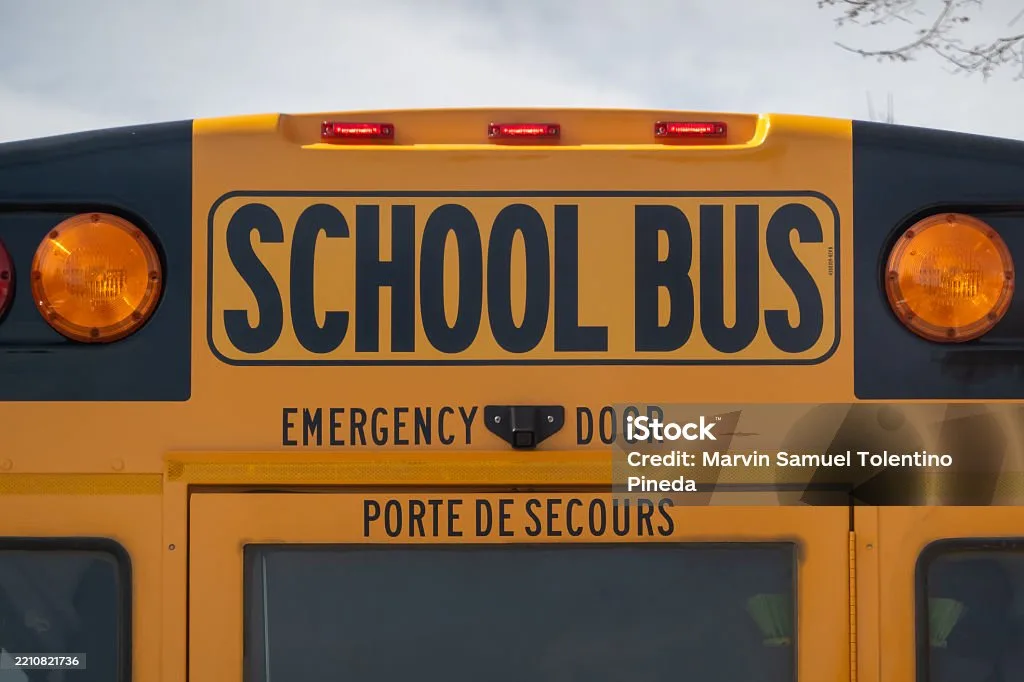
School buses use a standard eight-light warning system. Four amber lights and four red lights. They sit on the front and rear of the bus, positioned high for visibility.
Understanding the sequence is the key to knowing what to do.
Flashing Yellow Lights – Prepare, Don't Rush
The driver activates the amber lights about 100 to 300 feet before reaching a stop. This is your warning. Yellow means the bus is about to stop.
You need to slow down and get ready to stop yourself.
Some drivers treat yellow lights as a signal to speed up and beat the red. That is a dangerous mistake. The bus may stop sooner than you expect.
A child could be waiting near the road. Slow down instead.
Flashing Red Lights – Stop Means Stop
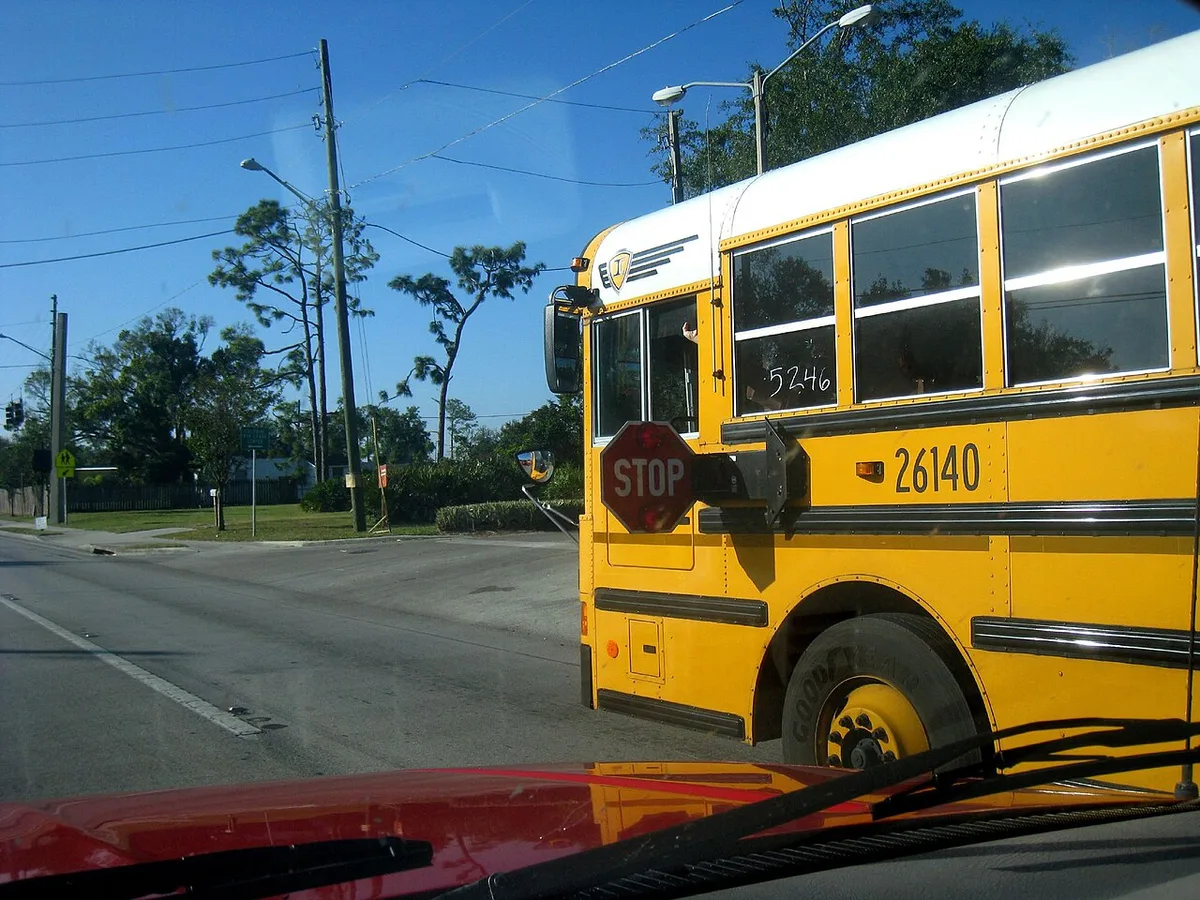
When the bus stops and the red lights start flashing, you must also stop. Period. The stop arm usually swings out at the same time.
This is not a suggestion. It is the law in all 50 states.
You need to stop at a safe distance. Most states recommend 20 to 30 feet away. This gives children room to board or exit without you being too close.
Stay stopped until the red lights turn off and the stop arm retracts.
The Stop Arm – Your Visual Backup
The stop arm is a red octagonal sign that extends from the driver's side of the bus. It has its own flashing red lights. Think of it as a giant visual reminder that the bus is loading or unloading children.
If you see it, stop.
Divided Highways and the One Exception to the Rule
This is where most drivers get confused. On a divided highway with a raised median, you do not have to stop when approaching from the opposite direction. The median creates a physical barrier.
Children will not cross the road to board the bus because traffic flows in opposite directions separated by concrete or grass.
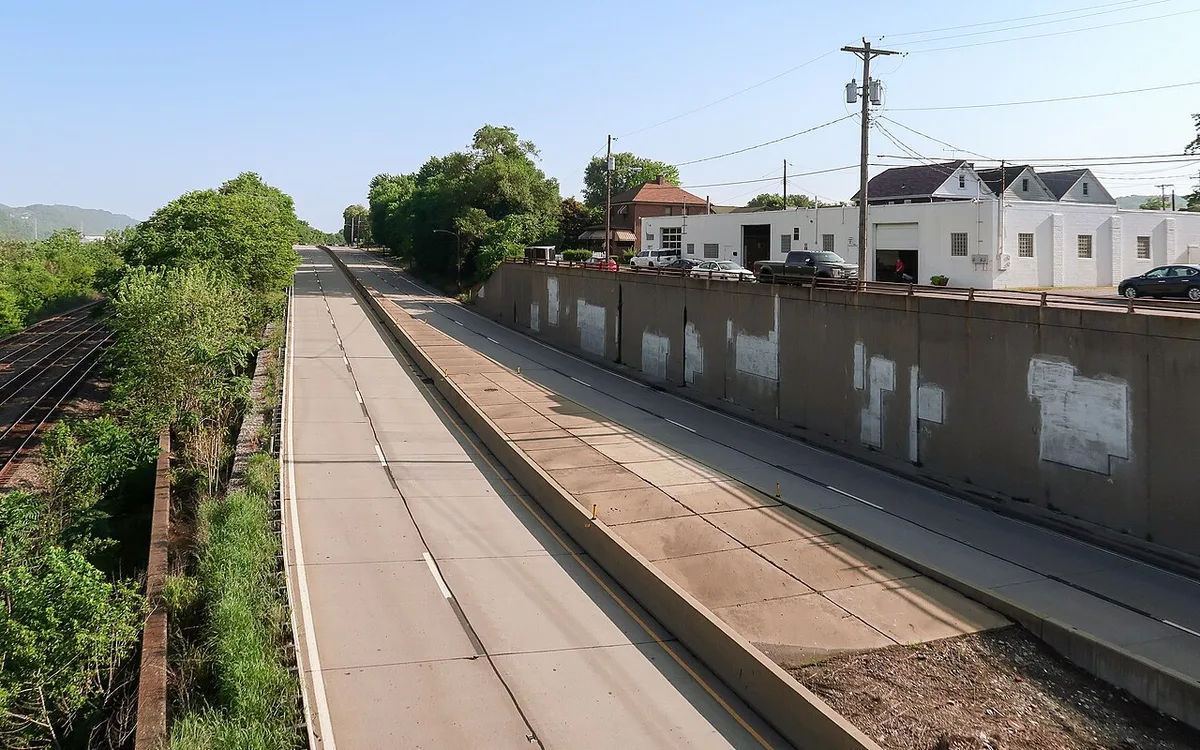
But there is a catch. The median must be a raised physical barrier. A painted center line or a turn lane does not count.
If the opposite side has only a painted median, you must stop. The rule applies strictly to roads where the median physically prevents crossing.
The same goes for multi-lane roads without a raised median. You stop. Every lane stops.
No exceptions. This includes roads with a center turn lane. That turn lane is not a physical barrier.
Children can and do cross it.
Knowing this distinction could save you a ticket. It could also save a life. If you are unsure, the safer choice is always to stop.
You will never get in trouble for stopping when you did not have to.
Common Scenarios That Confuse Drivers
Even experienced drivers hesitate in certain situations. Here are the most common ones and exactly what to do.
Four-Lane Roads With a Center Turn Lane
Imagine a four-lane road with two lanes going each direction. There is a center turn lane in the middle. The bus stops in the left lane and turns on its red lights.
You are behind the bus. You stop. You are approaching from the opposite direction.
You also stop. The center turn lane is not a physical barrier. Children cross through it to reach the bus.
You must stop until the bus turns off its lights.
Multi-Lane Roads Without a Median
Same idea. Two, three, or four lanes going each direction. No raised median.
The bus stops. All lanes in both directions must stop. Do not try to squeeze through on the far side.
Children can run between stopped cars.
Intersections Near Bus Stops
The bus stops before an intersection. You are approaching the intersection from a cross street. The bus is to your left or right.
Do you need to stop?
Generally, no. If the bus is stopped at a different intersection and you are on a separate road, you can proceed with caution. But pay attention.
Children may be crossing near that intersection. Slow down and watch for movement.
What About Roundabouts?
Roundabouts add another layer of confusion. If the bus is stopped at a roundabout, treat it like an intersection. Stop if you are in the lane immediately behind or approaching from the opposite direction.
Be extra cautious because roundabouts have limited visibility.
For more on general driving safety and vehicle maintenance, check out our Blog for additional tips.
In our research, the most common mistake is assuming you can pass on the opposite side of a multi-lane road. You cannot. What To Expect In A Drive Through Car Wash covers a different kind of vehicle handling, but the principle of paying attention to your surroundings applies everywhere.
State laws vary on the divided highway exception. Some states consider a painted median sufficient. Others require a raised barrier.
Check your local DMV handbook to be sure. When in doubt, just stop.
What Happens When You Get It Wrong – Fines, Points, and Real Consequences
Let's be direct about the penalties. Passing a stopped school bus illegally is not a minor traffic infraction. It carries serious consequences in every state.
Fines typically range from $150 to over $1,000 for a first offense. Some states set the minimum at $250 and go up from there. Repeat offenders face much higher fines and possible jail time.
License points are another issue. Most states add 3 to 6 points to your driving record for a school bus violation. That is enough to trigger insurance rate hikes or even a license suspension in some cases.
For commercial drivers, the stakes are even higher. A CDL holder who illegally passes a school bus can face disqualification. That means losing their job.
The FMCSA treats this as a serious safety violation.
| State | Typical Fine (First Offense) | License Points |
|---|---|---|
| California | $150 – $1,000 | 5 points |
| Texas | $500 – $1,250 | 6 points |
| New York | $250 – $1,000 | 5 points |
| Florida | $200 – $500 | 4 points |
| Illinois | $150 – $500 | 3 points |
The worst consequence is not financial. It is the possibility of injuring or killing a child. That stays with you forever.
No fine or legal penalty compares to that weight.
Several states now use stop-arm cameras to catch violators automatically. You might not see a police officer nearby. The camera captures your license plate anyway.
The ticket arrives in the mail days later.
The Human Factor – Why Kids Around Buses Are Unpredictable
Children are not small adults. Their behavior near roads is fundamentally different. Understanding this helps you anticipate danger before it happens.
Kids have a harder time judging vehicle speed and distance. A child might think they have plenty of time to cross when they really do not. They also have narrower peripheral vision than adults.
They might not see you coming at all.
Excitement makes things worse. Running to catch the bus. Dropping a backpack and darting into the street.
Chasing a friend without looking. These impulses override caution.
The area around a school bus is called the "danger zone." It extends 10 feet in all directions from the bus. The driver cannot see children in certain blind spots. The front of the bus has a large blind zone.
So does the area immediately behind the rear wheels.
If you need to clean your vehicle properly after driving in messy school zone conditions, our article on Manual Cleaning Equipment Using In Car Wash covers the tools that work best.
NHTSA data shows that most school bus-related fatalities happen during loading and unloading. The child is either walking to the bus or leaving it. The bus itself is stationary.
The danger comes from passing vehicles or the child moving into a blind spot.
This is why the stop law exists. It creates a protected zone around the bus. When you obey the signals, you give children the safe space they need.
Step-by-Step: Your Exact Actions When You See a School Bus
Let's walk through this step by step so there is no confusion.
Approaching From Behind
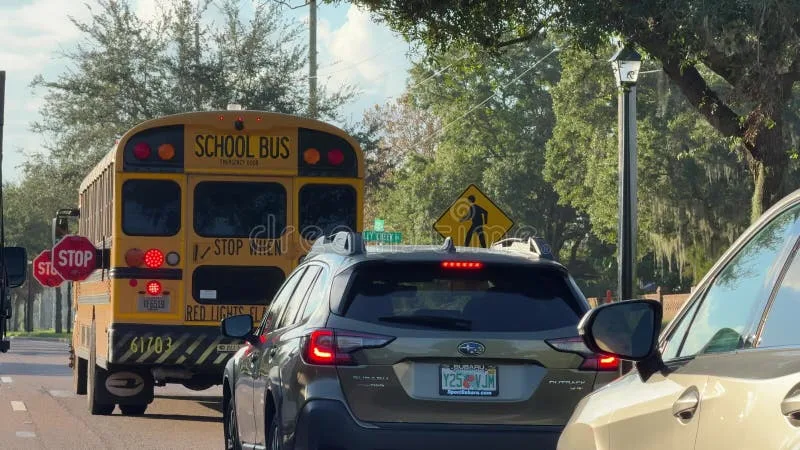
You see a school bus ahead. The amber lights start flashing. Slow down immediately.
Do not speed up to pass before the red lights come on.
The bus stops. Red lights flash. The stop arm swings out.
You stop your vehicle at least 20 feet behind the bus. Do not inch forward. Stay put.
Stay stopped until the red lights turn off and the stop arm retracts. The bus driver will not retract the arm until all children are safely clear. Do not move just because you see children walking away.
Wait for the signal.
Approaching From the Opposite Direction
Same basic rule applies. If there is no raised median, you stop. Wait for the lights to turn off.
Then proceed slowly.
If there is a raised concrete or grass median, you do not need to stop. But slow down anyway. Children might still be near the road.
Caution never hurts.
Moving Again Safely After the Bus Pulls Away
The bus driver turns off the lights and retracts the stop arm. The bus starts moving. You can proceed too.
But do not rush.
Children might be walking alongside the road after getting off the bus. A child might cross behind the bus without looking. Give them extra space.
Pass the bus only when it is safe and legal. Wait until the bus is a reasonable distance ahead. Then proceed normally.
State-by-State Law Differences You Need to Watch For
Here is where things get tricky. Federal guidelines set the base standards. But each state writes its own traffic laws.
You need to know the rules where you drive.
The divided highway exception is the most variable rule. Some states define "divided highway" strictly as a road with a raised physical barrier. Others include roads with a painted median or a turn lane.
A few states require stopping on all roads with no exceptions.
| State | Divided Highway Exception | Notes |
|---|---|---|
| Texas | Yes, with raised median | Painted median does not count |
| California | Yes, with raised barrier | Strict interpretation |
| Florida | Yes, with raised median or unpaved space | Broader definition |
| New York | No exception | Stop in all directions |
| Pennsylvania | Yes, with physical barrier | Concrete, grass, or metal |
Fine amounts also vary widely. In some states, a first offense carries a minimum $500 fine. In others, you might pay less than $200.
Repeat offenses escalate quickly.
Points on your license differ too. Some states assign 6 points for a school bus violation. Others assign 3.
A few states do not use points at all but impose mandatory court appearances.
School bus camera enforcement programs are expanding. As of 2026, more than 20 states allow automated enforcement. If you pass a stopped bus in those states, a camera captures your plate.
The citation arrives by mail regardless of whether a police officer was present.
If you are planning a road trip through multiple states, check each state's DMV website. The rules change at state lines. What is legal in one state may be illegal in the next.
Pro Tips for Drivers of All Experience Levels
Experience helps, but complacency can hurt. Here are practical tips that apply to every driver.
Leave a larger following distance. School buses stop more frequently than regular traffic. Give yourself extra room to react when you see a bus ahead.
Scan for children before you scan for signals. Look for kids on sidewalks, near bus stops, or waiting at driveways. Children do not always wait for the bus at designated stops. They might be walking along the road.
Watch for hand signals from bus drivers. Some drivers use hand signals to guide children across the road. If you see a driver waving, pay attention. They are managing traffic and pedestrians.
Be extra cautious between 7 AM and 9 AM, and between 2 PM and 4 PM. Those are peak school bus hours. Traffic patterns change. More buses are on the road.
More children are walking.
Know your route. If you drive the same roads daily, learn where bus stops are located. Anticipate where buses will stop. Adjust your speed accordingly.
Never pass a bus on the right side. School buses load and unload on the right. Children step directly into that space. Passing on the right is dangerous and illegal.
Treat every school bus like it might stop at any moment. Even if the lights are not flashing, the driver may be preparing to stop. Give them space and stay alert.
For more on maintaining your vehicle and staying safe on the road, check out our article on Prepare Touchless Washing for keeping your car clean without damaging the paint during messy school season driving.
Real Scenario: What a Close Call Taught Me
A driver we spoke with described a morning commute on a four-lane road. He approached a stopped school bus from behind. Red lights were flashing.
The stop arm was out.
A car in the opposite lane did not stop. It swerved around the bus at nearly 40 miles per hour. A child had just stepped off the bus and was walking between two parked cars.
The driver missed the child by about three feet.
The driver who passed got a ticket from the bus's stop arm camera. It arrived in the mail six days later. The fine was $350 plus court costs.
The child's parent saw the whole thing from their porch.
That close call could have been a tragedy. All because one driver thought the opposite lane was safe to pass. It was not.
Frequently Asked Questions
Do I need to stop if the bus is on the other side of a divided highway?
Only if the median is a raised physical barrier. Concrete barriers, grass medians, and metal dividers count. Painted lines do not.
Check your state law for specifics since definitions vary.
What should I do if I see flashing yellow lights on a school bus?
Slow down immediately. Prepare to stop. The bus will activate its red lights within about 100 to 300 feet.
Do not speed up to beat the red lights. That is dangerous and illegal.
Can I pass a stopped school bus if the stop arm is not extended?
No. The stop arm is a backup visual cue. The flashing red lights are the primary signal.
If the red lights are flashing, you must stop regardless of whether the stop arm is out.
How far behind a school bus should I stop?
Most states recommend stopping at least 20 feet behind the bus. Some say 30 feet. This gives children room to board or exit safely.
Do not creep forward while waiting.
Does the law apply on private roads or parking lots?
School bus signals apply anywhere the bus is loading or unloading children. This includes private roads, school driveways, and parking lots. Always stop when red lights are flashing.
What happens if I get caught by a stop arm camera?
You receive a citation in the mail. Fines vary by state but typically range from $150 to $500 for a first offense. Some states add license points.
The camera records your license plate and the violation.
The Bottom Line – One Rule That Covers Almost Everything
Here is the simplest way to think about it. When you see a school bus with flashing red lights, stop. Do not think about medians or lanes or exceptions in that moment.
Just stop.
If you are wrong about the exception, you might get a ticket. If you are wrong about stopping, a child could die. That is not a risk worth taking.
Slowing down in school zones and near bus stops costs you a few seconds. It saves lives. Keep your attention on the road.
Watch for children. Follow the signals.
Every driver shares the road with school buses. Every driver shares the responsibility to keep children safe. That is the rule that matters most.