ByMax Lee
Guide to Snowmachine, Snowmobile, Registration
Snowmachine, Snowmobile, Registration. If those three words have you scratching your head, you're not alone. In Alaska, the term "snowmachine" is what everyone says, but the state's legal system calls it a "snowmobile." That small difference trips up plenty of riders, especially first-timers and folks moving up from the Lower 48.
As of 2026, the Alaska DMV requires all snowmachines operated on public lands to have a valid registration. The base annual fee starts around 25 dollars. Ride without it, and you're looking at fines of 200 dollars or more, plus possible impoundment.
Let's walk through exactly what you need to know before you hit the trails.
Bing (Web (fair-use with source credit))
Why Getting This Wrong Costs You Real Money and Time
Skipping registration is not a minor oversight in Alaska. It's a violation of state law, and the Alaska State Troopers are the ones who enforce it. They patrol popular riding areas like the Knik Glacier, Petersville Road, and the trails around Fairbanks.
If they stop you and your registration is expired or missing, expect a ticket.
Here is what happens if you get caught without valid registration.
- Fine of up to 200 dollars for a first offense. Repeat violations can reach 500 dollars or more.
- Vehicle impoundment. Troopers can seize your snowmachine until you prove ownership and pay to get it out.
- No trail access. Many groomed trail systems, especially those managed by local clubs or the state, require a current registration sticker to let you ride.
- Insurance complications. If you cause an accident or damage property, an unregistered machine may not be covered by your policy. You could be personally liable for the full cost.
The most common way people get burned is by buying a used snowmachine without a title. If the seller hands you a bill of sale but no title, you cannot register it. That machine is effectively parked until you sort out the paperwork.
We cover how to handle that situation later in this guide.
What's the Difference Between a Snowmachine and a Snowmobile? (Spoiler: It Matters for Registration)
The short answer is: there is no mechanical difference. A snowmachine and a snowmobile are the exact same vehicle. The difference is purely regional vocabulary.
In Alaska, "snowmachine" is the everyday word. You hear it in conversations, at gas stations, and on local forums. But when you open the Alaska Statutes, the law uses "snowmobile." The Alaska DMV uses "snowmobile" on all forms and titles.
So when you walk into a DMV office in Anchorage or Fairbanks, you ask to register a "snowmobile."
Why does this matter for registration? Because the form you fill out, the computer system the clerk uses, and the sticker you receive are all tied to the legal term. If you search for "snowmobile registration Alaska" online, you will find the correct information.
Searching for "snowmachine registration" might return less official results.
Here is a quick comparison.
| Term | Where it's used | What it means |
|---|---|---|
| Snowmachine | Everyday speech in Alaska | Any tracked winter vehicle used for recreation or transportation |
| Snowmobile | Alaska Statutes, DMV forms, and legal documents | The official name for the same vehicle for registration purposes |
| Snow-go | Rural Alaska slang | Same as snowmachine; less common in official contexts |
| Ski-doo | Brand name used generically | Often used like "Kleenex" but not a legal category |
For registration, ignore the slang. Use the term "snowmobile" on your paperwork. And if you are talking to a mechanic or a friend, call it whatever feels natural.
How Snowmachine Registration Works in Alaska
Registration for a snowmachine in Alaska is handled by the Division of Motor Vehicles, just like cars and trucks. But the process and the rules are a bit different because snowmachines are off-highway vehicles. They do not share all the same requirements as a standard passenger vehicle.
Who Needs to Register (Residents vs. Non-Residents)
Anyone who operates a snowmachine on public land in Alaska needs a valid registration. That includes residents and non-residents.
Alaska residents: Every snowmachine you own must be registered in your name. The registration lasts one year and must be renewed before it expires. If you move to Alaska from another state, you have 30 days to register your machine here.
The out-of-state registration is not valid after that grace period.
Non-residents: If you bring a snowmachine into Alaska from outside the state, you have two options. You can buy a non-resident temporary permit, which is good for 7 days, 30 days, or a full season. Or you can register the machine full-time in Alaska, which is what you should do if you ride here regularly.
As of 2026, the non-resident permit fees run about 40 to 60 dollars depending on the length.
Rural vs. urban considerations: Some rural communities have limited DMV services. If you live in a bush village, you may need to register by mail. The Alaska DMV has a special process for remote areas.
You can call their office or check their website for details. Allow extra time for mail delivery.
What the Registration Actually Covers (Trails, Public Lands, and Road Crossings)
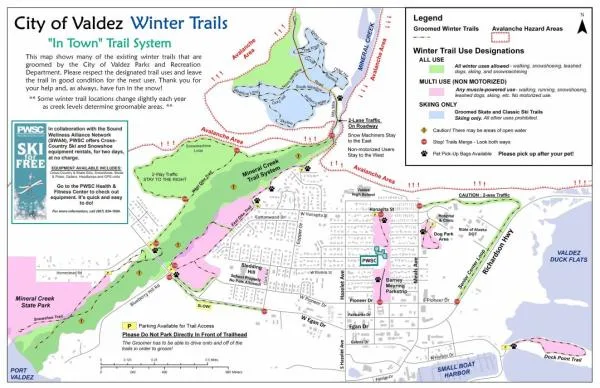
A valid registration gives you the right to operate your snowmachine on most public lands in Alaska. That includes state lands, BLM land, and areas within national forests that are open to motorized use. It also covers groomed trail systems maintained by the state or local clubs.
What it does not cover is riding on public roads. Snowmachines are not street-legal in Alaska. You can cross a road, but you cannot ride along it.
The only exception is if a local ordinance specifically allows it, and those are rare. Crossing a road means going straight across, not traveling parallel.
The registration also does not automatically give you access to private land. You still need the landowner's permission. Trespassing on private property with a registered snowmachine is still trespassing.
The Legal Difference Between Registration, Title, and a Trail Pass
People confuse these three documents all the time. They are separate things.
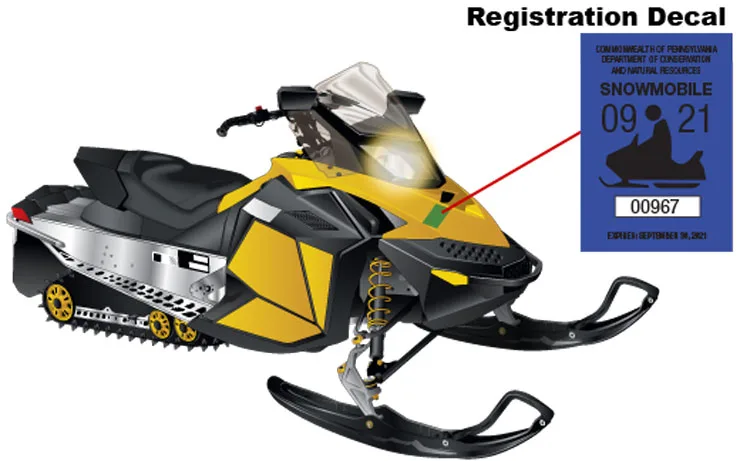
Registration is the proof that you have paid the state fee and are allowed to operate the vehicle on public land. It comes with a decal you stick on your tunnel or side panel. You need to renew it every year.
Title is the proof of ownership. It shows who the legal owner is. When you buy a new snowmachine, the dealer handles the title.
When you buy a used one, you transfer the title to your name. Without a title, you cannot prove you own the machine, and you cannot register it.
Trail pass is a separate fee that some trail systems require. It is not part of the state registration. For example, the Matanuska-Susitna Borough has its own trail permit program.
The money goes to trail maintenance. You need both a valid Alaska registration and a trail pass for those specific trail systems.
Bing (Web (fair-use with source credit))
Your Step-by-Step Guide to Registering a Snowmachine in Alaska
The process varies a little depending on how you got the machine and where you live. Here are the most common scenarios.
New Machine from a Dealer
This is the easiest path. When you buy a new snowmachine from a dealer in Alaska, they handle the registration and titling for you. They collect the fees and send everything to the DMV.
You walk out with a temporary registration sticker and get the permanent one in the mail within a few weeks.
What you need to do:
- Bring your valid Alaska driver's license or ID.
- Provide proof of insurance if the dealer or the specific trail system requires it (rarely required for off-road only, but some lenders demand it).
- Pay the dealer for the registration fee plus their document service fee.
You do not need to visit the DMV yourself.
Used Machine from a Private Seller
This is where most of the trouble starts. If you buy a used snowmachine from a private seller, the registration and title are not automatically transferred. You have to do it yourself.
Steps to follow:
- Get the signed title from the seller. Make sure the seller signs in the correct spot. If the title has a lien holder listed, that lien must be released.
- Get a bill of sale. It should show the date of sale, purchase price, and the names and signatures of both parties.
- Take both documents to the DMV. You also need your valid ID.
- Pay the title transfer fee (around 15 dollars) and the registration fee (depends on the vehicle year and type).
- Receive your new registration sticker. You can put it on the machine immediately.
What if the seller does not have the title? That is a common problem, especially with older machines that changed hands informally. You cannot register it without a title.
You have two options:
- Apply for a bonded title through the DMV. This requires a surety bond equal to the value of the machine. It is a process and takes time.
- Ask the seller to apply for a duplicate title from the DMV before you buy it. If they refuse, walk away.
Bringing a Snowmachine from Another State
If you are moving to Alaska or just bringing a machine you already own, here is the process.
- You have 30 days from the date you bring the machine into Alaska to register it here.
- You need the current out-of-state title. If the machine is titled in your name in another state, bring that title with you.
- Go to the DMV with the title, your ID, and payment for the registration fee.
- The DMV will issue an Alaska title and registration. They will collect a small out-of-state transfer fee on top of the registration.
One catch: if the out-of-state title is electronic or you only have a registration card, you may need to request a physical title from your previous state first. Plan ahead.
Non-Resident Temporary Permits
If you are visiting Alaska and bringing your own snowmachine, you can buy a temporary permit instead of a full registration. These are available at some DMV offices, authorized vendors, and certain trailhead check-in points.
The permit types as of 2026 are:
- 7-day permit: around 40 dollars
- 30-day permit: around 50 dollars
- Full-season permit: around 60 dollars
You do not need an Alaska title. You show proof of ownership (your home state title or registration) and your out-of-state ID. The permit goes on the machine like a regular sticker.
Renewals: Online, Mail, or In-Person
When your registration is up for renewal, the DMV sends you a notice in the mail. You can renew in three ways.
- Online: The fastest option. Go to the DMV website, enter your renewal code, and pay by credit card. The new sticker arrives by mail.
- By mail: Fill out the renewal form on the back of your notice. Include a check or money order. Mail it to the DMV address listed. Allow two to three weeks.
- In person: Go to any DMV office that handles off-highway vehicles. Pay with cash, check, or card. You get the sticker the same day.
If you let your registration expire, you pay a late penalty. The penalty is usually 10 to 25 dollars on top of the renewal fee.
What You Need Before You Walk Into the DMV
Do not show up at the DMV without your paperwork. It wastes time and frustrates everyone. Here is exactly what to bring.
Required Documents Checklist
| Document | Where to get it | Notes |
|---|---|---|
| Signed title (from seller or previous state) | The seller | Must be signed in the correct spaces. Check for any liens. |
| Bill of sale | The seller | Include date, price, names, signatures. Not always required if a title exists, but bring one anyway. |
| Valid Alaska driver's license or state ID | You | If you are a non-resident, your out-of-state ID works for a temporary permit. |
| VIN verification form | DMV or law enforcement | Needed if the machine has no title, is from out of state, or if the VIN on the title does not match. |
| Proof of insurance | Your insurance company | Rarely required for registration but needed if the title has a lien. |
| Payment | Cash, check, or card | DMV offices accept most payment methods. Check the specific office for limits. |
| Document | Where to get it | Notes |
|---|---|---|
| Signed title (from seller or previous state) | The seller | Must be signed in the correct spaces. Check for any liens. |
| Bill of sale | The seller | Include date, price, names, signatures. Not always required if a title exists, but bring one anyway. |
| Valid Alaska driver's license or state ID | You | If you are a non-resident, your out-of-state ID works for a temporary permit. |
| VIN verification form | DMV or law enforcement | Needed if the machine has no title, is from out of state, or if the VIN on the title does not match. |
| Proof of insurance | Your insurance company | Rarely required for registration but needed if the title has a lien. |
| Payment | Cash, check, or card | DMV offices accept most payment methods. Check the specific office for limits. |
VIN Verification: When You Need It and How to Get It
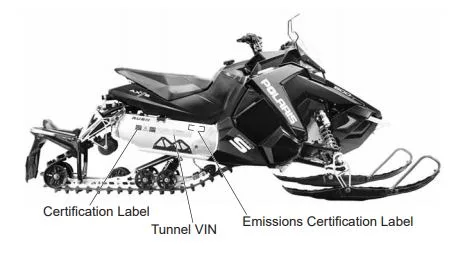
The VIN (vehicle identification number) is the serial number stamped into the tunnel of the snowmachine. Every machine has a unique one. The DMV needs to see it to make sure the machine matches the title.
You need a VIN verification in these situations.
- You are registering a machine from out of state.
- The machine has no title and you are applying for a bonded title.
- The VIN on the title is incomplete or mismatched.
- The machine is older than 20 years and the VIN is worn or hard to read.
How to get it done:
- At the DMV: Some DMV offices can inspect the VIN for you. Call ahead to confirm.
- By a law enforcement officer: Alaska State Troopers, city police, or village public safety officers can fill out the VIN verification form. You take that form to the DMV.
- At a licensed dealer: Some snowmachine dealers are authorized to do VIN verifications.
Do not try to scratch or clean the VIN area with aggressive tools. A damaged VIN creates more problems. If it is rusty, use a wire brush gently to reveal the numbers.
Bing (Web (fair-use with source credit))
Fees and Payment Methods
Here are the typical costs you will pay at the DMV for snowmachine registration and titling as of 2026.
| Fee type | Approximate cost |
|---|---|
| Annual registration (resident) | 25 to 50 dollars |
| Non-resident temporary permit (7-day) | 40 dollars |
| Non-resident temporary permit (30-day) | 50 dollars |
| Non-resident season permit | 60 dollars |
| Title transfer fee | 15 dollars |
| Late renewal penalty | 10 to 25 dollars |
| Duplicate registration card | 5 dollars |
Payment methods vary by office. Most accept cash, check, and credit or debit cards. Some smaller offices in rural areas may only take cash or money order.
Call ahead to confirm if you have any doubt.
The Real Costs: Registration Fees, Penalties, and Hidden Expenses
The base registration fee is only part of the picture. If you buy a used machine, you also pay a title transfer fee of about 15 dollars. If the seller has no title, a bonded title costs more.
You need a surety bond worth the machine's value plus a filing fee.
Late renewals add 10 to 25 dollars on top of the standard fee. And non-resident permits run 40 to 60 dollars depending on the duration. Those are the numbers you can plan for.
| Cost item | Amount |
|---|---|
| Annual registration (resident) | 25 to 50 dollars |
| Title transfer | 15 dollars |
| Late penalty | 10 to 25 dollars |
| Non-resident 7-day permit | 40 dollars |
| Non-resident season permit | 60 dollars |
| Duplicate registration card | 5 dollars |
The hidden cost is time. Rural riders sometimes drive hours to the nearest DMV. Mail-in renewals need two to three weeks.
Factor that into your planning so you never ride on an expired sticker.
Common Mistakes That Get People Fined or Denied
Buying a used snowmachine without a title. This is the number one mistake. You cannot register a machine without proof of ownership. A bill of sale alone is not enough.
Walk away unless the seller can produce a signed title.
Letting registration expire during the off-season. Many people store their machine in April and forget about it until November. By then the registration is six months expired. The penalty is small, but if you ride before renewing, the fine is not.
Assuming out-of-state registration works here. It does not. You have 30 days to register in Alaska if you move here. Non-residents need a temporary permit or a full Alaska registration.
Your home state sticker buys you nothing on Alaska trails.
Skipping the VIN check on older machines. Rust and wear can make the VIN unreadable. If the DMV cannot confirm the number, you cannot register. Check it before you buy.
If it is faded, ask the seller to get a VIN verification done first.
Your Rights, Responsibilities, and Risks Under Alaska Law
You have the right to ride on most state and federal public lands with a valid registration. That includes BLM land, state parks that allow motorized use, and groomed trail systems.
You are responsible for knowing where you cannot ride. Snowmachines are banned in designated wilderness areas and some national park units. Denali National Park, for example, only allows snowmachines on certain roads.
Check the local land management office before you head out.
DUI laws apply to snowmachines. If you are caught operating under the influence, the penalties match those for driving a car. You can lose your license and face jail time.
Noise limits also matter. Alaska sets a maximum decibel level for off-highway vehicles. If your machine has a modified exhaust, you might get a ticket even with a valid registration.
What happens if you are caught without registration? The Troopers can issue a citation with fines up to 200 dollars for a first offense. They can also impound your machine.
You pay for the tow and storage before you get it back.
Bing (Web (fair-use with source credit))
Buying a Used Snowmachine in Alaska: What the Registration Paperwork Reveals
The paperwork tells you more than just who owned it. Look at the title for lien holders. If a bank still has a claim, the seller cannot transfer ownership without a lien release.
Check that the VIN on the title matches the VIN stamped on the tunnel. Mismatches happen when someone replaced a tunnel or made a clerical error. That machine is unregisterable until the error is fixed.
Look at the registration history if the seller has old stickers or renewal notices. A long gap in registration sometimes means the machine sat for years or was used illegally. It is not a dealbreaker, but it is worth asking about.
Real Scenario: How One Rider Navigated the Title Transfer on a 20-Year-Old Snowmachine
A rider in the Mat-Su Valley bought a 2004 Ski-doo from a private seller. The seller had the title but had never transferred it from the original owner. The signature line was blank.
The rider went to the DMV with the title and a bill of sale. The DMV told them they needed the original owner to sign. The seller tracked down the original owner, who signed the title.
Problem solved.
But here is what happens when that is not possible. If the original owner is unreachable, you apply for a bonded title. You buy a surety bond for the machine's value, usually 1 to 2 percent of the bond amount.
You file the bond with the DMV. After three years with no claims against it, the bond releases and you get a clean title. It takes time and costs a few hundred dollars, but it is the legal way out of a no-title situation.
The Quick Guide: Which Registration Path Is Right for You?
First-Time Owner in Anchorage
Buy from a dealer. Let them handle the paperwork. You get a title and registration in one transaction.
Weekend Rider from Out of State
Buy a non-resident temporary permit online before you arrive. The 7-day permit covers most trips.
Rural Resident Using a Snowmachine for Transportation
Register by mail. Request forms from the DMV early. Allow three weeks for the sticker to arrive.
Buyer Looking at a Used Machine with No Title
Walk away unless the seller agrees to get a duplicate title first. A bonded title is your backup option, but it costs time and money.
Frequently Asked Questions
Can I register a snowmachine online in Alaska?
Yes. You can renew an existing registration online through the Alaska DMV website. First-time registrations must be done in person or by mail.
Do I need insurance to register a snowmachine?
No. Alaska does not require liability insurance for off-highway vehicles. Your lender may require it if you financed the machine.
How long does it take to get a registration sticker by mail?
Allow two to three weeks. If you need it sooner, visit a DMV office in person.
What if I lose my registration card?
You can request a duplicate from the DMV. The fee is about 5 dollars. You will receive a new card by mail.
Can I ride my snowmachine on Alaska roads?
No. Snowmachines are not street-legal. You can cross a road but not travel along it.
Local exceptions are rare.
What happens if I buy a snowmachine with a lien on the title?
You cannot register it until the lien is released. The seller must pay off the loan and provide a lien release letter from the bank.