Black Friday deals are live on Amazon · limited-time discounts, grab them before they’re gone
Grab the deals

ByMax Lee
What Should I Wash My Black Car With: Ultimate Guide for a Flawless Shine
A black car can produce an exceptional deep gloss, but it also reveals dust, dried water, fingerprints, swirl marks, and scratches more clearly than lighter paint. The safest approach is not an aggressive cleaner or complicated machine—it is the right car shampoo, clean wash media, plenty of lubrication, and a careful drying process.
For the best results, wash a black car with:
- A pH-neutral, high-lubricity automotive shampoo
- A clean microfiber wash mitt
- Two buckets with grit guards
- A hose or pressure washer for pre-rinsing
- Plush, clean microfiber drying towels
- A spray sealant, wax, or paint-safe ceramic coating for protection
The most important rule is simple: remove contamination with water and lubrication rather than rubbing it across the paint.
Why Black Paint Needs More Care
Black paint is not necessarily softer or more delicate than another factory finish. Its dark, reflective surface simply makes imperfections easier to see. A small swirl mark that disappears on silver paint may look like a web of fine scratches on black.
The most common causes of visible damage are:
- Washing without rinsing loose grit first
- Using a dirty mitt or towel
- Pressing too hard while cleaning
- Reusing towels that have touched wheels or the ground
- Washing in direct sun and allowing soap or water to dry
- Drying with a bath towel, rough cloth, or squeegee
- Taking the car through a brush-style automatic wash
In practice, many “scratches” on black cars are actually wash-induced micro-marring. These fine marks scatter reflected light and make the paint appear hazy instead of glossy. A careful wash routine reduces new marring, although it cannot remove scratches that are already in the clear coat.
What Should You Wash a Black Car With?
Use a pH-neutral car shampoo
Choose a shampoo specifically formulated for automotive paint. Look for a product described as:
- pH-neutral or pH-balanced
- High-lubricity
- Safe for waxes and sealants
- Concentrated for bucket washing
- Free from abrasive particles
A quality shampoo helps suspend and lubricate dirt so your mitt can glide over the surface. It should not be chosen only because it creates a large amount of foam; thick suds can look impressive, but lubrication and safe cleaning performance matter more.
A dedicated paint-safe washing formula is a better choice than household detergent.
Why dish soap is a poor routine choice
Dish soap is designed to break down cooking grease. It may remove protective wax or spray sealant more quickly than a normal car shampoo and can leave the surface feeling dry. It is not an effective way to repair dull paint, and repeated use can make a previously protected finish lose its water behavior.
Using dish soap once in an emergency is unlikely to destroy factory paint, but it should not be your regular wash product.
Choose the right shampoo for your protection
If the car has a wax, sealant, or ceramic coating, select a shampoo compatible with that protection. Avoid strong degreasers unless you are deliberately preparing the surface for a new coating or removing a specific contaminant.
For routine maintenance, a gentle shampoo is usually sufficient. Use an iron remover, tar remover, or stronger cleaner only when the contamination requires it and only according to the product directions.
The Tools You Need
| Tool | Why it matters |
|---|---|
| Two large buckets | Separates shampoo solution from dirty rinse water |
| Grit guards | Help keep heavy particles below the mitt |
| Microfiber wash mitt | Holds soap and reduces contact pressure |
| Hose or pressure washer | Removes loose grit before contact washing |
| Wheel and tire brushes | Keep wheel contamination away from paint tools |
| Plush microfiber drying towels | Absorb water with less dragging |
| Drying aid or spray sealant | Adds lubrication and helps water release |
| Optional foam cannon | Pre-treats heavily soiled surfaces |
| Optional air blower | Pushes water from mirrors, grilles, trim, and badges |
Keep separate tools for the wheels. Brake dust and road grit can become embedded in a mitt or towel and then scratch the paint during the next wash.
If your hands become cold or wet during the process, use properly fitting protective wash gloves that still allow you to feel trapped grit and control the mitt.
The Two-Bucket Method
The two-bucket method uses:
- One bucket containing diluted car shampoo
- One bucket containing plain rinse water
Add a grit guard to each bucket when possible. After washing one small section, rinse the mitt in the clean-water bucket before loading it with fresh shampoo. This removes some of the dirt instead of repeatedly returning it to the paint.
The method is not magic: a grit guard does not make a dirty mitt safe, and it does not guarantee that every particle stays at the bottom. Rinse gently, inspect the mitt often, and replace it if it picks up a large piece of grit.
For a more detailed setup, follow this paint-safe bucket sequence.
How to Wash a Black Car Without Swirl Marks
1. Pick the right conditions
Wash in shade, preferably when the bodywork is cool. Early morning or late afternoon is often easier than midday. Avoid washing during strong wind, because blowing dust can settle on wet paint.
Do not begin if the surface is hot enough for water to evaporate immediately. A panel that dries before you can rinse it is more likely to develop mineral spotting and shampoo residue.
2. Clean the wheels first
Wheels and tires carry the dirtiest mixture of brake dust, road film, and grit. Clean them before washing the painted panels, but use separate brushes and mitts.
Rinse the wheels, apply an appropriate wheel cleaner, agitate only as directed, and rinse thoroughly. Do not allow wheel cleaner to dry on a hot wheel or painted surface.
3. Pre-rinse the entire car
Use a hose or pressure washer to remove loose dust, sand, and grit. Work from the roof downward. A pressure washer can help, but excessive pressure or a nozzle held too close can damage loose trim, stone chips, or weather seals.
The pre-rinse is one of the most important steps because it reduces the amount of abrasive material your mitt must touch.
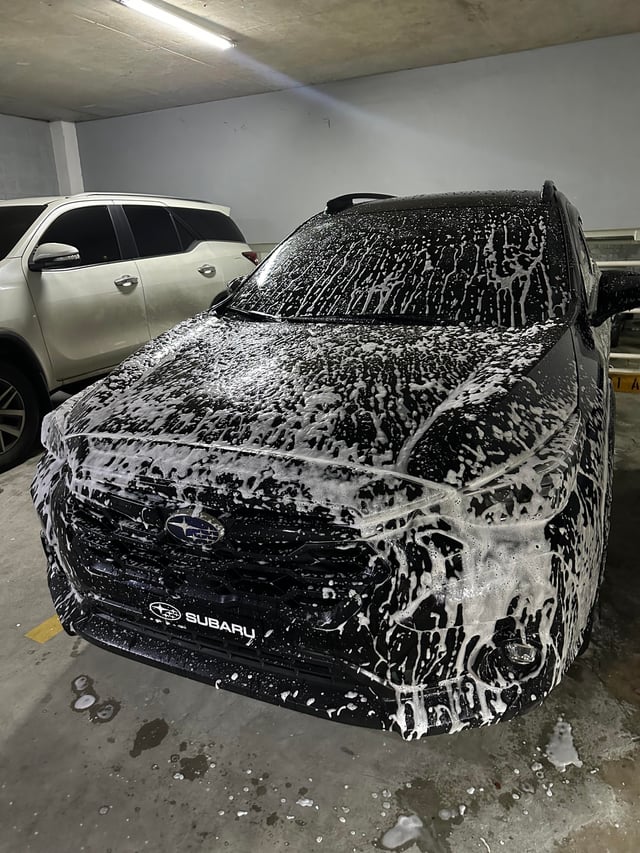
4. Apply foam if the car is heavily dirty
A foam cannon or foam gun can loosen traffic film before the contact wash. Allow the foam to dwell for the time specified on the product, but do not let it dry.
Foam does not replace hand washing. It loosens contamination; it does not remove every bonded particle without contact. Always rinse thoroughly afterward.
5. Wash from the top down
Load the mitt with shampoo and clean one small section at a time:
- Roof
- Glass and upper pillars
- Hood and trunk
- Upper doors and fenders
- Lower doors and bumpers
- Rocker panels last
Use straight, light passes rather than circular scrubbing. Avoid repeatedly going over a section. The lower panels usually contain more grit, so they should be washed last with frequent mitt rinsing.
A common mistake is to use pressure to compensate for a dirty surface. If contamination does not release with gentle passes, rinse the area again rather than pushing harder.
6. Rinse the mitt after each section
After each panel or small section, agitate the mitt in the rinse bucket. Inspect it before returning to the shampoo bucket. If it has visible grit, rinse it again or use a clean mitt.
Never drop a mitt on the ground and continue using it. Replace or wash it first.
7. Rinse from top to bottom
Rinse away all shampoo before it dries. A gentle final rinse can help sheet water from broad panels, leaving less water for the drying towel to absorb.
If your local water is hard, avoid leaving any droplets to evaporate. Minerals in the water—not the black paint itself—are what create many visible water spots.

Credit: www.youtube.com
The mitt should glide lightly over a well-rinsed, shampoo-lubricated panel.
How to Dry a Black Car Without Water Spots
Drying is where many otherwise careful washes go wrong. Do not allow the car to air-dry in direct sunlight, especially if your water contains a high mineral load.
Use a clean microfiber drying towel
Choose a large, plush microfiber towel intended for automotive drying. Lay it flat on the panel and gently pull it across the surface, or pat the panel dry. Avoid twisting, scrubbing, or applying unnecessary pressure.
Use multiple towels if needed. A towel that becomes saturated or picks up grit should be replaced immediately.
Use a drying aid
A compatible drying spray or spray sealant can add lubrication and improve water release. Apply it sparingly according to its label. Too much product can create streaks, especially on black paint.
Blow water from crevices
An air blower can remove water trapped in:
- Door-handle recesses
- Side mirrors
- Grilles
- Emblems
- Window trim
- License-plate holes
- Wheel spokes
A small compressor can help with this task, provided the air is clean and the nozzle is kept far enough away to avoid blasting grit into the paint. Review air-system considerations for vehicle work before choosing equipment for repeated use.
Never use an unfiltered shop-air line that can spray oil or moisture onto a freshly cleaned car.
How to Prevent Water Spots on Black Paint
Water spots form when dissolved minerals remain after water evaporates. Prevention is easier than removal.
- Wash in the shade.
- Keep each panel wet until it is ready to dry.
- Use a final rinse with a hose or filtered water where practical.
- Dry immediately with clean microfiber towels.
- Do not let shampoo dry on the paint.
- Remove bird droppings and bug residue promptly.
- Maintain a wax, sealant, or coating that makes water release easier.
Fresh water spots may disappear with a proper wash or a mild detailing spray. Older, etched spots may require a mineral deposit remover or light polishing. Test any chemical on an inconspicuous area first, and never use abrasive kitchen products.
Protection After Washing
Washing cleans the paint; protection helps reduce future contamination and makes the next wash easier.
Wax
Wax can add warmth and gloss, but it generally requires more frequent renewal than a durable sealant. It is a reasonable option when you enjoy regular detailing and want a traditional finish.
Paint sealant
A synthetic sealant typically provides longer-lasting protection than a conventional wax and is easy to apply by hand. It is a practical choice for a daily-driven black car.
Ceramic coating
A professional or consumer ceramic coating can improve chemical resistance and water behavior. It does not make the paint scratch-proof, eliminate the need to wash, or prevent all water spots. Coated vehicles still need gentle, regular maintenance.
Before applying any protection, make sure the surface is clean and free from residue. If the paint feels rough after washing, consider chemical decontamination or a clay treatment. Clay should be used gently and only when needed because it can create light marring that is especially visible on black paint.
How Often Should You Wash a Black Car?
For a regularly driven vehicle, washing every one to two weeks is a useful starting point. Adjust the schedule for weather, parking conditions, and contamination.
Wash sooner after:
- Road salt exposure
- Heavy rain followed by dust
- Long highway trips
- Pollen accumulation
- Bird droppings or insect impacts
- Mud or construction-site exposure
The goal is not to wash on a rigid calendar. The goal is to prevent contamination from drying, bonding, or remaining on the surface for long periods.
Between full washes, remove fresh bird droppings with a lubricated microfiber towel or rinseless-wash product. Do not wipe dry dust from the paint, because the particles can drag across the clear coat.
A short between-wash maintenance routine can keep the finish presentable without repeatedly performing a full bucket wash.
What to Avoid
Avoid these common sources of dullness and swirl marks:
- Dish soap as a routine shampoo
- Household cleaners, bleach, or abrasive powders
- A single bucket for both washing and rinsing
- Old towels with stiff or contaminated fibers
- The same mitt for wheels and paint
- Circular scrubbing on dry or gritty panels
- Automatic washes with stiff brushes
- Dry wiping dusty paint
- Washing in direct, intense sunlight
- Letting shampoo or rinse water dry on the bodywork
- Using a water blade or squeegee over contaminated paint
Touchless automatic washes are generally less likely to create brush-induced marring, but their stronger chemicals and high-pressure cleaning may not remove all bonded grime. If you use one, inspect the finish afterward and apply protection as needed.
When a Normal Wash Is Not Enough
A bucket wash removes loose and lightly attached dirt. It may not remove:
- Tree sap
- Tar
- Road paint
- Rail dust
- Industrial fallout
- Heavy insect residue
- Oxidized or etched water spots
Use a dedicated, paint-safe product for each contaminant. Chemical decontamination should come before clay treatment, and polishing should be reserved for defects that cleaning cannot remove.
If the surface feels rough after washing, place a clean plastic bag over your fingertips and lightly feel the paint. The plastic can make bonded contamination easier to detect. Do not use this test to scrub the paint; it is only for inspection.
Quick Black-Car Wash Checklist
Before washing:
- Park in shade
- Prepare separate wheel tools
- Fill wash and rinse buckets
- Inspect mitts and towels for grit
- Keep the paint cool
During washing:
- Pre-rinse thoroughly
- Work from top to bottom
- Clean small sections
- Rinse the mitt frequently
- Keep the surface wet
- Avoid pressure and scrubbing
After washing:
- Rinse all shampoo away
- Dry immediately
- Blow out trapped water
- Inspect for water spots
- Apply a compatible protection product
Responsible washing also means controlling runoff where possible. Avoid allowing concentrated wheel cleaner, degreaser, or oily residue to flow into storm drains; local environmental guidance, including information from the U.S. Environmental Protection Agency, is a useful starting point for understanding household vehicle-wash runoff.
Frequently Asked Questions
What is the best soap for washing a black car?
Use a pH-neutral automotive shampoo with good lubrication. It should be safe for the vehicle’s existing wax, sealant, or ceramic coating. The best product is one that lets the mitt glide while suspending dirt, not necessarily the one that produces the most foam.
Can I use dish soap on a black car?
Avoid using dish soap as your regular car shampoo. It can remove protective products and may leave the finish feeling dry. Use a purpose-made automotive wash instead.
Is a foam cannon necessary?
No. A foam cannon is helpful for loosening heavy dirt before contact washing, but a thorough pre-rinse and careful two-bucket wash can safely clean a black car without one.
Are microfiber towels safe for black paint?
Yes, clean and undamaged microfiber towels are suitable for black paint. Wash them separately from household laundry, avoid fabric softener, and retire any towel that feels rough or contains embedded grit.
Should I wash a black car in the sun?
No, if you can avoid it. Sunlight and hot panels cause soap and water to dry quickly, increasing the chance of streaks and mineral spots. Use shade and work on cool panels.
How do I remove light swirl marks?
Washing alone will not remove clear-coat scratches. Light swirls may require a mild polish, applied by hand or with a dual-action polisher. Deeper scratches that catch a fingernail may need professional assessment because polishing cannot safely remove unlimited clear coat.
Can I use an automatic car wash?
A touchless wash is generally safer for the paint than a brush wash, but it may use stronger chemicals and leave some dirt behind. Avoid automatic systems with shared rotating brushes if minimizing swirl marks is a priority.
How often should I wax a black car?
Follow the product label and judge by the surface’s water behavior, slickness, and appearance. Reapply when protection has clearly weakened rather than adding layer after layer over contamination.
Final Recommendation
Wash your black car with a pH-neutral, high-lubricity car shampoo, a clean microfiber mitt, and the two-bucket method. Pre-rinse before touching the paint, clean from the roof downward, reserve separate tools for the wheels, and dry immediately with plush microfiber towels.
Shade, lubrication, light pressure, and clean equipment matter more than expensive accessories. With that routine—and a suitable wax, sealant, or coating—a black car can maintain a deep, reflective finish while avoiding the swirl marks and water spots that make dark paint look dull.








