Image source: YouTube / WMAR-2 News (YouTube thumbnail (fair-use with source credit))
Moving to a new address in Maryland means updating your Motor Vehicle Administration (MVA) records. The Maryland address change notification requirement for MVA records is a legal obligation, not just a formality. If you don’t act within the required timeframe, you could face penalties or issues with your registration.
As of 2026, Maryland law requires you to notify the MVA within 30 days of changing your address. This applies to both your driver’s license and vehicle registration. Missing this deadline can lead to fines or complications with law enforcement.
Quick Answer
The Maryland address change notification requirement for MVA records mandates updating your address within 30 days. This applies to both your driver’s license and vehicle registration. You can do this online, in person, or by mail.
Failure to comply may result in penalties.
The 30-Day Rule: What Maryland Law Requires
Maryland’s Transportation Article §12-110 is clear: you have 30 days from the date of your move to update your address with the MVA. This isn’t just a suggestion, it’s the law. The rule covers all residents, whether you’ve moved within the state or relocated to Maryland from elsewhere.
Image source: YouTube / MDOT MVA (YouTube thumbnail (fair-use with source credit))
If you’re a new Maryland resident, the clock starts the moment you establish residency. For in-state moves, it begins the day you change your primary address. The MVA doesn’t make exceptions for temporary addresses, though military personnel and students may have specific provisions.
Who Has to Notify the MVA (and Who Doesn’t)
Not everyone needs to update their address with the MVA. If you’re a Maryland resident with a driver’s license or registered vehicle, you’re required to notify the MVA. This includes:
- Drivers with a Maryland-issued license
- Owners of vehicles registered in Maryland
- New residents who’ve recently moved to the state
You don’t need to notify the MVA if:
- You’re a non-resident with a vehicle registered in another state
- You’re only visiting Maryland temporarily
- Your address change is temporary and you have proof
What Happens If You Don’t Update Your Address on Time
Ignoring the Maryland address change notification requirement for MVA records can lead to real consequences. The most immediate risk is a traffic citation. If a police officer pulls you over and your license or registration shows an outdated address, you could be fined.
Longer-term, you might miss critical mail from the MVA, like registration renewal notices or recall alerts. This can lead to late fees for unpaid renewals, suspension of your vehicle registration, or issues with insurance claims if your address doesn’t match your policy.
How to Change Your Address with Maryland MVA
You’ve got three options to update your address: online, in person, or by mail. Each method has its pros and cons, depending on your situation.
Online: Fastest and Easiest Method
The online process is the quickest way to update your address. Here’s how it works:
- Visit the myMVA portal and log in to your account.
- Navigate to the “Change of Address” section.
- Enter your new address and confirm the changes for all linked vehicles and licenses.
- Submit the update.
You’ll receive a confirmation email, and your new license or registration card will arrive by mail within 7, 10 business days. There’s no fee for updating your address online, but if you need a replacement license or registration card with the new address, you may have to pay a small fee.
In-Person: When You Need It Done Immediately
If you need your updated documents the same day, visiting an MVA branch is your best option. This is ideal if you’ve moved and need proof of your new address right away.
Bring your current license, vehicle registration, and proof of your new address. Acceptable documents include a utility bill, lease agreement, or bank statement with your name and new address. As of 2026, expect to pay around $20, $25 for a duplicate license or registration card with your new address.
By Mail: If You Can’t Go Online or In-Person
Mailing in your address change is the slowest option but works if you don’t have internet access or can’t visit an MVA branch. Download and fill out the Address Change Request (Form VR-154) from the MVA website.
Include a copy of your proof of residency and mail the form to the address listed on the form. Processing takes 4, 6 weeks, so this method isn’t ideal if you need your updated documents quickly. There’s no fee for submitting the form, but you’ll need to pay if you request a replacement license or registration card.
Documents You’ll Need to Prove Your New Address
Image source: YouTube / All Tips Boss (YouTube thumbnail (fair-use with source credit))
The MVA requires proof that your new address is legitimate. You’ll need one or two documents showing your name and new address. The most common options are:
- Utility bill (electric, water, gas) issued within the last 60 days
- Lease or mortgage agreement
- Bank or credit card statement
- Insurance policy or card
- Employer pay stub
The document must be original or a certified copy. Digital screenshots or photos aren’t accepted unless they’re part of an official electronic statement.
Fees, Processing Times, and What to Expect
| Method | Processing Time | Fee (Address Update) | Fee (Replacement Card) |
|---|---|---|---|
| Online | 7–10 days | Free | $20–$25 |
| In-Person | Same day | Free | $20–$25 |
| 4–6 weeks | Free | $20–$25 |
Online updates are free if you only need to change the address in the MVA’s system. If you want a physical license or registration card with your new address, you’ll pay the replacement fee.
In-person visits give you the fastest turnaround. You’ll leave with a temporary paper license or registration, and your permanent card arrives by mail within 7, 10 days.
Updating Your Driver’s License vs. Vehicle Registration
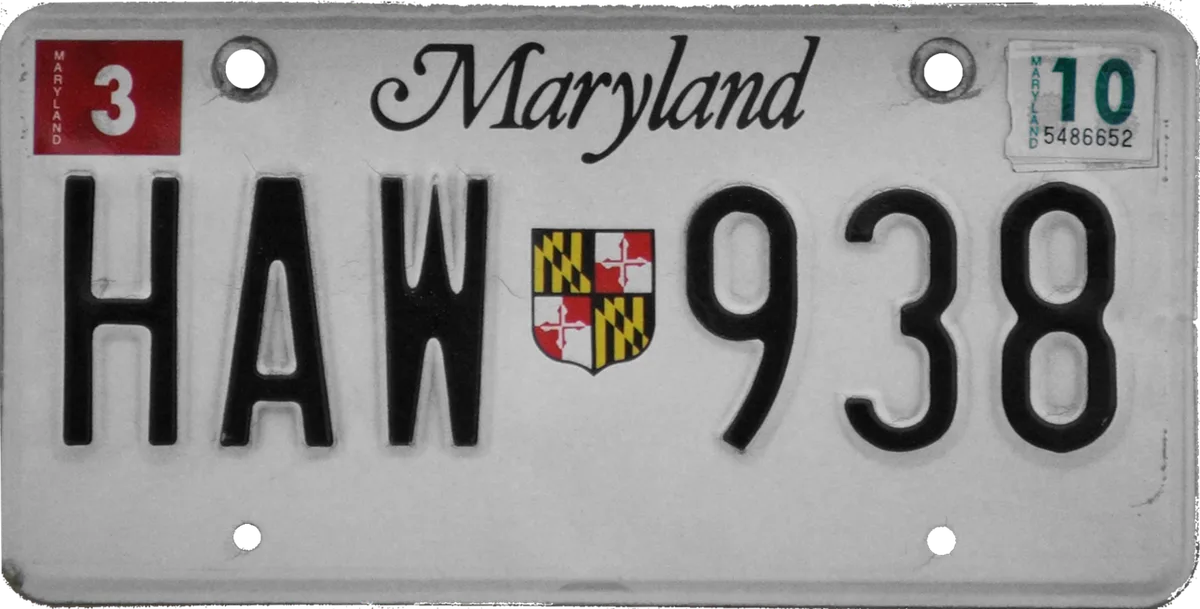
Image source: Wikimedia Commons / Krokodyl (CC BY)
These are two separate updates, and you need to do both if you own a vehicle. Changing your driver’s license address doesn’t automatically update your vehicle registration, and vice versa.
Your driver’s license is tied to your identity as a driver. Your vehicle registration is tied to the car itself. The MVA treats them as independent records, so you must update each one individually.
If you own multiple vehicles, you’ll need to update the address for each registration. The online portal lets you do this in one session, but in-person or mail updates require separate forms for each vehicle.
Common Mistakes That Cause Delays or Penalties
Forgetting to update both your license and registration is the most common error. Many drivers change one but not the other, which leaves their records incomplete.
Another frequent issue is waiting too long. The 30-day window isn’t a suggestion. If you miss it, you risk fines or complications during traffic stops.
Using an incomplete or outdated proof of address will get your application rejected. Double-check that your document shows your name exactly as it appears on your license and includes your new address.
Special Cases: Military, Students, and Temporary Moves
Military personnel stationed in Maryland have some flexibility. If you’re active duty and your address change is temporary, you may not need to update your MVA records. However, you should still notify the MVA if you want to ensure you receive important mail.
College students living on campus can use their school address for MVA records. You’ll need a letter from your school’s housing office or a dorm contract as proof.
For temporary moves like short-term work assignments, the rules depend on how long you’ll be away. If it’s less than 30 days, you may not need to update your address. For longer stays, you should notify the MVA to avoid issues.
FAQs About Maryland MVA Address Changes
Do I need to update my address if I’m moving out of state?
Yes. If you’re leaving Maryland, you must notify the MVA of your new address. This ensures your records are accurate until you register your vehicle in your new state.
Can I update my address over the phone?
No. The MVA doesn’t accept address changes by phone. You must use the online portal, visit a branch, or mail in your request.
What if I don’t have a printer for the mail-in form?
You can request a paper form by calling the MVA or visiting a branch. Some libraries and post offices also offer printing services for a small fee.
How do I update my address for multiple vehicles?
The online portal lets you update all your vehicles at once. For in-person or mail updates, you’ll need to submit a separate form for each vehicle.
Will my insurance be affected if I don’t update my address?
Possibly. Insurance companies use your address to calculate premiums. If your address doesn’t match your policy, you could face coverage issues or higher rates.
Final Checklist: Did You Cover Everything?
Review this list before you finish:
- Updated your driver’s license address
- Updated your vehicle registration address
- Changed the address for all vehicles you own
- Used an approved proof of residency document
- Completed the update within 30 days of moving
- Paid any required fees for replacement cards
If you’ve checked all these boxes, you’re in compliance with Maryland’s requirements. If not, take care of the missing steps as soon as possible to avoid penalties.
Review this list before you finish:
- Updated your driver’s license address
- Updated your vehicle registration address
- Changed the address for all vehicles you own
- Used an approved proof of residency document
- Completed the update within 30 days of moving
- Paid any required fees for replacement cards
If you’ve checked all these boxes, you’re in compliance with Maryland’s requirements. If not, take care of the missing steps as soon as possible to avoid penalties.