Maryland trailer towing safety chain and lighting equipment requirements exist to prevent accidents and keep you legal on the road. Miss one detail, and you risk a fine or worse, a detached trailer. As of 2026, Maryland law mandates crossed safety chains and fully functional lighting for all trailers, with additional rules for heavier loads.
These aren’t just suggestions. Per Maryland Vehicle Law, safety chains must meet or exceed the trailer’s gross weight, and all lights must comply with DOT standards. Get this wrong, and you’re looking at citations or liability if something goes wrong.
Quick Answer
Maryland requires crossed safety chains rated for your trailer’s weight. All trailers need working tail lights, brake lights, turn signals, and reflectors. Trailers over 3,000 lbs must have a break-away brake system.
Lights must meet DOT visibility standards.
Why Maryland’s Trailer Towing Safety Rules Actually Matter
Trailer detachment is a real risk without proper chains. In 2022, Maryland State Police reported over 200 towing-related incidents, many tied to failed safety equipment. The state’s rules aren’t arbitrary, they’re based on NHTSA crash data showing that improper towing causes serious accidents.
Lighting failures are just as dangerous. A trailer with dead brake lights or missing reflectors is nearly invisible at night. Maryland’s requirements align with federal standards to ensure other drivers can see and react to your trailer.
The Quick Legal Checklist: What Maryland Requires
Here’s what you must have to stay compliant:
- Safety chains: Crossed under the trailer tongue, rated for the trailer’s gross weight
- Lighting: Tail lights, brake lights, turn signals, and reflectors (red rear, amber front/side)
- Break-away brake: Mandatory for trailers over 3,000 lbs
- Wiring: 4-way or 7-way connector, depending on trailer features
- License plate light: Required if the trailer blocks the tow vehicle’s plate
Trailers over 80 inches wide need additional side marker lights. If your trailer has brakes, they must work in sync with the tow vehicle.
Here’s what you must have to stay compliant:
- Safety chains: Crossed under the trailer tongue, rated for the trailer’s gross weight
- Lighting: Tail lights, brake lights, turn signals, and reflectors (red rear, amber front/side)
- Break-away brake: Mandatory for trailers over 3,000 lbs
- Wiring: 4-way or 7-way connector, depending on trailer features
- License plate light: Required if the trailer blocks the tow vehicle’s plate
Trailers over 80 inches wide need additional side marker lights. If your trailer has brakes, they must work in sync with the tow vehicle.
Safety Chains: The Non-Negotiable Basics
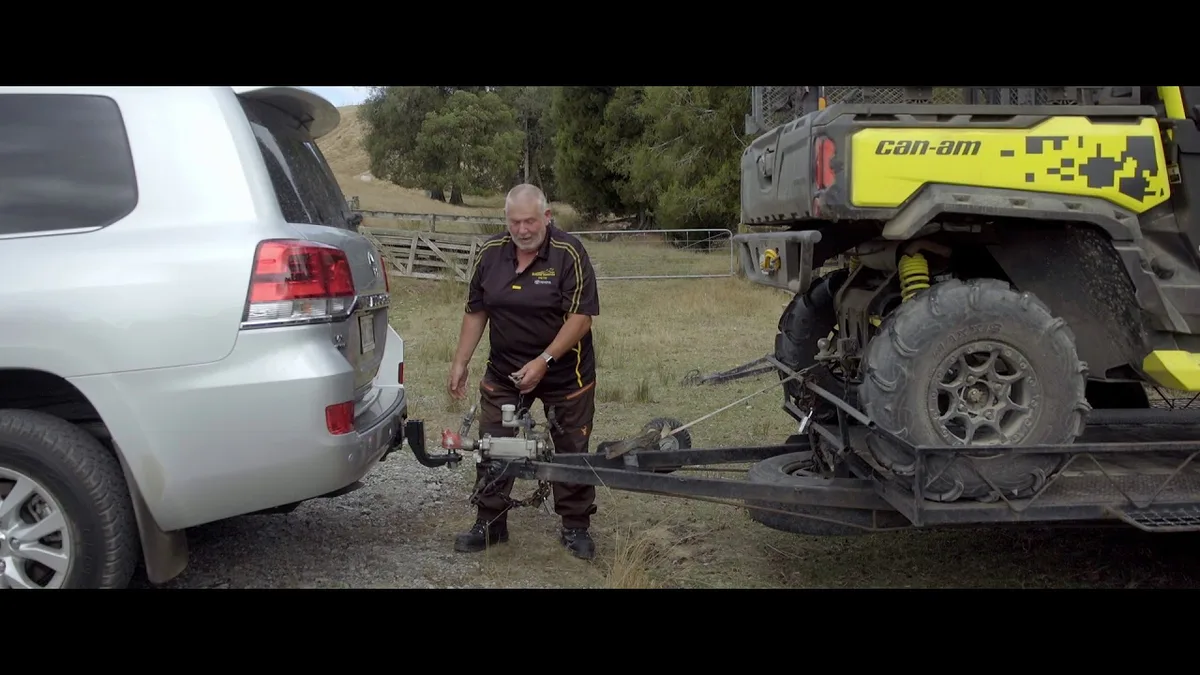
Safety chains are your last line of defense if the hitch fails. Maryland law requires them to be crossed in an X-pattern under the trailer tongue. This setup prevents the tongue from digging into the road if the trailer detaches.
Chain Strength, Material, and Attachment Rules
Use Grade 70 or Grade 80 steel chains, they’re the only types rated for towing. The chains must have a breaking strength equal to or greater than your trailer’s gross weight. For example, a 5,000 lb trailer needs chains rated for at least 5,000 lbs.
Attach the chains to the tow vehicle’s frame, not the hitch itself. This ensures they can handle the load if the hitch fails. Leave enough slack for turns but not so much that the chains drag on the road.
How to Cross and Secure Chains the Right Way
Cross the chains under the trailer tongue so they form an X. This cradle effect catches the tongue if it drops. Hook each chain to a separate point on the tow vehicle’s frame.
Double-check the hooks are secured tightly before every trip.
Trailer Lighting: What Must Work (and How to Test It)
Maryland requires all trailers to have functional lighting, regardless of size. This includes tail lights, brake lights, turn signals, and reflectors. Trailers over 80 inches wide also need side marker lights.
Required Lights by Trailer Size
| Trailer Weight | Tail Lights | Brake Lights | Turn Signals | Reflectors | Side Markers |
|---|---|---|---|---|---|
| Under 3,000 lbs | Required | Required | Required | Required | If over 80" wide |
| 3,000–10,000 lbs | Required | Required | Required | Required | Required |
| Over 10,000 lbs | Required | Required | Required | Required | Required |
Wiring Connections (4-Way vs. 7-Way)
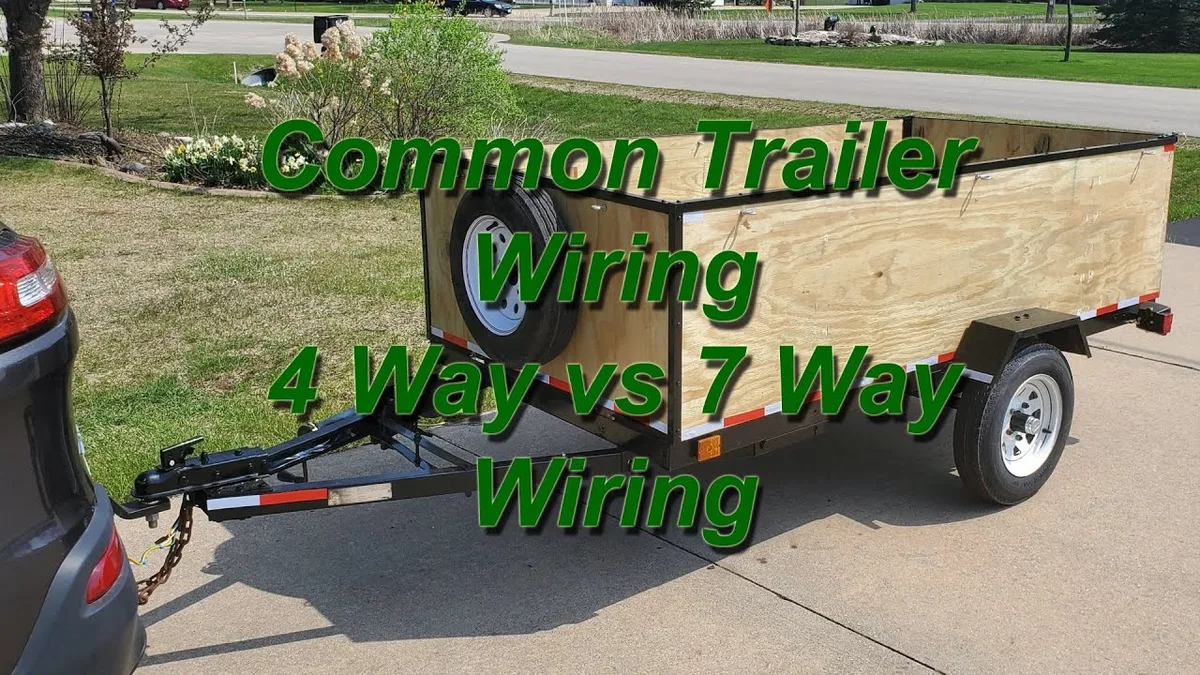
A 4-way connector handles basic lighting: tail lights, brake lights, and turn signals. A 7-way connector adds support for electric brakes and a 12V power line. If your trailer has brakes, you’ll need a 7-way to stay compliant and safe.
When Brakes and Break-Away Systems Are Mandatory
Maryland requires a break-away brake system for any trailer over 3,000 lbs. This system activates the trailer’s brakes automatically if it detaches from the tow vehicle.
Trailers under 3,000 lbs don’t need break-away brakes but must still have functional service brakes if the gross weight exceeds 1,500 lbs and the towing speed is over 30 mph.
Common Mistakes That Get You Pulled Over (or Worse)
Using safety chains that are too weak for the load is a frequent violation. Maryland State Police often cite drivers for chains that don’t meet the trailer’s gross weight rating.
Another common issue is non-functional lighting. Burned-out bulbs or faulty wiring can lead to immediate citations. Reflectors are also mandatory, and missing or cracked ones are an easy target for enforcement.
Step-by-Step Pre-Trip Safety Check

Start with the hitch and coupler. Ensure the ball and coupler are the same size and the latch is fully engaged. A loose connection can lead to detachment.
Next, inspect the safety chains. Verify they’re crossed under the tongue and have enough slack for turns but not enough to drag. Hooks should be secured to the tow vehicle’s frame, not the hitch.
Test all lights before hitting the road. Have a partner check brake lights, turn signals, and running lights while you operate the controls. Use a trailer light tester if you’re working alone.
Maryland-Specific Rules You Might Not Know
Maryland enforces a 55 mph speed limit for vehicles towing trailers on most highways. This rule applies regardless of the trailer’s size or weight.
Trailers over 80 inches wide require additional side marker lights. These must be amber on the front and red on the rear. Reflectors must also be visible from 300 feet at night.
What Happens If You’re Not Compliant?
Fines for towing violations in Maryland can reach up to $130 per offense. More importantly, non-compliance increases the risk of accidents and liability.
If a detached trailer causes damage or injury, you could face civil lawsuits or criminal charges. Proper safety chains and lighting aren’t just legal requirements, they’re critical for safety.
Pro Tips for Long-Term Safety and Hassle-Free Towing
Use dielectric grease on electrical connections to prevent corrosion. This keeps your trailer lights working reliably in all weather conditions.
Inspect chains and hooks for rust or wear before every trip. Replace any chain that shows signs of stretching or cracking. A weak chain can fail under load.
Frequently Asked Questions
Do I need safety chains for a small utility trailer?
Yes. Maryland requires safety chains for all trailers, regardless of size. Even a lightweight trailer must have properly rated and crossed chains.
Are LED trailer lights legal in Maryland?
Yes, as long as they meet DOT standards for brightness and color. LEDs are often brighter and more durable than incandescent bulbs.
What’s the fine for towing without proper lighting?
Fines can reach up to $130 per violation. Non-functional lights also increase accident risks.
Do I need a break-away brake for a 2,500 lb trailer?
No. Maryland only requires break-away brakes for trailers over 3,000 lbs. Service brakes are required if the trailer weighs over 1,500 lbs and you’re towing over 30 mph.
Can I use cables instead of chains for safety?
No. Maryland law specifically requires safety chains, not cables. Chains provide the necessary strength to secure the trailer if the hitch fails.