Towing a trailer in Massachusetts without the right safety gear isn’t just risky, it’s illegal. The Massachusetts trailer towing safety chain and lighting equipment requirements exist to keep you, your load, and everyone on the road safe. Get it wrong, and you’re looking at fines, failed inspections, or worse, a detached trailer causing an accident.
Per Massachusetts General Laws 540 CMR 2.00, every trailer must have crossed safety chains and fully functional lighting. Even a minor oversight, like a burnt-out brake light, can trigger a citation. Let’s break down exactly what the law demands and how to stay compliant.
Quick Answer
Massachusetts requires crossed safety chains rated for your trailer’s GVWR. All trailers need tail lights, brake lights, turn signals, and reflectors. Chains must attach to the tow vehicle frame, not the hitch.
Lights must be visible from 500 feet at night.
Why Massachusetts Trailer Towing Safety Chains and Lighting Matter
Safety chains are your last line of defense if the hitch fails. Without them, a detached trailer can veer into traffic, causing serious accidents. Massachusetts enforces this strictly because it’s a proven safety measure.
Lighting is just as critical. Other drivers need to see your trailer’s size, speed, and intentions. Faulty lights are a common cause of rear-end collisions, especially at night or in poor weather.
The state’s regulations align with federal standards to minimize these risks.
Massachusetts Safety Chain Requirements (The Non-Negotiables)
Massachusetts law mandates that every trailer must have at least two safety chains. These chains must be crossed under the trailer tongue to create a cradle. This setup ensures the tongue stays off the road if the coupler detaches.
The chains must be rated for your trailer’s Gross Vehicle Weight Rating (GVWR). For example, a trailer with a 5,000 lb GVWR needs chains with a minimum breaking strength of 5,000 lbs. Using under-rated chains is illegal and dangerous.
Attach them to the tow vehicle’s frame, not the hitch itself, to prevent failure under stress.
| Requirement | Specification |
|---|---|
| Number of chains | Minimum 2 |
| Configuration | Crossed under tongue |
| Strength rating | ≥ Trailer GVWR |
| Attachment point | Tow vehicle frame |
How to Properly Attach and Adjust Safety Chains
Start by identifying strong attachment points on both the trailer and tow vehicle. The trailer’s chains should connect to the frame or axle, never the coupler. On the tow vehicle, use the frame or a dedicated tow hook.
Cross the chains under the trailer tongue in an “X” pattern. This creates a cradle to catch the tongue if the hitch fails. Leave enough slack for turns but not so much that the chains drag.
A good rule of thumb is to allow 2-3 inches of slack when the trailer is level.
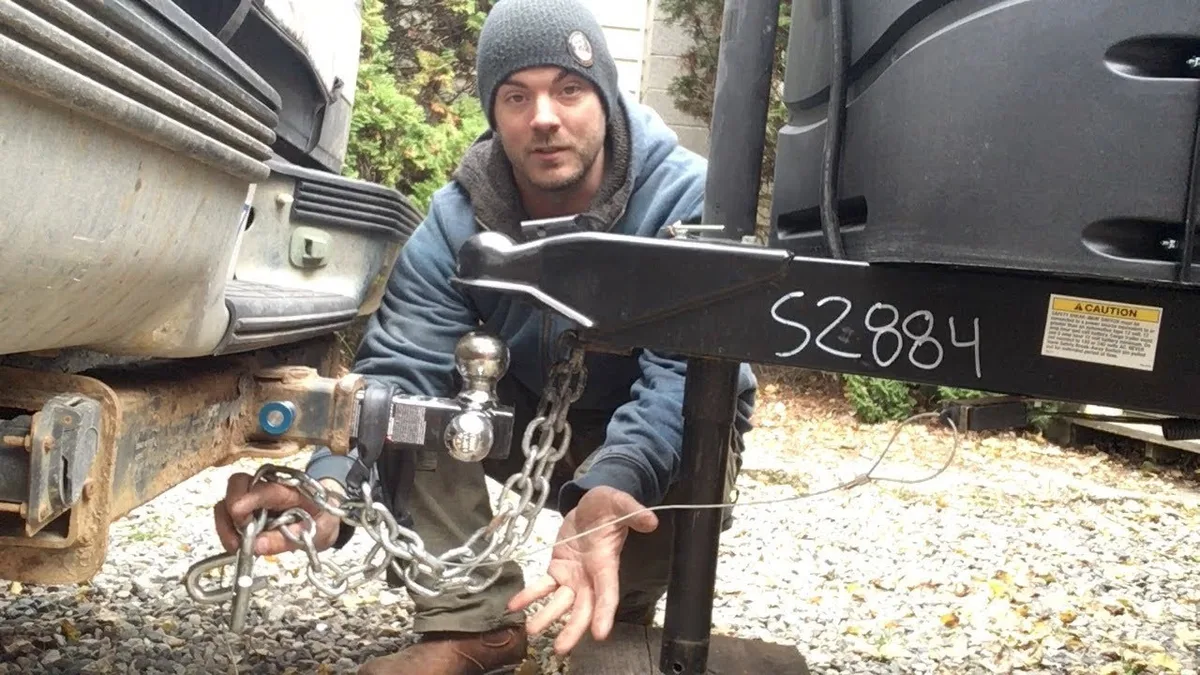
Check the chains before every trip. Look for rust, wear, or weak links. Replace any chain that shows signs of damage.
Massachusetts Trailer Lighting Equipment Rules
Every trailer must have a lighting system that meets federal and state standards. This includes tail lights, brake lights, turn signals, and reflectors. Trailers over 80 inches wide also need side marker lights and clearance lights.
Tail lights and brake lights must be red and visible from 500 feet at night. Turn signals can be amber or red but must flash at a steady rate. Reflectors must be red on the rear and amber on the sides.
All lights must be mounted at the correct height and spacing as outlined in FMVSS No. 108.
Here’s a quick breakdown of the lighting requirements:
| Light Type | Color | Visibility Requirement |
|---|---|---|
| Tail lights | Red | 500 feet at night |
| Brake lights | Red | 500 feet at night |
| Turn signals | Amber or red | 300 feet in daylight |
| Side markers | Amber (front), Red (rear) | 500 feet at night |
| Reflectors | Red (rear), Amber (side) | 600 feet at night |
Step-by-Step: Wiring and Testing Your Trailer Lights
Start with the right connector. Most passenger vehicles use a 4-way flat for basic lighting. Larger trailers often need a 7-way blade for brakes and auxiliary power.
Route the wiring harness from the tow vehicle to the trailer, avoiding sharp edges or moving parts. Use zip ties to secure the wires and prevent chafing. Connect the ground wire to a clean, bare metal surface on the trailer frame.
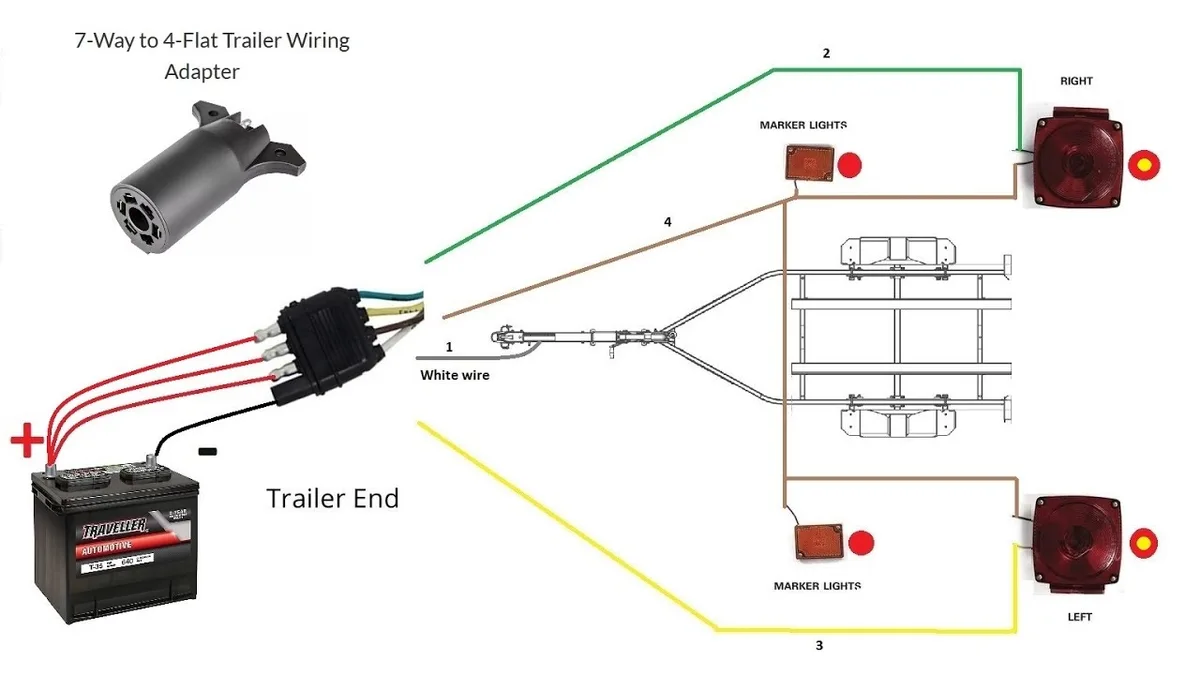
Test each function before hitting the road. Have a helper press the brake pedal while you check the brake lights. Activate the turn signals and verify both sides.
Walk around the trailer to confirm all lights are working.
Safety Chain vs. Cable: Which Should You Use?
Safety chains are the standard for most trailers. They’re durable, strong, and resistant to wear. Grade 70 or Grade 80 chains are the most common, with Grade 80 offering higher strength for heavier loads.
Cables are lighter and more flexible, which can be useful for certain setups. However, they’re more prone to fraying and corrosion over time. For most Massachusetts towing needs, chains are the safer and more compliant choice.
LED vs. Incandescent Trailer Lights: What’s Best for MA Roads?
LED lights last longer and draw less power than incandescent bulbs. They’re also brighter and more visible, which is a plus for safety. The downside is a higher upfront cost.
Incandescent bulbs are cheaper to replace but burn out faster. They’re also more susceptible to vibration damage. For frequent towing, LEDs are the better long-term investment.
Common Mistakes That Get You Pulled Over (And How to Avoid Them)
Using safety chains that are too weak for your trailer’s GVWR is a common violation. Always check the rating and match it to your load. Another frequent issue is improper chain attachment, such as connecting to the hitch instead of the frame.
Burnt-out lights are an easy target for inspections. Test all lights before every trip. Also, ensure your license plate is illuminated and visible, as this is often overlooked.
Trailer Weight and Chain Strength: Matching the Right Gear
The chain’s breaking strength must meet or exceed your trailer’s GVWR. For example, a 7,000 lb trailer needs chains rated for at least 7,000 lbs. Using under-rated chains is illegal and dangerous.
Here’s a quick reference for chain grades:
| Chain Grade | Typical Use Case | Breaking Strength (Example) |
|---|---|---|
| Grade 30 | Light-duty trailers | 3,000-5,000 lbs |
| Grade 70 | Medium-duty trailers | 5,000-10,000 lbs |
| Grade 80 | Heavy-duty trailers | 10,000+ lbs |
Massachusetts Inspection Checklist Before You Tow
Run through this list before every trip. It takes five minutes and could save you a ticket or an accident.
Check that both safety chains are crossed and secured to the frame. Verify the coupler is locked and the hitch pin is in place. Test all lights, including brake, turn, and tail lights.
Inspect the tires for proper inflation and tread depth. Ensure the load is balanced and secured. Finally, confirm the license plate is visible and illuminated.
Run through this list before every trip. It takes five minutes and could save you a ticket or an accident.
Check that both safety chains are crossed and secured to the frame. Verify the coupler is locked and the hitch pin is in place. Test all lights, including brake, turn, and tail lights.
Inspect the tires for proper inflation and tread depth. Ensure the load is balanced and secured. Finally, confirm the license plate is visible and illuminated.
Winter Towing in MA: Corrosion, Salt, and Lighting Survival Tips
Massachusetts winters are tough on towing equipment. Road salt accelerates corrosion on chains and wiring. Rinse your trailer after winter trips to remove salt buildup.
Apply a protective coating to chains and connectors to prevent rust. Check wiring connections frequently, as moisture can cause shorts. Consider using dielectric grease on electrical contacts to keep them functioning.
When You Need a Breakaway Brake System (And How It Works)
Trailers over 3,000 lbs GVWR require a breakaway brake system in Massachusetts. This system activates the trailer’s brakes if it becomes disconnected from the tow vehicle.
The breakaway system uses a cable attached to the tow vehicle. If the trailer detaches, the cable pulls a pin, activating the brakes. Always test the breakaway system before towing to ensure it’s functional.
FAQs About Massachusetts Trailer Towing Laws
Do I need safety chains for a small utility trailer?
Yes. Massachusetts requires safety chains for all trailers, regardless of size. Even small trailers must have crossed chains rated for their GVWR.
Can I use a single safety chain?
No. The law mandates at least two safety chains for all trailers. A single chain does not provide adequate security.
What color should my trailer’s turn signals be?
Turn signals can be amber or red. They must be visible from 300 feet in daylight and flash at a steady rate.
Are LED lights legal for trailers in Massachusetts?
Yes. LED lights are legal as long as they meet the color and visibility requirements. They must also comply with FMVSS No. 108.
How often should I inspect my trailer’s lighting system?
Inspect the lighting system before every trip. Check for burnt-out bulbs, loose connections, and corrosion. Regular maintenance prevents failures.
Do I need a license to tow a trailer in Massachusetts?
No special license is required for most trailers. However, the combined weight of your vehicle and trailer must not exceed your driver’s license class limits.