Towing a trailer in the US Virgin Islands without the right safety setup can get you pulled over or worse. The US Virgin Islands trailer towing safety chain and lighting equipment requirements are strict, and inspectors don’t cut corners. These rules exist to prevent accidents on the islands’ narrow, winding roads.
Per the US Virgin Islands Vehicle Code Title 24, your trailer must have safety chains rated at least 1.25 times its gross weight, plus fully functional lighting. Miss either, and you risk fines or a failed inspection.
Quick Answer
The US Virgin Islands requires safety chains rated for 1.25x your trailer’s gross weight. All trailers need working tail lights, brake lights, turn signals, and reflectors. Chains must be crossed under the tongue.
Lights must meet DOT standards.
USVI Trailer Safety Chain Requirements
Safety chains are your last line of defense if the hitch fails. In the USVI, they must be strong enough to hold the trailer’s full weight if it detaches.
Manufacturer specs confirm chains should be rated at 1.25 times the trailer’s gross weight. For example, a 5,000 lb trailer needs chains rated for at least 6,250 lbs. Use galvanized or alloy steel chains with S-hooks or clevis pins for secure attachment.
Chains must be crossed under the trailer tongue to create a cradle. This prevents the tongue from digging into the road if the hitch fails. Keep enough slack to allow turns but not so much that the chains drag.

USVI Trailer Lighting Equipment Requirements
Your trailer’s lighting must be visible and functional at all times. This includes tail lights, brake lights, turn signals, and side markers.
Per DOT standards, tail lights and brake lights must be red and visible from 500 feet. Turn signals must be amber or red and visible from 300 feet. Side markers and reflectors are required if the trailer is over 80 inches wide.
All wiring must be properly insulated and protected from corrosion. Use waterproof connectors and check them regularly for wear.

How to Check Your Trailer’s Weight and Chain Strength
Knowing your trailer’s gross weight is the first step to choosing the right chains. You can find this in your trailer’s manual or on its VIN plate.
If you’re unsure, use a public scale to weigh your loaded trailer. Once you have the weight, multiply it by 1.25 to determine the minimum chain strength. For example, a 3,000 lb trailer needs chains rated for at least 3,750 lbs.
Always check the chain’s rating, which is usually stamped on the chain itself. If it’s worn or rusted, replace it before towing.
Step-by-Step: Properly Attaching Safety Chains
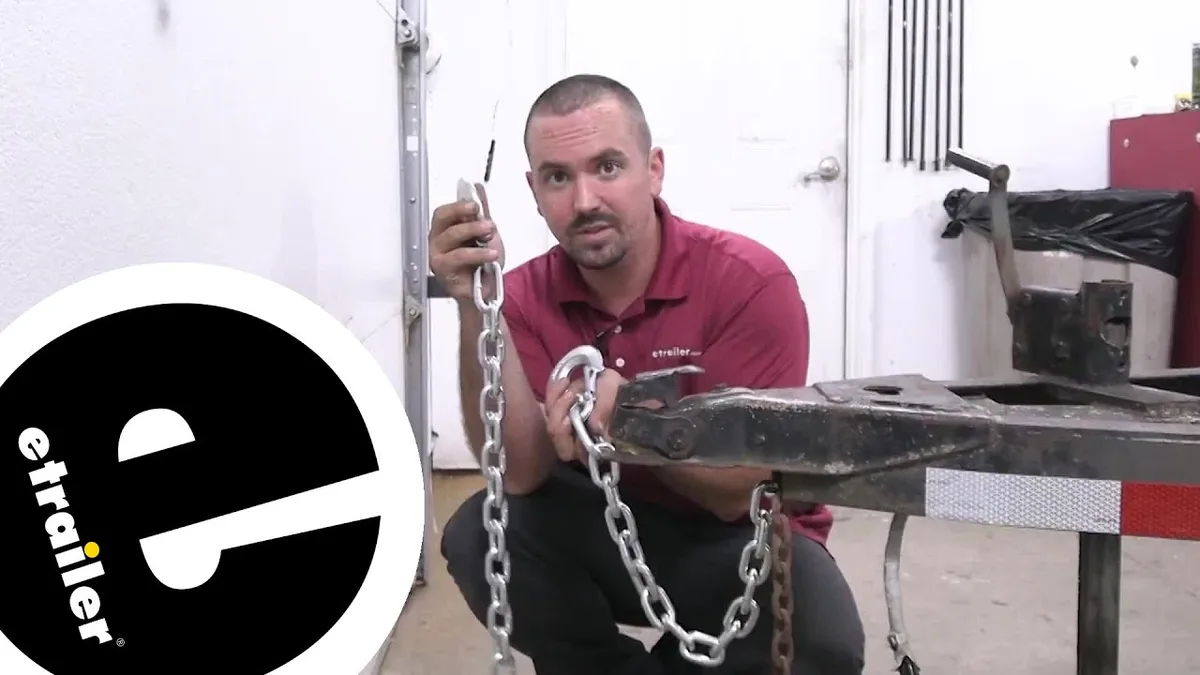
Attaching safety chains correctly is just as important as having the right ones. Start by crossing the chains under the trailer tongue to form a cradle.
Hook each chain to the tow vehicle’s frame, not the hitch itself. This ensures the chains can support the trailer’s weight if the hitch fails. Leave enough slack for turns but not enough for the chains to drag on the road.
Double-check the hooks are securely fastened and won’t come loose during transit.

Step-by-Step: Testing and Maintaining Trailer Lights
Start with a visual check. Walk around the trailer and verify all lights turn on when activated.
Use a multimeter to test voltage at each connection point. You should see 12V at the tail light circuit when the tow vehicle’s lights are on. Corroded or loose connections are the most common failure points in the USVI’s salty air.
Clean all connectors with electrical contact cleaner and apply dielectric grease to prevent future corrosion.

Common Mistakes That Get You Pulled Over in the USVI
Using chains that are too weak for the trailer’s weight is the top violation. Inspectors check ratings, not just presence.
Uncrossed safety chains are another instant fail. They must form a cradle under the tongue to work properly.
Burnt-out bulbs or non-functional turn signals are easy tickets. Many drivers assume their lights work because they did last trip, but salt air accelerates corrosion.
USVI Inspection Process and What They Look For
The US Virgin Islands requires annual inspections for trailers. Inspectors verify safety chains, lighting, and overall roadworthiness.
They’ll check that chains are properly rated and crossed under the tongue. All lights must function, including brake lights and turn signals.
Reflectors must be clean and visible. Any trailer over 3,000 lbs typically needs its own braking system, which inspectors will test.
When You Need Brakes on Your Trailer in the USVI
Trailers over 3,000 lbs gross weight require brakes in the USVI. This applies to most boat trailers and large utility trailers.
Brakes must be in working order and properly connected to the tow vehicle. Surge brakes are common for boat trailers, while electric brakes are typical for utility trailers.
Check your trailer’s manual or VIN plate for the exact weight rating. If you’re close to the limit, it’s safer to install brakes.
Pro Tips for Towing in Tropical Conditions
Salt air accelerates corrosion, so rinse your trailer and tow setup with fresh water after every use. Pay special attention to electrical connections and chains.
Use stainless steel or galvanized hardware wherever possible. Regular lubrication of moving parts prevents seizing.
Carry spare bulbs and fuses. The USVI’s remote roads mean help isn’t always nearby if a light fails.
Where to Get Compliant Gear in the US Virgin Islands
Local auto parts stores in St. Thomas, St. John, and St.
Croix stock DOT-approved lighting kits and safety chains. Brands like Curt and Reese are widely available and meet USVI standards.
For specialized trailers, marine supply shops carry saltwater-resistant components. Online retailers ship to the USVI, but verify DOT compliance before purchasing.
If you’re unsure about compatibility, bring your trailer’s VIN or weight rating to the store. Staff can help match the right gear to your setup.
Frequently Asked Questions
Do I need safety chains if my trailer has a breakaway brake?
Yes. Safety chains are required regardless of brake type. The breakaway brake is a secondary system, while chains provide immediate physical support if the hitch fails.
What’s the minimum chain size for a 7,000 lb trailer?
You need chains rated for at least 8,750 lbs. A 5/16-inch or 3/8-inch alloy chain typically meets this requirement. Always check the manufacturer’s rating.
Can I use LED lights on my trailer in the USVI?
Yes, as long as they’re DOT-approved and properly installed. LEDs are actually preferred in tropical climates because they resist corrosion better than incandescent bulbs.
How often should I inspect my trailer’s lighting?
Check before every trip. The USVI’s salty air accelerates corrosion, so monthly inspections are wise even if you’re not towing frequently.
Are reflectors required if my trailer has working lights?
Yes. Reflectors are mandatory and must be visible from 500 feet at night. They’re a backup if your lights fail.