ByMax Lee
American Samoa License Plate Frame Rules
American Samoa license plate frame law and state name visibility requirements can trip up even careful vehicle owners. If you've recently moved to the territory or picked up an aftermarket frame online, you need to know what the local rules actually say. Getting this wrong isn't just a paperwork headache.
It can lead to fines, failed inspections, or a ticket during a routine traffic stop.
The territory requires that the words "American Samoa" on your plate remain fully visible at all times. That means frames covering even a small portion of that text can violate local statute. Understanding the specifics before you install anything will save you time, money, and stress down the road.
Quick Answer
Yes, you can use a license plate frame in American Samoa as long as it does not obscure the territory name or the plate numbers. Frames must leave the full "American Samoa" text and all registration stickers clearly visible. Check with the Department of Public Safety for current enforcement details.
What American Samoa's License Plate Frame Law Actually Says
American Samoa operates under its own territorial motor vehicle code. The rules around license plate frames come from the American Samoa Code Annotated, specifically Title 22 covering motor vehicles. The territory does not have a specific statute that outright bans license plate frames.
Instead, the law focuses on what matters. Plates must be legible, properly mounted, and free from any obstruction that hides critical information.
The key requirement centers on visibility. The "American Samoa" text on your plate must remain fully readable from a normal viewing distance. That means any frame you install cannot cover the territory name, the plate number, or the registration decals.
If the frame overlaps even a small section of the territory name, it can be considered a violation during a traffic stop or inspection.
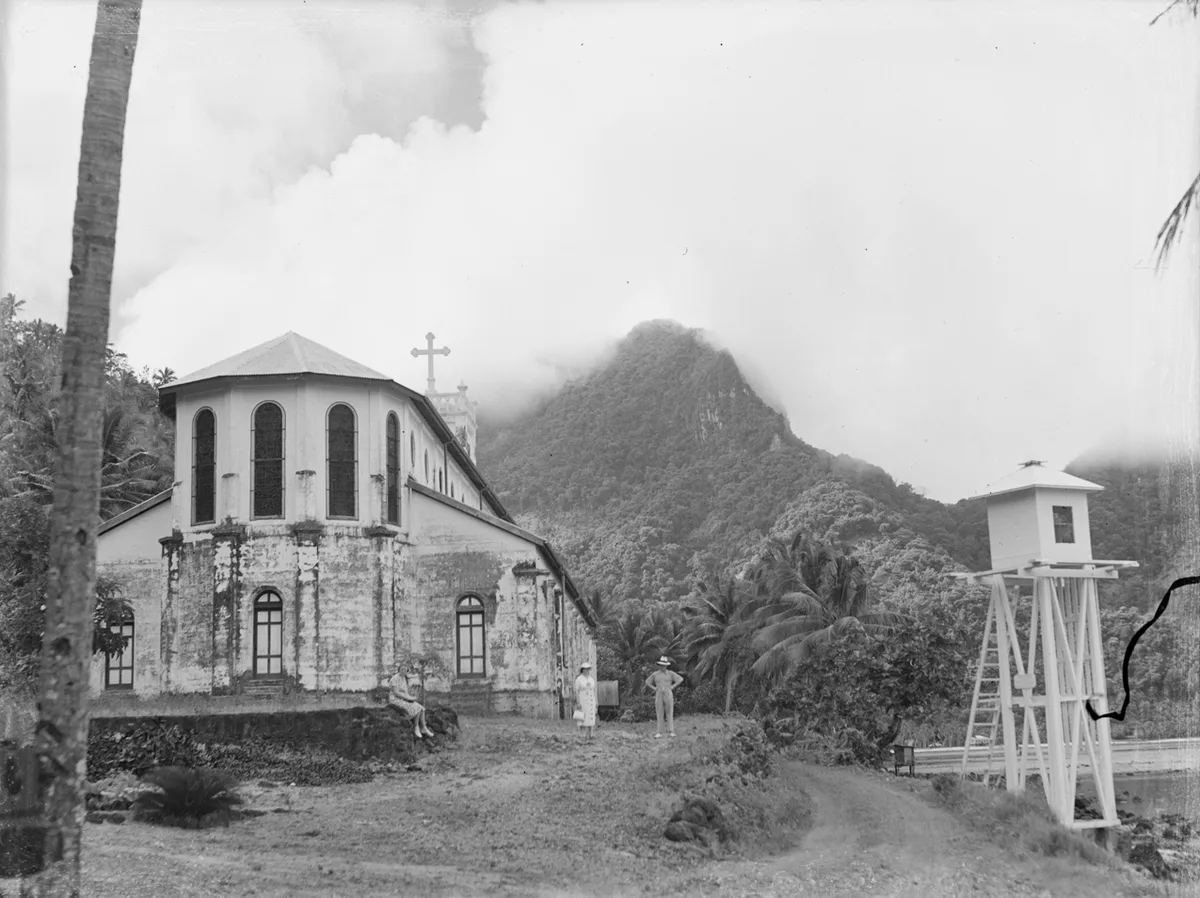
Image source: Wikimedia Commons / Collins, Tudor Washington, 1898-1970, photographer (CC BY)
Local law enforcement officers have discretion when it comes to enforcement. Some may issue a warning for minor frame overlap. Others might write a citation, especially if the obstruction is significant.
The safest approach is to choose a frame that leaves every inch of your plate exposed.
The territory also requires that registration stickers remain visible. Many decorative frames include raised borders or embossed lettering that can partially cover these decals. That is another common source of non-compliance.
Why This Matters (And What Happens If You Get It Wrong)
Non-compliance with American Samoa's plate frame rules carries real consequences. The most immediate risk is a traffic citation. Officers on the road can pull you over for an obstructed plate, and that becomes a recorded violation on your driving history.
Fines vary depending on the officer's discretion and whether you correct the issue on the spot.
Beyond the fine, you risk failing a mandatory vehicle inspection. American Samoa requires certain vehicles to pass inspection to maintain registration. An obstructed plate frame will result in a failed inspection, and you will need to remove the frame and return for re-inspection.
That means extra time, extra fees, and a temporary gap in your compliance status.
In more serious cases, repeated violations or intentional obstruction can escalate. Law enforcement may view a deliberately covered plate as an attempt to avoid identification. This can lead to additional charges beyond a simple traffic infraction.
You should also consider the practical side. A citation means you need to fix the problem quickly. Most drivers will remove the non-compliant frame and reinstall a legal one.
But if you are driving a rental car or a borrowed vehicle, you may not have the right tools on hand.
For vehicle owners managing multiple cars or commercial fleets, these issues multiply quickly. One non-compliant frame across several vehicles can mean multiple fines and inspection failures.
The Core Rule: Territory Name Visibility Requirements
The fundamental rule in American Samoa is straightforward. Your license plate frame must not obscure the words "American Samoa" on your plate. This text appears at the top of the territory's license plates and is a key identifier.
Any frame that covers even a portion of those words violates the visibility requirement.
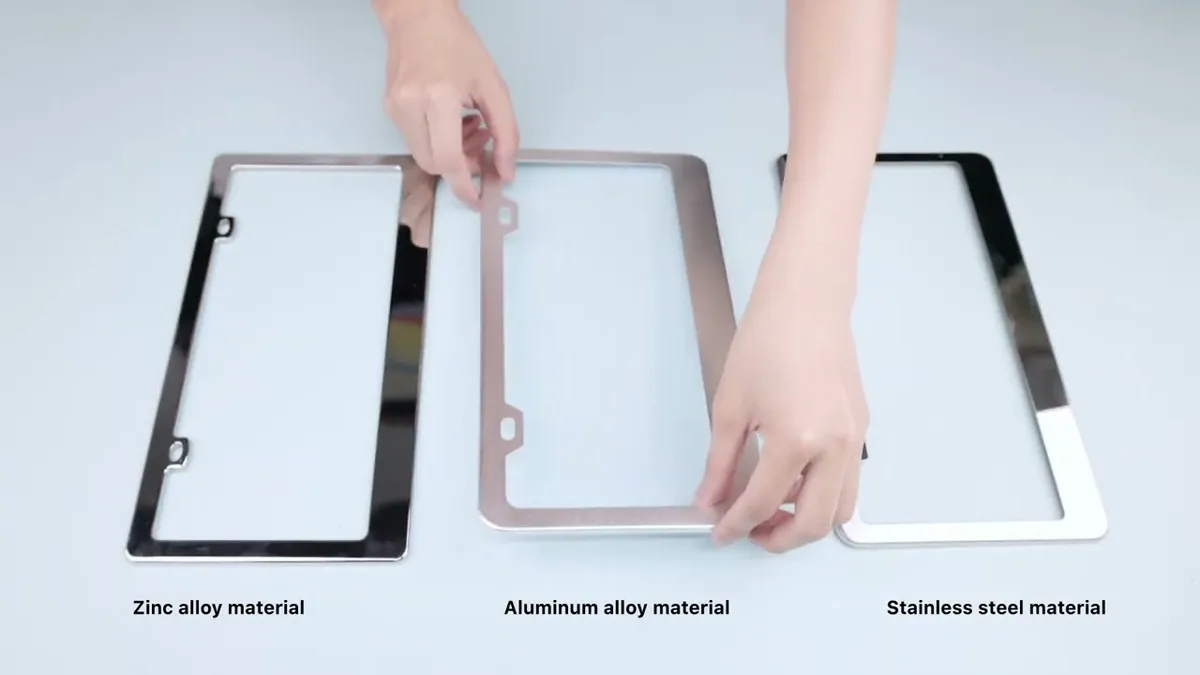
Image source: YouTube / AUTO VALOR (YouTube thumbnail (fair-use with source credit)
When we examine compliant versus non-compliant frames, the difference is clear. A legal frame sits flush against the plate without overlapping the territory name. It may wrap around the sides and bottom, but the top edge leaves the text fully exposed.
An illegal frame has a raised border or thick design that covers part of "American Samoa." Even a partial overlap is enough for an officer to cite you.
The same visibility rule applies to the plate numbers and letters. Your frame cannot block any digit or character on the plate. Registration stickers must also remain fully visible.
Some frames are designed with cutouts for stickers, but many decorative frames do not include this feature.
If your frame passes all these checks, you are compliant. If it fails any one of them, you need to remove it and find a different frame.
What's Allowed vs. What's Not (Frame Types & Coverage)
Not all license plate frames are created equal. Some designs comply with American Samoa law while others do not. Understanding the difference will help you make the right choice.
| Frame Type | Compliant? | Why It Works or Fails |
|---|---|---|
| Slim metal frame with flat edges | Yes | Leaves territory name and numbers fully visible |
| Rubber or plastic frame with thin border | Yes | Minimal coverage when properly sized |
| Oversized decorative frame with raised letters | No | Often covers the territory name on top |
| Frame with embossed text overlapping plate | No | Obscures required plate information |
| Frame that covers registration stickers | No | Violates visibility requirement for decals |
| Frameless plate mount | Yes | No obstruction possible |
The best frames are slim and flat. They wrap around the plate edges without overlapping any text. Metal frames in black, chrome, or silver are widely available and typically compliant.
Rubber frames also work well as long as the border stays thin.
Avoid frames marketed as "decorative" or "oversized." These often have thick borders or raised lettering that can cover the territory name. Some frames also include cutouts for stickers, but many do not. Always verify coverage before you buy.

Image source: Wikimedia Commons / Rama (CC BY-SA)
If you are shopping for a frame, measure your plate first. American Samoa plates follow standard U.S. size dimensions. A frame designed for that size should leave the top area clear.
How to Check If Your Frame Is Legal in American Samoa
Checking your frame for compliance is a quick process. Follow these steps to make sure you are following the rules.
First, look at the top of your plate. The words "American Samoa" should be fully visible with no frame material overlapping them. If your frame covers even a small portion of those words, it is not compliant.
Second, check the sides and bottom. The frame should not cover any part of the plate number or letters. Every digit and character must be readable from a normal distance.
Third, verify that registration stickers are fully visible. Both the front and rear plates should show all decals without obstruction.
Fourth, inspect the frame itself. Make sure there are no raised letters, emblems, or designs that could interfere with plate readability.
If your frame passes all four checks, you are compliant. If it fails any one of them, you need to remove it and find a different frame.
Common Mistakes That Get Drivers Fined
The most frequent violation is using a frame that covers the top of the plate. Many aftermarket frames have thick borders or raised lettering that blocks "American Samoa." Even a quarter-inch overlap is enough to trigger a citation.
Another common issue is frames that hide registration stickers. Some drivers assume the sticker is visible enough if part of it shows. The law requires the entire sticker to be readable.
Some vehicle owners install frames that are too large for their plates. Oversized frames can extend beyond the plate edges and cover critical text. Always match the frame size to your plate dimensions.
A less obvious mistake is using a frame with reflective or glossy surfaces. While not always illegal, these can create glare that makes the plate harder to read. Officers may interpret this as an attempt to obscure the plate.
Finally, some drivers forget to check both the front and rear plates. American Samoa requires compliance on all plates displayed on your vehicle.
Step-by-Step: Installing a Compliant Frame
Start by removing your current plate. Use a screwdriver to take off the screws or bolts holding it in place. Keep these fasteners safe as you will need them for reinstallation.
Next, position your new frame around the plate. Make sure the frame sits flush against the plate edges without overlapping any text. The top edge must leave "American Samoa" fully exposed.
Check the frame for any raised designs or embossed text. These can sometimes cover part of the plate. If your frame has these features, consider choosing a different design.
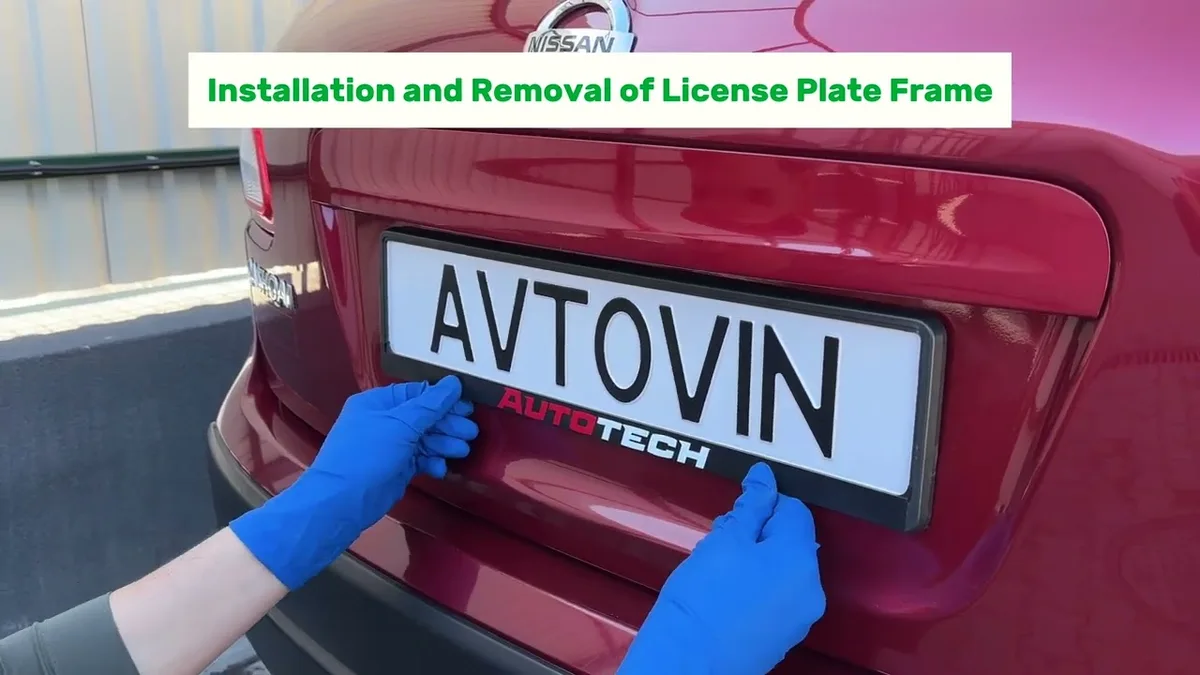
Image source: YouTube / Avtovin (YouTube thumbnail (fair-use with source credit)
Reattach the plate to your vehicle using the original screws or bolts. Make sure the plate sits securely and does not wobble.
Finally, step back and verify visibility. Walk around your vehicle and check the plate from multiple angles. Ensure the territory name, plate numbers, and registration stickers are all fully readable.
What Law Enforcement Looks For During Inspections
Officers primarily check for visibility. They will look at your plate from a normal viewing distance to confirm that "American Samoa" and the plate numbers are clear. Any obstruction, no matter how small, can result in a citation.
They also verify that registration stickers are fully visible. If a sticker is partially covered, the officer may ask you to remove the frame on the spot.

Image source: YouTube / Motorway Cops Official (YouTube thumbnail (fair-use with source credit)
Law enforcement pays attention to the condition of the plate itself. A dirty or damaged plate can be just as problematic as an obstructed one.
Officers may also check the mounting of the plate. Plates must be securely fastened and not at an angle that makes them hard to read.
During traffic stops, officers often use flashlights to check plate visibility at night. If your frame creates shadows or glare that make the plate hard to read, it could be considered non-compliant.
American Samoa vs. U.S. State Plate Frame Laws
American Samoa's rules are similar to those in many U.S. states but with some key differences. Most states require that license plate frames do not obscure any part of the plate. However, the specific language and enforcement can vary.
In some states, frames that cover the state name are explicitly prohibited. Others focus more on the plate numbers and registration stickers. American Samoa's emphasis on the territory name reflects its unique status.
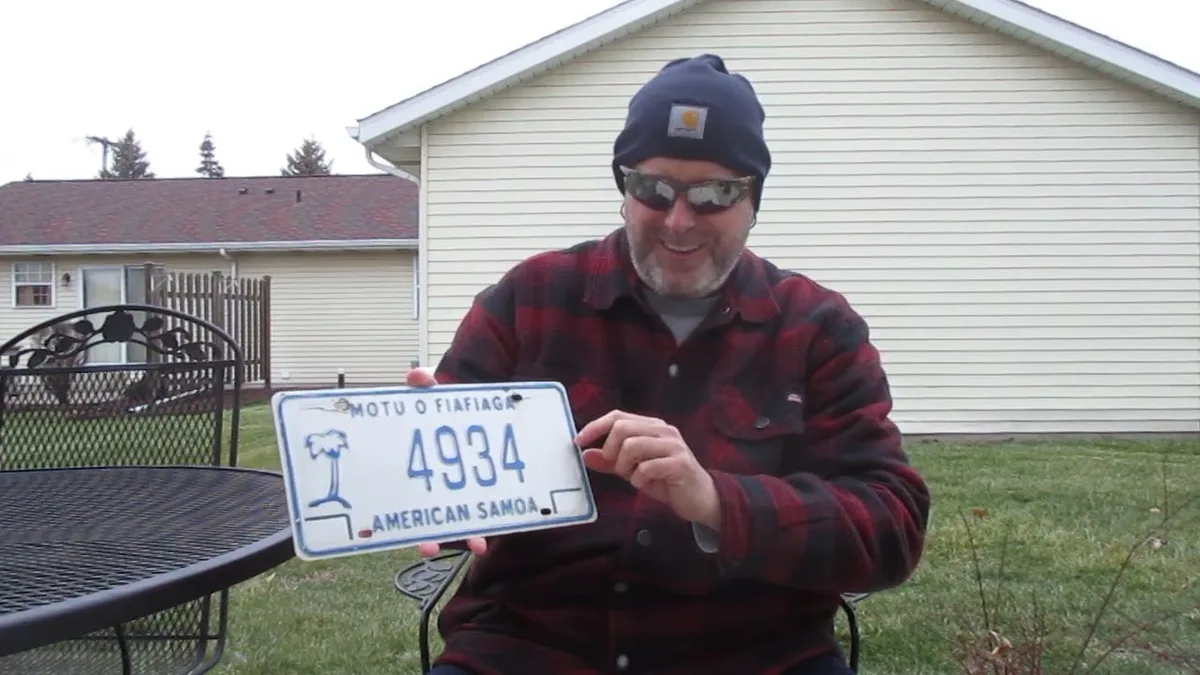
Image source: YouTube / King Kat 714 (YouTube thumbnail (fair-use with source credit)
Another difference is the plate design itself. American Samoa plates have distinct colors and markings that set them apart from U.S. state plates. The territory name is prominently displayed at the top, which is why visibility is so important.
Enforcement can also differ. Some states have strict penalties for non-compliant frames, while others may issue warnings first. American Samoa officers have discretion, but the risk of a citation is real.
If you are moving to American Samoa from a U.S. state, do not assume your current frame is legal. Check the territory's specific requirements and adjust as needed.
Where to Get Official Answers (And Who to Ask)
The American Samoa Department of Public Safety is the primary authority on license plate laws. Their motor vehicle office can provide the most accurate and up-to-date information. Visit their office or check their website for current regulations.
Local law enforcement agencies can also answer questions about compliance. If you are unsure whether your frame is legal, an officer can give you a definitive answer.
Auto accessory shops in American Samoa often stock compliant frames. Staff at these stores are usually familiar with local laws and can recommend products that meet the requirements.
Online resources can be helpful but should be used with caution. Some websites may not have the most current information. Always verify with an official source before making a decision.
If you receive a citation for a non-compliant frame, you can contest it. However, the simplest solution is usually to remove the frame and replace it with a compliant one.
Frequently Asked Questions
Can I use a frame that covers the screws on my plate?
No. Any frame that covers the screws or mounting hardware can be considered non-compliant. The plate must be securely fastened and fully visible.
What happens if my frame covers just a small part of "American Samoa"?
Even partial coverage is a violation. The territory name must be fully visible at all times.
Are there any frames specifically approved for American Samoa?
There is no official approval list. The rule is simple. If the frame does not cover any part of the plate text, it is compliant.
Can I get a warning instead of a fine for a non-compliant frame?
Possibly. Officers have discretion and may issue a warning for first-time offenses. However, you should not rely on this.
Do rental cars in American Samoa have compliant frames?
Most rental agencies use frames that meet local laws. However, it is wise to check the plate visibility before driving.