Black Friday deals are live on Amazon · limited-time discounts, grab them before they’re gone
Grab the deals


ByMax Lee
RI Winter Driving Rules & Studded Tire Laws
# RI Winter Driving Rules & Studded Tire Laws
Rhode Island winters hit hard, and if you're not running the right tires, you're risking fines or worse. The Rhode Island winter driving requirements and studded tire regulations spell out exactly when and how you can use studded tires to stay safe and legal.
As of 2026, studded tires are only allowed from November 1 through April 30, and they must meet strict specs like a maximum stud height of 0.060 inches. Get this wrong, and you could face penalties or compromise safety on icy roads.
## Quick Answer
Rhode Island allows studded tires from November 1 to April 30. Maximum stud height is 0.060 inches. Tire width cannot exceed 245mm. Out-of-season use can result in fines. Always check tread depth and stud retention before driving.

Image source: YouTube / FOX Weather (YouTube thumbnail (fair-use with source credit))
## Why Rhode Island Regulates Studded Tires
Studded tires improve traction on ice, but they also damage pavement over time. Rhode Island's regulations balance safety with road preservation.
The state's coastal climate means sudden freezes and black ice, especially on bridges like the Pell Bridge. Without rules, year-round stud use would accelerate road wear. The seasonal window targets the highest-risk months.
## Legal Studded Tire Season in Rhode Island
Studded tires are legal from November 1 to April 30 each year. This window covers the worst winter conditions in Rhode Island.
Outside these dates, using studded tires is illegal, even if weather conditions seem to justify it. The law doesn't make exceptions for early or late snowfalls.

Image source: Wikimedia Commons / NASA's Scientific Visualization Studio - SSAI/Andrew J Christensen, USRA/Helen-Nicole Kostis, NASA/GSFC/Greg Shirah, NASA/GSFC/Horace Mitchell, NASA/GSFC/Mark SubbaRao, NASA/GSFC/Lesley Ott, Morgan State University/Brad Weir, ADNET Systems, Inc./Laurence Schuler, ADNET Systems, Inc./Ian Jones, Global Science and Technology, Inc./Eric Sokolowsky
Enforcement typically ramps up in early November and late April. If you're caught with studded tires outside the season, you'll face fines and may be required to remove them on the spot.
## Studded Tire Specifications You Must Follow
Rhode Island's rules are precise. Here's what your studded tires must meet to be legal:
- **Stud height**: Maximum 0.060 inches (60 thousandths of an inch) above the tread
- **Tire width**: Maximum 245mm
- **Stud material**: Typically tungsten carbide for durability
- **Tread depth**: Minimum 11/32 inch for winter performance
Any tire exceeding these limits is non-compliant. Shops installing studded tires in Rhode Island are required to follow these specs.

Image source: YouTube / Steve "The Myth Buster" Mechanic (YouTube thumbnail (fair-use with source credit))
Manufacturer specs confirm that most modern studded tires meet Rhode Island's requirements, but it's your responsibility to verify before installation. If you're unsure, a certified tire shop can check for you.
## Where and When You'll Need Studded Tires in RI
Not every Rhode Island road demands studded tires, but some situations call for them.
- **I-95 and Route 3**: High-speed highways where black ice forms quickly
- **Pell Bridge approaches**: Elevated sections freeze first
- **Northern RI (Woonsocket, Cumberland)**: Higher elevation means more snow and ice
- **Rural roads**: Less salt treatment and more shaded areas
In urban areas like Providence, winter tires without studs often suffice. But if you frequently drive on untreated or elevated roads, studded tires add critical traction.
For official road condition updates, check the [Rhode Island Department of Transportation (RIDOT)](https://www.ridot.net). Their alerts can help you decide whether studded tires are necessary for your route.
## Studded Tires vs. Winter Tires vs. Chains: What's Best for RI?
Choosing the right traction depends on your driving conditions and budget. Each option has distinct strengths.
Studded tires excel on ice but are seasonal and costly. Winter tires without studs offer good all-around performance. Chains provide maximum grip but are cumbersome.
| Option | Best For | Cost | Season |
|--------|----------|------|--------|
| Studded tires | Black ice, untreated roads | $100–$200 per tire | Nov–Apr only |
| Winter tires | Regular snow, city driving | $80–$150 per tire | Year-round legal |
| Tire chains | Emergency, steep hills | $50–$150 per set | As needed |
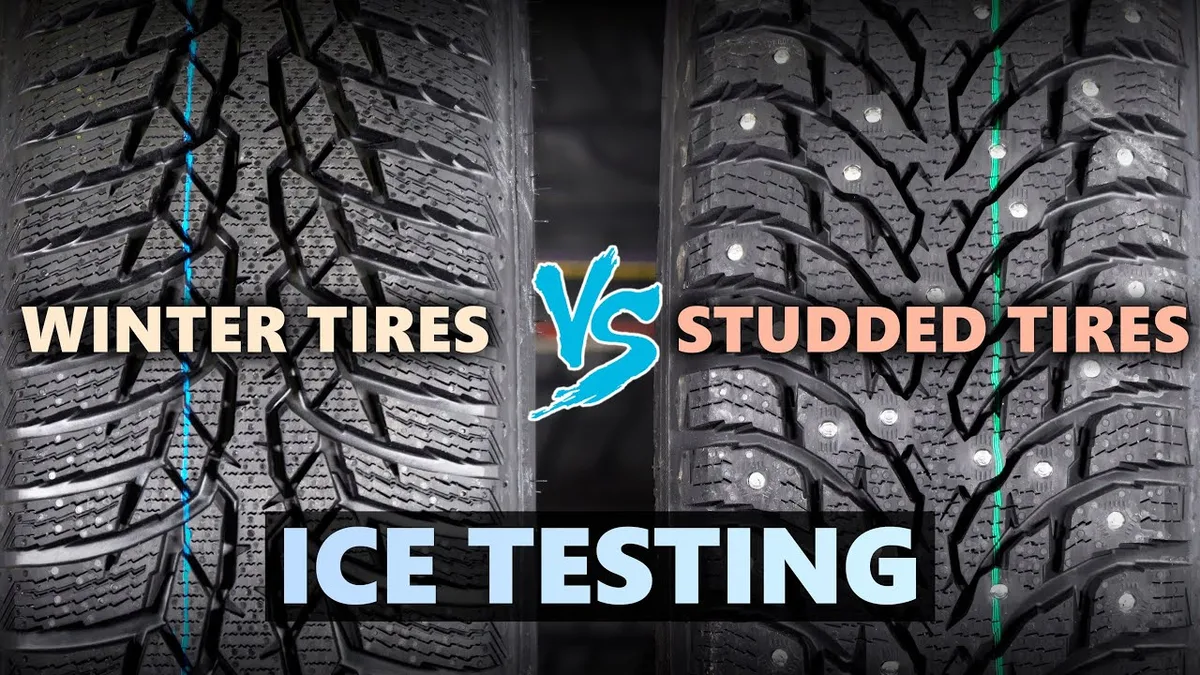
Image source: YouTube / Tyre Reviews (YouTube thumbnail (fair-use with source credit))
If you drive mostly on salted roads, winter tires may be enough. For rural routes or frequent bridge crossings, studded tires add a safety margin. Chains are a backup for extreme conditions, not a daily solution.
## How to Check If Your Studded Tires Are Legal
Before hitting icy roads, verify your tires meet Rhode Island's specs. An illegal setup can lead to fines and unsafe driving.
- **Stud height**: Use a caliper to measure. The stud must not protrude more than 0.060 inches.
- **Tire width**: Check the sidewall marking. No studded tire wider than 245mm is legal.
- **Stud retention**: Ensure studs are tight. Loose studs damage roads and fail inspection.
- **Season**: Confirm current date is between November 1 and April 30.

Image source: YouTube / 4 Wheel Online (YouTube thumbnail (fair-use with source credit))
Most certified tire shops will inspect your tires for compliance. If you're unsure, bring your vehicle to a professional. They can quickly verify height and width using proper tools.
## Step-by-Step: Installing and Removing Studded Tires in RI
Installing studded tires requires a professional shop with the right equipment. DIY installation is risky and often illegal if done incorrectly.
**Installation steps:**
1. Schedule an appointment with a certified tire installer.
2. Bring your vehicle for a professional mount and balance.
3. Ask for a compliance check before leaving the shop.
**Removal steps:**
1. Plan removal before April 30 to avoid late-season fines.
2. Return to the shop for professional removal.
3. Store tires in a cool, dry place for off-season storage.
Professional installation ensures proper stud seating and prevents damage to your rims. It also provides documentation of compliance if questioned by law enforcement.
## Common Mistakes That Get Rhode Islanders Fined
Mistakes with studded tires are common and costly. Avoid these pitfalls to stay legal and safe.
- **Using studded tires in summer**: The season ends April 30. Any use after that date is illegal.
- **Ignoring stud height**: Studded tires that exceed 0.060 inches can cause road damage and fines.
- **Choosing overly wide tires**: Studded tires wider than 245mm are prohibited, even if legal elsewhere.
- **Assuming all winter tires are legal**: Only studded tires meeting RI specs are allowed during the season.
Law enforcement periodically checks for illegal studded tires, especially in November and April. Fines can range from $100 to $300, plus the cost of removing non-compliant tires.
## What Happens If You Break the Rules?
Violating Rhode Island's studded tire regulations carries real consequences. Penalties are enforced to protect road infrastructure and public safety.
**Potential violations:**
- **Out-of-season use**: Fines from $100 to $300.
- **Excessive stud height**: Fine plus required removal.
- **Wide studded tires**: Fine and mandatory tire replacement.
In severe cases, repeated violations could lead to points on your driving record. Law enforcement may also require you to immediately remove illegal tires before driving further.
Always prioritize legal compliance. The risk of fines and compromised safety isn't worth cutting corners on tire regulations.
## Rhode Island Winter Driving Tips Beyond Tires
Proper tires are just the start. Smart driving habits keep you safe on Rhode Island's winter roads.
Slow down before bridges and overpasses. These freeze first and stay icy longer. Keep extra distance from the car ahead. Stopping distances can triple on snow and ice.

Image source: YouTube / NBC 10 WJAR (YouTube thumbnail (fair-use with source credit))
Clear all snow and ice from your vehicle before driving. This includes your roof, windows, and lights. Poor visibility is a leading cause of winter accidents.
## Massachusetts Border? Here's What Changes
Rhode Island and Massachusetts have different studded tire rules. If you cross the border, you need to know both.
Massachusetts allows studded tires from November 1 to April 15. Their stud height limit is also 0.060 inches. The main difference is the end date.
If you frequently drive between the two states, plan your tire changes carefully. Removing studded tires too early in Rhode Island could leave you unprepared for late-season snow. Keeping them too long in Massachusetts risks fines.
## FAQs About Rhode Island Studded Tire Laws
### Can I use studded tires year-round in Rhode Island?
No. Studded tires are only legal from November 1 to April 30. Using them outside this window is illegal and can result in fines.
### What's the maximum stud height allowed in Rhode Island?
The maximum stud height is 0.060 inches. Any stud protruding beyond this limit is non-compliant.
### Are winter tires without studs legal in Rhode Island?
Yes. Winter tires without studs are legal year-round. They provide good traction without the seasonal restrictions of studded tires.
### Do I need to remove studded tires by April 30?
Yes. The law requires removal by April 30. Driving with studded tires after this date can lead to fines.
### Can I use tire chains instead of studded tires in Rhode Island?
Yes. Tire chains are legal and can be used as needed. They're especially useful for extreme conditions or steep hills.
### What happens if I'm caught with illegal studded tires?
You'll face fines ranging from $100 to $300. Law enforcement may also require you to remove the tires before continuing to drive.
### Are there any exceptions to Rhode Island's studded tire season?
No. The November 1 to April 30 rule applies to all vehicles. Even emergency vehicles must comply with the same seasonal restrictions.
### Do studded tires void my warranty?
Check your vehicle's manual. Some manufacturers warn against studded tires due to potential rim damage. Most modern vehicles handle them fine if installed correctly.
## Final Checklist Before Hitting RI Roads This Winter
Verify your studded tires meet the 0.060 inch height limit. Confirm the season is active between November 1 and April 30.
Check tire width doesn't exceed 245mm. Ensure tread depth is at least 11/32 inch for winter performance.
Carry tire chains for extreme conditions. Test your vehicle's lights and defrosters before winter trips.
Keep an emergency kit with a scraper, blanket, and flashlight. Monitor RIDOT for road condition updates.
``` Monitor [RIDOT](https://www.ridot.net) for real-time road condition updates.