ByMax Lee
Does Arizona Waive Golf Cart Taxes or Fees at 65+?
No, Arizona does not hand out a senior discount on golf cart registration. Turning 65 unlocks the state's property tax relief program, but that program has nothing to do with vehicles. It applies to your primary residence and nothing else.
If you own a street-legal cart, you owe the same Vehicle License Tax and registration fees as any other driver, at least as of 2026. The confusion usually starts when people hear the phrase "Senior Freeze" and assume it covers every tax the state collects. Let's clear that up right now.
Quick Answer
No, Arizona does not offer age 65+ waivers for golf cart registration or taxes. The state's senior property tax exemption applies only to your primary residence. Golf carts registered as Low-Speed Vehicles owe full Vehicle License Tax.
Off-highway carts need an OHV decal. Private property use requires no registration.
Why the Senior Freeze Doesn't Apply to Golf Carts
Arizona's senior exemption freezes the assessed value of your home for property tax purposes. It does not touch vehicles.
Many retirees hear the word "freeze" and assume it covers their car, truck, and golf cart. It doesn't. Arizona Revised Statutes draw a hard line between real estate taxes and vehicle fees.
Golf carts fall under the Arizona Department of Transportation once they leave private property. ADOT charges Vehicle License Tax, or VLT, which is a percentage of the cart's value. That money goes into the state highway fund.
The county assessor handles some personal property, but registered motor vehicles sit with ADOT and the Motor Vehicle Division.
Too many owners skip registration because they assume the exemption covers their cart. That's a costly mistake.
The exemption only stabilizes the value used for your home's property tax bill. It does not reduce registration, license taxes, or plate fees for any vehicle you drive. There is no age tier, no reduced senior rate, and no family discount for carts.
How ADOT Classifies Golf Carts: Private Property, LSV, and OHV
ADOT splits carts into three practical groups. The rules you follow depend entirely on where and how you drive. Get this wrong and you risk a citation.
First is the private property cart. If you keep it inside a gated community or on a large private parcel and never touch public streets, you don't need registration. You can drive it around your neighborhood roads if the HOA allows it.
No plate. No VLT. No state paperwork.
If you're unsure how the state treats electric neighborhood vehicles on shared roads, review the neighborhood vehicle registration guide.
Second is the Low-Speed Vehicle, or LSV. This is the street-legal route. If you plan to cross public roads, even at 20 mph, ADOT treats it as a motor vehicle.
You need a title, registration, insurance, and a license plate. The cart must be built to federal LSV safety standards. Many of the requirements are detailed in the street-legal cart rules.
Third is the Off-Highway Vehicle, or OHV, category. This applies mainly to unmodified carts used on desert trails, dunes, or forest roads.
OHV use requires a state decal from the Arizona Game and Fish Department. It does not grant you street-legal status. Review the off-highway decal rules to see where your cart fits.
What You'll Pay: VLT, Registration, and County Obligations
Private Property Carts: The Zero-Fee Path
This is the cheapest option by far. If your cart stays off public roads, you pay the state nothing. You might still owe something if your county or HOA imposes a local fee.
Check your deed restrictions and local ordinances before you buy. Keep in mind that if you later change your mind and drive onto a main road, you're now breaking the law without a plate.
Street-Legal LSVs: The Full Fee Stack
Street-legal carts carry the heaviest load. You pay an initial registration fee, a plate fee, and VLT. The VLT rate is tied to the assessed value of the vehicle.
As your cart gets older, the VLT drops because the value drops. Most owners see the biggest savings over the first three years.
Here's a rough breakdown of what a street-legal cart owner might pay.
| Fee Type | What It Covers | Notes |
|---|---|---|
| Initial registration | Title plus plate issuance | Paid to ADOT MVD |
| Vehicle License Tax | Percentage of vehicle value | Declines as cart ages |
| Plate fee | Metal plate and sticker | Renewal required annually |
| OHV decal | Off-highway access only | Does not allow street use |
You can also register for multiple years at once to skip the annual renewal trip. Check the multi-year registration rules to see if your cart qualifies. Many owners now manage renewals through the state's digital registration system.
If you sell your LSV mid-cycle, you might also qualify for a prorated refund, which is explained in the vehicle registration refund guide.
OHV Decals: A Narrow Alternative
An OHV decal costs a fraction of full registration. As of 2026, it runs around $25 per year. It only works for unregistered vehicles on designated routes.
If you drive it to the store, you're breaking the law. Police can ticket you for operating an unregistered vehicle on a highway.
Street-Legal LSV Requirements, Insurance, and Emissions
Street legality isn't just a plate. Your cart must carry specific safety gear. Missing one item can turn a legal LSV into an illegal vehicle.
Here are the baseline requirements:
- Headlights, taillights, and brake lights
- Turn signals and side marker lights
- Reflectors on the front, rear, and sides
- Seat belts for every seating position
- Windshield and rearview mirror
- Parking brake and horn
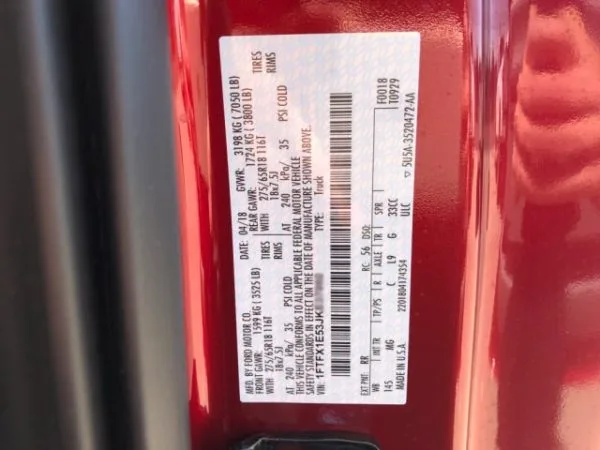
- A 17-digit VIN
- Top speed capped at 25 mph
Insurance is mandatory for street use. Arizona requires at least 25/50/15 liability coverage. That's $25,000 per person, $50,000 per accident, and $15,000 for property damage.
Many insurers offer a dedicated LSV policy. Rates are usually lower than a car but higher than a home policy.
If you run an electric LSV, you skip emissions testing entirely. Gas-powered carts are trickier. In Maricopa and Pima counties, some LSVs must meet emissions standards depending on weight and model year.
If you're unsure, ask the Arizona Department of Transportation before you title the cart. An unexpected emissions failure can derail your registration and leave you stranded.
Local rules vary too. Some cities allow carts on specific routes, while others ban them completely. Tribal lands operate under separate jurisdiction, so check before you cross a reservation border.
When in doubt, call the MVD directly rather than guessing.
Three Arizona Senior Use Cases and the Cost of Each
The Gated Community Commuter
Many Arizona retirees live behind gates in communities like Sun City or Anthem. If your cart never touches a public road, you pay nothing to the state. No VLT.
No registration. No plate fees. This remains the most popular path for buyers over 65.
The Neighborhood Street User
If you cross public roads to reach a grocery store, pharmacy, or friend's house, ADOT treats your cart as a Low-Speed Vehicle. Expect a first-year VLT bill near $200 to $350 depending on purchase price. The assessed value drops annually, so your bill shrinks over time.
Liability insurance typically adds $150 to $400 per year.
The Desert Trail Explorer
Some seniors use carts on private dirt roads or designated OHV trails outside the metro. A $25 annual OHV decal covers this use. It does not grant street-legal status.
If you mix trail use with pavement travel, you must carry both the decal and full LSV registration.
Mistakes That Trigger Citations, Impoundment, and Back Taxes
The biggest mistake is driving an unregistered cart on a public road. Police will issue a civil traffic citation. You may also owe back VLT, penalties, and impound fees if you're caught.
Those costs add up fast.
Another error is modifying a private cart for street use without registering it. Adding lights and seat belts does not make it legal until ADOT approves the paperwork and issues a plate.
Skipping insurance is dangerous. Arizona requires liability coverage for street-legal LSVs. A single uninsured at-fault accident can destroy retirement savings in one afternoon.
Ignoring address updates with the MVD causes missed renewal notices. Late penalties and interest accrue monthly. On a fixed income, that is a needless drain.
Step-by-Step: Registering Your Golf Cart Through ADOT Correctly
Follow this order to register your cart the first time without delays.
- Confirm your cart meets LSV safety specs or plan to keep it entirely private.
- Gather your bill of sale, proof of insurance meeting AZ minimums, and the 17-digit VIN.
- Visit an ADOT office or authorized provider for an in-person VIN inspection.
- Complete the title and registration application, then submit the paperwork.
- Pay the registration fee, plate fee, and your first-year Vehicle License Tax.
- Receive your plate and sticker, then mount them exactly as instructed.
When to Call the County Assessor or ADOT MVD
Call the MVD if your cart has a homemade frame, an unusual build, or an out-of-state title. Those files require manual review and can stall registration for several weeks.
Contact your county assessor if you receive a personal property tax notice for your cart. That means someone flagged it as taxable personal property. You will need to prove the cart is either properly registered as an LSV or used only on private ground.
FAQs: Golf Cart Taxes and Fees for Arizona Seniors
Does the Arizona Senior Freeze cover golf cart taxes?
No. The Senior Freeze applies only to primary residence property taxes. Golf carts and other vehicles fall under a completely separate tax system managed by the state.
Do I need to register a golf cart I only drive in my gated community?
No. Private property use does not require state registration, a license plate, or VLT payment. You can drive freely on roads your HOA controls without touching the MVD.
What is the cheapest legal way to drive a golf cart in Arizona?
Keep it on private land with HOA or landowner permission. That avoids every state fee entirely. There is no senior waiver for street use, so private roads remain the only zero-cost option.
Can I drive my golf cart on sidewalks or bike paths?
No. Arizona law treats carts on public streets as motor vehicles. Sidewalks and bike paths are typically prohibited unless a specific city ordinance allows cart access.
Does an electric golf cart need emissions testing?
No. Electric LSVs are exempt from Arizona emissions testing in every county. Gas-powered carts may face testing rules in Maricopa or Pima counties depending on weight and model year.
Can I get a refund if I sell my golf cart mid-year?
Yes. You can request a prorated refund for the remaining registration and VLT. Apply through the MVD right after the sale is recorded to avoid missing the deadline.
Verified Bottom Line
Arizona gives no age-based break on golf cart registration or Vehicle License Tax. The Senior Freeze covers homes only.
If you keep your cart on private roads, you pay nothing. If you drive on public streets, budget for full fees and insurance. Confirm local city rules before you buy or drive.