ByMax Lee
Arizona HOV Lane Rules: Who Can Use Them and When
You are sitting in gridlock on I-17, watching the cars to your left fly by. The only difference between you and them is the number of people in the car. Arizona’s carpool lane rules are simple once you know the baseline, but they catch plenty of drivers off guard.
As of 2026, the standard is HOV 2+, which means you need the driver plus at least one other passenger during posted peak hours. Most Valley and Tucson corridors restrict those lanes between 6:00 and 9:00 a.m. and again from 3:00 to 7:00 p.m. on weekdays. Let’s break down exactly how it works so you never get flagged.
The 30-Second Arizona HOV Answer
Arizona HOV rules require two or more people per car. Peak hours are 6 to 9 a.m. and 3 to 7 p.m. weekdays. Motorcycles may ride solo during those times.


Hybrids and EVs receive no exemption. Always obey the posted overhead sign.
How Arizona HOV Lanes Actually Work
A High Occupancy Vehicle (HOV) lane is a restricted travel lane reserved for vehicles carrying multiple occupants. The goal is straightforward: move more people using fewer vehicles. The Arizona Department of Transportation manages these lanes as part of the metro freeway network.
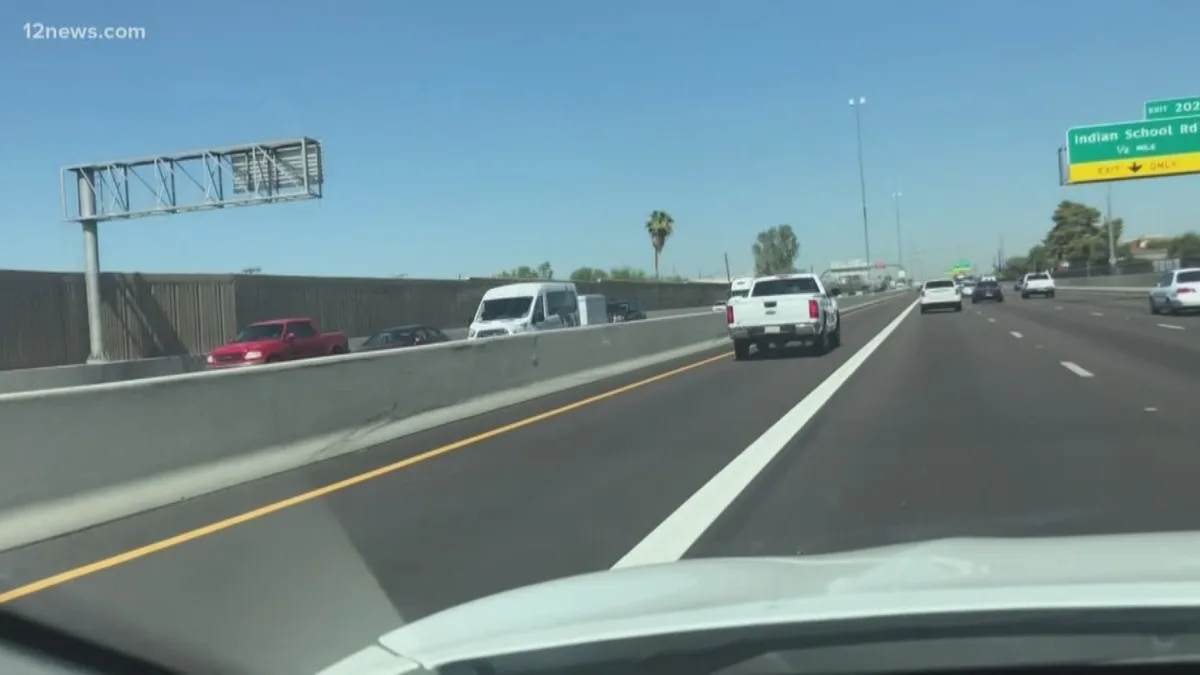
You will see a white diamond painted on the pavement. Green overhead signs match them. These are the only markings that count when you are trying to spot the lane from a distance.
The lanes use a concurrent-flow model. Traffic moves in the same direction as the regular lanes beside it. Most Valley corridors have no physical barrier.
You enter and exit only at designated points where the striping is broken.
During restricted windows, only vehicles meeting the occupancy threshold may travel in the lane. Outside those windows, the lane reopens to all traffic. Enforcement is active, and officers scan for solo drivers who try to beat congestion.
Am I Allowed In? The Driver Eligibility Decision Tree
Use this quick if/then check before you merge.
- If you are alone in a car, van, or truck, you may not use the HOV lane during peak hours.
- If you have one or more passengers riding with you, you may use it.
- If you are on a motorcycle with no passenger, you may use it. Bikes count as allowed even solo.
- If you drive a hybrid or EV alone, you may not use it. Arizona removed the clean-fuel exemption.
- If you are carrying a child in a car seat, that passenger counts.
- If you drive for a rideshare app with a paying passenger, you may use it while the trip is active.
- If you are unsure about the hours, check the overhead signs or dial 5-1-1.
A passenger who steps out at the office turns your commute home into a solo drive. That changes everything. Verify the current hour and passenger guidelines so you do not get flagged on the way back.
Time Windows and Geography: When and Where HOV Rules Apply
Phoenix and Tucson handle the bulk of Arizona’s HOV network. Routes like Loop 101, Loop 202, SR-51, I-10, I-17, US-60, and SR-143 are the corridors you will use most. The Arizona Department of Transportation sets the schedules, and the signs change if a project or traffic pattern shifts.
The standard weekday restriction runs from 6:00 to 9:00 a.m. and 3:00 to 7:00 p.m. Some stretches adjust slightly based on volume. The only schedule that matters is the one printed on the overhead sign in front of you.
If you see no diamond markings and no sign, standard lane rules apply.
| Metro Area | Common Corridors | Typical Restricted Hours |
|---|---|---|
| Phoenix (Maricopa County) | Loop 101, Loop 202, SR-51, I-10, I-17, US-60, SR-143 | 6:00 to 9:00 a.m. and 3:00 to 7:00 p.m. weekdays |
| Tucson (Pima County) | I-10 and select arterial connectors | Similar weekday peak windows |
| Rural / Northern AZ | Rare; posted HOV lanes are uncommon | Only if signs specify |
Tucson follows a similar schedule on its I-10 segments. Rural corridors in Yavapai or Coconino County rarely enforce HOV windows at all. When in doubt, default to the general lanes.
Weather can throw off normal traffic timing. Summer heat and monsoon storms create delays even outside rush hour. Plan extra time during storm-season commutes.
And if visibility drops in a dust wall, stay out of the carpool lane until conditions clear. Follow low-visibility protocols instead of forcing a merge.
Motorcycles, Hybrids, EVs, and Commercial Vehicles: Class-by-Class Rules
Arizona treats each vehicle class differently, and that surprises newcomers.
| Vehicle Type | Solo Allowed in HOV? | Notes |
|---|---|---|
| Standard passenger car | No during peak hours | Needs 2+ occupants |
| Motorcycle | Yes | Single rider permitted even during restrictions |
| Hybrid passenger car | No | Exemption programs ended |
| Electric passenger car | No | Same rules as gas vehicles |
| Commercial truck / large rig | Generally no | Check posted signage for restrictions |
| Neighborhood EV | No unless carrying passenger | Low-speed class still obeys occupancy rules |
Arizona used to let certain alternative-fuel vehicles travel solo during rush hour. Those incentives expired. Your EV badge or sticker does not buy unrestricted access anymore.
Review the state EV plate decals if you recently moved or updated your registration.
Towing a trailer? Oversized loads fall under different markings. Look for commercial vehicle restrictions posted alongside the diamond sign.
If you drive an EV and commute solo, expect to sit in general traffic until the restriction lifts. And when temperatures climb, battery strain adds another layer of frustration. Understand summer battery strain before you get stuck in the right lanes.
Entering, Riding, and Exiting Legally: The Day-to-Day Workflow
Enter only at broken white lines. Respect the buffer. Keep your speed.
Before you move left, find the legal entry gap. Arizona HOV lanes use broken striping to mark access points, and solid double lines to seal them off. Crossing a solid line is its own violation even with the right passenger count.
You can be cited for both offenses in the same stop.
Settle in once you are inside. The lane is designed for steady flow, not drag racing. Leave space.
Tailgating a semi in the left lane is a recipe for disaster when a tire blows on hot asphalt.
The striping follows standards set by the Federal Highway Administration, but ADOT applies the hours and enforcement. Check the 5-1-1 traveler information before you leave, especially during extreme-heat weeks when pavement warping and breakdowns spike. If your engine is running hot, think twice before making the merge.
Getting stuck in a sealed lane is worse than sitting in traffic.
Exiting is the same rule in reverse. Signal early. Wait for the broken line.
Do not brake hard at the last second. If you turn right at the next signal, obey the right-on-red rules once you exit.
HOV Lanes vs. Priced Express Lanes: Which Lane Suits Your Commute
What is the difference between an HOV 2+ lane and a priced express lane?
HOV 2+ is free with two or more people. Express lanes charge solo drivers a dynamic toll.
Phoenix added priced express lanes to major corridors, and the layout looks nearly identical from a distance. Both sit on the far left. Both use overhead signs.
Do not confuse them.
| Feature | HOV 2+ Lane | Priced Express Lane |
|---|---|---|
| Cost to rider | Free with 2+ people | Dynamic toll, varies by demand |
| Access requirement | Occupancy only | Transponder or registered plate |
| Availability | Peak hours only | Generally open longer |
| Best suited for | Carpools, motorcycles | Solo drivers with flexible budgets |
Carpoolers win by using the HOV lane for free while express-lane drivers pay the congestion premium. Single drivers should compare the cost of a solo toll against the delay in general lanes. During heavy weekday flow, prices can jump sharply.
The savings may not justify a routine commute.
If you already own a toll transponder from another state, do not assume it works here. Check your device compatibility before you enter the express network alone.
Five Mistakes That Get Phoenix and Tucson Drivers Ticketed
What trips people up most often?
Padding passenger counts, ignoring sign hours, and crossing solid lines.
Officers watch from medians, overpasses, and unmarked units. Five mistakes account for most citations.
- The disappearing rider. A driver drops a passenger at the office, forgets, and rides home solo. That is a guaranteed stop during peak hours.
- The fake occupant. Mannequins, coats, and hats on headrests fool nobody. Troopers look for the seatbelt strap and the seat indent.
- The EV shortcut. Drivers assume a Tesla badge means unrestricted access. It does not. No exemption exists for battery-only vehicles.
- The corridor assumption. Drivers learn hours on Loop 101 and assume they apply everywhere. Restrictions vary by county and project.
- The panic merge. Drivers sometimes wait until the lane ends ahead. The solid stripe forces an immediate illegal cross. Officers park near these choke points on purpose.
These five errors pop up daily on Loop 101 and I-10. Officers know the rhythms of the peak windows and the common excuses. The story rarely survives the stop.
Penalties, Enforcement, and Your Rights If You Get Pulled Over
What happens if you violate the rule?
You get a civil traffic citation, and you pay more than you expect.
Arizona treats an unauthorized HOV entry as a civil violation. It is not a criminal matter, and no points hit your license. That does not mean it is cheap.
Base fines plus state surcharges climb quickly. Figure a few hundred dollars once everything is added. Your insurer may not raise rates for a single ticket, but repeated violations flag risk.
Officers from the Arizona Department of Public Safety and local police handle enforcement. If you get stopped, stay calm. Provide your license and registration.
Arizona accepts phone-based vehicle records, so keep your digital registration handy.
You can contest a citation in court. Dashcam footage showing two occupants is your best defense. A passenger statement helps too.
Without proof, the citation stands.
If the ticket came from a city officer, the hearing stays with that municipal court. DPS citations route through state channels. Either way, you have the right to present your side.
Arizona HOV Decision Guide: Your Final Pre-Merge Checklist
Should you slide into the diamond lane?
Run this final checklist every time.
Before you merge, answer three questions out loud. You have a human passenger. You are within posted peak hours.
You can enter at a broken line.
| Your Situation | Action |
|---|---|
| Driver alone during peak hours | Stay in general lanes |
| Driver plus passenger during peak hours | Merge at the broken line |
| Motorcycle, any time | Proceed |
| Outside restricted hours | Any lane is legal |
Do not game the system with props or excuses. Do not cross solid lines. Do not assume your EV badge buys you a shortcut.
If your passenger leaves mid-trip, you must exit. That rule is absolute and it eliminates most awkward stops once drivers understand it.
If your route touches tribal land sections, watch for shifting enforcement jurisdiction and posted notices. Newer drivers should also review their graduated-license passenger limits before using the lane to haul friends around. What looks like a time-saver on Monday can turn into a violation on Tuesday.
Frequently Asked Questions
Do Arizona HOV lanes work on weekends?
No. Restrictions apply only on weekdays during posted peak hours. On weekends, the lanes open to all traffic unless signs say otherwise.
Does a child count as a passenger in Arizona?
Yes. Any human occupant counts, from a newborn to an adult. Car seats and booster seats are standard in HOV lanes during drop-off hours.
Can motorcycles use HOV lanes in Arizona?
Yes. Motorcycles are allowed in HOV lanes even with a single rider. The logic is simple: one bike takes less space than one SUV.
Are EVs exempt from Arizona carpool lane rules?
No. Arizona ended clean-fuel exemptions. Hybrids and EVs must meet the same 2+ occupancy minimum during restricted windows.
What is the fine for an HOV violation in Arizona?
A base fine plus state surcharges applies. The total usually lands in the low hundreds of dollars. No points are added to your license for the civil violation.
Do HOV lanes exist outside Phoenix and Tucson?
Rarely. Most Arizona HOV lanes sit in the two major metro areas. Rural interstates and mountain highways typically lack them entirely.