Black Friday deals are live on Amazon · limited-time discounts, grab them before they’re gone
Grab the deals

ByMax Lee
Tesla Door Handles: Preventing Ice-Over After a Winter Car Wash—Stay Smooth & Ice-Free!
A clean Tesla can become difficult to enter within minutes of a winter car wash. Water remains in the seams around the flush-mounted handles, then freezes as the temperature drops. The result may be a handle that will not present, a lever that will not move, or a door that feels sealed shut.
The safest strategy is prevention: wash when you have time to dry the car completely, remove water from the handle mechanism, and precondition the vehicle before leaving. If ice has already formed, use gentle heat and patience rather than force. You can also read our guide on tesla model y the best touchless settings for matte paint finishes.
Tesla door designs vary by model and production year, so confirm model-specific instructions in the official Tesla owner’s manual before applying any lubricant or de-icer.
Why Tesla Door Handles Freeze After a Winter Wash
Flush door handles have narrow gaps, hinges, springs, sensors, and surrounding seals where rinse water can collect. A touchless or automatic wash may remove road salt and grime, but its final rinse can also leave water in those hidden areas.
Freezing commonly happens in this sequence:
- Wash water enters the handle recess and surrounding seams.
- Airflow or a towel removes surface water but leaves droplets inside the mechanism.
- Temperatures fall below freezing after the wash.
- The water expands as it turns to ice.
- Ice bonds the handle, seal, or nearby trim in place.
Road salt and wash chemicals can make the problem worse by leaving a damp residue that attracts moisture. A car that is washed in a warm bay and then driven into freezing wind is especially vulnerable because moving air quickly cools the wet handle area.
The exact risk depends on the Tesla model, handle design, temperature, wind, humidity, and how thoroughly the vehicle was dried. Some newer vehicles may provide handle heating or improved cold-weather behavior, but those features do not guarantee that a wet mechanism will remain ice-free.
Which Tesla Handles Are Most Vulnerable?
The prevention principles apply to the major Tesla models, but the entry mechanism differs:
- Model 3 and Model Y: Press the wider part of the handle to pivot the narrow end outward, then pull. Ice can prevent the handle from presenting or stop it from pivoting.
- Model S and Model X: Handle and door designs vary by generation. Ice can affect the handle, door seal, or powered door mechanism.
- Powered doors: Extra caution is important. Do not repeatedly command a powered door to open when ice is visibly holding it shut.
If a handle feels stiff, stops halfway, or makes an unusual sound, treat it as frozen rather than continuing to pull. The small motor, pivot, spring, or painted trim can be damaged by repeated force.

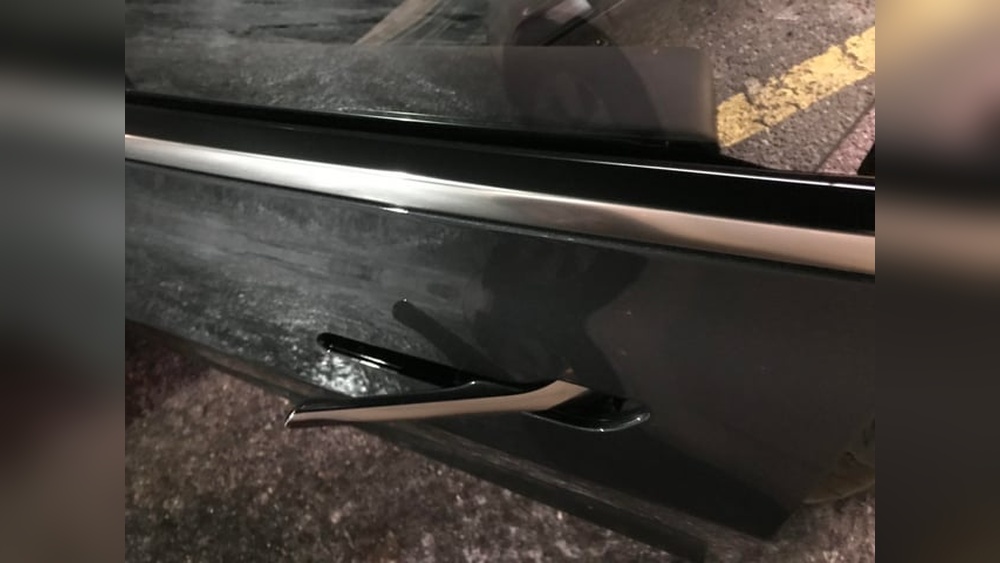
The handle pivots outward so the door can be opened; ice in the recess can restrict that movement.
Credit: www.tesla.com

Water trapped around a flush handle can freeze against the surrounding trim and seal.
Credit: www.ebay.com
The Best Way to Prevent Ice After a Winter Car Wash
1. Choose the right time to wash
Avoid washing immediately before the car will sit outdoors in freezing conditions. If possible, wash during the warmest part of the day and allow time for a complete dry-out before parking.
A practical rule is to plan for:
- A few minutes of careful drying after the wash
- A short drive to move air through body gaps
- Indoor parking or sheltered parking afterward
- Extra drying time when temperatures are falling quickly
If you must wash in freezing weather, a high-quality touchless wash reduces brush contact, but it does not eliminate the need to dry the handles and door seams.
2. Dry the handle recesses, not just the handle faces
A quick wipe across the outside of the handle is not enough. Use a clean, soft microfiber towel to dry:
- The top and underside of the handle
- The pivot or presentation gap
- The painted recess surrounding the handle
- The front and rear edges of the door
- The rubber door seal near the handle
- The lower edge of the door where rinse water may drain
Fold the towel into a narrow edge so you can reach the seam without forcing anything into the mechanism. Do not push a cloth deep into the handle opening or try to pry the handle outward.
A useful finishing step is to open each door normally, wipe the exposed edges, and then close it gently. This helps reveal water that was hidden behind the seal. For broader paint-safe washing technique, the two-bucket cleaning method can reduce the grit and salt left around exterior trim.
3. Blow out trapped water with clean, dry air
Compressed air can remove droplets that a towel cannot reach. Use low pressure, keep the nozzle several inches away, and direct air across the gap rather than straight into it.
Avoid blasting high-pressure air directly at:
- Door seals
- Cameras and sensors
- Window weatherstripping
- Electrical connectors
- The handle pivot
If you already own an air compressor, check its moisture separator and drain the tank before use. Water from a poorly maintained compressor can add moisture instead of removing it. This guide to choosing suitable air equipment explains why dry output and controlled pressure matter.
A handheld automotive dryer or leaf blower on a low setting is often more convenient. Keep the airflow moving and avoid directing debris toward the paint.
4. Use Tesla preconditioning before you leave
Preconditioning warms the cabin and can help thaw ice around doors and handles. Start it from the Tesla app or the vehicle touchscreen while the car is still connected to charging when practical.
Preconditioning is not an instant de-icer. Give it enough time to warm the vehicle, then test the handle gently. If the handle remains stuck, continue thawing rather than forcing it.
This approach is also useful after an overnight freeze: warm the vehicle first, brush away loose snow, and inspect the handle before touching it.
5. Park under cover whenever possible
A garage is the most reliable protection after a winter wash because it reduces wind, precipitation, and rapid temperature changes. A covered parking space is helpful, although it may not prevent freezing if the car enters wet and the temperature remains below freezing.
If you use an exterior car cover:
- Choose one designed for the vehicle and weather conditions.
- Never install it over a wet, dirty car if it can trap grit against the paint.
- Make sure it does not press against or restrict the door handles.
- Remove accumulated ice rather than pulling the cover against frozen trim.
Covered parking also makes it easier to inspect the handles and dry the doors before water freezes.
Should You Use Silicone Spray or Lubricant?
Be cautious. A general-purpose silicone spray, penetrating oil, or household lubricant is not automatically safe for every Tesla handle, seal, sensor, or painted surface.
Products can:
- Attract dust and road grit
- Contaminate rubber seals
- Leave a slippery film on the handle
- Reach electrical components
- Affect paint, coatings, or adhesive-backed trim
- Mask a mechanical fault that needs service
Do not spray directly into the handle opening unless Tesla specifically recommends that product and application for your model. Never use petroleum-based products, de-icer, or penetrating oil as a substitute for drying.
If a handle repeatedly freezes, binds, fails to present, or makes grinding or clicking noises, document the behavior and contact Tesla Service. A recurring problem may involve alignment, a seal, a pivot, a sensor, or the handle assembly rather than ordinary surface ice.
What Not to Do After a Freezing Car Wash
Several common shortcuts can turn a minor ice problem into expensive trim or mechanism damage.
Do not pull harder
If the handle does not move normally, stop. Applying increasing force can stress the pivot, spring, motor, mounting points, or painted components.
Do not use boiling water
Very hot water can shock cold glass and trim, damage finishes, and refreeze quickly in the handle gap. Even warm water can create a second layer of ice if it is not followed by thorough drying.
Do not chip ice with metal tools
Keys, screwdrivers, ice scrapers, and knives can scratch paint, cut seals, or break the handle surface. A plastic card may help with a thin layer on an exterior painted edge, but it should never be forced into the mechanism.
Do not use a heat gun
A heat gun can overheat paint, plastic, adhesive, weatherstripping, or nearby electronics before the ice has melted. It is not an appropriate substitute for controlled cabin preconditioning or a low-temperature hair dryer.
Do not repeatedly activate powered doors
If a powered door is frozen to its seal, repeated commands can strain the drive system. Thaw the seal and handle area first.
How to Free a Tesla Door Handle That Is Already Frozen
Use this sequence when the handle will not present or is visibly iced over.
Step 1: Remove loose snow
Brush away loose snow with a soft automotive brush. Do not scrape directly across a frozen handle or drag gritty snow over the paint.
Step 2: Unlock the vehicle without forcing the handle
Use the key card, key fob, phone key, or Tesla app as appropriate for your vehicle. Unlocking does not necessarily remove ice, but it confirms the car is responding and prevents you from mistaking a locked vehicle for a frozen one.
Step 3: Warm the area gradually
Use cabin preconditioning first. If necessary, use a hair dryer on a low or warm setting, keep it moving, and hold it well away from the surface. Warm the surrounding recess and seal rather than concentrating heat on one small spot.
A warm, damp cloth can also help on the exterior. Wring it out so water does not run into the mechanism, and dry the area immediately after the ice releases.
Step 4: Test with light pressure
For a Model 3 or Model Y-style handle, press the designated broad section as you normally would. Do not hook fingers behind a partially released handle and yank. If it does not pivot smoothly, stop and apply more gentle heat.
Step 5: Dry the released handle
Once open, wipe the handle, recess, and door edge completely. Use low-pressure air if available, then keep the vehicle sheltered while remaining moisture evaporates.
If the handle still does not operate normally after thawing, do not keep experimenting with sprays or tools. Arrange service, especially if the handle is loose, misaligned, noisy, or intermittently unresponsive.
A Reliable Winter Wash Routine
Use this checklist after every wash when freezing weather is expected:
- Wash during the warmest practical part of the day.
- Open and close each door normally to expose hidden water.
- Dry every handle recess and nearby seal with microfiber.
- Blow out trapped water using controlled, clean air.
- Wipe door edges and the lower door seams.
- Precondition the Tesla before leaving.
- Park indoors or under cover when possible.
- Inspect the handles before the next departure.
- Never force a handle that feels frozen or unusually stiff.
For drivers in mountain regions, washing and drying should be part of a broader cold-weather preparation routine. Vehicle equipment and traction requirements can also vary by route; review guidance on winter-ready vehicle specifications before heading into severe conditions.
Quick Prevention Guide
| Action | Why it helps | Important caution |
|---|---|---|
| Dry the handle recess | Removes water before it freezes | Do not push towels deep into the gap |
| Use controlled air | Clears droplets hidden behind trim | Keep pressure low and avoid seals and sensors |
| Precondition the Tesla | Gradually warms the vehicle and door area | Allow time; it may not release solid ice immediately |
| Park indoors | Limits wind, snow, and temperature swings | Dry the car before covering it |
| Use a soft automotive brush | Removes loose snow safely | Do not scrape frozen trim aggressively |
| Avoid unapproved sprays | Prevents residue and component damage | Follow model-specific Tesla guidance |
| Contact Tesla Service for repeat failures | Identifies mechanical or electrical faults | Do not disguise a recurring problem with lubricant |
When to Contact Tesla Service
Arrange professional inspection if any of the following occurs:
- The handle repeatedly freezes despite thorough drying.
- It presents only partway or retracts slowly.
- The handle is loose, crooked, or unusually noisy.
- The door opens from the inside but not the outside.
- A powered door reverses, stops, or strains.
- The issue continues after the vehicle and handle are fully thawed.
- A warning appears on the touchscreen or in the Tesla app.
A single ice event after a wet wash can be normal winter behavior. Repeated malfunction after thawing is different and should not be ignored.
Frequently Asked Questions
Why do Tesla door handles freeze after a car wash?
Water can remain in the handle recess, pivot, seals, and nearby door seams. When the vehicle cools below freezing, that water turns to ice and restricts the handle’s movement. Wind and falling temperatures can make freezing occur quickly after the wash.
Does Tesla preconditioning prevent frozen handles?
Preconditioning can warm the cabin and help thaw or reduce ice around the doors, but it is not a guarantee. It works best when started before departure and combined with drying the handle area after washing.
Can I pour warm water on a frozen Tesla handle?
Avoid boiling or very hot water. A small amount of lukewarm water may release light ice in an emergency, but it must be dried immediately because it can refreeze. Gradual heat from preconditioning or a low-temperature hair dryer is generally easier to control.
Is WD-40 safe for Tesla door handles?
Do not assume that WD-40 or another penetrating lubricant is safe for your Tesla’s handle assembly, seals, paint, or electronics. Use only a product and application method approved for your specific model, or ask Tesla Service.
Can I cover Tesla handles during a car wash?
Improvised plastic bags and tape are not recommended. They can trap water, leave adhesive residue, interfere with the mechanism, or detach during a wash. Drying the handles thoroughly after the wash is safer and more practical.
What should I do if the handle will not pop out?
Unlock the vehicle, remove loose snow, precondition it, and warm the handle area gradually. Do not pull, pry, or chip at the handle. If it remains stuck after thawing, contact Tesla Service.
Do all Tesla models have heated door handles?
Cold-weather features vary by model, generation, software, and market. Do not rely on a presumed heating element. Check the owner’s manual for your vehicle and use drying and preconditioning as the primary prevention steps.
Conclusion
Preventing Tesla door-handle ice starts before the car is parked after its winter wash. Dry the recesses and seals, remove trapped water with controlled air, precondition the vehicle, and choose sheltered parking whenever possible. Avoid improvised covers, harsh chemicals, metal tools, boiling water, and force.
If ice still forms, thaw the area gradually and test the handle gently. When a handle remains stiff or repeatedly fails after thawing, treat it as a service issue rather than a problem to overcome with more pressure.
Dry the handles before the temperature drops, then precondition your Tesla for a smoother, safer winter departure.
For broader cold-weather ownership checks, review your local vehicle inspection expectations, such as these seasonal safety requirements, before long winter trips.