ByMax Lee
Guide to Engine Oil Does It Wash the Engine: Simple Steps
I know you’re looking for a straight answer: engine oil does it wash the engine, and the short version is “not the way a soapy sponge washes a dirty plate.” Engine oil isn’t a solvent that dissolves sludge on contact. It uses chemical additives called detergents and dispersants to keep contaminants suspended so they can be filtered out. But if you’re dealing with heavy buildup, just dumping in fresh oil won’t fix it.
In fact, it can make things worse.
Manufacturer specifications (API SN Plus and ILSAC GF-6 standards) require modern oils to control deposits under normal driving. But “normal” doesn’t include years of neglected changes. As of 2026, even the best synthetic oil can’t undo severe sludge without the right procedure and risk awareness.
Let’s break down what really happens inside your engine and how to handle it safely.
Quick Answer
Oil cleans, but it doesn’t wash. Detergents in engine oil loosen microscopic particles. Dispersants hold them in suspension.
The oil filter catches most of them. Heavy sludge needs a different approach. Never assume a high-detergent oil will dissolve years of buildup.
That move can clog oil passages and destroy bearings.
How Engine Oil Cleans (The Real Mechanism)
Inside your engine, combustion creates soot, carbon, and acidic byproducts. Left alone, these form varnish and sludge. That’s where the additive package steps in.
- Detergents chemically attack deposits on metal surfaces, lifting them into the oil.
- Dispersants keep those particles separated so they don’t clump together.
- The oil filter traps particles larger than about 20 to 40 microns.
- The oil itself carries everything to the filter during circulation.
This process works great for new or light deposits. It’s the reason regular oil changes prevent sludge from forming in the first place. But if those deposits are thick and baked on from years of extended intervals, the detergents can only nibble at the surface.
The real cleaning action is slow and gradual.
A common misunderstanding is that switching to a synthetic oil will “flush” the engine. Synthetics have better thermal stability and a stronger additive package than conventional oils. That means they resist breakdown longer and control deposits more effectively, but they still rely on the same detergent-dispersant mechanism.
They won’t dissolve a layer of sludge overnight. If you’ve been using conventional oil for 100,000 miles and suddenly switch to a high-detergent synthetic, the gradual cleaning could dislodge larger chunks that your filter can’t catch. That’s where the risk lives.
For external cleaning needs like tar and bug residue on your paint, a separate product is required. Check our guide on the best bug and tar remover for cars to see how different the approach is from internal engine care.
The Hidden Risk: When “Cleaning” Goes Wrong
This is the part most people don’t hear about. A well-intentioned “engine flush” or sudden switch to a super-detergent oil can cause real damage. Here’s how.
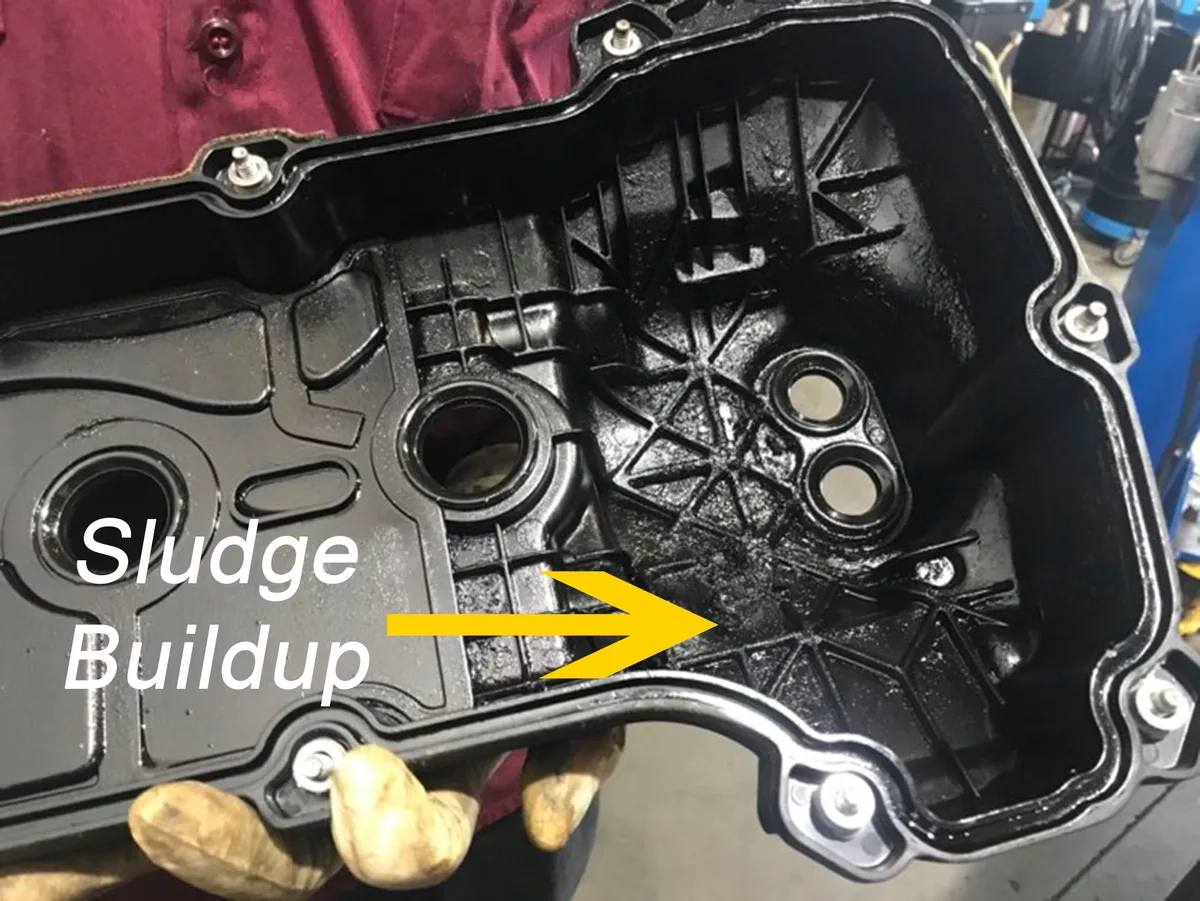
- Sludge breakaway: If a thick layer of sludge lines your valve covers, oil pan, or timing chain area, it’s often brittle and stuck. When detergents weaken the bond, large flakes can break loose.
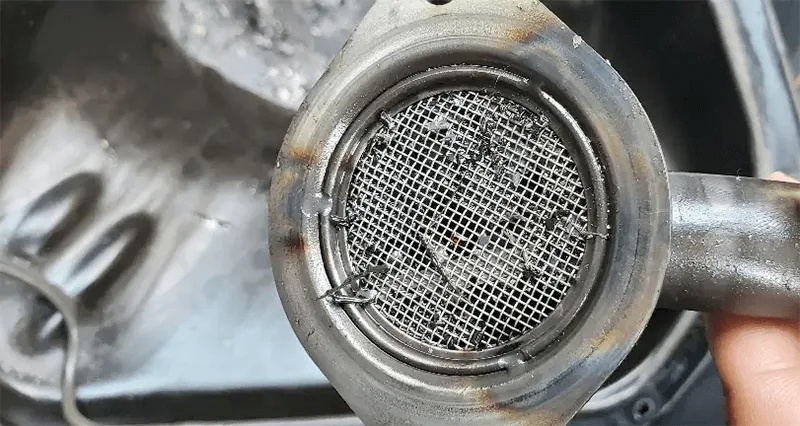
- Clogged pickup tube: The oil pump draws oil through a screen at the bottom of the pan. A chunk of sludge can block that screen, starving the pump. Oil pressure drops. Bearings run dry.
- Bearing failure: Without oil pressure, rod bearings, main bearings, and cam bearings overheat and seize. This is often a terminal event for the engine.
I’ve seen this happen in cars that went 8,000 to 10,000 miles between changes. The engine had sludge, but it was stable. A well-meaning owner poured in an engine flush additive, let it idle for 10 minutes, and drained.
The next start-up produced a horrifying knock. The oil pickup was partially clogged.
Per SAE International guidelines, the ASTM Sequence VG test evaluates an oil’s ability to control sludge under controlled conditions. But that test uses clean engines. Real-world deposits can be far more stubborn and risky.
If you suspect heavy sludge (low oil pressure, ticking lifters, a check engine light for camshaft phaser codes), do not attempt a flush. That’s when you want a professional inspection. Our blog page has more on diagnosing these warning signs.
Common Mistakes That Can Destroy Your Engine
Let’s walk through the errors that show up in repair shops daily. Avoid these like a bad batch of fuel.
1. Using a high-detergent oil as a “cleaner”
You might think, “I’ll run a high-mileage oil with extra detergents for a few hundred miles, then change it.” That’s a gamble. The detergents can lift sludge faster than the filter can catch it. A better approach: stick with the recommended viscosity and API category for your car and change it at the correct interval.
2. Adding an engine flush additive without reading the directions
Many flush products say “add to old oil, idle 5 minutes, drain.” But if the engine already has heavy deposits, that 5-minute idle can dislodge enough material to clog the pickup. Some manufacturers explicitly warn against using flushes on high-mileage engines.
3. Using the wrong viscosity oil
Thicker oil doesn’t clean better. It flows more slowly, which means less circulation and less cleaning. Always follow the owner’s manual.
For older engines, a high-mileage oil with seal conditioners is often safer than a heavy 20W-50.
4. Skipping the oil filter change
The filter is your only defense against suspended particles. If you run a flush or swap to a high-detergent oil, the filter can become clogged quickly. Change the filter at the same time as the oil.
A 20-micron filter catches more than a 40-micron one, but it also plugs faster. Use a quality filter from a known brand.
5. Ignoring the dipstick
Check it regularly. If the oil looks like chocolate milk, you have water contamination. If it’s thick and black, you’ve gone too long between changes.
If it’s foamy, you have aeration. Don’t just top it off, figure out the root cause. For stubborn external contamination like tar on wheels, a dedicated product works better.
See our roundup of the best tar remover for wheels for that job.
Synthetic vs. Conventional Oil: Which Cleans Better?
This is the most common comparison question I get. Let’s settle it with data.
| Factor | Conventional Oil | Full Synthetic Oil |
|---|---|---|
| Base oil purity | Group I or II, more impurities | Group III, IV, or V, highly refined |
| Detergent additive package | Standard, meets API minimum | Typically stronger, higher concentration |
| High-temperature stability | Breaks down faster | Resists oxidation longer |
| Sludge prevention | Adequate for normal intervals | Superior under extended intervals or harsh conditions |
| Cold flow | Thickens more at low temps | Flows better at startup |
| Typical API rating | SN, SP | SN Plus, SP, GF-6 |
| Cost per quart | $4–$7 | $8–$15 |
The winner for cleaning: synthetic. But that’s cleaning over time, not an instant rinse. Synthetic oils maintain their viscosity longer, which means the additive package stays active longer.
They also resist heat breakdown, preventing the formation of new varnish and sludge.
However, do not switch to synthetic in a high-mileage engine that has always run conventional and has visible sludge. The gradual cleaning effect is real, but it’s slow enough that it rarely causes problems, as long as you change the oil and filter on schedule. The risk comes when you also add a flush product or use an oil with an extremely high detergent dose.
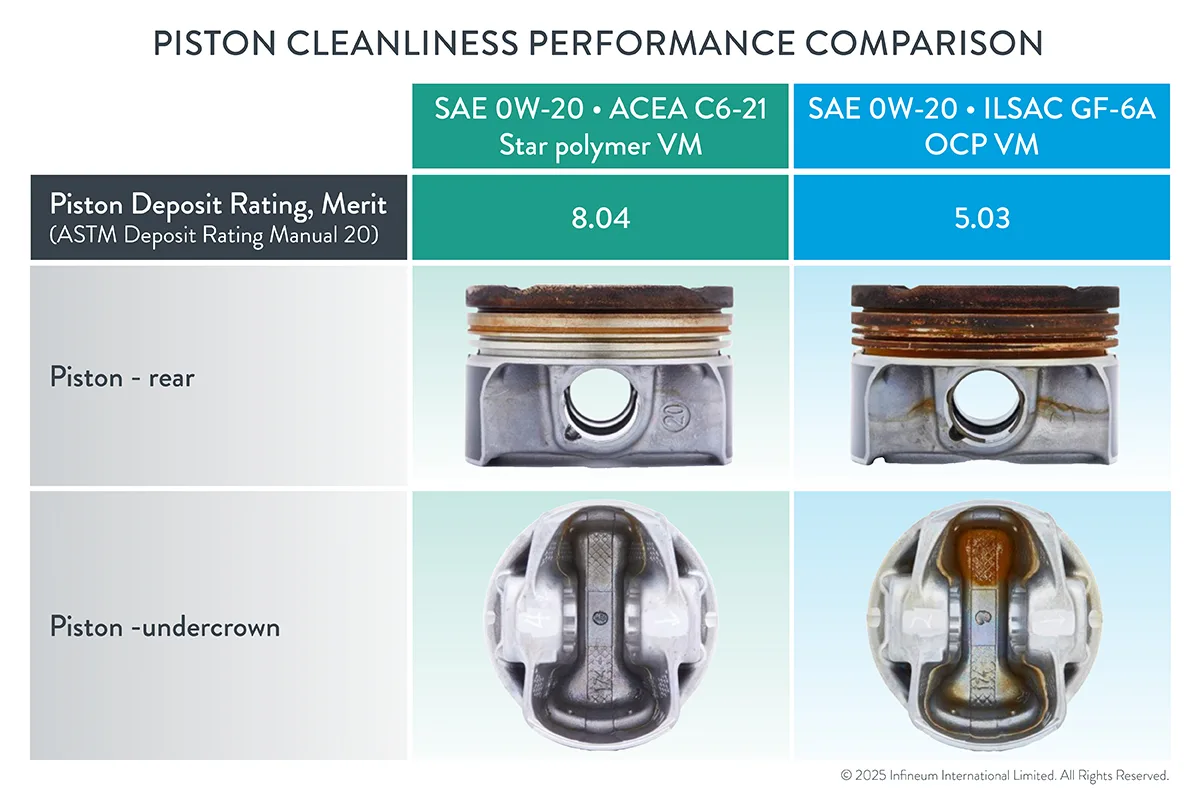
For most drivers, the best choice is the oil recommended in your owner’s manual. If you want the extra protection of a synthetic, switch at the next normal oil change. Use the same viscosity grade.
Change the filter. And keep an eye on the dipstick for the first few thousand miles.
If you need to remove tough external tar from your car’s paint, check our guide on the best tar remover for car, different chemical challenge, but just as important to get right.