ByMax Lee
Guide to Is a 65 Degree Nozzle Good for Car Detailing (2026)
If you've been wondering is a 65 degree nozzle good for car detailing, the short answer is yes, but only for the right job. It is the widest spray angle available on standard pressure washers, and that changes how it works. A 65-degree tip drops the pressure at the surface by roughly 80 to 90 percent compared to a narrow 0-degree jet.
That makes it the safest option for painted panels.
But safe does not mean universal. Manufacturer specifications show that a 65-degree nozzle is designed for low-pressure tasks like soap application and gentle rinsing. Use it on heavy grime, and you will just be wasting time.
Our research across detailing forums and professional workflows confirms one thing: this nozzle earns its place in your kit, but only when you know exactly where it fits.
Quick Answer
Yes, a 65-degree nozzle is good for car detailing. It excels at applying car wash soap and performing final rinses. The wide fan spreads water gently across the clear coat.
This low-pressure spray reduces the risk of forcing dirt into the paint. However, it lacks the power for heavy grime and tires. Use it for the safest wash, not the fastest one.
How a 65-Degree Nozzle Works
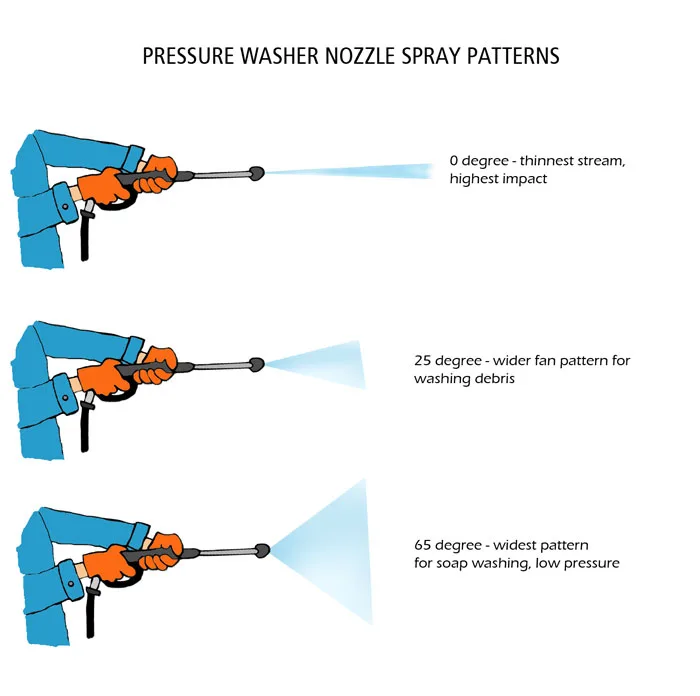
A pressure washer nozzle controls two things: the shape of the water jet and the force it delivers. The number printed on the tip, 65, refers to the spray angle in degrees. That is the widest standard tip you can buy.
When water exits a 65-degree tip, it fans out into a broad, soft curtain.
Here is the key: physics means that wider angle equals lower pressure at the surface. A 0-degree tip concentrates all the force into a tiny point. A 65-degree tip spreads that same force across a massive area.
The result is a gentle, broom-like spray that feels more like a powerful garden hose than a cutting jet.
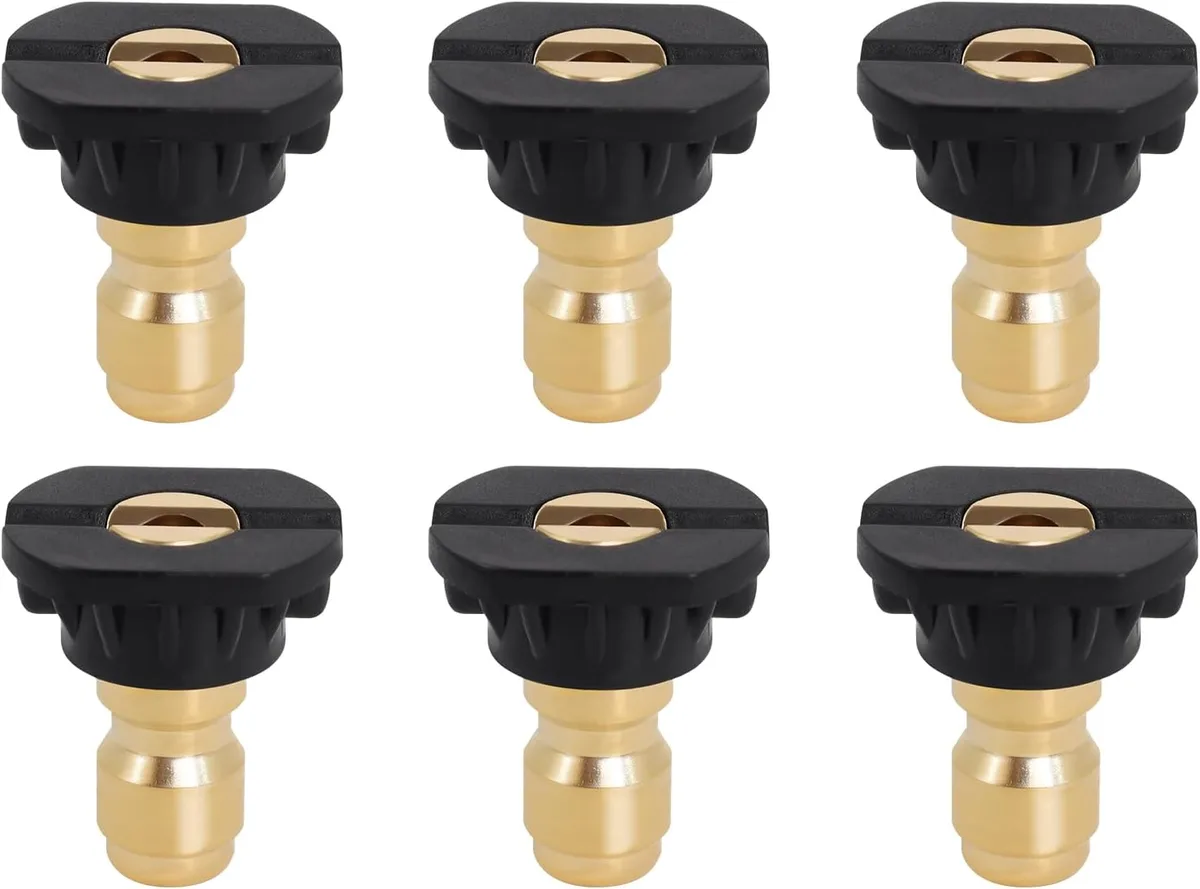
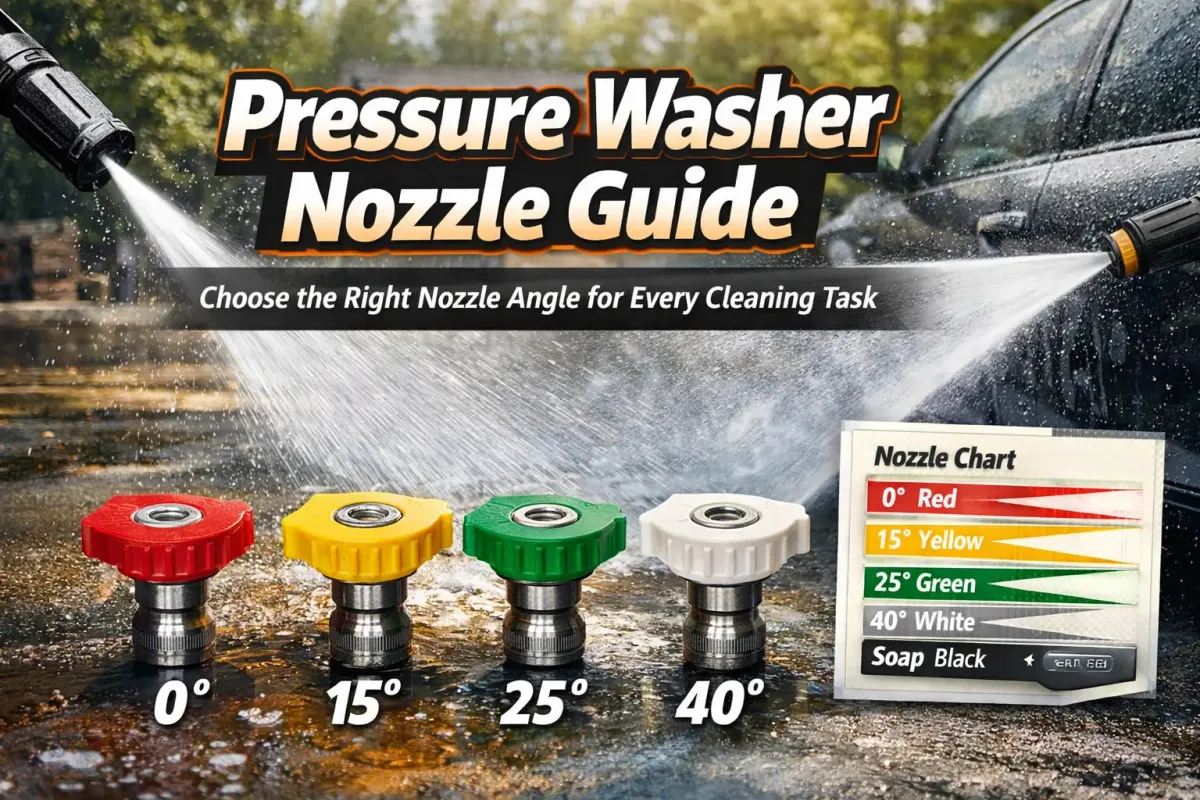
Most manufacturers follow a color code for their nozzles. The 65-degree tip is usually black. You will find it alongside white (40-degree), green (25-degree), yellow (15-degree), and red (0-degree) tips.
That black tip is your go-to for anything that touches paint directly.
The orifice size inside the tip also matters. A 65-degree nozzle with a small orifice (say, 2.0) restricts water flow. A larger orifice (3.0 or 3.5) lets more water through.
You need to match the orifice to your pressure washer's flow rate, measured in GPM. A mismatch will give you a weak spray or damage the nozzle over time.
Decision Tree: Should You Use a 65-Degree Nozzle?
This is not a one-size-fits-all answer. The right choice depends on your task, your machine, and the surface you are cleaning. Follow these branches to decide.
By Task
| Task | 65-Degree Nozzle? | Why |
|---|---|---|
| Applying car wash soap | Yes | Gentle, even coverage without forcing suds into crevices. |
| Pre-rinse heavy dirt or mud | No | Not enough pressure to dislodge stuck-on grime. |
| Rinsing after hand washing | Yes | Low pressure protects wax and ceramic coatings. |
| Cleaning wheels and tires | No | Too gentle for baked-on brake dust and road grime. |
| Removing bug splatter or tar | No | Needs a tighter angle or a dedicated remover. |
| Final rinse / sheeting | Yes | Wide fan helps water sheet off for spot-free drying. |
By Machine
Check your pressure washer's specs. If it is an electric model rated at 1.2 to 1.8 GPM, a 65-degree nozzle with a 2.0 or 2.5 orifice works well. If you use a gas-powered machine pushing 2.5 GPM or more, step up to a 3.0 or 3.5 orifice.
Too small an orifice on a high-flow machine can cause cavitation and tip failure.
By Surface
- Clear coat in good condition: Perfect. The low pressure protects the clear coat from damage.
- Peeling or damaged clear coat: Risky. Even low pressure can lift the edges of failing clear coat.
- Vinyl decals and stripes: Safe, as long as you keep the nozzle moving.
- Convertible tops (vinyl or canvas): Excellent. The gentle spray prevents water from forcing its way under the seams.
When a 65-Degree Nozzle Shines
The 65-degree nozzle has a narrow sweet spot, but within that spot, it outperforms every other tip.
Applying Car Wash Soap
This is its main job. Fill your pressure washer's soap reservoir or attach a dedicated siphon tube. The 65-degree nozzle lays down a thick, even layer of suds.
The wide fan means you cover a large panel in a single pass. You don't have to move your wrist as much, and that reduces fatigue on longer washes.
Performing a Safe Final Rinse
After you have hand-washed every panel, you need to rinse off the soap. A 40-degree nozzle works here too, but the 65-degree tip adds an extra layer of safety. It gently floods the surface, which helps water sheet off in large droplets rather than beading up and leaving mineral spots.
If you have applied a fresh wax or a ceramic coating, the 65-degree tip is your best friend. High pressure can disturb those coatings before they fully cure. The wide, soft spray preserves your hard work.
Wetting Delicate Areas
Convertible tops, vinyl roofs, and rubber trim all benefit from the low-pressure approach. A tighter nozzle can push water past seals or lift the edges of trim pieces. The 65-degree tip avoids those problems.
It also works great for rinsing glass without leaving streaks, especially if you pair it with an alcohol free window cleaner for final touch-ups.
Common Mistakes Even Experienced Detailers Make
Even people who wash their cars weekly make these errors with the 65-degree nozzle. Avoid them to keep your paint safe and your wash efficient.
Holding the Nozzle Too Close
The 65-degree tip is gentle at 12 to 18 inches. At 2 inches, it can still damage paint. The water pressure drops with distance, so getting too close defeats the safety benefit.
Keep a ruler or your forearm as a rough measure. Twelve inches is about the length of your hand.
Using It for Heavy Grime
This is the most common mistake. People grab the black nozzle because it is labeled "safe for paint." Then they try to blast off dried bug splatter or tar. It does not work.
You end up standing in one spot for five minutes with no results. Swap to a 25-degree nozzle for heavy dirt, or use a dedicated product like a best bug and tar remover for vehicles.
Ignoring the Orifice Size
The nozzle color tells you the angle. The number stamped on the side tells you the orifice size. Ignoring that number is a mistake.
A 65-degree tip with a 4.0 orifice on a small electric pressure washer will produce a weak, disappointing spray. A 65-degree tip with a 1.5 orifice on a large gas machine can cause the tip to crack or fail.
Thinking Low Pressure Means No Risk
Low pressure is safer, but it is not zero risk. If your clear coat is already peeling, the wide spray can still work its way under the edges and lift more material. If you have loose decals, the water can get behind them.
Always pre-check your paint condition before getting aggressive with any nozzle.
For stubborn spots that survive the 65-degree rinse, reach for a best glue remover for cars rather than increasing the pressure. That approach gives you safer results with less risk of paint damage.
Frequently Asked Questions
Will a 65-degree nozzle work on any pressure washer?
Yes, as long as you match the orifice size to your machine's GPM. Most universal nozzle sets come with a 65-degree black tip that fits standard quick-connect wands. Check your pressure washer's manual for the recommended orifice range.
Can I use a 65-degree nozzle to remove heavy dirt?
No. The low pressure cannot dislodge heavy mud, baked-on bug splatter, or road tar. Use a 25-degree nozzle for those tasks.
For tar and sap, apply a dedicated remover before rinsing.
What is the difference between a 65-degree and a 40-degree nozzle?
The 65-degree tip sprays a wider fan at lower pressure. It is best for soap and gentle rinsing. The 40-degree tip has a narrower fan and higher pressure.
It works better for rinsing off loose dirt and general washing.
Should I use a foam cannon or a 65-degree nozzle for soap?
Both work, but for different reasons. A foam cannon creates a thick, clinging foam that dwells on the paint to lift dirt. The 65-degree nozzle applies soap in a high-volume, low-pressure stream.
Many detailers use a foam cannon first, then follow up with the 65-degree tip for a contact wash. Learn more about that process in our guide on how does a foaming sprayer work.
How close should I hold a 65-degree nozzle to car paint?
Keep it 12 to 18 inches from the surface. Closer than 8 inches can still damage the clear coat, especially if the paint is thin or the clear coat is failing. The wide fan covers a lot of area, so you do not need to crowd the panel.
Step-by-Step: Using a 65-Degree Nozzle Correctly
Follow this sequence to get the best results without wasting time or risking paint damage.
Step 1: Match the Orifice
Check your pressure washer's flow rate (GPM) before you attach anything. For machines under 1.8 GPM, use a 65-degree nozzle with a 2.0 orifice. For 1.8 to 2.5 GPM, a 2.5 or 3.0 orifice works.
For anything above 2.5 GPM, step up to a 3.5 orifice. The number is stamped on the side of the nozzle.
Step 2: Attach and Test
Lock the nozzle into your wand's quick-connect fitting. Point the wand away from the car and squeeze the trigger. Listen for a steady, even spray.
If the sound is sputtering or the stream pulses, the orifice is too small for your machine's flow.
Step 3: Wet the Car
Stand 12 to 18 inches from the paint. Start at the roof and work your way down. Overlap each pass by about 50 percent.
This initial wetting lifts loose dust before you apply soap. Keep the nozzle moving to avoid concentrated pressure on any single spot.
Step 4: Apply Soap
Switch the pressure washer to low pressure or use the soap siphon. The 65-degree nozzle lays down suds evenly. Start at the top and work in horizontal passes.
Let the soap dwell for two to three minutes. Do not let it dry on the surface.
Step 5: Rinse
Return to the 65-degree nozzle and rinse from top to bottom. Keep the same 12 to 18 inch distance and the same overlapping motion. The wide fan helps water sheet off the paint.
This reduces water spots and makes drying faster.
Step 6: Switch for Problem Areas
If you see tar, bug residue, or stubborn grime after rinsing, do not increase pressure with the 65-degree tip. Switch to a 25-degree nozzle for those spots, or apply a dedicated remover. Our guide on the best bug and tar remover spray for cars covers the safest approach.
Pro Tips from Real Detailing Workflows
These are the small adjustments that separate a good wash from a great one.
Use a Foam Cannon First
A foam cannon clings thicker soap to the paint for longer dwell time. Let it sit for five minutes. Then rinse with the 65-degree nozzle.
The combination gives you chemical cleaning plus gentle flushing. The nozzle does not replace the foam cannon. It finishes what the foam starts.
Dedicate One Nozzle to Soap
Keep a separate 65-degree tip for soap application only. If you use the same nozzle for rinsing after a muddy wash, debris can lodge inside the orifice. That debris will scratch your paint the next time you apply soap.
A dedicated nozzle costs a few dollars and saves you from swirl marks.
Slow Down Your Passes
The 65-degree nozzle moves a lot of water, but the velocity is low. If you move the wand too fast, you leave streaks of soap behind. Move at a steady pace that keeps a consistent sheen of water on the panel.
About one foot per second is a good rhythm.
Protect Trim and Emblems
Even with a wide fan, water can get behind loose trim or badge edges. Tape off any known weak spots before you start. Or just avoid blasting directly at those areas.
Use the 65-degree nozzle at an angle so the water slides across the surface rather than hitting it head-on.
Pair with the Right Cleaning Products
The nozzle is only as effective as the chemistry you pair it with. A 65-degree tip for rinsing works best when you have already used a quality car soap or a dedicated spot remover. For glass, follow up with an ammonia free glass cleaner for cars to remove any remaining film.
Quick Comparison: 65-Degree vs. 40-Degree vs. 25-Degree Nozzles
Here is how the three most common painting nozzles stack up. Use this table to decide which one to grab.
| Nozzle (Color) | Spray Angle | Pressure at Tip | Best Use | Safety for Paint |
|---|---|---|---|---|
| 65° (Black) | Widest fan | Very low (under 300 PSI) | Soap, final rinse, delicate surfaces | Safest |
| 40° (White) | Medium-wide | Low to moderate (500–800 PSI) | Rinsing loose dirt, general washing | Safe with care |
| 25° (Green) | Medium | Moderate (800–1200 PSI) | Bug splatter, wheels, heavy grime | Use cautiously |
The 65-degree tip is the only one you can safely use for an entire contact wash without risk of etching or lifting clear coat. The 40-degree tip works for pre-rinsing but demands more distance. The 25-degree tip should never touch paint directly unless the dirt is truly baked on.
When You Should Reach for a Different Nozzle
Knowing when to swap saves you time and protects your paint.
Heavy Bug Splatter or Tar
The 65-degree tip cannot remove baked-on bugs or tar. You will stand there for minutes with no progress. Switch to a 25-degree nozzle and spray from six to eight inches away.
Better yet, pre-treat those areas with a dedicated remover. Check our best tar remover for car guide for products that work without heavy scrubbing.
Wheels and Wheel Wells
Brake dust and road grime on wheels need more force. A 25-degree nozzle cleans them quickly. A 15-degree nozzle works for caked-on dirt, but keep it at least 12 inches away to avoid chipping wheel paint.
Never use a 0-degree jet anywhere near your car.
Hard Water Spots
If you have mineral deposits on the paint or glass, water alone will not remove them. The 65-degree tip rinses away loose dust but does nothing for etched spots. Use a dedicated water spot remover.
Our best hard water spot remover for cars guide covers the right products.
Pre-Rinse Before Contact Wash
For the first rinse of a dirty car, a 40-degree nozzle is better. It has enough force to knock off loose mud and grit without pushing it into the clear coat. Use the 65-degree tip after you have hand-washed each panel.
Final Verdict / Decision Guide
The 65-degree nozzle is good for car detailing, but only when you use it for its designed purpose. It is the safest tool for soap application and final rinsing. It is the wrong tool for heavy cleaning, wheels, and stubborn grime.
Here is your decision guide in one sentence: if the job involves paint directly and you want the lowest possible risk, reach for the black 65-degree tip. If the job involves dirt removal or high-pressure work, grab a narrower angle.
Keep a 65-degree nozzle in your detailing kit. Use it for the gentle work. Swap to a 25-degree or 40-degree tip for everything else.
Your clear coat will thank you. For the most stubborn contaminants, pre-treat with a best grime remover for car paint and let the chemistry do the heavy lifting.
Frequently Asked Questions
Can I use a 65-degree nozzle with a gas pressure washer?
Yes, as long as you match the orifice size to your machine's flow rate. Gas models typically push 2.5 to 4.0 GPM. Use a 3.0 or 3.5 orifice to avoid cavitation and protect the tip.
Will a 65-degree nozzle remove tree sap?
No. The low pressure cannot dissolve sticky sap. Use a dedicated sap remover first, then rinse with the 65-degree tip.
Our best sap remover for cars guide covers the right approach.
How do I clean a 65-degree nozzle?
Remove it from the wand. Use a paperclip or nozzle cleaning tool to clear any debris from the orifice. Rinse it under running water.
Do this after every wash to prevent clogs and uneven spray patterns.
What is the best pressure washer setting for a 65-degree nozzle?
Run your pressure washer at its standard operating pressure. The nozzle itself drops the pressure at the surface. You do not need to adjust the machine's unloader valve.
Just attach the tip and go.
Can I use a 65-degree nozzle on a ceramic-coated car?
Absolutely. It is the best nozzle for coated cars. The low pressure preserves the coating's integrity and helps water sheet off cleanly.
Avoid high-pressure tips that can compromise the coating's bond over time.