Black Friday deals are live on Amazon · limited-time discounts, grab them before they’re gone
Grab the deals

ByMax Lee
What Is Needed to Wash a Black Car: Essential Tips for a Flawless Shine
Black paint can produce an exceptionally deep reflection, but it also reveals dust, water spots, swirl marks, dried soap, and fingerprints more clearly than lighter colours. The goal is not simply to make the car wet and clean—it is to remove contamination while preventing the tiny scratches that make black paint look dull.
The safest approach is a cool, shaded wash, plenty of lubrication, clean microfiber tools, and a method that keeps grit away from the paint. With the right supplies and sequence, you can wash a black car regularly without creating unnecessary swirl marks. You can also read our guide on how often should i wash my black car.
What You Need to Wash a Black Car
Gather everything before starting. Leaving the vehicle half-washed while you search for a towel increases the chance that soap will dry on the panels.
Essential washing supplies
| Supply | Purpose | What to look for |
|---|---|---|
| pH-balanced car shampoo | Loosens dirt without unnecessarily stripping protection | Automotive-specific, lubricating formula |
| Two buckets | Separates dirty rinse water from wash solution | Large buckets with grit guards if available |
| Microfiber wash mitt | Safely lifts and holds loose dirt | Plush, clean, and dedicated to paint |
| Microfiber drying towels | Removes water with minimal friction | Large, absorbent, edgeless or soft-edged towels |
| Hose or pressure washer | Rinses away loose grit and soap | Adjustable flow; avoid forcing water into seals |
| Wheel and tire brushes | Cleans brake dust and road film | Soft, non-scratching bristles |
| Wheel cleaner | Breaks down wheel contamination | Use one approved for your wheel finish |
| Detailing brushes | Reaches badges, grilles, emblems, and seams | Soft synthetic bristles |
| Glass cleaner | Prevents streaks on windows and mirrors | Automotive glass-safe formula |
| Drying aid or spray sealant | Adds lubrication and short-term protection | Compatible with wax, sealant, or ceramic coating |
| Nitrile gloves | Protects your hands from cleaners and grime | Chemical-resistant and well-fitting |
A paint-safe wash routine is more important than buying the most expensive product. A premium shampoo used with a dirty mitt can still scratch paint, while a basic automotive shampoo used with disciplined technique can work very well. You can also read our guide on how to plastic model car black wash.

Keep paint-contact tools separate from wheel and tire tools to prevent abrasive contamination.
Credit: www.amazon.com
Helpful optional supplies
These items are useful, but they are not required for every wash:
- Foam cannon or pump sprayer: Adds a pre-wash layer that helps loosen grime before contact washing.
- Grit guards: Help keep heavier particles at the bottom of a bucket.
- Clay bar or synthetic clay mitt: Removes bonded contamination that normal washing cannot remove.
- Iron fallout remover: Helps identify and dissolve embedded iron particles, especially on light-coloured wheels and heavily exposed paint.
- Tar remover: Treats road tar and adhesive residue; use only as directed.
- Automotive drying blower or compressed air: Clears water from mirrors, badges, grilles, door handles, and trim.
- Paint sealant or wax: Adds protection and improves water behaviour after the surface is clean.
- Water filter: Can reduce mineral residue in areas with hard water, although it does not replace proper drying.
If you use compressed air, choose clean, dry air and keep the nozzle far enough away that it cannot propel grit into the paint. A suitably sized air compressor for vehicle tasks can be useful, but an ordinary microfiber drying towel is usually simpler for a routine wash.
Why Black Cars Need More Care
Black paint is not automatically softer or more fragile than other colours. Most modern automotive finishes consist of a clear coat over coloured base coat. What makes black especially demanding is contrast: fine circular scratches and dried mineral marks stand out against a dark, reflective surface. You can also read our guide on how to wash a black car without a hose.
A common mistake is assuming that a product labelled “for black cars” can repair poor washing technique. It cannot. A tinted wax may temporarily darken light defects, but it will not remove deep scratches or prevent new ones.
The main risks are:
- Dry grit rubbing across the clear coat
- A dirty wash mitt being reused without rinsing
- Water or shampoo drying in direct sun
- Rough towels dragging contamination across the paint
- Washing wheels and then using the same tools on the body
- Using aggressive chemicals on an unknown wheel or coating finish
The best results come from reducing friction, keeping the surface wet, and working in small, controlled sections.
Before You Wash: Inspect the Car and Choose the Conditions
Pick shade and a cool surface
Wash in shade, preferably when the bodywork is cool. Avoid washing directly after driving when the bonnet, roof, and wheels are hot. Early morning or late afternoon is often easier than midday, but the important factor is surface temperature rather than the clock. You can also read our guide on best hose filter for car washing.
Windy conditions are also poor for washing because airborne dust can settle on wet panels. If shade is unavailable, a movable canopy can help, but never use a cover that touches a wet, dirty vehicle.
Remove loose items and check the paint
Close windows, fold mirrors if appropriate, and check for:
- Bird droppings
- Tree sap
- Road tar
- Fresh mud
- Stubborn bug residue
- Existing chips, peeling clear coat, or loose trim
Do not aggressively scrub bird droppings or bug remains. Saturate them with car shampoo solution or a suitable pre-treatment and allow time for them to soften. Rubbing hardened contamination is a frequent cause of isolated scratches. You can also read our guide on how to make car wash soap.
Follow local water-use rules
Avoid allowing concentrated wheel cleaner, degreaser, or oily runoff to enter storm drains. The U.S. Environmental Protection Agency provides general environmental information and water-protection guidance; local rules may be stricter. Use the least aggressive product that will do the job and direct runoff to an appropriate drainage area where permitted.
Step-by-Step Method for Washing a Black Car
Step 1: Prepare two buckets
Fill one bucket with clean water for rinsing the mitt. Fill the second with water and the manufacturer’s recommended amount of car shampoo. You can also read our guide on how to keep a black car clean between washes.
Do not guess by adding a large amount of soap. Excess product can make rinsing harder and may leave residue. If you have grit guards, place one in each bucket and keep the wash bucket and rinse bucket clearly separated.
Keep separate tools for:
- Paint and exterior trim
- Wheels and tires
- Lower rocker panels and exhaust areas
- Glass, if you prefer a streak-free glass-only towel
Step 2: Clean the wheels and tires first
Wheels usually contain the most abrasive dirt, including brake dust and road grit. Clean them before the body so splashes do not contaminate freshly washed paint.
Work on one wheel at a time:
- Rinse the wheel, tire, and wheel arch.
- Apply the correct wheel cleaner to a cool surface.
- Allow the product to dwell only for the stated time.
- Agitate with dedicated brushes.
- Rinse thoroughly from the top down.
- Dry or move the vehicle far enough away to avoid splashing the body.
Check the wheel manufacturer’s care instructions if the finish is polished, anodised, chrome, painted, or ceramic-coated. A strong acidic or alkaline cleaner that is acceptable for one finish may damage another.
Step 3: Rinse the entire car
Use a hose or pressure washer to remove loose dust, sand, and mud. Start at the roof and work downward. Pay special attention to:
- Wheel arches
- Lower doors
- Rear bumper
- Rocker panels
- Front grille
- Areas behind the wheels
A pressure washer can improve the pre-rinse, but high pressure does not make contact washing unnecessary. Keep the nozzle at a sensible distance and avoid directing concentrated spray at damaged paint, weather seals, badges, sensors, or convertible-top material.
Step 4: Pre-treat difficult contamination
Apply a suitable product to bird droppings, bugs, sap, or tar and allow it to soften. Use a plush microfiber towel or a gentle rinse rather than scraping.
Never use a razor blade, kitchen sponge, dry paper towel, or abrasive household cleaner on painted panels. If contamination will not release with chemical softening and gentle agitation, it may need professional correction.
Step 5: Wash from the top down
Soak the wash mitt in the shampoo bucket and clean one small section at a time. A practical order is:
- Roof
- Glass
- Upper bonnet and boot
- Upper doors and quarter panels
- Front and rear panels
- Lower doors and rocker panels
Use straight, overlapping passes with light pressure. Avoid circular scrubbing, which can create visible circular marring if grit is trapped in the mitt.
After each section, rinse the mitt thoroughly in the clean-water bucket. Inspect it with your fingers; if it feels gritty or contains visible debris, rinse again or replace it. Then reload it with shampoo before touching the next panel.
For the dirtiest lower panels, use a second mitt rather than dragging contamination from the rocker panels over the roof.
Step 6: Rinse thoroughly
Rinse from the top downward until no slippery soap film remains. Remove shampoo from:
- Door handles
- Mirror housings
- Badges
- Panel gaps
- Grilles
- Wiper arms
- Around the boot or hatch
A gentle open-hose stream can help sheet water from flat panels, leaving fewer droplets behind. This is particularly useful on black paint because fewer remaining droplets means less drying and less mineral spotting.
Step 7: Dry immediately and gently
Do not allow the car to air-dry in the sun. Water evaporates and leaves minerals behind, producing spots that can become difficult to remove.
Use a clean, high-quality drying towel and either:
- Blot and lift water from the surface, or
- Glide with almost no pressure across a well-rinsed panel
Start with the glass and upper panels, then finish with the lower areas. Turn or replace the towel as soon as it becomes saturated or picks up dirt.
Use a small towel or compressed air around mirrors, badges, grilles, door handles, fuel doors, and trim. These areas often release hidden water after the main drying pass, creating streaks down clean paint.
Step 8: Inspect under good lighting
After drying, look across the panels from different angles. Check for:
- Remaining soap film
- Water spots
- Streaks
- Missed grime
- Towel lint
- New marks or pre-existing defects
If you find a dirty area, spray a small amount of detailer or shampoo solution onto a clean towel and gently remove it. Do not wipe a dry, gritty mark with a dry towel.
Decontamination: When to Use Clay, Iron Remover, or Tar Remover
A normal wash removes loose dirt, but it does not remove every contaminant bonded to the clear coat.
Use a clay bar only when the paint feels rough
After washing and drying, lightly run a clean plastic bag over the paint. If the surface feels gritty or sandy, bonded contamination may be present.
To clay safely:
- Work in shade on a cool panel.
- Use plenty of dedicated clay lubricant.
- Flatten and lightly glide the clay—never scrub.
- Fold the clay frequently to expose a clean face.
- Stop if the clay becomes visibly dirty or falls onto the ground.
- Rewash or wipe the panel afterward.
Claying can create light marring, especially on black paint, so it should not be an automatic part of every wash. If the paint is already smooth, skip it.
Use chemical decontamination carefully
Iron removers can help with embedded ferrous particles, while tar removers target asphalt and adhesive residue. These products are not substitutes for shampoo, and they should not be left on the surface longer than instructed. Test an inconspicuous area first, especially on aftermarket finishes, wraps, matte paint, or delicate trim.
Protecting Black Paint After Washing
Once the surface is clean and dry, apply protection if needed.
Wax
Wax can provide a warm appearance and short-term water repellency. It is easy to apply but generally requires more frequent renewal than a durable sealant.
Paint sealant
A synthetic sealant usually offers longer-lasting protection and easy maintenance. Apply a thin, even layer to clean, dry paint and follow its curing instructions.
Spray sealant or drying aid
A spray sealant is convenient for regular maintenance. Apply it to a small area or to the drying towel as directed. Using too much product often causes streaking, especially on black paint.
Ceramic coating
A professional or properly prepared ceramic coating can make maintenance easier, but it is not scratch-proof. Coated vehicles still need gentle washing, clean towels, and prompt removal of bird droppings and road contamination.
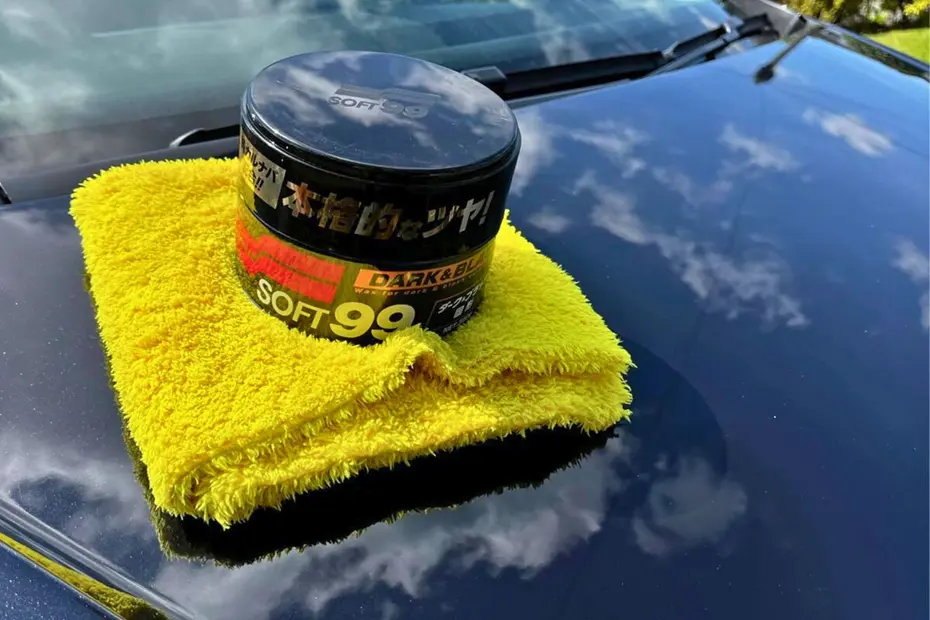
Protection improves gloss and water behaviour, but careful washing prevents the defects that dull the finish.
Credit: davidsguide.com
Do not apply wax, sealant, or coating over bonded contamination. Protection locks in whatever remains on the surface and can make later correction more difficult.
How Often Should You Wash a Black Car?
There is no single schedule for every vehicle. Wash based on exposure rather than relying only on a calendar.
A black car may need washing about every one to two weeks when it is driven regularly, parked outdoors, or exposed to road salt, dust, pollen, or heavy rain. A garage-kept car driven occasionally may need less frequent full washes.
Remove bird droppings, bug remains, tree sap, and road salt as soon as practical. These contaminants can etch or stain the clear coat, particularly when heated by sunlight.
Between full washes:
- Use a proper rinse-less wash only when the vehicle is lightly dirty and the product is used as directed.
- Do not use a quick detailer on heavily dusty paint.
- Keep a clean microfiber towel in the car for bird-dropping removal, but use it only after soaking the contamination.
- Avoid automatic brush washes if preserving a swirl-free finish is a priority.
- Never dust a dirty black car with a dry household duster.
Common Mistakes and Better Alternatives
| Mistake | Why it causes problems | Better approach |
|---|---|---|
| Using dish soap regularly | It is not formulated for automotive paint-care systems and may remove existing protection | Use pH-balanced car shampoo |
| Washing in direct sun | Soap and water dry before you can rinse them | Work in shade on cool panels |
| Using one bucket | Dirt stays in the wash solution and returns to the paint | Use separate wash and rinse buckets |
| Scrubbing in circles | Trapped grit can create obvious circular marring | Use light, straight, overlapping passes |
| Washing bodywork before wheels | Brake dust and dirty water can splash onto clean paint | Clean wheels first with dedicated tools |
| Using a bath towel or old T-shirt | Fibres may be rough, contaminated, or poorly absorbent | Use clean automotive microfiber |
| Letting the car air-dry | Mineral deposits can form water spots | Dry immediately after the final rinse |
| Reusing a dropped towel | Ground grit can scratch the clear coat | Retire it to wheels or wash it before reuse |
| Applying wax to dirty paint | Contamination becomes trapped beneath the product | Wash and decontaminate first |
| Using strong wheel cleaner everywhere | Some chemicals can stain sensitive finishes or trim | Match the cleaner to the wheel material |
Caring for Microfiber Towels and Mitts
Microfiber only protects paint when it is clean and maintained properly.
Wash paint towels separately from wheel towels, bathroom laundry, and greasy workshop clothing. Use a suitable detergent without fabric softener, because softener can coat fibres and reduce absorbency. Dry on a low or moderate setting, or air-dry in a clean place.
Before each use, inspect towels for:
- Sand or grit
- Hardened product residue
- Loose stitching
- Contamination from wheels or exhaust areas
- Excessive wear
Colour-coding helps: reserve one colour for paint, another for glass, and another for wheels and tires. Fold towels into quarters so you can switch to a clean face frequently.
When Washing Is Not Enough
Washing removes dirt; it does not correct scratches, oxidation, or paint defects.
You may need polishing or professional paint correction if the black paint has:
- Swirl marks visible in direct light
- Water-spot etching
- Heavy oxidation
- Scratches that catch a fingernail
- Random deep scratches
- Clear-coat failure or peeling
A light polish can improve shallow defects, but polishing removes a small amount of clear coat. Work conservatively, use a test spot, and avoid aggressive correction if you do not know the paint thickness or condition. Deep scratches and peeling clear coat usually require body-shop repair rather than stronger cleaning products.
Frequently Asked Questions
What is the most important item for washing a black car?
The most important items are a lubricating automotive shampoo, a clean microfiber wash mitt, separate rinse water, and soft drying towels. Technique matters just as much as the product: remove loose grit first, use light pressure, and never drag visible dirt across dry paint.
Is a pressure washer necessary?
No. A garden hose can rinse a black car effectively when used carefully. A pressure washer is helpful for pre-rinsing mud and wheel arches, but excessive pressure can damage loose trim, chips, weather seals, or fragile finishes.
Can I wash a black car with dish soap?
It is better not to use dish soap as part of a routine wash. Use a shampoo designed for automotive paint, particularly if the vehicle has wax, a sealant, or a ceramic coating that you want to maintain.
Should I use a clay bar every time I wash?
No. Use clay only when the cleaned paint still feels rough or contaminated. Overuse adds unnecessary contact and may create light marring that is especially noticeable on black paint.
How do I stop water spots on black paint?
Wash in shade, keep the panels wet, rinse thoroughly, and dry immediately with clean microfiber. If your area has hard water, a filtered rinse or drying aid may reduce spotting. Existing mineral etching may require a dedicated water-spot remover or polishing.
Can I use a black-coloured wax?
Yes, provided it is compatible with the paint and used according to its instructions. Black-tinted wax may temporarily improve the appearance of light marks, but it will not repair scratches or replace safe washing technique.
Is an automatic car wash safe for black paint?
Touchless systems generally reduce brush-induced scratching but may use strong chemicals and high pressure. Brush systems can introduce swirl marks when their equipment is dirty. For the best finish, use a careful hand wash with clean, paint-dedicated tools.
What should I do if I drop my wash mitt?
Do not put it straight back on the car. Rinse it thoroughly and inspect it. If grit remains trapped in the fibres, retire it to wheel or household cleaning rather than risking the paint.
Final Checklist for a Safe Black-Car Wash
Before you begin, confirm that you have:
- Automotive car shampoo
- Two buckets
- Clean microfiber wash mitts
- Dedicated wheel brushes and wheel cleaner
- A hose or pressure washer
- Several clean drying towels
- A safe product for stubborn contamination
- Optional wax, sealant, or drying aid
- Shade and enough time to finish without rushing
Black paint rewards consistency. Pre-rinse thoroughly, wash from clean areas to dirty areas, rinse the mitt often, dry without pressure, and protect only after the surface is clean. Follow this process every time to preserve a darker, clearer reflection and reduce the swirl marks that make black cars look prematurely dull.
Set up your two-bucket wash before the next drive so the job stays gentle, quick, and finish-safe.








