ByMax Lee
Guide to Auxiliary Driving Lamp Regulations
Alaska's roads are long, dark, and often empty. That's exactly why you want extra lighting. But bolt on the wrong setup, and you're looking at a ticket instead of better visibility. Auxiliary Driving Lamp Regulations in Alaska aren't just suggestions, they're written into state law, and the rules change depending on where you're driving and what kind of lights you install.
The Alaska Statutes Title 28 and Alaska Administrative Code Title 13 spell out exactly what's allowed. As of 2026, the rules cover everything from how many lamps you can run to what color they can be and whether they need covers. Get it right, and you'll drive with confidence.
Get it wrong, and a friendly trooper will explain the fine details at a roadside stop. Let's walk through what actually matters.
Quick Answer
Alaska allows up to four auxiliary driving lamps on public roads. They must be DOT or SAE certified. Off-road only lamps need opaque covers on highways.
Fog lamps must be aimed low. Driving lamps must switch with your high beams. Mount height ranges from 12 to 48 inches.
Red and blue lights are illegal for civilian use. Always check Alaska Statute 28.05.040 before installing.
Why Alaska's Auxiliary Lamp Rules Actually Matter
Alaska isn't like the lower 48. You've got stretches of highway with zero street lighting for a hundred miles. Moose, caribou, and black ice don't care about your commute.
Good auxiliary lighting can mean the difference between seeing that animal at 500 feet or 150 feet. That extra reaction time saves bumpers and lives.
But here's the catch. Alaska State Troopers enforce lighting laws year round, and they know the book. Non compliant lamps can earn you a citation ranging from 50 to 200 dollars depending on the violation.
If your setup fails a vehicle inspection, you'll need to remove or rewire the lights before you can register or sell your vehicle. That's a headache nobody wants.
The rules also keep other drivers safe. A poorly aimed light bar can blind oncoming traffic for a full second at highway speed. In Alaska's winter conditions, that second can be the difference between a clean pass and a collision.
So the regulations exist for a reason, and they're specific enough to be useful once you understand them.
For general vehicle maintenance and cleaning tips that keep your car in top shape year round, check out our blog for more Alaska specific advice.
The Two Minute Rule: What You Can and Can't Do
Here's the quick version you need before we dive into details. These rules apply to any vehicle operated on public roads in Alaska, including highways, city streets, and rural routes.
You can:
- Install up to four auxiliary driving lamps (SAE or DOT certified)
- Use fog lamps with a proper cutoff beam
- Run amber or white lights on the front
- Cover off road lamps with an opaque cover for highway use
- Wire driving lamps to activate with your high beams
You cannot:
- Use red or blue lights facing forward (those are for emergency vehicles)
- Run uncovered off road lights on public roads
- Mount lamps above 48 inches or below 12 inches for fog lights
- Use more than four auxiliary driving lamps while on the highway
- Install lights that flash or oscillate unless you're a legal emergency vehicle
This two minute checklist covers 90 percent of the citations people actually get. The rest comes down to installation specifics and your particular driving situation.
Driving Lamps vs. Fog Lamps: The Difference That Keeps You Legal
Most people use these terms interchangeably. Alaska law does not. And the difference matters more than you'd think.
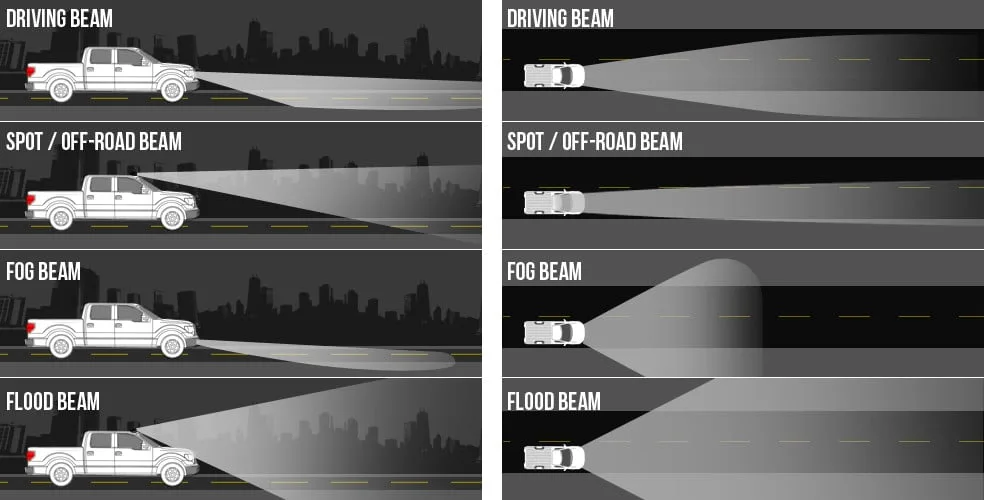
Driving lamps are designed to extend your high beam range. They throw a narrow, focused beam far down the road. They must be wired to your high beam circuit so they turn off when you dim your lights for oncoming traffic.
Think of them as long range spotlights for open highway stretches.
Fog lamps are the opposite. They produce a wide, low beam with a sharp cutoff at the top. That cutoff prevents light from reflecting off fog, snow, or ice particles back into your eyes.
Fog lamps can be used independently of your high beams, but they must be aimed low enough to not blind other drivers. In Alaska's winter fog and blowing snow, a proper fog light setup is worth its weight in gold.
The confusion happens at the parts counter. A light bar marketed as a "fog light" might not have any cutoff at all. A pair of round lamps sold as "driving lights" might actually meet fog lamp specs.
You need to check the beam pattern and certification stamp before you buy.
Alaska Statute 28.05.040 specifically calls out the difference. Driving lamps must comply with SAE Standard J581. Fog lamps must comply with SAE Standard J583.
If the lamp doesn't have an SAE or DOT certification mark, it's automatically classified as off road only.
Here's a quick comparison table:
| Feature | Driving Lamps | Fog Lamps |
|---|---|---|
| Beam pattern | Narrow, focused, long range | Wide, flat, short range |
| Cutoff | No sharp cutoff | Sharp top cutoff |
| Switching | Must tie to high beams | Can be independent switch |
| Color | White only | White or amber |
| Mount height | 16 42 inches recommended | 12 48 inches allowed |
| SAE standard | J581 | J583 |
Pick the wrong type for your intended use, and you're either blinding people or not seeing far enough. Pick the right type, and you're legal and safe.
The Legal Checklist for Alaska
Let's break this down into the specific requirements so you can check your setup against the law point by point.
Let's break this down into the specific requirements so you can check your setup against the law point by point.
Mounting Height and Location
Alaska doesn't have a single height rule for every lamp type. Fog lamps must be mounted between 12 and 48 inches from the ground measured to the center of the lamp. Driving lamps typically land between 16 and 42 inches, but you'll want to follow the SAE spec for your specific model.
The lamps must be symmetrically mounted. That means if you install one on the left, you need one on the right at the same height. They can't stick out past the widest part of your vehicle either.
No extending beyond your fenders or mirrors.
Number of Lamps Allowed
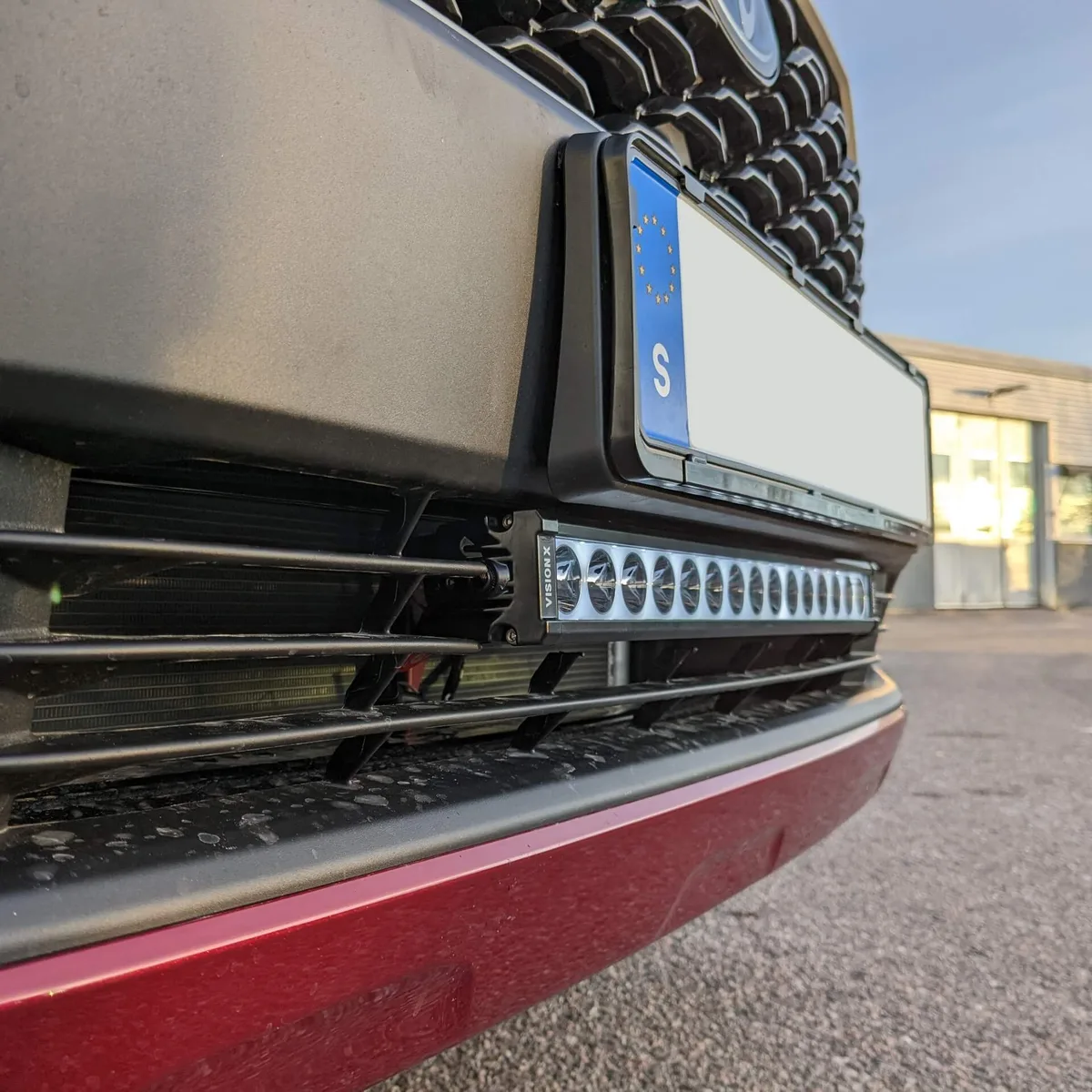
You can run a maximum of four auxiliary driving lamps on a passenger vehicle while on public roads. That's four total, not four per side. If you've got a light bar with 20 individual LEDs, the law treats it as one lamp unit as long as it's in a single housing.
But two separate light bars count as two lamps.
Commercial vehicles have slightly different rules under federal FMVSS 108, but Alaska defers to those standards for trucks operating interstate.
Color and Beam Pattern Rules
Front facing auxiliary lamps must be white or amber. Selective yellow is also acceptable for fog lamps. No blue, green, red, or any other color on the front of your vehicle.
Red and blue are reserved for police, fire, and EMS.
The beam pattern matters just as much. Driving lamps must not produce excessive glare. That's a subjective standard, but troopers look for lamps that clearly light up the treetops or flash into oncoming lanes.
If your lamps cause other drivers to flash their high beams at you, aim them lower.
Cover Requirements for Off-Road Lights
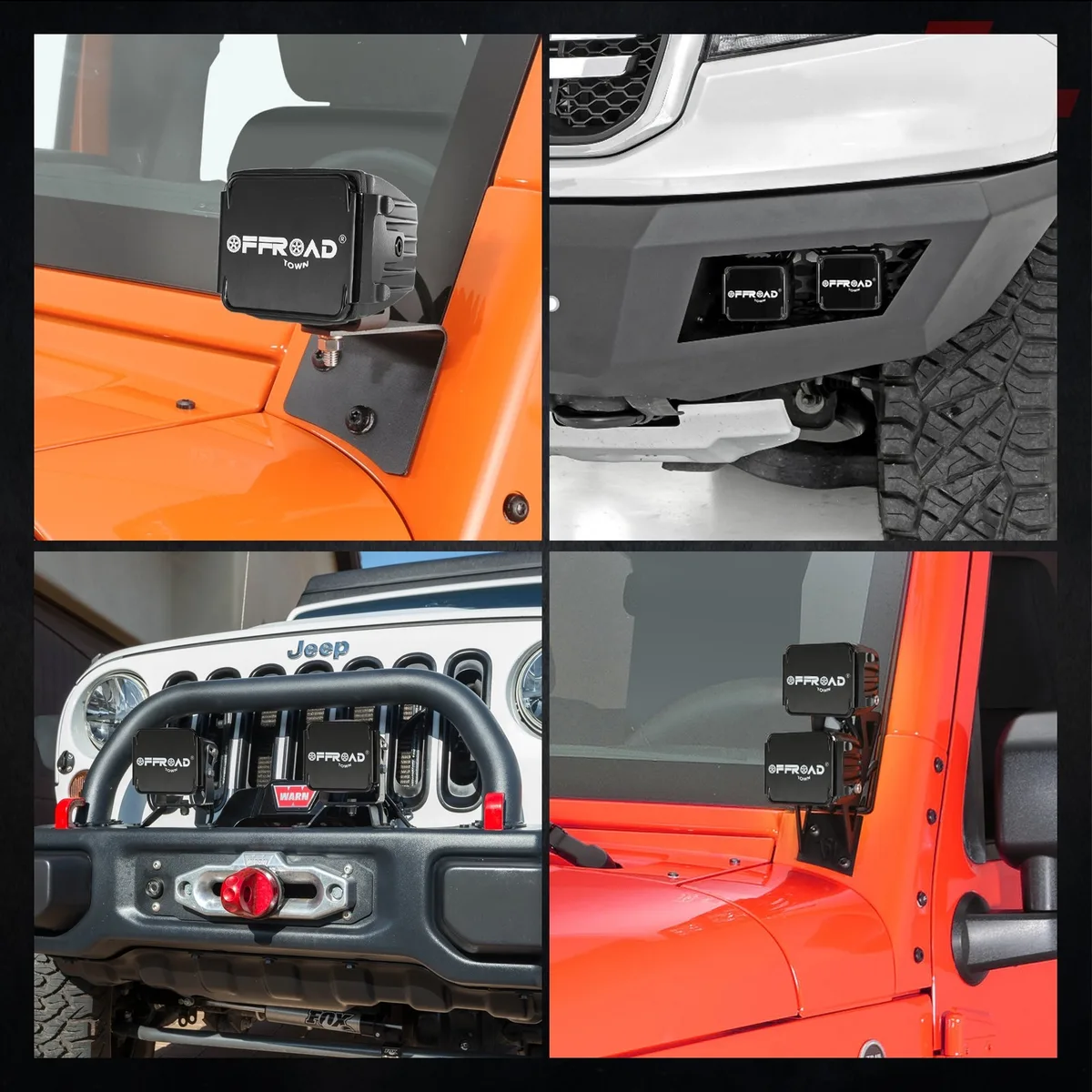
This is the rule that gets most Alaska drivers. If your auxiliary lamps are not DOT or SAE certified, they're legally off road only. To drive on public roads with them installed, you need an opaque cover over each lamp.
That cover must block all light output. A mesh cover doesn't cut it. A tinted lens cover doesn't cut it.
It needs to be solid, opaque material that completely stops any light from escaping. Many drivers use black plastic snap on covers or heavy duty vinyl caps.
If a trooper sees uncovered off road lights on your vehicle, even in daylight, you can be cited. The law doesn't require you to remove the lights, just to cover them when you're on the highway.
For more on protecting your vehicle's finish during Alaska's harsh winters, read our guide on whether ceramic coating protects against salt damage on your paint and lights.
Your Situation, Your Rules: A Simple Decision Tree
Your legal setup depends entirely on how you use your vehicle. Let's walk through the three main scenarios.
Branch 1: On Road Only
You drive paved highways and city streets. You never take your vehicle off road for hunting, camping, or recreation.
Your requirements:
- All auxiliary lamps must be DOT or SAE certified
- Maximum of four driving lamps
- Driving lamps wired to high beam circuit
- Fog lamps aimed low with proper cutoff
- No covers needed (your lamps are already legal)
- White or amber light only
Best setup: Two certified driving lamps and two certified fog lamps. This gives you long range visibility and bad weather coverage without breaking any rules.
Branch 2: Off Road Only
Your vehicle is a dedicated trail rig. It never touches public roads except on a trailer.
Your requirements:
- No restrictions on number, color, or type of lamps
- No certification needed
- No covers required
Best setup: Run whatever you want. Light bars, spotlights, floodlights, colored lights. The only limit is your electrical system and common sense around other off roaders.
Branch 3: Mixed Use
You drive to the trailhead on public roads, then hit the trails. This is the most common situation in Alaska.
Your requirements:
- All lamps installed on the vehicle must be covered when on public roads unless they are DOT SAE certified
- If they're certified, no covers needed
- If they're not certified, covers go on before you hit the pavement
- You can mix certified and non certified lamps on the same vehicle
Best setup: Install certified driving lamps for highway use, then add non certified light bars for trail use with quick release covers. Keep the covers in your truck bed or cab so you can pop them on before you leave the trailhead.
This is where most people get tripped up. They install a powerful LED light bar that's clearly off road only, then forget to put the cover on when they drive home. A five second mistake costs them a ticket.
Make it a habit. Cover before you leave gravel.
For keeping your vehicle clean after those muddy trail runs, our article on manual cleaning equipment using in car wash covers the tools you'll want in your Alaska winter kit.
Continue to the next section to learn how to install and aim your auxiliary lamps correctly, avoid the most common installation mistakes, and verify your setup before you hit the road.
Common Mistakes That Get You Pulled Over
Troopers see the same handful of violations over and over. Avoid these and you'll stay legal.
Forgetting to cover off-road lights. This is number one by a wide margin. You drive home from the trail, exhausted, and you leave the light bar uncovered. A five second mistake.
A ticket that lasts years on your record. Make a habit of checking your covers before you merge onto any paved road.
Mixing up driving lamps and fog lamps. Installing a set of SAE J583 fog lamps and wiring them to your high beam circuit makes them useless. They won't throw light far enough. More importantly, it's a violation if the lamps aren't designed for that use.
Match the lamp type to its intended circuit.
Exceeding the four lamp limit. Adding a light bar counts as one lamp. Adding two separate pairs of driving lamps counts as four. Adding a second light bar puts you over.
Count your lamp housings before you drive.
Aiming lamps too high. A light bar aimed at the treeline blinds every oncoming driver for half a mile. Troopers can cite you for excessive glare under Alaska Statute 28.05.040 even if everything else is legal. Aim your lamps to hit the road surface 300 to 400 feet ahead, not the horizon.
Using colored covers or lenses. Some drivers think amber or blue covers are fine because they're "just covers." They're not. If light passes through a colored lens or cover, the emitted color must comply with state law. Blue is illegal.
Red is illegal. Amber is legal only on fog lamps.
If you've accidentally damaged your lamps or housings during a drive through car wash, check for cracks or seal failures before hitting rough roads.
How to Install and Aim Auxiliary Lamps the Right Way
A legal lamp is only legal if it's installed correctly. Here's the process.
Mount the lamps symmetrically. Left and right lamps must be at the same height and distance from the vehicle centerline. Measure twice. Drill once.
Wire driving lamps to the high beam circuit. Use a relay triggered by your high beam wire. This ensures the driving lamps turn off automatically when you dim your lights. No relay means you risk overheating the factory switch.
Wire fog lamps to an independent switch. Fog lamps must be usable without your high beams. Run a dedicated fused circuit through a relay. Use a switch that's illuminated so you know when they're on.
Aim the lamps properly. Park 25 feet from a flat wall on level ground. Mark the center of each lamp's height on the wall. For driving lamps, the hot spot should land at or slightly below that mark.
For fog lamps, the cutoff line should sit 4 inches below the mark at 25 feet. This gives you proper road illumination without blinding traffic.
Secure all wiring. Alaska's winter roads are brutal on loose wires. Use zip ties and split loom tubing. Keep wires away from exhaust components and moving suspension parts.
A short circuit on a dark winter highway is dangerous.
Check your installation for any exposed wiring or loose connections during your regular car wash and maintenance routine. Corrosion builds fast in salt and slush.
Specs That Matter: Lumens, Heights, and Certifications
Not all specs are created equal. Here are the numbers that actually matter for legality and performance.
Certification stamp. Look for DOT or SAE on the lens or housing. No stamp means the lamp is off road only. Counterfeit stamps exist, so buy from reputable suppliers.
SAE J581 for driving lamps. SAE J583 for fog lamps.
Lumen output. Alaska doesn't cap lumens, but more isn't always better. A 10,000 lumen light bar on a pickup creates more glare than useful light. Aggregate reviews suggest 2,000 to 4,000 lumens per lamp is the sweet spot for highway driving.
Off road use can go higher.
Mounting height. Fog lamps: 12 to 48 inches from ground to lamp center. Driving lamps: 16 to 42 inches recommended per SAE guidelines. Measure from level ground with the vehicle unladen.
Beam distance. A proper driving lamp throws usable light 500 to 800 feet. Fog lamps are designed for 100 to 200 feet. If your fog lamp reaches 500 feet, it's not a fog lamp.
It's a driving lamp, and it needs to be wired accordingly.
Color temperature. 3000K to 5000K is the legal and practical range for auxiliary lamps. 3000K is warm amber, ideal for fog and snow. 5000K is pure white, best for open highway. Avoid 6000K and above. The blue tint reduces contrast in snow and rain and can attract unwanted attention from law enforcement.
Here's a quick reference table for common auxiliary lamp specs:
| Spec | Driving Lamp (SAE J581) | Fog Lamp (SAE J583) |
|---|---|---|
| Beam pattern | Narrow, long range | Wide, short range |
| Cutoff | No | Yes, sharp top |
| Color allowed | White | White or amber |
| Typical lumen range | 2000 8000 | 1000 4000 |
| Mount height range | 16 42 inches | 12 48 inches |
| Typical reach | 500 800 feet | 100 200 feet |
| Certification mark | DOT or SAE J581 | DOT or SAE J583 |
Pro Tips for Alaska Winter Driving
Alaska's winter conditions demand more from your lighting than any other state. Here's what experienced drivers do.
Use amber fog lamps for snow and ice fog. Interior Alaska sees ice fog at 40 below. White light reflects off those ice crystals and creates a wall of glare. Amber light cuts through it.
If your fog lamps are white, swap the lenses or bulbs for selective yellow or amber.
Keep your lenses clean. Road salt and grime cut light output by 50 percent or more. Wipe your lamps at every fuel stop. Use a microfiber cloth to avoid scratches.
Scratched lenses scatter light and reduce effective range.
Check your covers regularly. Opaque covers can freeze shut or crack at extreme temperatures. Test them at home, not on the side of the road at 20 below. Keep a spare set in your vehicle.
Adjust your aim seasonally. If you lift your truck for summer off roading, your lamps aim up. If you load down the bed with firewood in winter, your lamps aim down. Check your aim whenever your vehicle's ride height changes significantly.
Don't rely on auxiliary lamps alone. Factory headlamps have come a long way. Upgrade your main bulbs to high quality LED or HID units before adding aux lamps. A good set of headlamps covers 90 percent of your driving needs.
Auxiliary lamps fill in the gaps.
For protecting your paint and lenses from Alaska's harsh winter chemicals, see our guide on whether ceramic coating protects against salt damage.
How to Verify Your Setup Is Legal
Before you hit the highway, run through this quick verification checklist. It takes five minutes and saves you a ticket.
Check the certification. Look for DOT or SAE marks on every auxiliary lamp. No mark means off road only. Cover it or remove it before driving.
Count your lamps. Are you at four or fewer? Count each housing. A dual lamp bar counts as one.
Two separate bars count as two. Make sure your total is under the limit.
Test the switching. Turn on your high beams. Do the driving lamps come on? Turn off your high beams.
Do the driving lamps go off? If they stay on, you're wired wrong. Fix it before you drive at night.
Aim check. Park 25 feet from a wall. Turn on your auxiliary lamps. The beam should hit the wall at or below the height of the lamps themselves.
If it's above, aim them down.
Cover check. For any non certified lamps, confirm the cover is fully opaque. Hold your hand behind the cover with the lamp on. If you see any light through the cover, it's not opaque enough.
Replace it.
Color check. Turn on each lamp individually. Verify the color is white or amber only. No blue, red, green, or purple.
If you see any other color, replace the bulb or lens.
Pass all six checks and you're legal for Alaska highways. Fail any one, and you're gambling on a citation. Don't gamble.
Fix it.
Frequently Asked Questions
Do I need a cover for DOT approved lights?
No. If your auxiliary lamps carry a legitimate DOT or SAE certification stamp, they are legal for on road use without covers. Only off road lamps need opaque covers on public highways in Alaska.
How many auxiliary lamps can I run on my truck?
Alaska law allows a maximum of four auxiliary driving lamps on a passenger vehicle while on public roads. A single housing light bar counts as one lamp. Two separate bars count as two.
Commercial vehicles may have different limits under federal standards.
What color auxiliary lights are legal in Alaska?
White and amber are the only legal colors for forward facing auxiliary lamps on civilian vehicles. Selective yellow is acceptable for fog lamps. Red and blue are strictly reserved for emergency vehicles.
No green, purple, or other colors are allowed facing forward.
Can I get pulled over just for having lights on my truck?
Yes, if they are non compliant. Troopers can stop you for uncovered off road lamps, excessive glare, wrong color lights, or too many lamps. Even in daylight, uncovered off road lights are a violation.
A quick cover check prevents the stop entirely.
Do I need a relay for auxiliary lamp wiring?
Yes, always. A relay protects your factory switch from overheating. It also ensures clean power delivery to the lamps.
Wire the relay trigger to your high beam circuit for driving lamps or to an independent switch for fog lamps.
Which Lamp Setup Is Right for You?
If you drive paved roads only, install four certified driving and fog lamps with proper wiring. If you run trails every weekend, add non certified light bars with quick release opaque covers. For mixed use, combine certified highway lamps with covered off road lights.
The decision tree we walked through covers every scenario. Verify your setup against the six point checklist before you drive, and you'll stay legal on every Alaska road.