Black Friday deals are live on Amazon · limited-time discounts, grab them before they’re gone
Grab the deals

ByMax Lee
How to Wash Black Cars Without Scratching: Expert Tips Revealed
Black paint can produce a deep, mirror-like shine—but it also makes dust, water spots, swirl marks, and fine scratches unusually easy to see. Most damage does not come from the soap itself. It happens when grit is dragged across the paint, when towels are reused after touching dirty areas, or when a car is washed and dried in the wrong conditions.
The safest approach is simple: loosen dirt before touching the paint, use separate wash and rinse water, work from clean areas to dirty ones, and dry with clean microfiber towels. This guide explains how to wash black cars without scratching them, including the tools, technique, drying process, and mistakes that cause permanent-looking swirl marks. You can also read our guide on how often should i wash my black car.
Why Black Cars Show Scratches So Easily
Black paint is not necessarily softer than other colors. Its dark, uniform surface simply creates more contrast against light-reflecting scratches and dust. A fine circular mark may be difficult to notice on silver paint but obvious under a bright light on black paint.
Most wash-induced marks are micro-marring or swirl marks. They typically come from:
- Sand and grit trapped in a wash mitt
- A dirty sponge or towel
- Pressing too hard while washing
- Reusing a towel from the wheels or lower panels
- Wiping a dry, dusty surface
- Using an automatic brush wash
- Drying with an old cotton towel or bath towel
In practice, the most important rule is to avoid moving abrasive particles across the paint. Soap provides lubrication, but it cannot make a dirty mitt safe. A careful technique matters more than buying the most expensive bottle of shampoo. You can also read our guide on how to plastic model car black wash.
The Safest Tools and Products
Prepare everything before you wet the car. Leaving the vehicle half-washed while you look for a towel allows soap and water to dry on the paint.
| Tool or product | What to look for | Why it matters |
|---|---|---|
| Two buckets | Separate wash and rinse buckets | Keeps loosened grit away from the soap |
| Grit guards | One in each bucket if possible | Helps keep debris at the bottom |
| pH-balanced car shampoo | Automotive-specific, lubricating formula | Cleans without unnecessary harshness |
| Microfiber wash mitt | Plush, clean, and dedicated to paint | Holds dirt away from the surface |
| Separate wheel tools | Wheel mitt or brush used only on wheels | Prevents brake dust contamination |
| Pressure washer or hose nozzle | Adjustable spray and a wide fan | Loosens dirt before contact washing |
| Large drying towels | Clean, soft, high-absorption microfiber | Reduces rubbing during drying |
| Detailing spray | Paint-safe drying aid or lubricant | Adds lubrication for stubborn droplets |
| Nitrile gloves | Optional | Keeps hands clean and protects sensitive skin |
A paint-safe bucket routine is the foundation of a low-scratch wash. Do not use the same mitt for wheels, tires, exhaust tips, and painted panels. You can also read our guide on how to prevent water spots on car after washing.
If you use compressed air to clear water from mirrors, emblems, and trim, choose equipment with a clean, moisture-controlled air supply. An appropriately sized air system can be useful, but never direct oily or contaminated shop air at the finish.
Before Washing: Inspect the Car and Choose the Right Conditions
Wash in Shade on a Cool Surface
Choose shade, a cool overcast day, or a garage with good ventilation. The paint should be cool enough that water and shampoo remain wet while you work.
Direct sun creates several problems:
- Shampoo dries before it can be rinsed
- Water evaporates and leaves mineral deposits
- Panels become unevenly dry
- You may rush and apply too much pressure
Shade does not eliminate water spots, but it gives you more control. If the only available location is sunny, wash one small section at a time and rinse it immediately.
Check for Contamination Before Touching the Paint
Look for bird droppings, tree sap, road tar, bug residue, and dried mud. Do not scrub these spots aggressively. Soak them with car shampoo solution or a dedicated paint-safe cleaner, allow the contamination to soften, and then lift it away with minimal pressure.
Bird droppings can contain abrasive material. Removing them promptly is safer than allowing them to dry and harden. If a deposit is stuck, place a damp microfiber towel over it briefly rather than scraping it with a fingernail or plastic card.
Wash After Heavy Road Grime, Not During It
If the car has been exposed to salt, mud, or construction dust, begin with a thorough rinse. Vehicles used on mountain routes or in severe weather can carry more abrasive debris than a lightly driven city car; broader road-condition preparation advice can help when planning seasonal cleaning.
For older or collectible vehicles, be especially cautious around aged rubber seals, repainted panels, and delicate trim. The paperwork for older vehicles is separate from paint care, but an older finish may require gentler handling than a modern factory coating.
How to Wash a Black Car Without Scratching It
1. Rinse Loose Dirt From Top to Bottom
Use a hose or pressure washer to remove as much loose dirt as possible before the mitt touches the paint. Start at the roof and glass, then work down toward the rocker panels.
If using a pressure washer:
- Use a wide spray pattern rather than a narrow jet
- Keep the nozzle moving
- Maintain a sensible distance from the paint
- Avoid damaged clear coat, loose trim, badges, sensors, and weather seals
- Never use high pressure to force dirt across the panel
The lower sections are usually the dirtiest. Give them extra rinsing time, but do not let runoff from the wheels or tires splash back onto clean paint.
2. Fill the Buckets Correctly
Fill one bucket with clean water and the other with the shampoo mixture according to the product directions. Excess soap does not necessarily clean better and can make rinsing more difficult.
Place a grit guard in each bucket if available. The rinse bucket is not a guarantee against scratches; it is a tool that helps reduce contamination when combined with frequent rinsing and light pressure.
3. Wash the Cleanest Areas First
Load the mitt with shampoo and begin with the roof. Continue to the upper glass, hood, trunk, and upper doors. Leave the bumpers, rocker panels, wheel arches, and lower rear areas until last.
Use straight, overlapping passes with very light pressure. Avoid scrubbing in circles. Straight passes make any accidental marks easier to identify and generally reduce repeated movement over the same piece of grit.
Wash only a small panel or section before rinsing the mitt. On a hot or heavily soiled car, that may mean cleaning half a roof or one door at a time.
4. Rinse the Mitt After Every Section
After each section, place the mitt in the rinse bucket and gently agitate it against the grit guard. Inspect it occasionally. If you feel sand or see embedded debris, rinse it again or replace it with a clean mitt.
Then reload the mitt in the shampoo bucket. Never place a visibly dirty mitt directly back into the soap solution without rinsing it first.
A common mistake is to rinse only when the mitt looks dirty. Fine grit may be nearly invisible, especially in gray or brown water, so rinse by habit after every section.
5. Use Separate Equipment for Wheels and Tires
Wheels collect brake dust, road tar, and metallic particles that can mark paint. Clean them with separate brushes and mitts, preferably before washing the body if heavy wheel cleaner or dirty runoff could reach the panels.
If you prefer to clean wheels after the body, rinse the vehicle again afterward and keep all wheel tools away from painted surfaces. Never use a wheel brush on the hood, doors, or roof.
Pay attention to the lower body and underbody after winter driving. Dirt around exhaust components and catalytic-converter areas is not paint-safe debris; keep related underside work separate from the vehicle theft-prevention work you may be doing.
6. Rinse Thoroughly From Top to Bottom
Rinse the roof first and allow clean water to flow downward. Work around mirrors, trim, panel gaps, grilles, and badges where shampoo can hide.
A final gentle sheet of water from an open hose can reduce the number of droplets left on flat panels. Do not rely on this alone in hard-water areas; dry the car promptly to prevent mineral deposits.

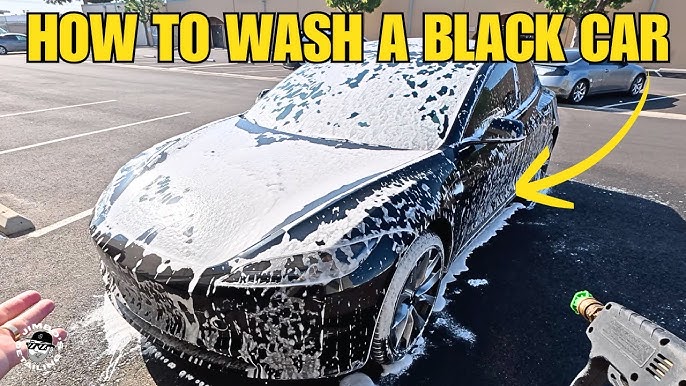
The mitt should glide over lubricated paint after loose grit has been rinsed away.
Credit: www.youtube.com
How to Dry a Black Car Without Leaving Swirl Marks
Drying is where many otherwise careful washes go wrong. Water spots form when minerals remain after droplets evaporate, but aggressive wiping can create more visible damage than the spots themselves.
Use the Right Drying Method
Use a clean, high-quality microfiber drying towel. Lay it flat on the panel and gently pull it across the surface, or pat and blot rather than rubbing firmly. A large towel can remove water from a panel with fewer passes.
Use a separate towel for:
- Wheels and tires
- Door jambs
- Exhaust areas
- Glass
- Painted panels
If the towel becomes saturated, dirty, or drops on the ground, replace it immediately. A towel that touches the floor should never return to the paint.
Blow Water From Tricky Areas
Compressed air or a dedicated car dryer can remove water from:
- Side-mirror housings
- Grilles
- Emblems
- Door-handle recesses
- Wheel spokes
- Panel gaps
- Window seals
Use clean, dry air and moderate force. Blowing water out of these areas prevents drips from appearing after the vehicle seems dry. Do not use an air line that contains oil or workshop debris.
What to Do About Water Spots
If a spot remains, do not polish the entire panel immediately. First try a clean, damp microfiber towel and a paint-safe detail spray. For mineral deposits that do not release, use a product specifically labeled for automotive water-spot removal and follow its instructions.
Persistent etching may require machine polishing. Polishing removes a small amount of clear coat, so it should not be treated as a routine washing step. If the paint feels rough or the marks remain after safe cleaning, a professional detailer can identify whether the issue is contamination, mineral etching, or clear-coat damage.
How to Handle Bird Droppings, Bugs, and Tree Sap
Never dry-wipe hardened contamination from black paint. The particles can drag across the clear coat and create a concentrated patch of marring.
Use this process:
- Rinse the area gently to remove loose particles.
- Place a soaked microfiber towel over the residue.
- Let the moisture soften it for several minutes.
- Lift or wipe in one direction with minimal pressure.
- Rinse the towel before using it again.
- Wash the panel normally once the contamination is gone.
For tar and sap, use a dedicated automotive-safe remover rather than household solvents. Test any chemical on an inconspicuous area first, keep it off unpainted plastics when required by the label, and wash the treated area afterward.

Soften dried contamination before lifting it from the clear coat.
Credit: www.drbeasleys.com
Common Black-Car Washing Mistakes
| Mistake | Why it causes problems | Safer alternative |
|---|---|---|
| Using one bucket | Grit remains in the wash water and returns to the mitt | Use separate rinse and shampoo buckets |
| Washing a dry, dusty car | Dust is dragged over the finish | Rinse thoroughly before contact washing |
| Using a household sponge | It can trap grit against the paint | Use a clean microfiber wash mitt |
| Washing in direct sun | Shampoo and water dry too quickly | Work in shade on a cool surface |
| Scrubbing bird droppings | Hardened residue can scratch and stain | Soak and lift the contamination |
| Using one towel everywhere | Wheel and jamb debris transfers to paint | Assign towels to specific jobs |
| Reusing dropped microfiber | Ground grit can remain in the fibers | Put it aside for laundering |
| Pressing harder on stubborn dirt | Pressure increases the chance of marring | Add lubrication, rinse, and repeat |
| Cleaning wheels with body tools | Brake dust can scratch the clear coat | Use dedicated wheel equipment |
| Drying with a bath towel | Coarse fibers and trapped grit can mark paint | Use clean automotive microfiber |
| Rubbing in circles | Repeated circular marks are highly visible | Use straight, overlapping passes |
| Letting water air-dry | Minerals can etch the finish | Dry promptly with clean towels |
How Often Should You Wash a Black Car?
Wash according to the vehicle’s exposure rather than a rigid calendar. A garage-kept car driven in clean, dry conditions may need less frequent washing than a daily driver exposed to rain, road salt, pollen, construction dust, or bird droppings.
A practical routine is:
- Rinse or wash soon after heavy mud, salt, or bird contamination
- Wash when the surface has a visible film of road grime
- Inspect the lower doors, rear bumper, and rocker panels regularly
- Avoid allowing multiple layers of dirt to build up
- Use a gentle maintenance wash instead of aggressive occasional scrubbing
Frequent, low-contact washing is usually safer than waiting until dirt is heavily bonded to the paint.
Should You Use Wax, Sealant, or Ceramic Coating?
Protection does not make black paint scratch-proof, but it can make washing easier by reducing how strongly dirt and contamination cling to the surface.
Wax
Wax can add gloss and water behavior, but it generally needs more frequent renewal than a synthetic sealant. It is a reasonable choice when you enjoy regular maintenance and want a traditional finish.
Paint Sealant
A synthetic sealant typically lasts longer than many traditional waxes and can simplify routine washing. Apply it only to clean, dry paint according to the manufacturer’s directions.
Ceramic Coating
A professionally applied or correctly installed coating can improve chemical resistance and water behavior. It does not prevent rock chips, deep scratches, or careless washing. Coated cars still need clean mitts, safe drying towels, and prompt removal of bird droppings.
Choose protection based on how much maintenance you are willing to perform. The best product is one you can apply correctly and maintain consistently.
When a Touchless or Automatic Car Wash Makes Sense
A touchless wash is usually less likely to create swirl marks than a tunnel wash with brushes or cloth strips because nothing physically contacts the paint. However, its detergents may be stronger, and it may not remove bonded road film completely.
If you use one:
- Choose a touchless option when possible
- Rinse thoroughly afterward
- Dry with clean microfiber if the facility allows it
- Avoid brush tunnels for a carefully maintained black finish
- Do not assume “touchless” means the car is fully clean
A hand wash remains the best option for maximum control, provided the equipment and technique are clean.
A Simple Maintenance Routine Between Washes
Do not use a quick-detail spray on heavily dusty or muddy paint. It is intended for light dust, fingerprints, or a few fresh water marks—not for replacing a proper wash.
For light contamination:
- Confirm the surface is only lightly dusty.
- Use plenty of paint-safe detail spray.
- Fold a clean microfiber into multiple sides.
- Wipe in one direction with minimal pressure.
- Turn to a clean side after each small area.
- Stop if the towel becomes visibly dirty.
For anything heavier, rinse and wash instead. More lubrication cannot fully eliminate the risk of dragging coarse grit across the finish.
FAQ
What is the best way to wash a black car without scratching it?
Rinse loose dirt first, use two buckets, wash with a clean microfiber mitt, work from the roof downward, rinse the mitt frequently, and dry with clean microfiber towels. Avoid pressure, circular scrubbing, and any towel that has touched the ground or wheels.
Is a two-bucket wash enough to prevent scratches?
It significantly reduces contamination but does not guarantee a scratch-free wash. You still need a thorough pre-rinse, clean mitts, separate wheel tools, light pressure, and frequent towel changes.
Can I use dish soap on a black car?
Dish soap may remove protective waxes and is not formulated for routine automotive paint care. Use a lubricating car shampoo mixed according to its label instead.
Should I wash a black car in direct sunlight?
Avoid direct sunlight whenever possible. A hot panel can dry shampoo and water before you rinse them, increasing streaks and mineral spotting. Shade or a cool, overcast period gives you more working time.
Are microfiber towels guaranteed not to scratch paint?
No. Microfiber is a material, not a guarantee. A towel can still scratch if it contains grit, has rough edges, is worn out, is used with too little lubrication, or is dragged across heavily contaminated paint.
Should I use a sponge on black paint?
A clean, paint-safe wash pad or microfiber mitt is usually easier to control because it holds loosened debris away from the surface. The key issue is not only the tool’s name but whether it is clean, well lubricated, and rinsed often.
How do I remove dried bird droppings safely?
Soak the deposit with water or car shampoo solution and let it soften. Lift it with a damp microfiber towel using very light pressure. Do not scrape, dry-wipe, or polish the spot while contamination is still present.
What causes black-car swirl marks?
Swirl marks usually result from abrasive dirt being moved across the clear coat. Common causes include automatic brushes, dirty mitts, old towels, dry wiping, excessive pressure, and circular scrubbing.
Can a ceramic coating stop scratches?
No. A coating can improve water behavior and chemical resistance, but it cannot make paint immune to abrasive washing, impact damage, or deep scratches.
Final Checklist for a Scratch-Safe Black-Car Wash
Before you begin, confirm that you have:
- A shaded, cool work area
- A hose or safe pressure rinse
- Separate wash and rinse buckets
- Clean microfiber mitts and drying towels
- Dedicated wheel equipment
- Automotive shampoo
- A plan for bird droppings, sap, and tar
- Enough time to rinse and dry without rushing
The safest way to wash a black car is to keep abrasive dirt away from the paint and minimize the number of times you touch the surface. Rinse thoroughly, use clean equipment, work from top to bottom, and dry gently. With that routine, black paint can retain its deep gloss without relying on aggressive scrubbing or frequent polishing.








