Black Friday deals are live on Amazon · limited-time discounts, grab them before they’re gone
Grab the deals

ByMax Lee
How to Prevent Water Spots on Car After Washing: Expert Tips
Water spots are not caused by washing your car incorrectly in every case. They usually appear when droplets dry on the paint and leave behind dissolved minerals, soap residue, or contaminants. The faster the water evaporates—and the harder the water—the greater the chance of visible spotting.
The most reliable prevention routine is simple: wash in the shade, keep the surface wet, rinse thoroughly, and dry immediately with clean microfiber towels or filtered air. A paint sealant or coating can make maintenance easier, but it cannot replace proper drying. You can also read our guide on how to wash a black car without water spots.

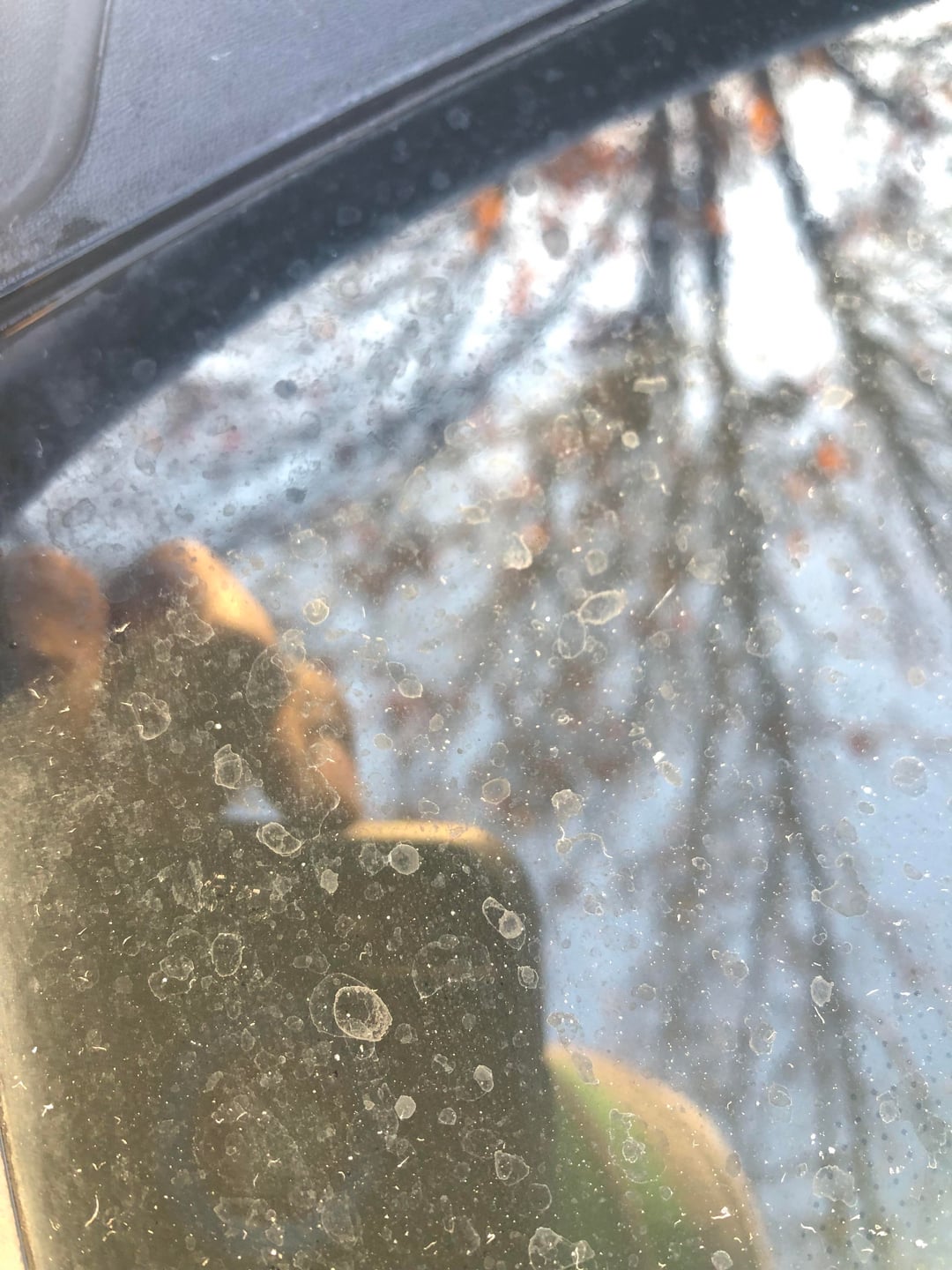
Credit: mobiledetailerfrisco.com
What Water Spots Are—and Why They Matter
A fresh water spot is usually a mineral deposit left behind after evaporation. Tap water may contain calcium, magnesium, silica, and other dissolved solids. When the water disappears, those solids remain as pale rings, dots, or cloudy patches.
In practice, water spots generally fall into three categories:
| Type | What you see | Best response |
|---|---|---|
| Mineral deposits | Light dots or rings that sit on top of the paint | Rewash, chemically dissolve, or safely wipe away |
| Bonded deposits | Rough, stubborn spots that remain after washing | Use a dedicated mineral or water-spot remover |
| Etching | A dull ring or depression in the clear coat | Machine polishing or professional correction may be necessary |
Fresh deposits are much easier to remove than etched marks. Sunlight and heat can accelerate the damage because they dry the droplet quickly and may allow acidic contaminants to concentrate on the clear coat. You can also read our guide on best hose filter for car washing.
Water chemistry varies by location and supply. The U.S. Geological Survey provides background on how dissolved minerals and water chemistry differ between sources, which explains why one household may experience far more spotting than another.
The Best Way to Prevent Water Spots After Washing
1. Wash in the shade and on a cool surface
Direct sunlight is one of the most common causes of spotting. It heats the panel, evaporates rinse water quickly, and often dries shampoo before you can rinse it away. You can also read our guide on how to get car wash to pay for damage.
Choose a shaded, well-ventilated area and wash when the paint is cool to the touch. If shade is unavailable, work one small section at a time. Avoid washing immediately after driving, particularly when the hood, roof, and wheels are still hot.
Shade does not make a car wash automatically safe, however. A breeze can still dry droplets rapidly, so keep checking the panels and do not leave the final rinse standing. You can also read our guide on can i wash my car with dawn dish soap.
2. Remove loose dirt before touching the paint
Rubbing gritty dirt across dry paint can create fine scratches that make future water spotting more noticeable. Start with a thorough rinse to remove loose sand, dust, and road film.
For a lower-risk hand wash, use separate wash and rinse water. This two-bucket setup keeps much of the abrasive dirt away from the shampoo solution and wash mitt. You can also read our guide on best car wash for hard water.
Use a clean, dedicated microfiber mitt rather than a household sponge. Wash the upper panels first, then move to the lower doors, rocker panels, and rear bumper, where contamination is usually heavier.
3. Use a pH-balanced car shampoo
Automotive shampoo is designed to loosen road film while remaining suitable for automotive paint, trim, rubber, and existing protection. Dish soap may remove wax and leave the surface less protected; it is not a better routine car wash. You can also read our guide on do car washes damage paint black cars.
Follow the shampoo’s dilution instructions. More soap does not necessarily clean better and can leave a film that resembles water spotting. If the surface still feels greasy after rinsing, the problem may be traffic film rather than minerals.
4. Rinse from the top down
Rinse the roof first and work toward the lower panels. This carries loosened soap and dirt downward instead of redistributing it over areas you have already cleaned. You can also read our guide on how to wash a car with a bucket of water.
Pay attention to:
- Door handles and mirrors
- Grille openings
- Window trim
- Badges and emblems
- The gap around the fuel door
- Wiper arms and cowl panels
- Wheel arches and rocker panels
A final rinse should remove every visible trace of foam. Do not assume that clear-looking water means the soap is gone; inspect the panel from different angles before drying.
5. Use a low-mineral final rinse when practical
If your tap water is hard, a filtered or deionized final rinse can significantly reduce spotting. A hose-end filter may help, but performance depends on the filter media, water hardness, flow rate, and how quickly the cartridge becomes exhausted. You can also read our guide on will car wash damage paint.
Distilled water is effective for small areas or spot treatment, but using it for an entire vehicle may be inconvenient and expensive. A deionized-water system is more practical for frequent washing, especially for dark paint or vehicles that are washed in direct sunlight.
Do not confuse a basic sediment filter with a deionizing system. A sediment filter removes particles; it does not necessarily remove dissolved minerals. You can also read our guide on best cloth for waterless car wash spray.
6. Dry immediately instead of letting the car air-dry
Air-drying is the single habit most likely to create spots. Even a thorough rinse can leave mineral-rich droplets behind as the water evaporates.
Use a large, clean, high-quality drying towel. Lay it flat and pull it gently across the panel, or use it to blot rather than aggressively rub. A second towel is useful for finishing around mirrors, grilles, badges, and panel gaps. You can also read our guide on how to wash a black car with hard water.
For an efficient routine:
- Open the doors briefly and dry the jambs before trapped water runs out.
- Dry the glass and roof first.
- Move to the hood, trunk, and upper side panels.
- Finish with lower panels and wheels.
- Inspect the paint in changing light before putting the towels away.
Compressed air can push water out of mirrors, emblems, trim, and gaps. Use clean, dry air at a sensible pressure and avoid blowing grit across the paint. A properly sized air compressor for vehicle care can make this step easier, although a dedicated car dryer is often quieter and more convenient.
7. Keep drying towels clean and separate
A towel that has touched wheels, tires, or the ground should never return to painted panels. Tiny grit particles can scratch clear coat, while detergent residue or trapped minerals can create streaks.
Use separate towels for:
- Paint and glass
- Wheels and tires
- Door jambs
- Exhaust tips
- Interior surfaces
Wash microfiber separately from cotton items, avoid fabric softener, and replace towels that become stiff, contaminated, or unable to absorb water. Store them in a clean, covered container.
8. Apply protection, but understand its limits
A wax, paint sealant, ceramic coating, or other paint protection can make water and dirt easier to remove. It may also reduce how strongly mineral deposits bond to the surface.
Protection does not make a vehicle immune to water spots. Beading can leave many small droplets on the panel, and those droplets can still dry into mineral rings. The protection mainly gives you more cleaning margin and can reduce the effort needed for maintenance.
Apply protection only to clean, dry paint and follow the product’s cure time. A properly maintained surface is easier to dry because water releases more readily, but immediate towel drying remains essential.
A Fast, Paint-Safe Drying Routine
When time is limited, use this sequence:
- Park in shade and allow hot panels to cool.
- Rinse the entire vehicle thoroughly.
- Perform a final low-mineral rinse if available.
- Remove standing water with a clean drying towel or air blower.
- Dry mirrors, trim, badges, and jambs before they drip.
- Inspect the finish in direct or angled light.
- Treat any remaining droplets before they evaporate.
If you cannot dry the vehicle immediately, avoid leaving it wet in strong sunlight. A quick rinse with lower-mineral water is preferable to allowing hard tap water to bake onto hot paint.
Common Mistakes That Cause Water Spots
| Mistake | Why it creates spotting | Better approach |
|---|---|---|
| Washing in direct sun | Droplets evaporate before you can dry them | Work in shade or in small sections |
| Allowing a car to air-dry | Minerals remain when water evaporates | Dry immediately |
| Using hard tap water for the last rinse | Dissolved minerals are left on the paint | Use filtered or deionized water |
| Reusing a dirty towel | Grit scratches paint and spreads residue | Use clean towels by task |
| Using too much shampoo | Residue may remain after rinsing | Follow the label dilution |
| Washing a hot vehicle | Water flashes off rapidly | Cool the panels first |
| Spraying quick detailer on gritty paint | Lubricant cannot prevent abrasive contact | Rinse or wash first |
| Assuming wax prevents spots | Protection does not remove minerals | Continue drying carefully |
| Scrubbing dry deposits aggressively | Pressure can mar or scratch clear coat | Soften and dissolve deposits first |
How to Remove Water Spots Safely
Start with a gentle rewash
If the spots are recent, wash the vehicle again in the shade using clean shampoo and a soft mitt. Dry immediately. Some deposits disappear once the surface is properly cleaned.
Do not begin with a clay bar or abrasive polish unless you know the surface needs it. Mechanical decontamination can create unnecessary marring when the problem is only soluble residue.
Try a dedicated water-spot remover
For mineral deposits that survive a normal wash, use a product specifically labeled for automotive paint. Apply it to a cool, small test area, follow the dwell time on the label, and rinse or wipe as directed.
Never allow a chemical remover to dry on the panel. Keep it away from unsealed stone, delicate metal, matte finishes, and sensitive trim unless the manufacturer specifically approves those surfaces.
Use diluted vinegar only with caution
Mild household acid can dissolve some mineral deposits, but vinegar is not a universal or risk-free paint treatment. It may affect wax, sealants, sensitive trim, or unprotected surfaces, and it will not repair etching.
If you test it, use a weak dilution on a small, cool area, keep the contact time short, and rinse thoroughly. Do not use it in direct sun, do not let it dry, and stop immediately if the finish changes. A purpose-made automotive product is usually easier to control.
Polish only when the spot is etched
If the mark remains after cleaning and chemical treatment, it may be etched into the clear coat rather than sitting on top of it. Light polishing can remove a shallow defect, but polishing removes a small amount of clear coat and should not be repeated unnecessarily.
A dual-action polisher and a mild finishing polish are safer for beginners than aggressive compounds, but a professional detailer is the better choice when:
- The spot has a visible crater or dull ring.
- The finish is heavily marked across multiple panels.
- The paint is soft, thin, repainted, or valuable.
- You are unsure whether the defect is contamination or clear-coat damage.
Avoid household abrasives, scouring pads, magic erasers, and rough paper towels. They can permanently dull automotive paint.
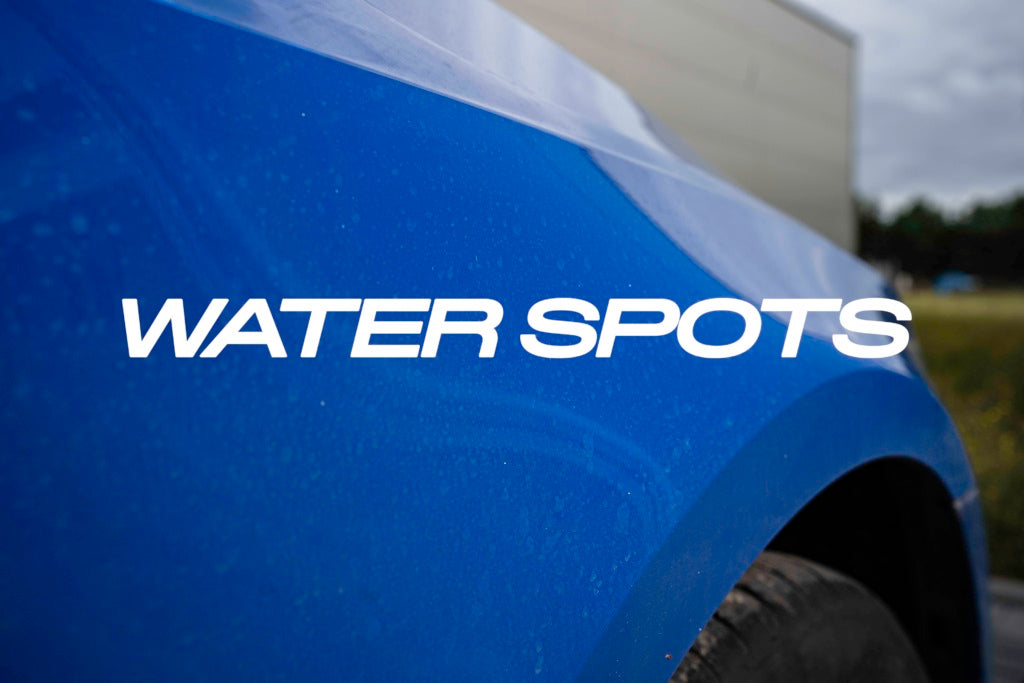
Credit: ultracoatpro.co.uk
How to Tell Whether Your Water Is the Problem
If spotting occurs after every wash, test the water rather than repeatedly changing products. A total dissolved solids meter can indicate whether your rinse water contains a high mineral load, although it does not identify every substance or predict exactly how the paint will react.
You can also compare two small areas:
- Wash and dry one area with ordinary tap water.
- Wash and dry another with filtered or deionized water.
- Inspect both areas after they are completely dry.
If the filtered-water area stays noticeably clearer, water quality is likely a major factor. A local water-quality report can also provide useful information about hardness and dissolved minerals.
When Professional Detailing Is Worthwhile
Professional help is appropriate when water spots have been baked onto the paint, spread over the entire vehicle, or returned despite careful washing. Ask the detailer whether the correction will involve chemical decontamination, polishing, or both.
A reputable provider should inspect the finish first rather than immediately promising that every mark can be removed. The correct treatment depends on paint condition, previous polishing, clear-coat thickness, and whether the deposits have etched the surface.
For an older or collectible vehicle, preserving the finish may be more important than chasing every faint mark. Protecting the paint can also support long-term value, especially when maintaining a vehicle for antique registration requirements.
Frequently Asked Questions
How can I stop water spots on my car after washing?
Wash in the shade, keep the surface wet, rinse thoroughly, and dry immediately with clean microfiber towels. If your water is hard, use filtered or deionized water for the final rinse. Do not leave the vehicle to air-dry in sunlight.
Does a ceramic coating prevent water spots?
No. A ceramic coating can make deposits easier to remove and may reduce bonding, but mineral-rich droplets can still dry on the coated surface. Proper rinsing and immediate drying remain necessary.
Is filtered water better than tap water for washing a car?
Filtered or deionized water is better for the final rinse when tap water contains many dissolved minerals. A basic sediment filter may not remove those minerals, so check what type of filtration system you are using.
Can I use a chamois to dry my car?
A clean, paint-safe chamois can dry a vehicle, but modern microfiber drying towels are often easier to use and hold more water. Whichever material you choose, keep it free of grit and never drag it across visibly dirty paint.
Does quick detailer remove water spots?
Quick detailer can help with light fresh residue after a wash, but it is not a substitute for washing or a dedicated mineral remover. Never use it to wipe heavy dirt from dry paint.
Will vinegar remove hard-water spots?
Vinegar may dissolve some fresh mineral deposits, but it can affect existing protection and sensitive trim. Use a cautious spot test, prevent it from drying, and choose an automotive water-spot remover for stubborn deposits.
Why do water spots appear more on black cars?
Black paint does not necessarily create more spots, but it shows contrast, haze, and mineral rings more clearly than light-colored paint. Careful drying and a clean towel are especially important on dark finishes.
Final Takeaway
The most effective answer to “how to prevent water spots on a car after washing” is to control both evaporation and water quality. Wash a cool vehicle in the shade, use proper car shampoo, rinse from top to bottom, and dry every panel before droplets evaporate. Filtered or deionized water helps when your supply is mineral-rich, while wax, sealants, and coatings provide useful but limited protection.
For your next wash, prepare two clean drying towels and plan the final rinse before you start—those two small changes prevent more spotting than aggressive correction later.








