ByMax Lee
Guide to Arizona Monsoon Season Flash Flood Driving Risks
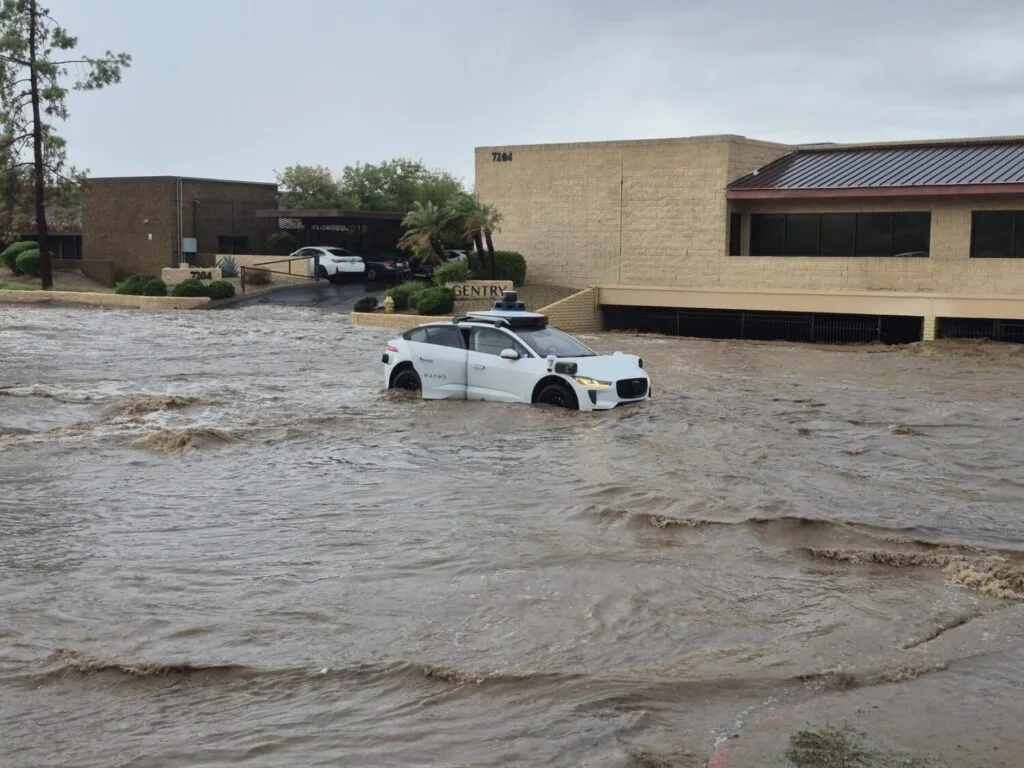
Arizona's monsoon season brings a specific kind of danger most drivers don't fully understand until it's too late. The risks of driving during a flash flood go far beyond a little water on the road, and they apply to every vehicle on the road, from a lifted truck to a compact sedan. Understanding Arizona monsoon season flash flood driving risks means knowing what actually happens to a vehicle when water meets pavement, and more importantly, knowing exactly when to stop and turn around.
Research from the National Weather Service confirms that six inches of moving water can knock a person off their feet, and just twelve inches can carry away most passenger vehicles. As of 2026, Arizona still leads the nation in flash flood driving fatalities per capita, according to aggregated NOAA data. That statistic is not just a number.
It represents real drivers who misjudged a low-water crossing or an arroyo they had crossed a hundred times before. Let's walk through what you need to know to stay safe, starting with why this matters more than most Arizona car owners realize.
Bing (Web (fair-use with source credit))
Quick Answer
Flash floods kill more drivers than any other monsoon hazard. Twelve inches of moving water can move most cars. Eighteen inches can move a truck.
Never drive past a barrier or into standing water on a road. Turn around, find higher ground, and wait for the water to recede. That single decision saves more lives than any driving skill.
Why This Matters for Arizona Drivers
Monsoon season in Arizona runs from mid-June through September. That is the window when dry desert washes turn into deadly rivers in minutes. The combination of hard-baked soil, sparse vegetation, and intense localized rainfall means water does not soak into the ground.
It runs off fast, and it collects in the lowest points, which are often the roads you drive every day.
What makes Arizona unique is the geography. The state has thousands of arroyos, dry creek beds that only carry water during storms. Many of these cross roads at low-water crossings.
You can drive over a dry wash a hundred times and never think twice about it. Then one afternoon, a storm thirty miles upriver sends a wall of water downstream, and that same crossing becomes a death trap.
The problem is visibility. You might not see rain where you are. The storm could be miles away, but the water is already coming your way.
By the time you see it, it is often too late to react safely. That is why knowledge and preparation matter far more than reaction time.
If you have not already, take a moment to read through our general blog on Arizona driving safety for a broader look at seasonal risks. Monsoon preparedness is just one piece of the puzzle.
Arizona Flash Floods 101: What Actually Happens to a Road
Let's talk about what happens when a flash flood hits a road in Arizona. The pavement itself does not change much, but everything underneath it does. Water erodes the ground beneath the road surface.
It can wash out the base material, leaving the asphalt or concrete unsupported. That is how roads collapse without warning.
A road that looks perfectly solid can have a void underneath it big enough to swallow a vehicle. The water hides the damage. You cannot see a washed-out roadbed from above, especially when there is muddy water flowing over it.
That is the core danger.
Flood water also carries debris. Rocks, tree branches, silt, and even large boulders get pushed downstream. That debris can hit your vehicle with enough force to dent panels, break windows, or wedge under your car and lift it off the ground.
Once your tires lose contact with the road, you are no longer driving. You are floating, and water dictates where you go.
Here is how water depth affects different vehicles:
| Water Depth | Effect on Vehicle |
|---|---|
| 6 inches | Reaches bottom of most passenger cars. Loss of control possible. |
| 12 inches | Will float and move many small cars and sedans. |
| 18 inches | Can carry away most SUVs and pickup trucks. |
| 24 inches | Will move nearly any passenger vehicle, including large trucks. |
These numbers come from real-world testing and crash data collected by federal agencies. They are not estimates. They are hard limits based on physics.
The 3 Numbers That Matter Most: Depth, Speed, and Clearance
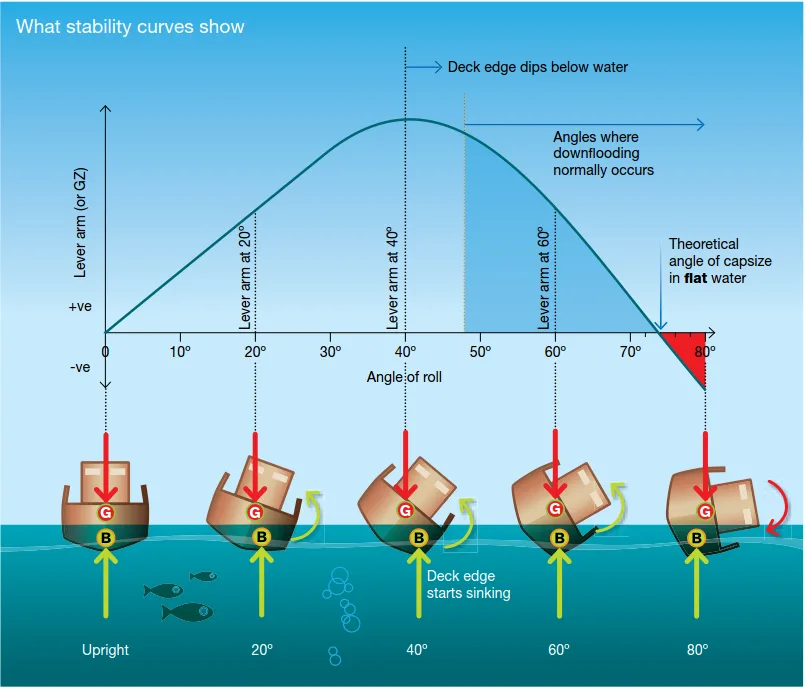
Three factors determine whether crossing a flooded road is survivable or suicidal. You need to understand all three, and you need to assess them before you even think about driving through standing water.
Bing (Web (fair-use with source credit))
Depth is the most obvious, but you cannot trust what you see. Water is rarely perfectly clear, and the bottom might be lower than it looks. A puddle that looks six inches deep could easily be two feet deep if the road has dropped off or the shoulder has eroded.
Never estimate depth from the driver's seat. If you cannot see the pavement clearly, assume it is deeper than it looks.
Speed is the factor people underestimate most. Still water is dangerous, but moving water is lethal. Force increases exponentially with speed.
Water moving at just 5 miles per hour exerts 500 pounds of force per square foot against the side of a vehicle. At 10 miles per hour, that force more than doubles. Your vehicle weighs a few thousand pounds.
That force can push it sideways off the road and into a ditch or a river channel.
Clearance is about your specific vehicle. Know your vehicle's ground clearance and its intake height. For most sedans, the air intake sits around 24 to 30 inches off the ground.
For trucks and SUVs, it is higher but still vulnerable. Water entering the engine causes hydro-lock, which destroys the engine almost instantly. Even if you make it across, you might be looking at a total engine replacement.
A simple rule of thumb: if the water reaches the bottom of your door frame, it is too deep. Turn around.
Arroyos and Low-Water Crossings: Why They Kill
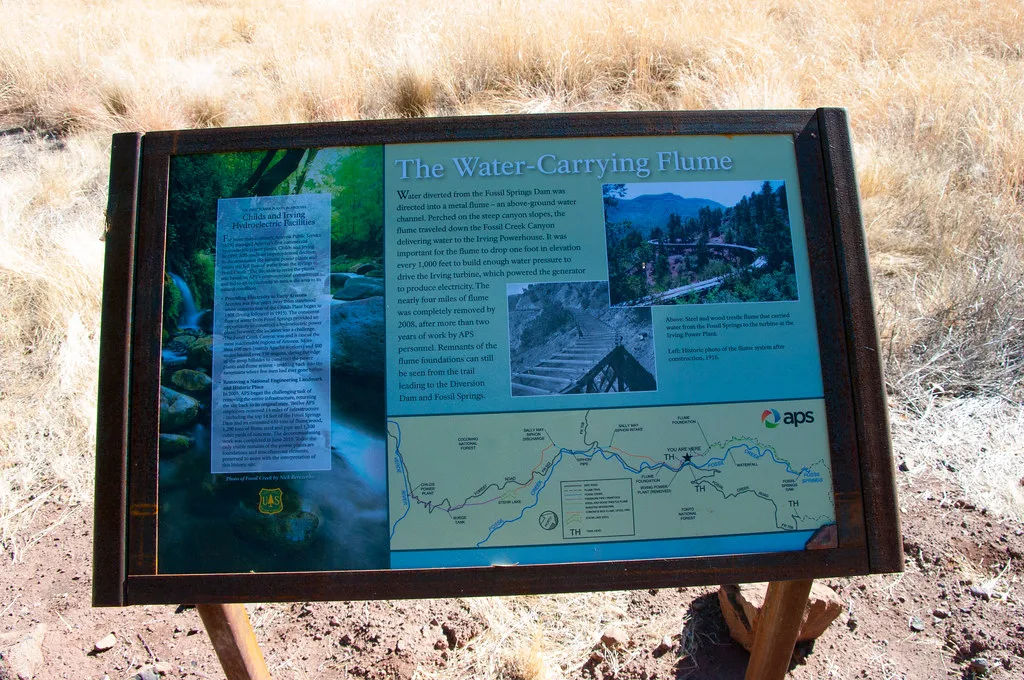
Arroyos are the single deadliest feature of Arizona's monsoon landscape. These dry washes funnel water from huge areas into narrow channels. A storm that drops an inch of rain over a ten-square-mile watershed can produce a surge that fills an arroyo with six feet of water in under five minutes.
Openverse / deborah.soltesz
Low-water crossings are designed to be driven over when dry or when water is shallow. But here is the catch. That sign you see, the one with the water wave symbol, is not a suggestion.
It is a warning based on real deaths. The Arizona Department of Transportation installs these signs at locations with a known history of flooding. Ignoring them is how people die.
The specific danger of arroyos is the speed of rise. You might drive into a crossing that looks passable. By the time you are in the middle, the water has risen six inches.
By the time you decide to turn around, it is too late. Your wheels are lifting off the ground, and you are being swept downstream.
Here is what ADOT and local flood control districts want you to know. Never drive around barricades. Barricades are placed by trained engineers and emergency personnel who have assessed the actual conditions.
Driving around them is not just illegal under Arizona Revised Statute 28-648A. It is how people end up in the news, and not in a good way.
If you need to wash mud and debris off your vehicle after a close call or a dusty monsoon drive, check out our guide on manual cleaning equipment used in car wash situations for safe techniques. But remember, that is for after the drive, not during the flood.
The "I Have a Truck" Trap: Why Bigger Isn't Safer
This is the most dangerous myth on Arizona roads. The idea that a lifted truck, a Jeep, or a large SUV can handle a flooded crossing because it sits higher off the ground. That belief has killed experienced off-road drivers every single monsoon season without fail.
Here is the truth. Trucks and SUVs are heavier, yes. But they are also taller and more prone to being pushed sideways by moving water.
The same force that hits the side of a sedan hits the side of a truck with even more surface area to push against. Water does not care about your ground clearance. It cares about your side profile and your buoyancy.
Bing (Web (fair-use with source credit))
Let's look at the comparison:
| Vehicle Type | Ground Clearance | Intake Height | Risk at 12" Moving Water |
|---|---|---|---|
| Sedan | 5-6 inches | 24-30 inches | High |
| Crossover SUV | 7-9 inches | 30-36 inches | High |
| Pickup Truck | 9-12 inches | 36-42 inches | Moderate to High |
| Lifted Off-Road Truck | 12-18 inches | 48-60 inches | Moderate |
Notice the pattern. Even a lifted truck with 18 inches of clearance is at risk in 12 inches of moving water. The water might not reach your intake, but it will reach your tires, your undercarriage, and your door seals.
Buoyancy starts working against you long before water reaches the hood.
That truck you spent thousands lifting and outfitting for off-road adventures floats. And when it floats, it becomes a several-thousand-pound battering ram being pushed wherever the water wants it to go. You lose steering.
You lose braking. You lose control.
The only advantage a truck has is that you sit higher and can see farther. Use that advantage to spot the water early, and then use your good judgment to turn around. That is the only safe move.
For keeping your truck in top shape after monsoon season, we also have advice on washing a car with ceramic coating pressure washer techniques that work well for removing dried mud without scratching the paint. Proper maintenance after a wet drive matters almost as much as the decision to avoid the flood in the first place.
The bottom line is clear. No vehicle is flood-proof. A lifted truck gives you more clearance, but it does not give you safety.
Physics does not care about brand loyalty or how much you spent on suspension. It only cares about depth, speed, and the fact that water always wins.
Step-by-Step Decision Guide for Any Flooded Road
When you approach a flooded road, follow this decision process. Do not skip steps. Do not rush.
Step 1: Stop the vehicle completely. Put your hazard lights on. Take a good look at what is ahead.
Step 2: Check for barricades or warning signs. If you see a barricade, do not go around it. That is the law in Arizona, and it exists for a reason. Turn around now.
Step 3: Assess the water yourself. Look for moving water. Look for debris floating downstream. Look at the edges of the road to see if the pavement is broken or washed out.
If you cannot see the road surface clearly, the water is too deep.
Step 4: Check the weather upstream. Use a weather app on your phone to see if storms are active in the area. Remember that water can travel miles from where rain is falling.
Step 5: Make the call. If the water is moving, if you cannot see the bottom, if there is any debris flowing, or if a barricade is present, do not cross. Turn around and find another route.
That is the entire decision tree. It is simple because the answer is almost always no.
What to Do If You're Already in Rising Water
Sometimes the water rises faster than you expect. Maybe you drove into a crossing that looked fine, and now the water is climbing the sides of your car. Here is what to do.
If the water is still shallow and not moving fast: Back out slowly. Do not spin your tires. Drive in reverse following the same path you used to enter.
Keep steady pressure on the gas. Do not stop.
If the water is moving or has reached your door sills: Stop the vehicle. Turn off the engine. Get out immediately if it is safe to do so.
Move to higher ground on foot. Do not try to save the car.
If the water is carrying your vehicle: Stay inside the vehicle. Keep your seatbelt on. Call 911 if you have cell service.
Roll down a window if you can, in case the electrical system fails. If the vehicle sinks, you will need that window to escape.
If you are swept out of the vehicle: Do not try to stand up in moving water. Float on your back with your feet pointing downstream. Use your feet to push off obstacles.
Look for something to grab onto, like a tree branch or a rock that is above water.
The most important thing to remember is this. Vehicles are replaceable. You are not.
The 5 Biggest Mistakes Arizona Drivers Make During Monsoon Season
These mistakes show up in accident reports every year. They are predictable, avoidable, and deadly.
Mistake 1: Driving around barricades. This is the number one cause of flash flood deaths in Arizona. People see a barricade and think they know better. They do not.
Mistake 2: Underestimating water depth. A road covered with water looks shallow. It rarely is. The dip in the road, the washed-out shoulder, the debris underneath, they all make the water deeper than it appears.
Mistake 3: Assuming a big vehicle can handle it. As we covered, trucks and SUVs are not safe in moving water. The extra weight and height actually work against you once buoyancy kicks in.
Mistake 4: Trying to go fast to get through. Speeding up through water pushes a bow wave in front of the vehicle. That wave floods the engine intake. Go slow if you must cross, but the better choice is not to cross at all.
Mistake 5: Ignoring weather reports. Monsoon storms can pop up fast, but the National Weather Service provides watches and warnings for a reason. Check the forecast before you drive. If flash flood warnings are active in your area, stay off the roads.
Legal and Insurance Reality Check
Driving around a barricade in Arizona is not just dangerous. It is illegal. Arizona Revised Statute 28-648A makes it a traffic violation to disobey official traffic control devices, including flood barricades.
If you cause an accident or injury while bypassing a barricade, you can face criminal charges.
Insurance is another important piece. Comprehensive auto insurance covers flood damage. Collision insurance does not, unless water damage happens during a collision.
If you drive through flood water and stall, comprehensive coverage will pay for repairs minus your deductible. But if you drive around a barricade and get swept away, your insurance company may deny the claim based on reckless behavior.
Check your policy before monsoon season starts. Make sure you have comprehensive coverage. It is cheap compared to the cost of a new engine or a total loss.
How to Prepare Your Vehicle Before the Monsoon Hits
Preparation can save your vehicle and your life. Here are the steps to take before monsoon season arrives.
Check your tires. Good tread depth gives you more control on wet roads. Replace tires that are worn below 4/32 of an inch.
Inspect your wipers. Monsoon rain comes down hard. Old wipers will leave streaks and reduce visibility. Replace them at the start of June.
Test your defroster and AC. Humidity inside the car causes fog on the windows. You need both systems working to keep visibility clear.
Keep an emergency kit in your vehicle. Include a flashlight, a first aid kit, a phone charger, a blanket, and a life jacket if you drive through areas with low-water crossings.
Know your vehicle's clearance. Measure the height of your air intake. Write it down. Keep it in your glove box.
That number tells you the absolute maximum water depth your engine can survive, and it is lower than you think.
If you live in areas with frequent dust and mud exposure, does ceramic coating protect against salt addresses one aspect of long-term paint protection. And for keeping your paint safe during monsoon washes, our guide on car shampoo for ppf covers the right products to use on paint protection film.
Real Arizona Scenarios
These are not made up. They are based on real events that happen every monsoon season.
Scenario 1: The arroyo crossing. You are driving home on a rural road you take every day. It crosses a dry wash. There is no water when you arrive.
But a storm passed through forty minutes ago, ten miles north. As you start to cross, a wall of water appears around the bend. You have maybe ten seconds to react.
Hit the gas to get across, or slam the brakes and back up. Both options carry risk. The only safe choice is to not cross until you know no storm is upstream.
Scenario 2: The flooded underpass. You are in the city, driving through a low underpass on a surface street. Rain is coming down hard. The underpass fills with water faster than you expect.
Your car stalls in the middle. Water seeps through the door seals. You need to get out, but opening the door lets water pour in.
Roll down your window and climb out. Move to higher ground. Call for help.
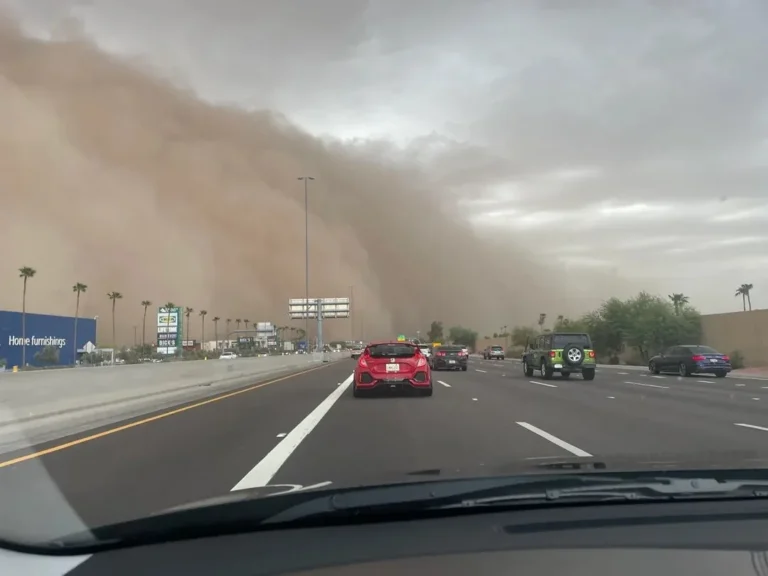
Scenario 3: The highway surprise. You are on Interstate 10 near Casa Grande. A storm blows through with zero warning. Visibility drops to near zero from the rain and blowing dust.
Water pools across all lanes. You cannot see where the shoulder is. Slow down gradually.
Put your hazard lights on. Pull off as far as you safely can. Wait for the storm to pass.
Do not keep driving.
Quick Reference: When to Turn Around vs. When It's Safe
| Condition | Decision |
|---|---|
| Water across road, no barricade, water is still and less than 4 inches deep | Proceed with caution, go slow |
| Water across road, no barricade, water is 4-6 inches deep | Turn around |
| Water across road, no barricade, water is moving | Turn around |
| Barricade present, regardless of water depth | Turn around |
| Water across road, cannot see bottom | Turn around |
| Any water reaching door sill level | Turn around |
| Debris flowing in water | Turn around |
| Water deeper than your vehicle's ground clearance | Turn around |
Notice a pattern. The list of "safe" conditions is very short. The list of "turn around" conditions covers almost everything you will encounter.
For getting your vehicle clean after a monsoon drive, prepare touchless washing offers practical steps to remove mud and grime without damaging your paint.
Final Takeaway: The Only Rule That Actually Saves Lives
One rule covers every situation. If you see water on the road, do not drive through it. That simple rule prevents more deaths than any driving technique or vehicle upgrade ever could.
The National Weather Service has a slogan that has saved hundreds of lives. You have probably heard it before. Turn around, don't drown.
It is not a clever marketing phrase. It is a proven rule based on decades of flash flood data. Follow it every time.
Even when you are in a hurry. Even when the water looks shallow. Even when other drivers are going through.
Even when you have driven that road a hundred times.
The single best tool for surviving Arizona monsoon season is not a lifted truck or a 4WD system. It is the willingness to admit that water always wins, and to take the long way home.
Frequently Asked Questions
How deep can a car drive through water safely?
For most passenger cars, the safe limit is about 4 inches of still water. For trucks and SUVs, the limit is around 6 to 8 inches. These limits assume the water is not moving.
Moving water drastically reduces safe depth regardless of vehicle type.
What should I do if my car stalls in flood water?
Turn off the engine immediately. Do not try to restart it. Restarting a flooded engine can cause hydro-lock and total engine failure.
If water is rising, exit the vehicle quickly and move to higher ground. Call for help once you are safe.
Does car insurance cover flash flood damage?
Comprehensive car insurance covers flood damage. Collision insurance does not. If you drive around a barricade and get caught in a flood, some insurers may deny the claim based on reckless behavior.
Check your policy before monsoon season starts.
Is it safe to drive a lifted truck through flood water?
No. A lifted truck sits higher, but it is still vulnerable to buoyancy and side force from moving water. Lifted trucks have a larger side surface area, which means water pushes them more easily.
Ground clearance does not prevent floating.
How fast does flash flood water rise in Arizona?
In an arroyo or low-water crossing, water can rise at a rate of 2 to 4 feet per minute. That means a crossing that is dry one minute can be impassable the next. Never assume you have time to make it across.
Can I drive through a flooded road if other cars are doing it?
No. Other drivers may be misjudging the depth or taking a risk that will not end well for them. Do not follow someone else's bad decision.
Assess the conditions yourself and make your own call. One mistake is all it takes.