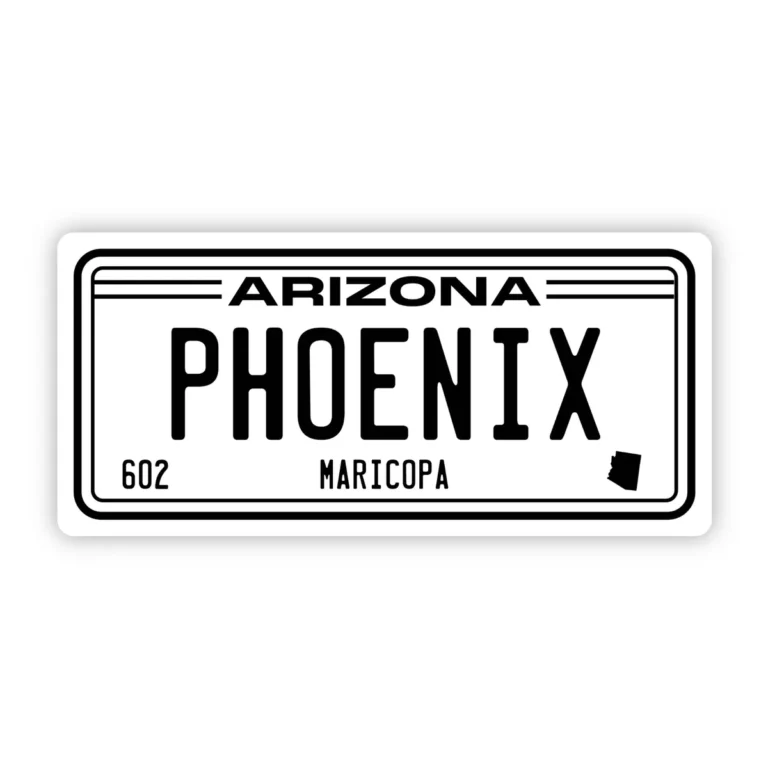
Test if you live in Maricopa, Pima, or parts of Pinal and Yavapai. Your vehicle must be 1996 or newer and over five years old. Gas, diesel, and hybrids need testing.
EVs and motorcycles are exempt. Test every two years before registration renewal.
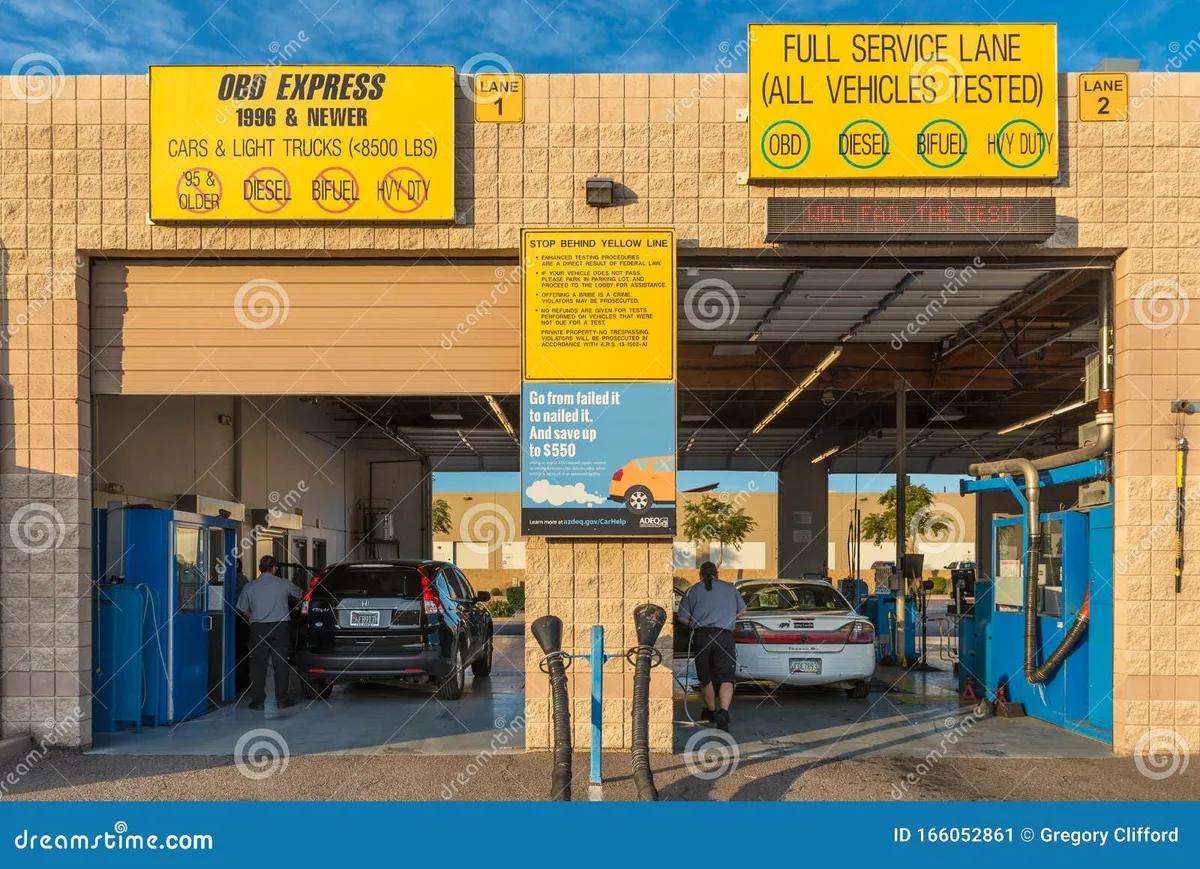
The Big Decision Tree: Does Your County Require Testing?
This is where the confusion usually starts. Arizona doesn’t test every county. Only the ones that violate federal air-quality standards for ozone have a testing program.
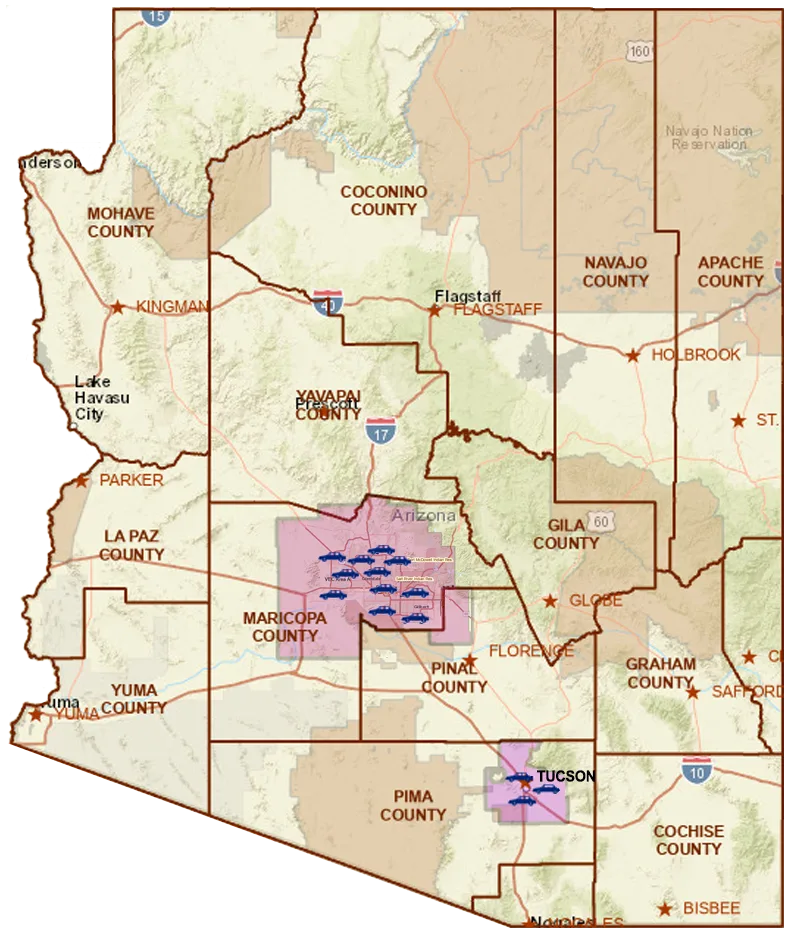
Testing counties as of 2026:
| County | Status | Notes |
|---|---|---|
| Maricopa | Required | Full program, includes Phoenix metro |
| Pima | Required | Full program, includes Tucson metro |
| Pinal | Partial | Only specific areas near Maricopa border |
| Yavapai | Partial | Only Clarkdale, Cottonwood, Jerome, Sedona |
| Apache | Not required | No testing |
| Cochise | Not required | No testing |
| Coconino | Not required | No testing |
| Gila | Not required | No testing |
| Graham | Not required | No testing |
| Greenlee | Not required | No testing |
| La Paz | Not required | No testing |
| Mohave | Not required | No testing |
| Navajo | Not required | No testing |
| Santa Cruz | Not required | No testing |
| Yuma | Not required | No testing |
If you live in a testing county, move to the next step. If not, you’re done, no test needed for registration.
Step 1: Find Your County and ZIP Code
The easiest way to confirm is to use the ADEQ ZIP code lookup tool on their website. Even within a testing county, some ZIP codes are exempt. For example, parts of Pinal County near the Maricopa border require testing, but other Pinal ZIP codes don’t.
Check your specific ZIP. Don’t rely on just the county name.
Step 2: Check Your Vehicle’s Age and Fuel Type
Vehicles less than five years old are exempt from testing for the first two registration cycles. Here’s the formula:
- 2025 model year: First test due in 2030 (when car turns 5)
- 2020 model year: Test due now (as of 2026, car is 6 years old)
- 1995 and older: Must take the older dynamometer (treadmill) test, not OBD-II
Fuel type matters too. Gasoline, diesel (under 8,500 lbs GVWR), and hybrid vehicles all need testing. Plug-in hybrids count as gasoline vehicles, the gas engine still gets tested.
Pure electric vehicles, natural gas vehicles, and motorcycles are exempt.
Step 3: Know Your Registration Cycle (New vs. Renewal)
The testing requirement is tied to your registration renewal date, not the calendar year.
- Renewal test: You must test within 90 days before your registration expires.
- New resident test: If you just moved to Arizona, you need a test before you can register out-of-state vehicles in a testing county.
- Used car purchase: If you buy a used car, you need a fresh test if the previous owner’s test is more than 90 days old.
Timing matters. Test too early and it won’t count. Test too late and you pay late fees.
What Happens at the Test Station? (OBD-II vs. Dynamometer)
Once you know you need a test, it helps to understand what actually happens under the hood.
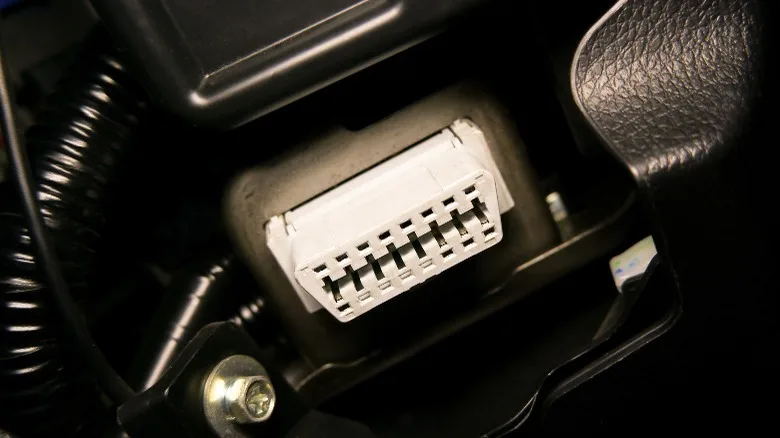
For most vehicles (1996 and newer): The technician plugs a scanner into your OBD-II port, usually located under the dashboard near the steering column. The scanner reads your car’s computer for trouble codes, readiness monitors, and emissions system status. The test takes about five minutes.
No tailpipe probe, no rollers.
For older vehicles (1995 and earlier): You get the dynamometer test. Your car drives on a set of rollers while a probe samples the exhaust. This test measures hydrocarbons, carbon monoxide, nitrogen oxides, and carbon dioxide.
It takes about 15 minutes.
What both tests check:
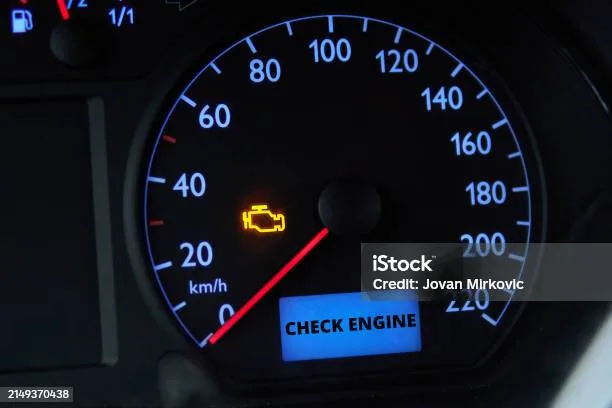
- Check engine light must be off
- Gas cap must seal properly
- Exhaust system must be intact (no leaks, no missing catalytic converter)
- OBD-II monitors must show “ready” status
If your check engine light is on, you’ll fail automatically. No exceptions.
How to Prepare Your Car for a Pass (Pre-Test Checklist)
You don’t need a mechanic, but a little upfront work saves you a retest trip.
Do this before you drive to the station:
- Drive your car for at least 20 minutes before the test. A warm engine runs cleaner and passes OBD-II readiness checks faster.
- Make sure the check engine light comes on briefly when you turn the key (bulb check), then stays off.
- Tighten your gas cap until you hear three clicks. A loose cap triggers an evaporation leak code.
- Top off your oil and coolant if they’re low. Low fluids won’t fail you, but they can cause other issues.
- If you have an older car, take it for a highway drive the day before. That burns off carbon deposits and helps the catalytic converter work.
What to bring with you:
- Your current registration
- Your vehicle (obviously)
- Payment, $9 to $15 at state-run stations, more at private ones
One pro tip from our research: If you have a pending code or a recently cleared check engine light, drive 50 to 100 miles over two days to let the OBD-II monitors reset. A “not ready” status can fail you in some cases.
You don’t need a mechanic, but a little upfront work saves you a retest trip.
Do this before you drive to the station:
- Drive your car for at least 20 minutes before the test. A warm engine runs cleaner and passes OBD-II readiness checks faster.
- Make sure the check engine light comes on briefly when you turn the key (bulb check), then stays off.
- Tighten your gas cap until you hear three clicks. A loose cap triggers an evaporation leak code.
- Top off your oil and coolant if they’re low. Low fluids won’t fail you, but they can cause other issues.
- If you have an older car, take it for a highway drive the day before. That burns off carbon deposits and helps the catalytic converter work.
What to bring with you:
- Your current registration
- Your vehicle (obviously)
- Payment, $9 to $15 at state-run stations, more at private ones
One pro tip from our research: If you have a pending code or a recently cleared check engine light, drive 50 to 100 miles over two days to let the OBD-II monitors reset. A “not ready” status can fail you in some cases.
I Failed the Test – Now What? (Waivers, Repairs, and Retest Rules)
Failing feels frustrating, but it’s not the end of the road. Arizona gives you options.
Immediate steps after a fail:
- You get a printed report showing which emissions system failed.
- You have 60 calendar days to repair and retest at the same station for free.
- If you go to a different station, you pay the test fee again.
Repair waiver rules:
If the cost to fix the problem exceeds a certain threshold, you may qualify for a waiver. The threshold as of 2026:
| Vehicle model year | Repair cost threshold for waiver |
|---|---|
| 2012 and newer | $450 |
| 2002 to 2011 | $650 |
| 2001 and older | $850 |
You need receipts from a licensed mechanic to prove the repairs. The waiver applies only once per registration cycle.
Time extension option:
If you need more time to save up or find parts, you can request a 60-day temporary permit from the MVD. That lets you drive legally while you sort out repairs.
What happens if you ignore it?
Your registration renewal gets blocked. You can’t renew online, and you’ll eventually get a late fee (up to $20). If it goes on long enough, the MVD can flag your vehicle for non-compliance.
The one repair that almost always fixes it: a bad oxygen sensor or a loose gas cap. Those two issues account for more than half of all test failures. Replace the sensor, tighten the cap, and retest.
Simple fixes.