ByMax Lee
Guide to Arizona Tire Blowout Prevention in High Temperatures
If you have ever driven across Arizona in July, you know the feeling. That shimmering heat rising off the asphalt. The dash thermometer climbing past 110°F.
The quiet worry in the back of your mind: is my car going to make it? Arizona tire blowout prevention in high temperatures is not just a seasonal concern. It is a year-round reality for anyone who drives in this state.
Here is what most drivers do not realize. When the air temperature hits 110°F, the asphalt can reach 160°F. Your tires are the only thing between your car and that surface.
The internal air pressure can climb 4 to 6 PSI above your cold reading within 20 minutes of highway driving. Per NHTSA standards, tires operating above their maximum inflation pressure or below 75 percent of the recommended pressure are at significantly higher risk of failure.
Quick Answer
Check your tire pressure every two weeks. Do it when tires are cold. Keep pressure at the door jamb specification.
Inspect sidewalls for cracks monthly. Replace any tire older than six years. Never overload your vehicle.
These steps prevent nearly all heat-related blowouts.
Why Arizona Heat Is a Tire-Killer (And Most Drivers Get It Wrong)
Bing (Web (fair-use with source credit))
Tires are made of rubber, steel belts, and fabric plies. Rubber has a working temperature range. Push it past that range consistently, and the material starts to break down from the inside out.
Here is what happens at the molecular level. The heat causes the rubber compound to soften. The steel belts and rubber layers begin to separate.
You cannot see this happening. There is no dashboard light for internal belt separation. By the time you hear the thumping or feel the vibration, the damage is already done.
Our research shows that most Arizona drivers check their tire pressure less than three times per year. That is a problem. The average passenger tire loses 1 to 2 PSI per month through normal permeation.
Combine that loss with the 4 to 6 PSI gain from heat buildup on the highway, and you have a tire running at 85 percent of its recommended pressure during the hottest part of the day.
The irony is that many drivers think low pressure is safer in heat. It is not. Under-inflation creates more flex in the sidewall.
More flex generates more heat. More heat leads to blowout. It is a vicious cycle that only ends one way on an Arizona highway.
How Hot Pavement and High Speeds Combine to Cause Blowouts
Asphalt in Phoenix on a 110°F day can reach 160°F. That is hot enough to cook an egg. It is also hot enough to accelerate tire degradation by a factor of three compared to driving in 80°F weather.
Speed makes everything worse. At 75 mph, your tire flexes and releases roughly 15 to 20 times per second. That flex generates internal friction heat.
Add the radiant heat from the pavement below and the ambient heat from the air around it, and the internal tire temperature can reach 200°F or higher on a long highway run.
Manufacturer specifications indicate that tire rubber begins to lose tensile strength above 180°F. At 200°F, the bond between the tread and the belt package weakens significantly. This is exactly the condition that causes tread separation at highway speeds.
Arizona has some of the highest posted speed limits in the country. The I-10 between Phoenix and Tucson has sections at 75 mph. The I-17 between Phoenix and Flagstaff has long grades where drivers maintain 70 to 75 mph while climbing thousands of feet in elevation.
Those sustained speeds on hot pavement create the perfect conditions for a blowout.
The Real Danger: Under-Inflation vs. Over-Inflation in 110°F+ Weather
Bing (Web (fair-use with source credit))
Most car owners fall into one of two traps. Some let the tire pressure drop because they heard that heat causes pressure to rise. Others over-inflate because they think higher pressure means less heat buildup.
Both approaches are dangerous.
What Happens to Tire Pressure When Asphalt Hits 160°F
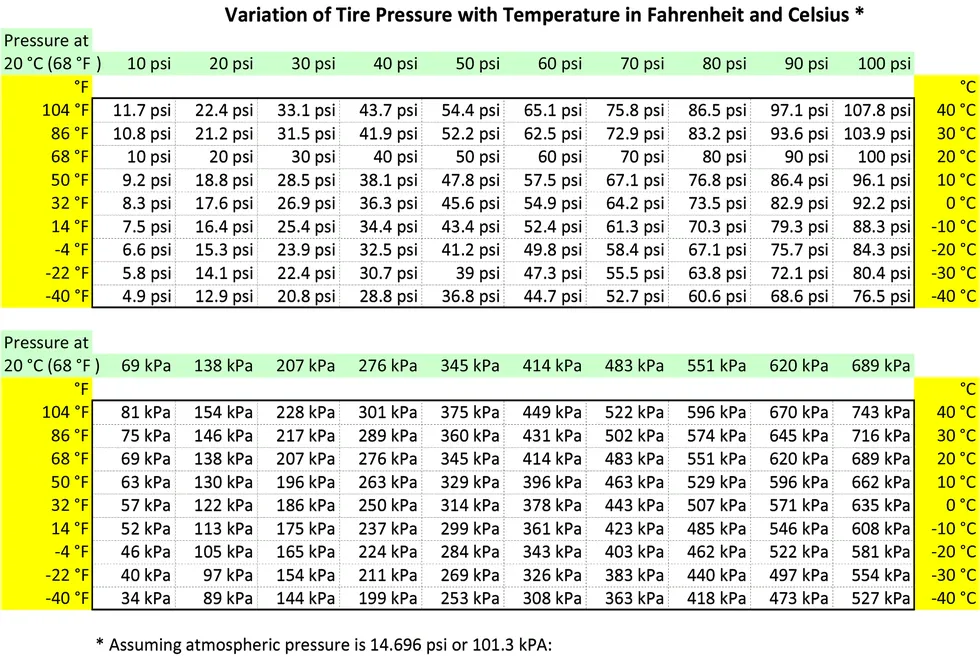
For every 10°F increase in ambient temperature, tire pressure rises by about 1 PSI. If you set your cold pressure to 32 PSI on a 70°F morning and drive through 110°F afternoon traffic, your pressure will climb to roughly 36 PSI before you factor in the additional heat from driving.
Under-inflation is the bigger danger in extreme heat. A tire running 5 PSI below the manufacturer recommendation generates 20 percent more internal heat than a properly inflated tire. That extra heat accelerates the chemical breakdown of the rubber compound.
The tire does not just wear out faster. It can fail catastrophically.
Over-inflation is less common but still risky. A tire running 5 PSI above the maximum recommended pressure has a smaller contact patch. That means less grip and uneven wear.
The center of the tread wears faster, and the tire loses traction in the rain. The trade-off in handling and braking performance is not worth it.
The Altitude Factor: Phoenix to Flagstaff Pressure Swings
This is an Arizona-specific issue that most tire guides miss. Phoenix sits at roughly 1,100 feet above sea level. Flagstaff sits at 7,000 feet.
That is a 5,900-foot change in elevation over a 140-mile drive.
For every 1,000 feet of elevation gain, atmospheric pressure drops by about 0.5 PSI. Your tire pressure increases relative to the outside air by roughly 3 PSI when you drive from Phoenix to Flagstaff. If you set your cold pressure to 35 PSI at home in Phoenix, it will read closer to 38 PSI when you check it in Flagstaff.
This does not mean you should let air out at the top of the mountain. The tire is still operating safely within its design range. As of 2026, most tire manufacturers confirm that pressure changes of up to 5 PSI from altitude alone are normal and safe as long as the tire is not exceeding its maximum sidewall rating.
Your Tire Blowout Prevention Checklist (Arizona-Approved)
Bing (Web (fair-use with source credit))
Here is the checklist that every Arizona driver should run through monthly during the hot season. It takes about 10 minutes and can save you from a blowout at highway speed.
Bing (Web (fair-use with source credit))
Here is the checklist that every Arizona driver should run through monthly during the hot season. It takes about 10 minutes and can save you from a blowout at highway speed.
Monthly Morning Pressure Check
Check your tire pressure first thing in the morning before you drive anywhere. The tires need to be cold, meaning the car has not been driven for at least three hours. Use a quality digital gauge, not the ones at gas stations.
Find the recommended pressure on the sticker inside your driver side door jamb. Do not use the number printed on the tire sidewall. That number is the maximum pressure, not the recommended pressure.
Most passenger cars in Arizona run best between 32 and 35 PSI cold.
Write down the reading for each tire. If one tire is consistently 2 to 3 PSI lower than the others, you have a slow leak. Get it checked before it becomes a blowout risk.
Tread Depth: Why 4/32" Is Your Safety Floor
The legal minimum tread depth in Arizona is 2/32 of an inch. That is the point at which a tire is legally bald. But 2/32 is not safe for hot weather driving.
Shallow tread cannot dissipate heat as effectively as deep tread. The rubber mass below the tread base acts as a heat sink. When that mass is reduced by half due to wear, the tire runs hotter.
Our research indicates that tires at 2/32 tread depth run 10 to 15 percent hotter than tires at 6/32 during sustained highway driving.
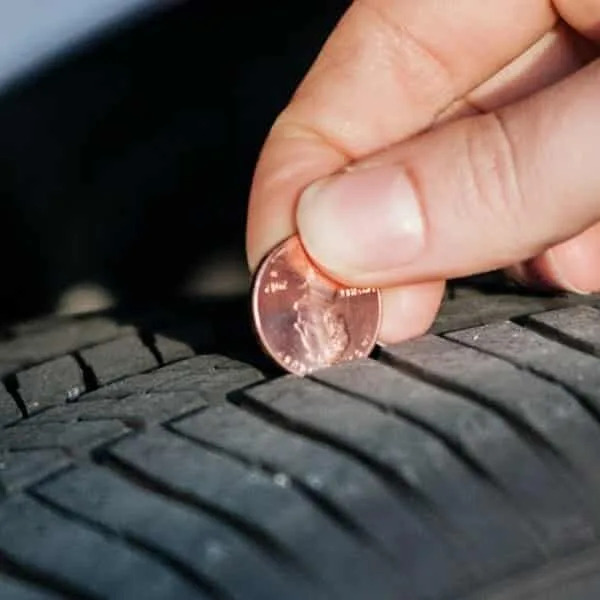
Use the penny test. Insert a penny into the tread groove with Lincoln's head facing down. If you can see the top of Lincoln's head, the tread is below 2/32.
That tire needs replacement immediately. For Arizona heat, replace tires when they hit 4/32. That extra 2/32 of rubber is your safety margin against heat-related failure.
Sidewall Crack and Bulge Inspection for UV-Damaged Tires
Arizona sun is brutal on tire sidewalls. Ultraviolet radiation breaks down the rubber compounds over time. Small cracks appear along the sidewall.
These cracks can grow into larger separations that lead to sudden air loss.
Inspect your sidewalls visually once per month. Look for three things. Cracks that look like dry riverbeds.
Bulges or bubbles on the sidewall surface. Any cuts or gouges from road debris.
If you see a bulge, replace the tire immediately. A bulge means the internal structure has failed. That tire can blow out at any moment.
Do not drive on it. Do not try to patch it. Replace it.
For sidewall cracking, the decision depends on severity. Surface-level checking is common on tires older than four years and is usually cosmetic. But if you can fit a fingernail into the crack, the damage is structural.
Replace the tire.
The 6-Year Tire Rule: Age Over Tread Depth

Bing (Web (fair-use with source credit))
Replace your tires when they reach six years old, regardless of tread depth. The rubber degrades over time, and Arizona's extreme heat accelerates that process.
Most drivers think tread depth equals tire life. That is not true. A tire can have 8/32 of tread remaining and still be unsafe because the rubber has hardened and lost flexibility.
Hard rubber does not grip the road. It also does not flex properly, which means it does not dissipate heat effectively.
Tire manufacturers agree. Tires more than six years old should be replaced, even if they look fine. Tires more than ten years old are dangerous and should never be driven on.
How to Read Your DOT Code (And When to Replace)
Every tire sold in the United States has a DOT code stamped into the sidewall. The last four digits tell you the week and year the tire was manufactured. For example, a DOT code ending in 1520 means the tire was made in the 15th week of 2020.
If your tire has a DOT code that starts with a number, look at the last four digits. If the code ends in three digits, the tire was made before the year 2000 and should have been replaced years ago. Mark the year of purchase on a sticker inside your glove box.
Write the replacement year six years from now. When that calendar date arrives, buy new tires.
The cost of four new tires ranges from 400 to 1,000 dollars for a typical passenger car. The cost of tire replacement is much lower than the cost of a blowout at highway speed. Check our blog for more detailed vehicle maintenance guides.
Nitrogen vs. Compressed Air: Does It Actually Help in Desert Heat?
You have probably seen the nitrogen inflation machines at tire shops. Nitrogen is marketed as a way to reduce pressure fluctuations in extreme temperatures. The claim is partially true but not as dramatic as the marketing suggests.
Nitrogen molecules are larger than oxygen molecules. This means nitrogen escapes through tire rubber more slowly than regular air. A nitrogen-filled tire loses pressure at roughly one-third the rate of an air-filled tire.
That sounds great, but there is a catch.
Regular air is already 78 percent nitrogen. The difference between air and pure nitrogen in terms of pressure stability is measurable but small. In aggregate reviews from tire engineers, the real benefit of nitrogen is not better heat performance.
It is more consistent pressure over time because the tire stays inflated longer.
Here is the honest take. If you can get nitrogen for free or at a minimal cost, use it. It will not hurt and it may help you maintain proper pressure between checks.
But do not pay 50 dollars for a nitrogen fill. Regular compressed air from a gas station works fine as long as you check your pressure regularly. The habit of checking pressure matters far more than the gas inside the tire.
TPMS: How to Trust But Verify Your Tire Pressure Monitoring System
Every car sold in the United States since 2008 has a Tire Pressure Monitoring System. The TPMS light on your dashboard comes on when tire pressure drops 25 percent below the recommended level. That sounds helpful, and it is.
But it has limitations you need to understand.
The TPMS does not measure actual pressure in most cars. It measures rotational speed differences between tires. An under-inflated tire has a slightly smaller diameter and rotates faster than a properly inflated tire.
The system detects this difference and triggers the warning light. This means the TPMS does not give you a pressure reading. It gives you a threshold alert.
Here is the problem in Arizona heat. If you set your cold pressure to 32 PSI and it drops to 25 PSI on a 70°F morning, the TPMS will not turn on. That is only a 22 percent drop.
But when the heat of the day raises that pressure to 29 PSI, the sensor will not know that your tire is under-inflated relative to the door jamb spec.
Trust your TPMS but verify with a gauge. If the light comes on, check all four tires with a digital gauge. If the light does not come on, still check your pressure monthly.
The TPMS is a safety net, not a maintenance tool.
Towing, Hauling, and Overloading: Blowout Risks You Might Not Notice
Arizona has a high number of pickup trucks, SUVs, and vehicles used for towing. Overloading is one of the most common causes of heat-related blowouts in the state. It is almost completely preventable.
Every tire has a maximum load rating printed on the sidewall. This number assumes ideal conditions, including moderate temperatures. When the temperature climbs above 100°F, the tire's load capacity decreases.
Tire manufacturers typically derate the load capacity by 10 to 15 percent for sustained use above 100°F.
That means a tire rated for 1,500 pounds at 70°F can safely carry only about 1,275 pounds when the pavement hits 160°F. If you are towing a trailer near the vehicle's maximum load rating, you are exceeding the tire's safe capacity by 10 percent or more in Arizona summer conditions.
Check your vehicle's Gross Vehicle Weight Rating and compare it to your actual load. Weigh your vehicle at a truck scale if you regularly tow or haul heavy loads. The cost of a weigh ticket is a few dollars.
The cost of a blowout while towing a trailer on the I-10 is much higher.
Monsoon Season: The Hidden Danger of Hot Tires on Wet Roads
Arizona monsoon season runs from June through September. These storms bring sudden, heavy rain to roads that have been baking at 150°F or higher all day. The combination of hot tires and wet roads creates a unique danger.
When hot tires hit standing water, the rubber surface cools rapidly. This sudden cooling can cause the outer rubber layer to become brittle temporarily. If the tire already has small cracks from UV exposure, the thermal shock can widen those cracks and lead to sudden air loss.
There is also the hydroplaning risk. Worn tires with less than 4/32 of tread cannot channel water effectively. On a dry Arizona road, shallow tread is a heat issue.
On a monsoon-soaked highway, shallow tread is a hydroplaning issue. The same tire that felt fine at 3/32 in June can become dangerous in July when the rain hits.
Replace tires at 4/32 before monsoon season starts. Slow down when rain begins. Give hot tires time to adjust to the wet surface.
The first 10 minutes of a monsoon are the most dangerous for tire integrity.
Common Mistakes That Lead to Blowouts (Even Smart Drivers Make)
Mistake 1: Setting pressure based on the tire sidewall. The number on the sidewall is the maximum pressure, not the recommended pressure. Use the door jamb sticker. Those numbers are different.
Mistake 2: Waiting for the TPMS light to come on. That light means you have already lost 25 percent of your air. By that point, the tire has been running hot for miles. Check pressure proactively.
Mistake 3: Assuming newer tires are safer. A two-year-old tire with 20,000 miles can fail if it has a manufacturing defect, road damage, or improper inflation. Inspect all tires regardless of age.
Mistake 4: Rotating tires without checking balance. Unbalanced tires create vibration that accelerates wear. Vibration also generates extra heat. When you rotate tires, balance them at the same time.
Mistake 5: Driving on a temporary spare for too long. The donut spare is designed for emergency use only. It has a lower speed rating, less load capacity, and much less heat tolerance. Replace it with a full-size tire as soon as possible.
When to Run Summer Tires vs. All-Season Tires in Arizona
Summer tires use a softer rubber compound that remains flexible at high temperatures. They provide better grip on hot pavement and handle heat buildup more effectively than all-season tires. The trade-off is shorter tread life and worse performance in wet conditions below 50°F.
All-season tires use a harder compound that works in a wider temperature range. They last longer but generate more internal heat in Arizona summer conditions. For most Arizona drivers, high-quality all-season tires with a temperature rating of A are the right choice.
They balance heat tolerance, tread life, and wet weather performance.
If you drive a sports car, tow heavy loads regularly, or spend a lot of time at high speeds on the I-10 and I-17, summer tires may be worth the upgrade. For the average commuter in a sedan or SUV, all-season tires with proper maintenance will serve you well.
The Quick Decision Guide: Check, Pump, Replace, or Call a Pro
If pressure is 2 to 4 PSI below spec: Add air to reach the door jamb number. Recheck in one week. If it drops again, you have a slow leak.
If pressure is 5 PSI or more below spec: Add air and drive to a tire shop immediately. You likely have a puncture or a failing seal. Do not wait.
If tread depth is 3/32 or below: Replace the tire now. It is below the legal limit and unsafe in heat.
If tread depth is 4/32: Plan to replace the tire within the next month, sooner if monsoon season is active.
If sidewall has a visible bulge: Do not drive the car. Call for roadside assistance. The tire is structurally compromised.
If sidewall has cracks but no bulge: Check the depth with a fingernail. If the crack catches your nail, replace the tire. If it is surface only, monitor monthly.
When to See a Tire Professional (Signs You Should Not Ignore)
Vibration at highway speed. If your steering wheel shakes between 60 and 70 mph, you have either a balance issue or a damaged tire. Both need professional diagnosis.
Thumping noise that changes with speed. This often indicates a broken belt inside the tire. That tire needs replacement, not repair.
Pressure loss that returns every few days. Something is causing a slow leak. It could be a puncture, a corroded rim, or a failing valve stem. A tire professional can find the source.
Uneven wear across the tread. If one edge is more worn than the other, your alignment is off. Improper alignment accelerates tire wear and generates extra heat. Get an alignment check.
Tire age approaching six years. Even if the tire looks fine, have a professional inspect it annually after the five-year mark. They can check for internal degradation that you cannot see from the outside.
Frequently Asked Questions
How often should I check tire pressure in Arizona summer?
Check cold tire pressure every two weeks during the hot months, from May through September. Monthly checks are adequate during the cooler months. Regular checks catch slow leaks before they become blowout risks.
Is it safe to drive on tires with sidewall cracks in Arizona?
Surface-level checking on tires older than four years is common and usually cosmetic. If you can fit a fingernail into the crack, the tire needs replacement. Any bulge in the sidewall means the tire must be replaced immediately.
Does nitrogen inflation prevent blowouts in Arizona heat?
Nitrogen reduces pressure loss over time but does not prevent blowouts caused by heat, age, or damage. The most important factor is maintaining proper pressure, regardless of whether you use nitrogen or compressed air.
Can I drive from Phoenix to Flagstaff without adjusting tire pressure?
Yes. The pressure increase from altitude is normal and safe. Do not let air out at the top.
The tire is operating within its design range. The pressure will return to normal when you descend.
What is the best tire pressure for Arizona summer driving?
Use the pressure listed on the door jamb sticker of your vehicle. That number is determined by the manufacturer for your specific car at normal loads. Do not change it for summer.
Do not use the number on the tire sidewall.
How long do tires last in Arizona before they need replacement?
Most tires in Arizona last three to five years before tread wear or age requires replacement. The combination of heat, UV exposure, and highway driving accelerates degradation. Replace any tire at six years regardless of tread depth.