Arizona Right on Red Light Legal Requirements
You're driving through Mesa, creeping up to a red light, and you know the drill. Stop, check traffic, turn right. But what if that light has a red arrow instead of a solid red circle?
What about that intersection in Scottsdale with the electronic sign that says no turn on red only during certain hours? The Arizona right on red light legal requirements aren't complicated, but they have a few traps that can cost you real money.
As of 2026, Arizona law under ARS § 28-644 allows right turns on red after a full stop. But only when there's no conflicting sign or signal. The catch is that many drivers don't realize how much the rules change depending on the type of light, the intersection, and the city they're in.
Let's break down exactly what the law says and where people get tripped up.
Quick Answer: What Arizona Law Says About Right on Red
You can turn right on a steady red light in Arizona. Come to a full stop first. Yield to everyone in the intersection.
That includes pedestrians and cyclists. Check for signs that prohibit the turn. If a red arrow is showing, do not turn.
That's the rule in plain language.
How ARS § 28-644 Defines Your Right to Turn
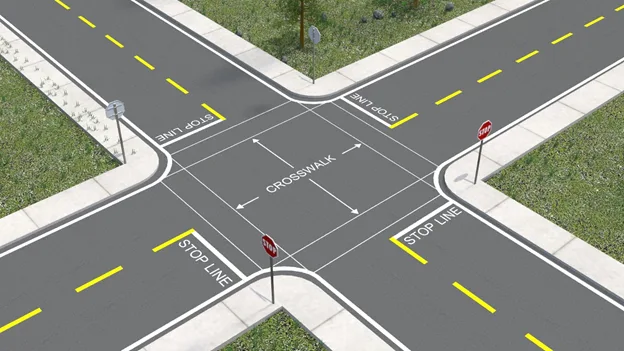
Arizona Revised Statutes Title 28, Section 644 is the law you need to know. It says that unless a sign tells you otherwise, a steady red circular light means you may turn right after stopping. You must stop at the clearly marked stop line.
If there's no stop line, you stop before the crosswalk. If there's no crosswalk, you stop before entering the intersection.
The law is straightforward, but the details matter. The stop must be complete. That means zero forward movement.
A rolling stop where you slow to two miles per hour and then go counts as a violation in Arizona. The courts have been clear on this for years.
Once you stop, you need to yield the right of way to any vehicle that's already in the intersection or approaching so closely that it would be dangerous to proceed. You also need to yield to any pedestrian crossing with a walk signal or lawfully crossing against a solid don't walk signal if they're already in the crosswalk.
Here's what the law requires you to do:
- Come to a complete stop at the stop line or before the crosswalk
- Yield to all vehicles lawfully in the intersection
- Yield to all pedestrians and cyclists in the crosswalk
- Make sure no "No Turn on Red" sign is posted
- Proceed only when the way is clear
Blog has more on Arizona driving laws if you're looking to brush up on other rules of the road.
The Critical Difference: Steady Red Light vs. Red Arrow
This is where most drivers get confused. It's the difference between a legal turn and a ticket.
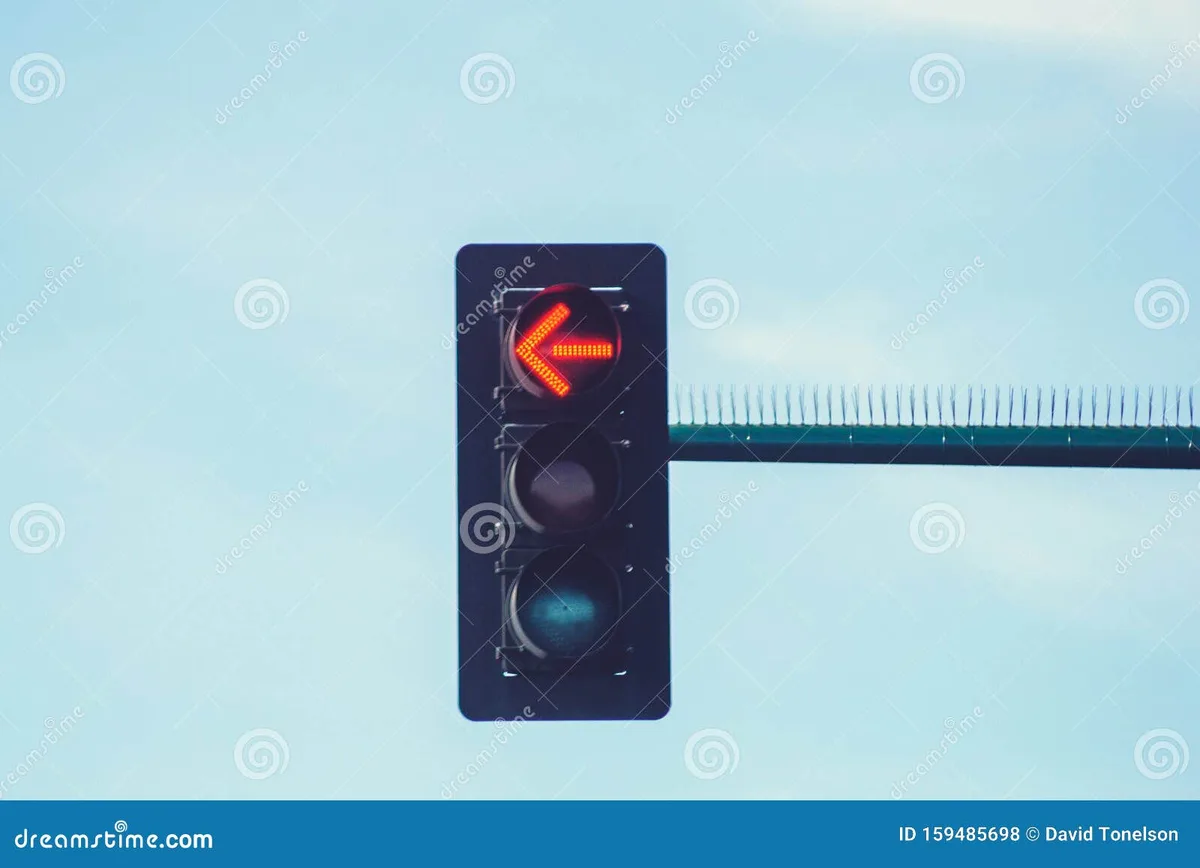
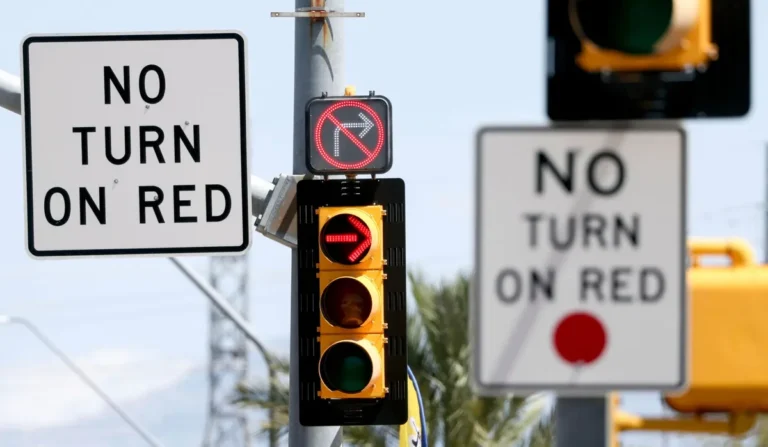
A steady red circular light means you may turn right after stopping. A steady red arrow means you may not turn right at all. Period.
The red arrow functions like a stop sign for that specific movement. You wait until the arrow turns green, or the light cycles to a green circular indication.
Why does this matter? Because many Arizona intersections use red arrows specifically to prevent right turns on red. This is common at intersections with poor visibility, high pedestrian traffic, or a history of right on red collisions.
When you see a red arrow, the law treats it as a prohibition. You sit tight.
Here's a quick comparison:
| Light Type | Can You Turn Right? | What You Must Do |
|---|---|---|
| Steady red circle | Yes, after stop | Stop, yield, turn when clear |
| Steady red arrow | No | Wait for green arrow or green circle |
| Flashing red arrow | Yes, after stop | Same as stop sign, yield to traffic |
| No signal (blank) | Yes, if no sign prohibits | Drive carefully, yield as needed |
One more thing about flashing red arrows. Arizona uses them at some intersections. A flashing red arrow means you must stop, then you may proceed when it's safe.
It's essentially a stop sign for that turn lane. But if a solid red arrow is showing, even for a moment, you cannot turn until it changes.
Step by Step: How to Execute a Legal Right on Red
Let's walk through this like you're behind the wheel right now. You're approaching an intersection. The light is red.
You want to turn right.
Step 1: Slow down as you approach. Don't coast through expecting to go. Start braking early enough that you can stop smoothly at the stop line.
Step 2: Come to a complete stop. Your wheels must stop moving. Count one full second. Many Arizona police officers use a two second rule when determining whether a stop was complete.
If you stop for less than a full second, you risk a ticket.
Step 3: Look at the signal head. Is it a steady red circle? A red arrow? A flashing red arrow?
Your next move depends entirely on this.
Step 4: Check for signage. Look for any "No Turn on Red" sign. Some are static. Some are electronic and only active during certain hours.
If the sign says no turn on red, don't turn.
Step 5: Scan for pedestrians and cyclists. This is the most common cause of right on red collisions. Pedestrians have the right of way in the crosswalk, even if the walk signal is counting down. Check the crosswalk you're turning into and the one you're crossing.
Step 6: Yield to approaching traffic. Look left. If a vehicle is close enough that it would need to brake or swerve to avoid you, you cannot go. That's not yielding.
That's cutting someone off.
Step 7: Complete the turn smoothly. Turn into the nearest lane. In Arizona, you should turn into the rightmost lane unless otherwise marked. Swinging wide into a middle lane can get you a ticket for an improper turn.
If you've ever washed your car after a dusty Arizona drive and worried about brush scratches, check out our guide on swirling car wash brush damage to keep your paint looking good between drives.
Where Right on Red Is Prohibited: No Turn on Red Signs
Not every intersection in Arizona allows right turns on red. The law gives cities and the state the authority to post signs that prohibit the turn. When you see one, it's not a suggestion.
It's a legal restriction.
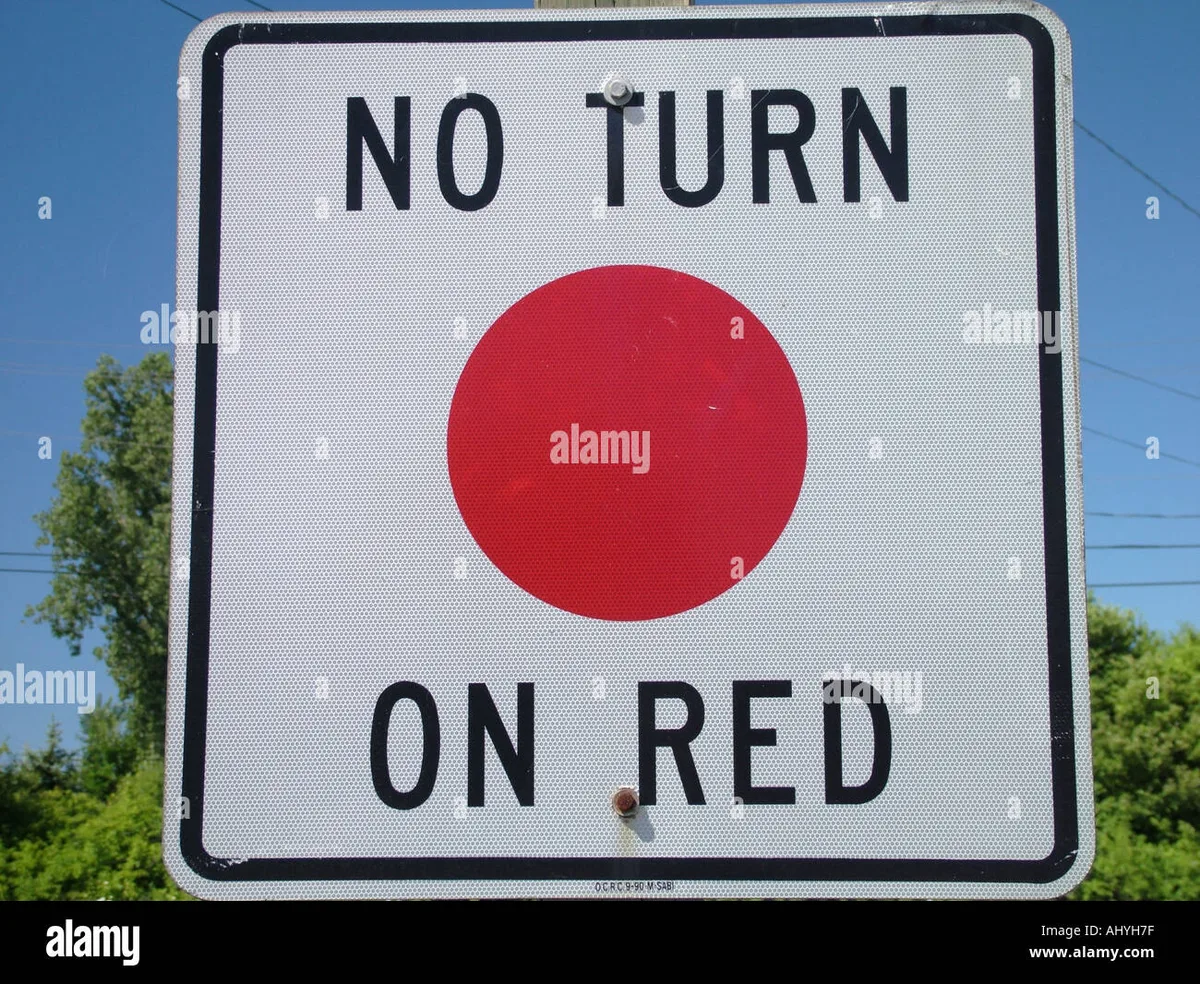
There are two types of "No Turn on Red" signs you'll encounter in Arizona:
- Static signs: The classic white rectangle with black text and red circle. These are permanent. The restriction applies 24 hours a day, seven days a week.
- Electronic signs: These display "No Turn on Red" only during certain hours, typically when school is in session or during peak pedestrian traffic. If the sign is blank or shows a different message, the turn is permitted.
Some common places where you'll find "No Turn on Red" signs in Arizona include:
- Intersections near schools during drop off and pick up hours
- High pedestrian traffic zones in downtown Phoenix and Scottsdale
- Intersections with poor sight distance due to curves or buildings
- Railroad crossings where the right turn would intersect with tracks
If you run a "No Turn on Red" sign and get a ticket, the fine is the same as running a red light. There's no discount because you were trying to turn. The law treats it as a full red light violation.
Here's a practical tip. Some electronic signs in Arizona are solar powered and can malfunction. If the sign is blank and you're not sure whether the restriction is active, err on the side of caution.
Wait for the green light. It costs you sixty seconds. A ticket costs you several hundred dollars.
Common Mistakes That Get You a Ticket
Most right on red tickets in Arizona come from four predictable errors. Knowing them can save you hundreds of dollars.
The rolling stop. This is the number one ticket generator. You slow down to two or three miles per hour and roll through the turn. The law requires a full stop with zero forward movement.
Officers watch for this constantly at known right on red intersections. If your wheels are still turning, it's a violation.
Failing to yield to pedestrians. Arizona law gives pedestrians the right of way in marked and unmarked crosswalks. If someone is stepping off the curb and you start your turn, you're at fault. This is especially dangerous near downtown areas and university campuses where foot traffic is heavy.
Turning at a red arrow. Some drivers see red and just go. They don't look closely enough to see whether it's a circle or an arrow. A red arrow means no turn.
Period. Traffic courts in Arizona report that many drivers who contest these tickets lose because the photo clearly shows a red arrow.
Blocking the crosswalk. You pull forward past the stop line to get a better view of traffic. Now you're sitting in the crosswalk. If a pedestrian needs to cross, you're illegally blocking their path.
This can earn you a separate citation on top of any other violation.
A few other mistakes that show up regularly in Arizona traffic court records:
- Turning into the wrong lane (middle lane instead of rightmost lane)
- Failing to see a "No Turn on Red" sign that was clearly posted
- Turning when a school bus is loading or unloading nearby
- Making the turn during posted restricted hours
If you're interested in keeping your car in top shape between those desert drives, our guide on washing a car with ceramic coating pressure washer covers the best techniques for protecting your paint.
What It Costs: Fines, Points, and Red Light Cameras
A right on red violation in Arizona isn't cheap. The total cost depends on which city you're in and whether a camera caught you.
Here's what you're looking at:
| Violation Type | Fine Range | Points on License | Additional Fees |
|---|---|---|---|
| Moving violation (officer issued) | $150 to $500 | 3 points | Court costs, surcharges |
| Red light camera ticket | $150 to $350 | 0 points (civil) | Processing fee |
| Improper turn citation | $100 to $250 | 2 points | Court costs |
| Pedestrian right of way violation | $200 to $500 | 3 points | Possible defensive driving requirement |
The point system matters. Accumulate eight points in 12 months and the Arizona Motor Vehicle Division sends you a warning. Get 12 points in 12 months and your license gets suspended.
Red light cameras are active in several Arizona cities including Mesa, Scottsdale, and parts of Phoenix. These cameras capture the vehicle's rear license plate and the driver's face. The ticket is a civil violation.
It doesn't add points to your license. But you still have to pay it.
Contesting a camera ticket is harder than contesting an officer issued one. The camera systems are calibrated and tested regularly. The photos are timestamped.
Unless you can prove the vehicle wasn't yours or the light was malfunctioning, you're likely better off paying.
One option worth considering. If this is your first moving violation in Arizona, you may qualify for defensive driving school. Complete the course and the ticket gets dismissed.
No points. No insurance hike. You pay the course fee plus a small court fee.
That's usually less than the fine itself.
When Right on Red Turns Into an Accident: Legal Liability
Let's talk about what happens when a right on red goes wrong. Accidents happen at these turns more often than you'd think.
Arizona is a comparative fault state. That means if you cause an accident while making a right on red, you're likely to be found at least partially at fault. In many cases, you're found fully at fault.
Here's why. The driver turning right on red has the highest duty of care. You're the one making a nonstandard movement.
You're the one who needs to yield. A driver with a green light has the right of way and a reasonable expectation that you'll wait.
Common accident scenarios:
- A driver making a right on red hits a pedestrian in the crosswalk. That's almost always the turning driver's fault. Arizona law is clear that pedestrians in crosswalks have priority.
- A driver making a right on red collides with a vehicle coming from the left that has a green light. The turning driver is at fault. They failed to yield.
- A driver making a right on red is hit from behind by a vehicle also turning right. This is trickier. Usually the rear driver is at fault for following too closely. But if the front driver stopped abruptly well past the stop line, fault can be shared.
What insurance companies look at:
- Did you come to a complete stop?
- Was a "No Turn on Red" sign posted?
- Was the pedestrian signal active?
- How far into the intersection did you travel before stopping?
- Were there any visibility obstructions?
If you're involved in a right on red accident, exchange information and call the police. Arizona law requires reporting any accident with injury, death, or property damage over $2,000.
Arizona's Unique Rule: Left on Red from One-Way to One-Way
Most drivers don't know this one. Arizona allows left turns on red under specific conditions.
If you're on a one-way street and you want to turn left onto another one-way street, you can turn left on red after stopping. It works exactly like a right on red. Stop.
Yield. Turn when clear.
This is authorized under the same statute, ARS § 28-644. The law treats left turns from one-way to one-way the same as right turns on red.
Where you'll see this most often in Arizona:
- Downtown Phoenix on the one-way street grid (Washington, Jefferson, Central)
- Tucson's downtown corridor
- Scottsdale's Old Town area
The key is that both streets must be one-way. If you're on a one-way street turning left onto a two-way street, it's not allowed. You have to wait for the green light.
This rule catches out of state drivers frequently. They see the red light and assume left turns are always prohibited. In Arizona, if the streets are one-way, you're good to go after your stop.
Just remember that all the same rules apply. Stop completely. Yield to pedestrians and cyclists.
Check for "No Turn on Red" signs. Watch for red arrows.
How City Laws Differ: Phoenix, Tucson, Scottsdale, and Beyond
State law provides the baseline, but Arizona cities can add restrictions. They do this through signage and local ordinances.
Phoenix has a mix. Many downtown intersections have "No Turn on Red" signs, especially near the light rail tracks and high pedestrian zones. The city also uses red arrows at several major intersections to prevent conflicts with light rail trains.
If you're driving near Central Avenue or the Roosevelt Row area, pay extra attention.
Scottsdale is known for aggressive enforcement of right on red violations. The city has red light cameras at several intersections. Officers also patrol known hotspots near the entertainment district.
Scottsdale's municipal court sees a high volume of right on red citations.
Mesa has extensive red light camera coverage. The cameras are clearly marked with signs warning drivers. Mesa also restricts right on red near schools and parks during certain hours.
Tucson has fewer restrictions overall. But the University of Arizona area has heavy pedestrian traffic. The city has installed electronic "No Turn on Red" signs that activate during class changes.
Flagstaff adds a winter twist. Snow and ice can obscure stop lines and signage. The city recommends extra caution at right on red turns during winter months.
Reduced visibility from snowbanks can make it harder to see approaching traffic.
Rural areas and tribal lands. State law applies on state highways and municipal roads. But tribal lands within Arizona may have their own traffic codes. If you're driving through the Navajo Nation or the Gila River Indian Community, you're subject to tribal traffic law.
Some tribal roads prohibit right on red entirely even without signage.
Here's a practical rule. When you enter a new city in Arizona, assume nothing. Look for signs at every intersection.
What worked in Chandler might not work in Tempe. When in doubt, wait for the green light.
Pedestrians and Cyclists: Your Legal Duty to Yield
Arizona law is strict on this point. Pedestrians in crosswalks always have the right of way when you're making a right on red. That includes crosswalks with or without painted lines.
Cyclists count too. If a cyclist is crossing in a bike lane or crosswalk, you must yield just as you would for a pedestrian. Arizona's bicycle laws treat cyclists as vehicle operators in many cases.
But when they're in a crosswalk, they get pedestrian protections.
The most dangerous moment comes when you're focused on left side traffic and forget to check the crosswalk. Look both ways before you go. That extra glance takes one second.
Defensive Driving: How to Handle a Right on Red Ticket
If you get a right on red ticket in Arizona, you have options. The best one for most drivers is defensive driving school. Complete an approved course and the ticket gets dismissed.
No points on your license. No insurance rate increase.
You're eligible if you haven't used defensive driving for a moving violation in the past 12 months. The course costs around $20 to $50 plus a court fee. That's usually less than the fine itself.
You can take the course online or in person. The online version takes about four hours. Once you finish, the court receives your completion certificate electronically.
The case is closed.
Frequently Asked Questions
Can I turn right on red at any intersection in Arizona?
No. Only where no sign prohibits it and where there is no red arrow showing. Some intersections have permanent or time restricted "No Turn on Red" signs.
Does a right on red ticket add points to my license in Arizona?
Yes, if an officer issues the ticket. It adds three points. If a red light camera catches you, it's a civil violation with no points.
Can I turn left on red in Arizona?
Yes, but only from a one-way street onto another one-way street. Stop, yield, and proceed when clear.
How long do I need to stop for a right on red?
The law requires a complete stop with no forward movement. Courts and officers typically look for a one to two second pause.
What happens if I hit a pedestrian while turning right on red?
You are almost always found at fault. Arizona law gives pedestrians in crosswalks the right of way. You could face fines, license points, and civil liability.
Final Take: Stay Legal, Stay Safe, Avoid the Ticket
Right on red in Arizona is simple when you know the rules. Stop completely. Check for signs and red arrows.
Yield to everyone. Turn when clear.
Every intersection is different. Pay attention to signs, light types, and local restrictions. When you're unsure, wait for the green light.
That extra minute beats a $300 ticket every time.