ByMax Lee
Guide to Arizona Left Lane Passing Only Law Penalties (2026)
Arizona Left Lane Passing Only Law Penalties: What Drivers Need to Know
If you've ever been pulled over for driving in the left lane on an Arizona highway, you already know the state doesn't mess around. Arizona left lane passing only law penalties can hit your wallet hard and leave points on your driving record.
As of 2026, the base fine for a first offense under ARS § 28-721 typically starts at $150. But court fees and surcharges push the total higher. You could easily pay $200 to $600 before it's all over.
Let's break down exactly what you're facing and how to handle it.
Openverse / cogdogblog
Quick Answer
Arizona law requires drivers to stay right except to pass. The penalty includes a fine of $150 to $500 plus court costs. You also receive two points on your driving record.
Insurance rates often rise after a citation. Repeat violations lead to higher fines and possible license suspension.
What a Left Lane Citation Really Costs — Fines, Points, and Hidden Fees
Most drivers think a left lane ticket costs the same as a regular speeding ticket. That's not quite right.
Bing (Web (fair-use with source credit))
A left lane violation under ARS § 28-721 is a moving violation. That classification triggers a specific set of costs. Here's the breakdown.
| Cost Item | Amount |
|---|---|
| Base fine (first offense) | $150 to $250 |
| Court administrative fees | $20 to $80 |
| Surcharges and assessments | $30 to $150 |
| Total out-of-pocket | $200 to $600 |
| Points on driving record | 2 points |
| Insurance premium increase (annual) | 15% to 25% |
That insurance increase sticks around for three years in most cases. If you have a commercial driver's license, the consequences go further. Your employer may see the citation and adjust your driving status.
The point system matters too. Arizona's Motor Vehicle Division assigns two points for a left lane violation. Accumulate eight points in 12 months and you face a license suspension hearing.
Twelve points in 24 months triggers the same risk.
Don't overlook the hidden fees. Many drivers see the base fine and think that's the full amount. Court costs vary by jurisdiction.
Maricopa County courts tend toward the higher end of the range. Smaller counties may charge less in administrative fees but add surcharges for state programs.
Left Lane Camping vs. Passing: The Crucial Difference the Law Makes
The law is straightforward but often misunderstood. ARS § 28-721 says you must keep to the right lane on a divided highway. The only exception is when you are passing another vehicle.
So what counts as passing? You move into the left lane, overtake a slower vehicle, and return to the right lane. That's the entire process.
Left lane camping means staying in the left lane after you've finished passing. Maybe you're cruising at 75 mph and don't want to move over. Maybe you're trying to avoid merging traffic.
The law does not care about your reasons.
Here's what the law considers a violation:
- You are in the left lane and not actively passing.
- A faster vehicle approaches from behind.
- You do not move to the right within a reasonable time.
- You stay in the left lane for multiple miles without passing.
The law applies to all highways with two or more lanes in the same direction. That includes interstates, US highways, and state routes. It includes the Loop 101, Loop 202, and US 60 through Phoenix.
There's one important nuance. The law also prohibits impeding traffic. If you are in the right lane driving 55 mph in a 65 mph zone while traffic builds behind you, that's also illegal.
But that's a different statute, ARS § 28-704.
The key difference is intent and duration. Camping is a choice to stay left. Passing is a temporary action.
Can You Be Cited for Driving the Speed Limit in the Left Lane?
Yes. Absolutely yes.
This is the most common misconception we hear. Drivers argue, "I was going the speed limit, so I wasn't impeding anyone." The law does not work that way.
The left lane is for passing, not for traveling at any speed. If you are doing 65 mph in the left lane and a car approaches from behind doing 70 mph, you must move right. It does not matter that you are at the limit.
Arizona courts have consistently upheld this interpretation. The law prioritizes traffic flow over individual speed choices. The officer's observation is simple: you had the opportunity to move right and did not.
Here's how enforcement typically plays out:
- An officer observes your vehicle in the left lane.
- They note that traffic is building behind you.
- They clock your speed and confirm you are not passing.
- They initiate a stop.
The citation is almost always for violating the keep-right law, not for speeding. That means you cannot argue that you were driving safely or at the limit. The violation is your position on the road, not your speed.
If you are in the left lane and the officer sees a line of cars stacked behind you, you are the problem. Even if those cars are speeding, you are still blocking the flow of traffic. The law expects you to yield.
This rule applies to all lanes to the left. If you are in the center lane on a three-lane highway and not passing anyone, you can also be cited. The leftmost lane is reserved for passing only.
Where Enforcement Hits Hardest in Arizona (I-10, I-17, Loop 101, and More)
Arizona Department of Public Safety officers target left lane violations statewide. But enforcement is not uniform.
Bing (Web (fair-use with source credit))
I-10 between Phoenix and Tucson, This stretch is notorious. DPS patrols heavily between Casa Grande and Marana. The high traffic volume and speed differential make it a prime location for enforcement.
I-17 from Phoenix to Flagstaff, The mountainous terrain and two-lane sections create bottlenecks. Officers watch for drivers who stay left after passing slower trucks on the grades.
Loop 101 (Pima and Price Freeways), Suburban commuters often treat the left lane as a travel lane. DPS and local police run regular enforcement campaigns during peak commute hours.
US 60 (Superstition Freeway), Eastbound and westbound through Mesa and Apache Junction. The combination of commuters and construction zones keeps enforcement active.
Loop 202 (Red Mountain and Santan), Growing enforcement area as traffic volumes increase. Officers focus on aggressive driving and lane violations.
I-40 across northern Arizona, Truck-heavy corridor with strict enforcement for commercial drivers. Left lane camping here carries additional risks for CDL holders.
The city of Phoenix also enforces the law on city streets with highway-style design. If the road has at least two lanes in each direction and a speed limit over 45 mph, the law applies.
Out-of-state drivers get no special treatment. Arizona courts do not offer leniency for visitors. If you are driving through the state, you are subject to the same penalties.
The best strategy is simple: stay right unless you are actively passing. If you see a car approaching from behind, move over. It's not a courtesy.
It's the law.
You Got the Ticket — Here's Exactly What to Do Next
The first thing to know is that you have options. Do not panic, but do not ignore it either.
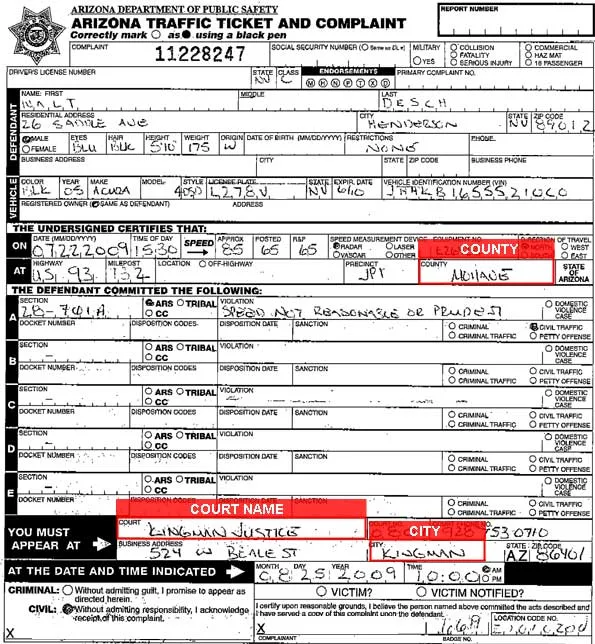
When the officer hands you the citation, you will see a court date and a violation code. That code references ARS § 28-721. Read it carefully.
Make sure the location, date, and vehicle description are correct. Errors on the ticket can work in your favor.
You have roughly 30 days from the issue date to respond. Ignoring the ticket means the court issues a default judgment. That adds fees and could lead to a warrant for your arrest.
Here is what you need to do in the first week:
- Read the entire citation. Note the court location and case number.
- Decide whether you want to pay the fine or fight the ticket.
- Check your driving record online through the Arizona MVD website. Know your current point total before making decisions.
- Gather any evidence if you plan to challenge the citation. Dash cam footage works well.
- Mark the court date on your calendar. Missing it is the worst mistake you can make.
The court information on your ticket tells you exactly which jurisdiction handles your case. Phoenix municipal court works differently than a justice court in Pinal County. Each has its own fee schedule and procedures.
If you decide to pay, you can usually do it online, by mail, or in person. The citation includes instructions. Online payment is the fastest method and gives you an immediate receipt.
Fight It or Pay It: Real Options for Dealing With the Citation
You have three main paths forward. Each has different outcomes.
Pay the fine. This is an admission of guilt. You pay the total amount shown on the citation. The two points go on your record.
Your insurance company sees the conviction at renewal time. This option is simple and fast. It is also the most expensive in the long run.
Request defensive driving school. If you qualify, this is often the best option. You pay a fee and complete an approved course. The court dismisses the citation.
No points go on your record. Your insurance company never sees the violation.
Not everyone qualifies. You must have a valid Arizona driver's license. The violation must be a civil traffic offense, not criminal.
You cannot have used defensive driving school for another citation in the past 24 months.
Fight the citation in court. You plead not guilty and request a hearing. The officer must appear and present evidence. If the officer does not show, the case is often dismissed.
If they do show, you present your defense.
Fighting a ticket takes time. You may need to take a day off work. Court appearances are not flexible.
But if you have a strong case, it is worth the effort.
Here is a quick comparison of the three options.
| Option | Points on Record | Insurance Impact | Time Required |
|---|---|---|---|
| Pay the fine | 2 points | 15% to 25% increase | 15 minutes |
| Defensive driving school | 0 points | None | 4 to 6 hours |
| Fight in court | 0 if dismissed | None | 1 to 3 court visits |
Defensive driving school is the most popular choice for a reason. It keeps your record clean. The cost of the course is about $50 to $100.
That is less than a single year of increased insurance premiums.
How Your Insurance Reacts to a Left Lane Violation
Insurance companies treat moving violations seriously. A left lane citation is a moving violation. It tells the insurer you are a higher risk.
Here is what typically happens. Your insurer reviews your driving record at renewal. The two-point violation appears.
Your premium increases by 15% to 25%. That increase lasts three years in most cases.
Let's do the math. Say you pay $1,200 per year for car insurance now. A 20% increase adds $240 per year.
Over three years, that is $720. Add that to the original fine of $300. Your total cost for that left lane ticket is over $1,000.
That is why paying the fine is rarely the cheapest option. Defensive driving school costs $75 and keeps your premium flat. Over three years, you save hundreds of dollars.
Some insurance companies offer violation forgiveness programs. If you have that on your policy, the first citation may not affect your rates. Check your policy documents or call your agent.
Do not assume you have it.
If you have a commercial driver's license, the stakes are higher. CDL holders face stricter reporting requirements. A moving violation on your personal record still affects your commercial insurance.
Your employer may see it during periodic reviews.
What Truckers and Out-of-State Drivers Need to Know
Commercial drivers face a different set of rules. A left lane citation under ARS § 28-721 counts as a moving violation on your CDL record. Two points is the standard assessment.
The problem for truckers is cumulative. CDL holders face disqualification at lower point thresholds. Six points in 24 months can trigger a hearing.
Your employer may also have internal policies about moving violations.
Arizona enforces left lane laws aggressively on truck-heavy routes. I-40 across northern Arizona is a prime target. DPS officers know that truck drivers who camp in the left lane cause serious hazards.
They write the citation without hesitation.
The best strategy for commercial drivers is simple. Stay in the right lane unless you are actively passing. Return to the right lane immediately after passing.
Never cruise in the left lane.
Out-of-state drivers get no special treatment either. Arizona courts do not offer leniency for visitors. If you are driving a rental car with out-of-state plates, you are still subject to the same law.
The citation follows you home. Your home state's MVD receives notification through the Driver License Compact.
Some states do not assess points for out-of-state violations. Others do. Check your home state's reciprocity rules.
The fine itself must be paid regardless of where you live.
If you are a snowbird or seasonal visitor, pay attention. Arizona DPS actively patrols during peak travel months. November through March sees heavier enforcement on major routes.
Do not assume you will not get pulled over.
For more driving tips and vehicle care advice, check out our blog.
Common Defenses That Won't Work (and One That Might)
Let's start with the defenses that fail every time.
"I was going the speed limit." We covered this earlier. The law does not care about your speed. It cares about your position on the road.
"I was keeping up with traffic." If traffic in the left lane is moving faster than the right lane, you should be passing. If you are maintaining the same speed as the car next to you, you are blocking traffic.
"There was no one behind me." The officer may have observed you from a distance. They saw you in the left lane for miles without passing. The law does not require another driver to be directly behind you.
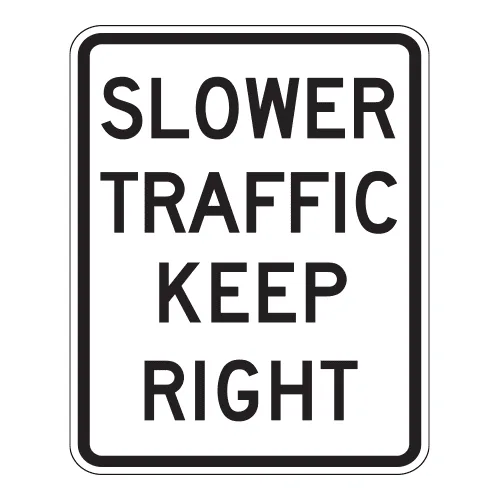
"I didn't see the sign." Ignorance of the law is not a defense. Arizona posts "Slower Traffic Keep Right" signs on most highways. Even if you missed them, the law still applies.
"The officer was speeding too." An officer's speed is irrelevant to your violation. Their job is enforcement, not compliance. This argument rarely works in court.
Now for the defense that might work.
Error on the citation. If the officer wrote the wrong location, wrong date, or wrong vehicle description, the citation may be invalid. Courts require accurate information. A technical error can get the case dismissed.
Dash cam evidence. If your camera shows you were actively passing a vehicle, you have a defense. The officer may have misjudged the situation. Present the footage to the court.
Medical emergency. If you had a legitimate medical reason for staying in the left lane, the court may consider it. You need documentation from a doctor.
Weather or road conditions. If poor visibility, construction, or hazards made the right lane unsafe, you have a defense. The law includes a reasonable exception for unsafe conditions.
These defenses require evidence. You cannot just claim them in court. Bring documentation, video footage, or witness statements.
The judge decides whether your defense is valid.
Proven Ways to Stay Out of the Left Lane Penalty Trap
The best way to avoid a citation is simple. Use the left lane only for passing.

Bing (Web (fair-use with source credit))
Here are the habits that work.
Check your mirror every few seconds. If you see a car approaching faster than you, move right. Do it before they get close enough to tailgate.
Pass and return. Complete your pass in a few seconds. Move back to the right lane as soon as you see the passed vehicle in your rearview mirror.
Ignore the "fast lane" myth. There is no fast lane in Arizona. There is only a passing lane. The right lane is for travel.
The left lane is for overtaking.
Adjust your speed to match the right lane. If you are cruising at 75 mph in the left lane and the right lane is moving at 70 mph, you are not passing. You are camping. Drop to 70 mph and stay right.
Be predictable. Other drivers expect right lane traffic to be slower. When you stay in the left lane without passing, you create confusion. That confusion leads to road rage and accidents.
These habits cost nothing. They take a few seconds of attention. They save you hundreds of dollars and a lot of frustration.
When It's Worth Calling a Traffic Attorney
Most left lane citations do not require a lawyer. The fine is modest. Defensive driving school handles the points.
But there are exceptions.
You have a CDL. A moving violation on your commercial record threatens your livelihood. An attorney may negotiate a reduction to a non-moving violation that avoids points.
You already have points on your record. If you are close to the eight-point suspension threshold, an attorney can help. They may get the citation dismissed or reduced.
You were also cited for another offense. If the officer added aggressive driving or speeding to the same stop, the stakes are higher. Those carry criminal penalties in some cases.
You are an out-of-state driver with a complex situation. An attorney familiar with Arizona traffic court can handle the case without you appearing in person.
Traffic attorneys typically charge $300 to $800 for a simple citation. That sounds expensive. But if it saves your CDL or prevents a suspension, it is worth every dollar.
The Bottom Line for Arizona Drivers
Arizona left lane passing only law penalties are real and enforced. The state does not issue warnings. It issues citations.
The law exists for a reason. Left lane camping causes congestion and road rage. It forces other drivers to pass on the right.
It increases the risk of accidents.
Here is the takeaway. Stay right unless you are passing. If you get a citation, choose defensive driving school if you qualify.
Never assume you can cruise in the left lane just because you are at the speed limit.
Drive smart. Drive right. Your wallet and your insurance premium will thank you.
Frequently Asked Questions
What is the fine for driving in the left lane in Arizona?
The base fine ranges from $150 to $500. Court fees and surcharges add another $50 to $150. Total out-of-pocket cost is typically $200 to $600 for a first offense.
How many points does a left lane violation add to my Arizona driving record?
Two points. If you accumulate eight points in 12 months, the MVD may suspend your license. Defensive driving school can prevent the points from being added.
Can I get a left lane ticket if I was driving the speed limit?
Yes. The law requires you to use the left lane only for passing. Your speed does not matter.
If you are not actively passing, you must move right.
Will a left lane citation affect my insurance rates?
Yes. Most insurers increase rates by 15% to 25% for three years after a moving violation. Defensive driving school avoids this increase by keeping the citation off your record.
Do out-of-state drivers get cited for left lane violations in Arizona?
Yes. Arizona courts do not offer leniency to visitors. The citation follows you through the Driver License Compact.
Your home state may add points to your record.
Can I fight a left lane ticket in Arizona traffic court?
Yes. You can plead not guilty and request a hearing. Your best defense is evidence that you were actively passing or that road conditions made the right lane unsafe.
Dash cam footage helps.