ByMax Lee
Guide to Arizona Alternative Fuel Vehicle Plate Benefits
Bing (Web (fair-use with source credit))
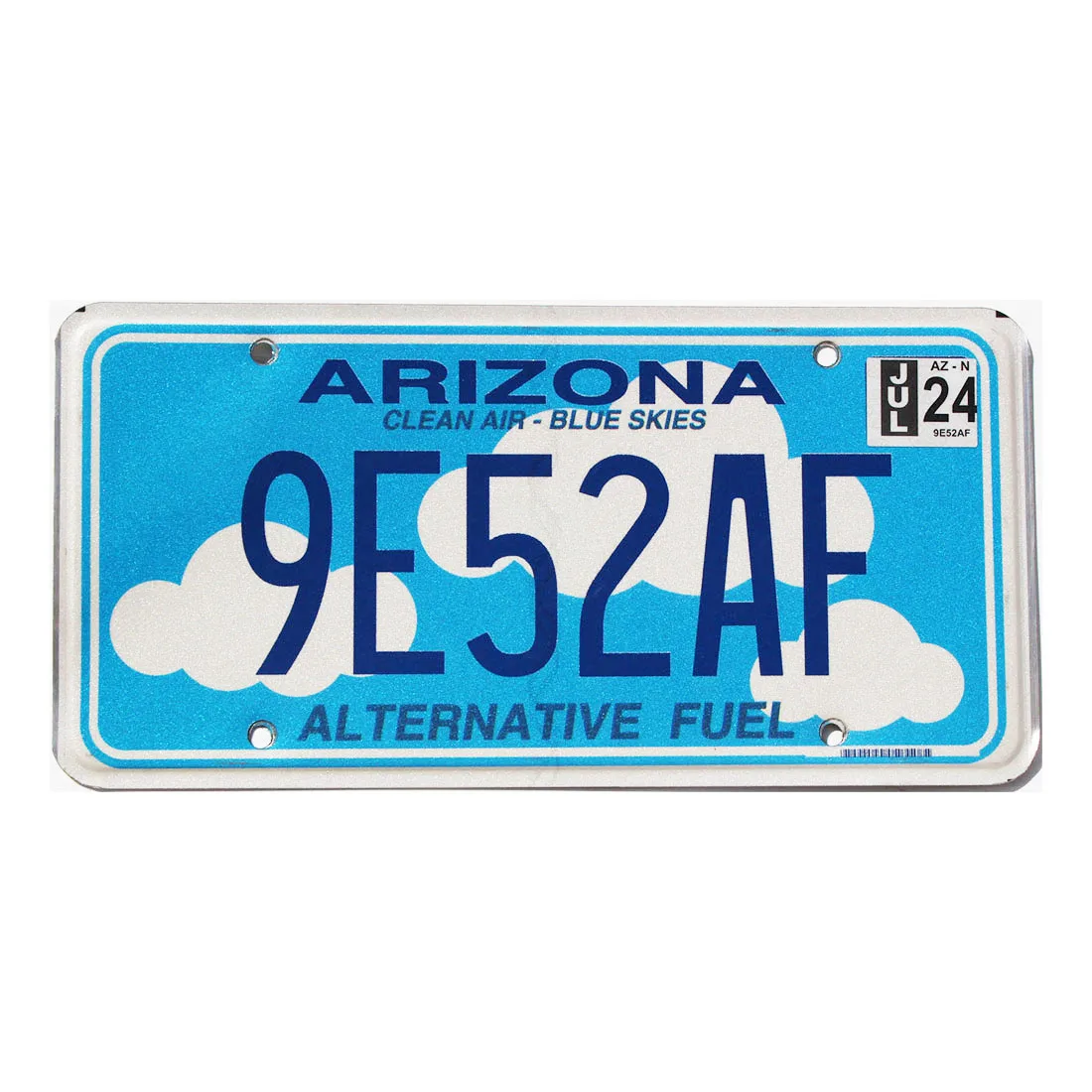
If you drive an electric or plug-in hybrid vehicle in Arizona, you have probably noticed those distinctive white-on-blue plates zipping past in the carpool lane with just one person inside. The Arizona alternative fuel vehicle plate benefits are real, but they are not automatic and they are not the same for every driver.
As of 2026, the special plate costs $25 per year on top of your standard registration. That fee unlocks solo access to HOV lanes in Phoenix and Tucson metro areas. For many commuters, that is a time savings of 15 to 30 minutes each way.
Let us walk through exactly what qualifies, what it costs, and whether it makes sense for your situation.
Is the AFV Plate Worth It for You?
That depends on three things. Your vehicle type. Your commute.
And how much you value time over money.
If you drive a fully electric car or a qualified plug-in hybrid and regularly sit in Phoenix traffic on I-10, US 60, or Loop 101, the plate pays for itself pretty fast. If you work from home or rarely hit rush hour, you might be better off skipping it.
We will break down each condition so you can decide.
Quick Answer: What the AFV Plate Actually Gets You
The plate lets you drive solo in Arizona HOV lanes during restricted hours. It costs $25 per year plus standard registration. Not all hybrid vehicles qualify.
The plate does not give toll lane access. It does not require a passenger. You must apply through the Arizona MVD.
Eligibility is tied to the vehicle, not the driver.
Does Your Vehicle Even Qualify? (The Eligibility Check)
This is where most people get tripped up. You cannot just slap an AFV plate on any hybrid. The state publishes a specific list of qualified alternative fuel vehicles.
ADOT updates that list each year.
Bing (Web (fair-use with source credit))
Which vehicles qualify
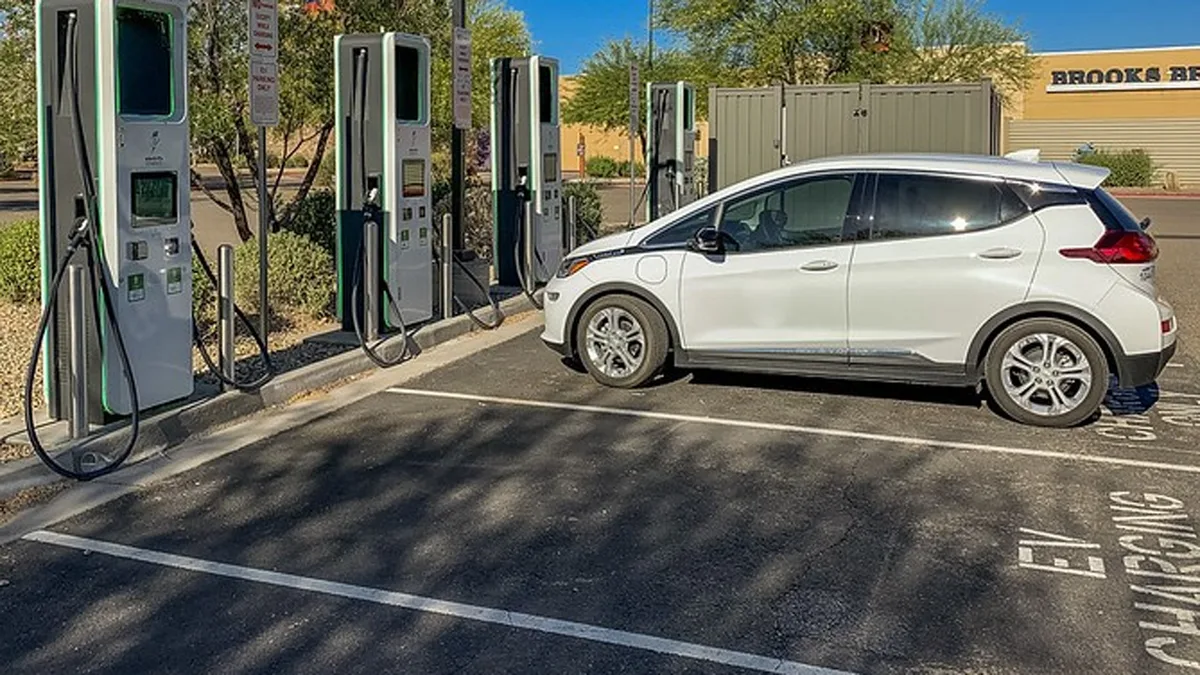
The short answer is battery electric vehicles (BEVs), plug-in hybrid electric vehicles (PHEVs), hydrogen fuel cell vehicles, and compressed natural gas (CNG) vehicles. But there are catches.
- Full battery electrics: Every factory-built BEV qualifies. Tesla Model 3, Chevrolet Bolt, Nissan Leaf, Ford Mustang Mach-E, Hyundai Ioniq 5, Kia EV6. All of them.
- Plug-in hybrids: Many qualify, but not all. The list favors models with a minimum electric range. The Toyota Prius Prime, Honda Clarity Plug-In, and Ford Escape PHEV are typically on it.
- Standard hybrids: Toyota Camry Hybrid, Honda Accord Hybrid, Ford Fusion Hybrid. These do not qualify. They lack a plug and do not meet the definition of an alternative fuel vehicle under Arizona law.
- CNG and hydrogen: Uncommon in Arizona but eligible. The Honda Clarity Fuel Cell and certain fleet CNG vehicles are on the list.
How to check your specific vehicle
You have two options. Both are free.
Option one: Go to the ADOT website and search for the qualified AFV list. It is a PDF that lists every eligible make, model, and model year. Find your exact vehicle on that list.
Option two: Visit an MVD office or authorized third-party location. Bring your VIN. They can run it against the current qualification database on the spot.
Do not assume a plug-in hybrid qualifies just because it has a plug. Some early PHEVs with very short electric ranges did not make the cut. Check before you pay the application fee.
The Real Cost: Fee Breakdown vs. Standard Registration
Let us talk money. The AFV plate is not free, but it is not expensive either.
| Fee Component | Standard Plate | AFV Plate |
|---|---|---|
| Registration fee | Varies by vehicle value, weight, and county | Same as standard |
| Special plate fee | None | $25 per year |
| Total annual cost | $100 to $500+ depending on vehicle | Standard plus $25 |
The base registration fee in Arizona depends on your vehicle's assessed value, your county, and a few other factors. A typical passenger car runs between $100 and $400 per year. The AFV plate adds exactly $25 to that.
For a $30,000 EV, you are probably looking at around $250 to $350 total per year with the AFV plate. That is $25 more than you would pay without it.
Are there any hidden costs?
No. The $25 special plate fee is the only additional charge. There is no extra processing fee, no inspection fee, no sticker or decal cost.
The plate itself is mailed to you or handed over at the MVD counter.
One thing to watch for. If you sell your vehicle and want to transfer the AFV plate to a new qualifying vehicle, the $25 fee applies again. It is not a one-time purchase.
What about emissions testing?
Some qualifying vehicles are exempt from Arizona emissions testing. That depends on the vehicle type and model year, not the plate itself. Check with the Arizona Department of Environmental Quality for your specific vehicle.
The exemption is a bonus benefit, but it is not guaranteed.
Which Freeways and HOV Lanes Can You Use?
This is where the plate actually pays off. The AFV plate gives you solo access to HOV lanes in Arizona's largest metro areas.
Phoenix metro area
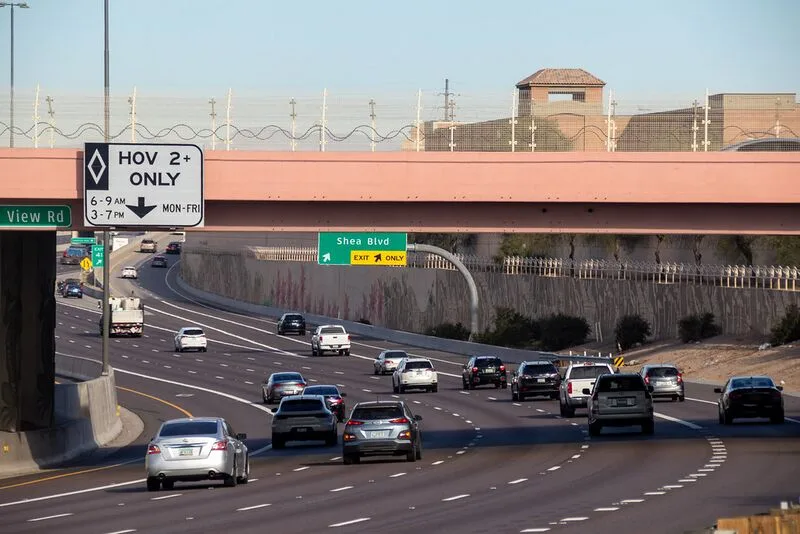
The Valley has the most extensive HOV network in the state. Key freeways with HOV lanes include:
- I-10 (Maricopa Freeway and Papago Freeway sections)
- US 60 (Superstition Freeway)
- Loop 101 (Agua Fria and Pima freeways)
- Loop 202 (Santan and Red Mountain freeways)
- SR 51 (Piestewa Freeway)
HOV lane hours in Phoenix are generally 6:00 AM to 9:00 AM and 3:00 PM to 7:00 PM on weekdays. Outside those hours, anyone can use them. With the AFV plate, you can use them during restricted hours with no passenger.
Tucson metro area
Tucson has fewer HOV lanes, but they exist. The main ones are on I-10 and I-19. Hours are similar to Phoenix, but the network is much smaller.
If you commute from Marana to downtown Tucson, the plate still helps. If you drive mostly on surface streets, it probably will not.
Bing (Web (fair-use with source credit))
Important limitation: toll lanes
The AFV plate does not give you free access to toll lanes. In Phoenix, the SR 51 Flex Lanes and the I-10 Westbound Flex Lanes are separate systems. You still need a transponder and you still pay the toll.
The plate only covers HOV lane access, not toll road access.
Rural Arizona
Outside Phoenix and Tucson, HOV lanes are rare or nonexistent. If you live in Flagstaff, Prescott, or Yuma, the AFV plate provides little to no commuting benefit. You would still pay the $25 fee for a plate that does not give you any additional access.
For rural drivers, it is usually not worth it.
Step-by-Step: How to Apply for an Arizona AFV Plate
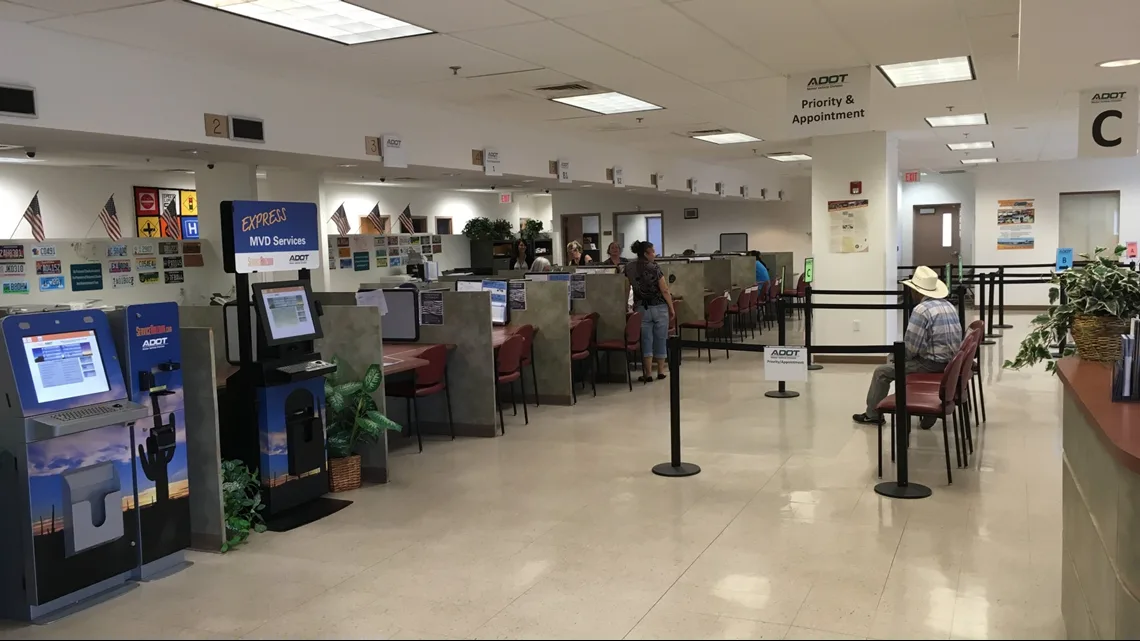
The application process is straightforward. You can do most of it online through ServiceArizona without visiting an office.
Step 1: Confirm your vehicle
Pull up the ADOT qualified AFV list. Find your exact make, model, and model year. If it is not on the list, the rest of this process does not apply.
Some MVD offices also offer a VIN lookup at the counter if you want confirmation in person.
Step 2: Gather your documents
You need your current vehicle title, proof of ownership, and your existing registration. If you have a loan on the vehicle, the lien holder information must match what is on file with the MVD.
Step 3: Submit the application
Online is fastest. Log into ServiceArizona. Select the AFV plate option from the special plate menu.
Pay the $25 special plate fee plus any standard registration costs due.
Bing (Web (fair-use with source credit))
Step 4: Wait for the plate
The MVD mails the plate to your registered address. Delivery typically takes 2 to 4 weeks. In our research, some applicants reported receiving theirs in under two weeks.
Others waited closer to a month.
Step 5: Install and use
Arizona does not require a front plate. Install the AFV plate on the rear of your vehicle. Once it is affixed, you can use HOV lanes immediately.
There is no sticker, no decal, and no additional activation step.
Common Mistakes That Cost Arizona Drivers Time and Money
We see the same errors come up repeatedly. Avoid these.
Mistake 1: Assuming any hybrid qualifies
This is the biggest one. Standard hybrids like the Toyota Camry Hybrid or Honda Accord Hybrid do not qualify. They lack a plug-in capability.
Only vehicles on the ADOT list are eligible. Check before you pay.
Mistake 2: Thinking the plate works on toll lanes
The AFV plate gives you HOV lane access only. The SR 51 Flex Lanes, I-10 Flex Lanes, and any other tolled express lanes still require a transponder and payment. Mixing these up can lead to toll violations.
Mistake 3: Forgetting to renew
The AFV plate and its benefits renew each year with your standard registration. If you let your registration lapse, you lose HOV lane access. The plate itself does not automatically renew separately.
Mistake 4: Transferring the plate to a non-qualifying vehicle
If you sell your EV and buy a standard hybrid, you cannot move the AFV plate to the new car. The plate stays with the qualifying vehicle or gets surrendered. Using it on an ineligible vehicle is a violation.
Mistake 5: Expecting rural benefits
If you live in Flagstaff, Prescott, or Yuma, you are paying $25 per year for a plate that provides no commuting advantage. Check your local HOV lane availability before applying.
Who Should Get the Plate — and Who Should Skip It
This decision comes down to your specific driving patterns.
Best candidates for the AFV plate
- Daily commuters on Phoenix freeways. If you drive I-10, US 60, Loop 101, or Loop 202 during rush hour, the time savings is substantial. Fifteen minutes each way adds up to about 130 hours per year.
- Ride-hail drivers. Uber and Lyft drivers in Phoenix can use HOV lanes to complete trips faster. More trips per shift means more earnings.
- Fleet operators. Companies running multiple qualified EVs or plug-in hybrids can equip each vehicle with an AFV plate. The collective time savings across a fleet is significant.
- Tesla owners. If you own a Tesla, you already drive a qualifying vehicle. Check our guide on special soap for Tesla to keep your paint in top shape while enjoying HOV lane access.
Who should skip it
- Rural drivers. No HOV lanes in your area means no benefit. Keep the standard plate and save the $25.
- Off-peak commuters. If you drive before 6 AM or after 7 PM, the HOV lanes are open to everyone anyway. The plate provides no advantage.
- Short-distance drivers. A 10-minute surface street commute does not benefit from freeway HOV access. The plate is unlikely to save you any time.
- Standard hybrid owners. Unless your specific hybrid appears on the ADOT list, you cannot get the plate. Do not apply for a vehicle that does not qualify.
Lost or Stolen Plates: What Happens to HOV Access
If your AFV plate is lost or stolen, you lose HOV lane access immediately. Driving in the carpool lane without the proper plate is a violation, even if your vehicle still qualifies.
What to do
Report the loss to the MVD. File a police report if it was stolen. Request a replacement AFV plate through ServiceArizona or at an MVD office.
The replacement fee is the same $25 special plate fee.
In our research, replacement plates typically arrive within 2 to 3 weeks. During that window, you cannot use HOV lanes. Plan accordingly.
Can you use a temporary permit?
No. Temporary permits do not carry the AFV designation. Even if your vehicle is registered for the AFV plate, you need the physical plate on the vehicle to access HOV lanes legally.
Selling Your Car? What Happens to the AFV Plate
The AFV plate is tied to the vehicle, not the owner. When you sell or trade the car, the plate does not automatically transfer to your next vehicle.
Option 1: Surrender the plate
Remove the AFV plate before the sale. Return it to the MVD or destroy it. The new owner gets standard plates.
You forfeit the $25 fee you paid.
Option 2: Transfer to a new qualifying vehicle
You can transfer the AFV plate to another qualifying vehicle you own or purchase. The process requires a new application and the $25 fee again. The plate must be reassigned to a vehicle on the ADOT list within a specific timeframe.
Option 3: The buyer keeps the plate
If the buyer owns another qualified vehicle, they can apply to transfer the plate to their own car. This is handled through the MVD as part of the title transfer process.
Still Unsure? A Simple 3-Question Decision Guide
If you are still on the fence, work through these three questions. Your answers will tell you exactly what to do.
Question 1: Does your vehicle appear on the ADOT qualified AFV list?
If yes, move to question two. If no, stop here. You cannot get the plate.
Save yourself the time and the $25 fee.
Question 2: Do you regularly commute on Phoenix or Tucson freeways during HOV restricted hours?
If yes, the plate likely pays for itself. A 15 minute time savings each way is worth roughly 130 hours per year. If no, consider skipping it.
Rural drivers and off-peak commuters get no real benefit.
Question 3: Are you willing to maintain the AFV designation each year?
The plate requires annual renewal with your standard registration. If you forget, you lose HOV access. If that feels like a hassle you do not want, stick with your standard plate.
If you are comfortable with the simple renewal, go ahead and apply.
Decision summary: Answer yes to all three questions. Apply for the AFV plate. Answer no to any question.
Skip it and keep your standard plate.
For more Arizona driving tips and vehicle care guides, check out our blog.
Frequently Asked Questions
How long does an Arizona AFV plate take to arrive?
Delivery typically takes 2 to 4 weeks after you submit the online application through ServiceArizona. Some applicants report receiving theirs in under two weeks. Others wait closer to a full month.
Can I use the AFV plate on any vehicle I own?
No. The plate is tied to the specific qualifying vehicle you registered it for. You cannot move it to a different car unless that vehicle also appears on the ADOT qualified AFV list.
Does the AFV plate work outside Phoenix and Tucson?
It works only where HOV lanes exist. Outside these two metro areas, Arizona has very few carpool lanes. The plate provides no benefit in rural parts of the state.
What happens if I get pulled over for HOV lane misuse?
HOV lane enforcement falls under the Arizona Department of Public Safety. Fines start around $200. Using the lane without a qualifying plate or outside permitted hours is a violation, even if your vehicle is alternative fuel.
Can I get the AFV plate for a leased vehicle?
Yes. You can apply for the AFV plate on a leased vehicle as long as the vehicle appears on the ADOT qualified list. You need the lease agreement and the lien holder information at the time of application.
Is the $25 fee refundable if I sell my car?
No. The $25 special plate fee is nonrefundable. If you sell the vehicle or remove the plate, you do not get the fee back.
It is an annual cost tied to the registration period.