ByMax Lee
Guide to Arizona Vehicle License Tax Calculation Formula
Anyone buying a car in Arizona quickly discovers the Vehicle License Tax formula isn't as simple as a percentage of the purchase price. People end up paying way more than expected or stress over a number they cannot figure out. It is not a mystery.
It is a specific formula you can learn in five minutes.
The formula uses a fixed rate of $2.80 per $100 of the vehicle's assessed value. That value drops by 16.25% every year for the first 16 years. As of 2026, this system has been in place for decades, and it trips up new residents and buyers alike.
Let's break it down so you can walk into any dealership knowing exactly what to expect.
Bing (Web (fair-use with source credit))
Quick Answer
The Arizona VLT formula multiplies $2.80 by the vehicle's assessed value divided by 100. Assessed value is the original MSRP minus 16.25% per year. After 16 years, a 5% floor applies.
You cannot use the purchase price. You must use the original MSRP.
Why Getting the Arizona VLT Formula Wrong Costs You Real Money
A miscalculation of a few hundred dollars can hit your budget hard. The biggest reason people mess it up is they assume they can use the price they paid for the car. You cannot.
The formula is fixed by Arizona law. Dealers and private sellers cannot change it. You cannot negotiate it.
If you budget based on the wrong starting point, you could end up paying $400 or $500 more than you planned in that first year.
This matters most when you buy a new car. The MSRP is typically much higher than the negotiated price. If you use the wrong number, you under-budget.
That means scrambling to cover the difference when you register the vehicle.
The Core Facts: What the VLT Actually Is (And Isn't)
The Vehicle License Tax is an annual tax you pay when you register your car in Arizona. It is not a one-time purchase tax. It is not the same as sales tax.
And it is definitely not optional.
Here is what you need to know:
- It is an annual tax. You pay it every year with your registration renewal.
- It replaces personal property tax. Many states charge a separate property tax on vehicles. Arizona wraps that into the VLT.
- It applies to all registered vehicles. Passenger cars, trucks, motorcycles, and RVs all fall under the same general system. Commercial vehicles have a different rate.
- The state sets the rate. Counties and cities do not add their own surcharge to the VLT itself.
The key distinction that trips up most people: VLT is not a sales tax. You will still pay Transaction Privilege Tax (TPT) when you buy the car. That is the sales tax.
The VLT comes later, every year.
The Exact Formula: MSRP, Depreciation Rate, and the 5% Floor
Here is the formula in plain English.
Step 1: Get the original MSRP of the vehicle.
Step 2: Apply the annual depreciation.
Step 3: Compare the result to the 5% floor. Use whichever is higher.
Step 4: Divide that number by 100.
Step 5: Multiply by $2.80.
That is the entire thing. Let's spell it out with the actual variables.
The formula:
VLT = (max(MSRP × (1 - 0.1625 × age), MSRP × 0.05) / 100) × 2.80
Where:
MSRPis the original manufacturer's suggested retail priceageis the number of years since the model year (current year minus model year)0.1625is the 16.25% annual depreciation rate0.05is the 5% floor2.80is the tax rate per $100 of assessed value
The floor means that even a 20-year-old car still has a minimum assessed value of 5% of its original MSRP. You cannot get below that number.
Bing (Web (fair-use with source credit))
How the 16-Year Depreciation Schedule Works (With Real Numbers)
This part confuses people the most. The depreciation is not based on mileage. It is not based on condition.
It is purely based on age.
Every year, the assessed value drops by exactly 16.25% of the original MSRP. Not 16.25% of the current value. That is a critical difference.
Here is an example with a $35,000 MSRP vehicle.
| Year | Assessed Value | VLT (annual) |
|---|---|---|
| 1 | $35,000 | $980 |
| 2 | $29,313 | $821 |
| 3 | $24,569 | $688 |
| 4 | $20,594 | $577 |
| 5 | $17,258 | $483 |
| 6 | $14,463 | $405 |
| 7 | $12,119 | $339 |
| 8 | $10,155 | $284 |
| 9 | $8,512 | $238 |
| 10 | $7,134 | $200 |
| 11 | $5,978 | $167 |
| 12 | $5,009 | $140 |
| 13 | $4,196 | $117 |
| 14 | $3,516 | $98 |
| 15 | $2,947 | $83 |
| 16 | $2,469 | $69 |
| 17+ | $1,750 | $49 |
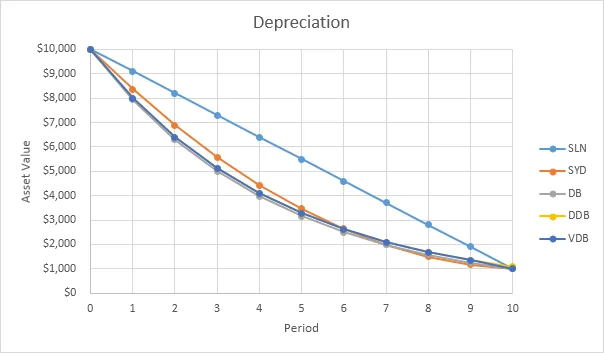
Notice something. After year 17, the value stays at $1,750 because the 5% floor kicks in. That $35,000 car will never have an assessed value below $1,750, no matter how old it gets.
The VLT drops quickly in the first few years and then levels out. That is the predictable curve.
Bing (Web (fair-use with source credit))
Step-by-Step: How to Calculate Your VLT Before You Buy
You do not need a dealer to tell you the VLT. You can calculate it yourself in about 60 seconds.
Step 1: Find the original MSRP.
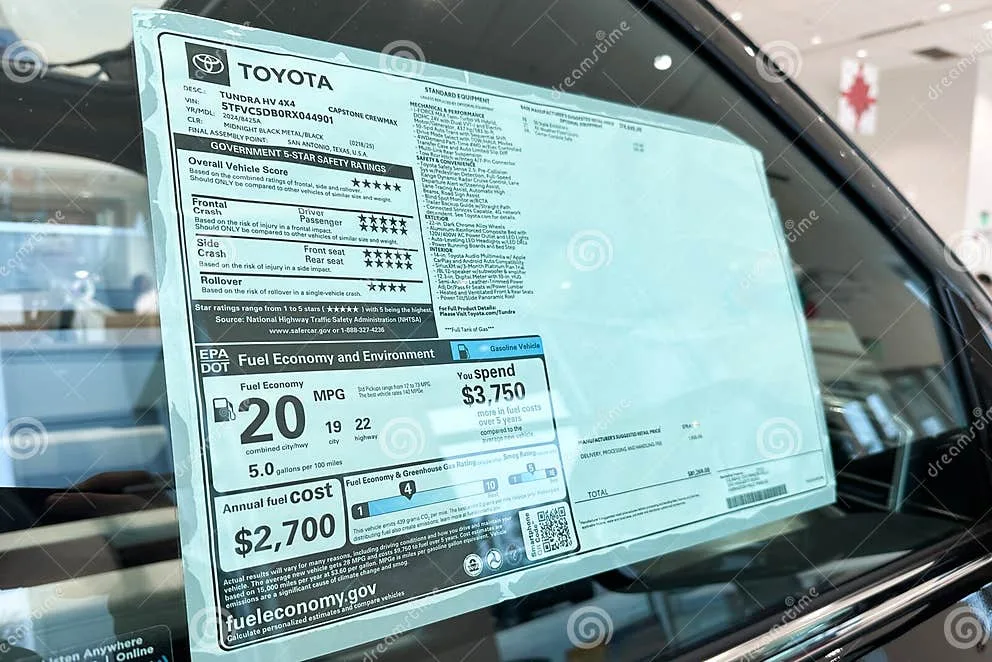
If the car is new, the MSRP is on the window sticker. If it is used, you need the original MSRP. That is not the same as the current market value.
Use a VIN decoder or check with the manufacturer. Do not guess.
Step 2: Determine the age.
Subtract the model year from the current calendar year. A 2023 model purchased in 2026 is 3 years old. The age is the difference in years, not the time since you bought it.
Step 3: Apply the depreciation.
Multiply the MSRP by 16.25% per year. Subtract that from the MSRP. If the result is less than 5% of the MSRP, use the 5% floor instead.
Step 4: Calculate the VLT.
Divide the assessed value by 100. Multiply by $2.80.
Step 5: Prorate if necessary.
If you are registering mid-year, multiply by the number of months remaining in the year divided by 12.
Step 6: Add the other fees.
The VLT is one part of your total registration cost. You will also pay a registration fee, a title fee, and possibly a plate fee. These are separate and vary by vehicle type and county.
Let's run through a real example.
You buy a 2024 Honda Accord with an MSRP of $28,000 in 2026. It is 2 years old. No proration needed because you are registering in January.
- Assessed value: $28,000 x (1, 0.1625 x 2) = $28,000 x 0.675 = $18,900
- VLT: ($18,900 / 100) x 2.80 = $529.20
That is your first-year VLT. Next year it will drop to roughly $443.
The Critical Difference Between VLT and Sales Tax (TPT)
This is the single biggest source of confusion for new Arizona drivers. The VLT is not the sales tax. It is a completely separate charge.
Transaction Privilege Tax (TPT) is what most people call sales tax. You pay it once when you purchase the vehicle. It is a percentage of the purchase price and varies by city and county.
In Phoenix, for example, the TPT rate on vehicle sales is around 5.6% of the purchase price.
Vehicle License Tax (VLT) is an annual tax. You pay it every year when you renew your registration. It is based on the original MSRP and the vehicle's age, not the purchase price.
You will pay both. There is no way around it.
Why this matters for budgeting.
When you buy a car in Arizona, you need to account for both taxes. The TPT adds several thousand dollars to the purchase price up front. The VLT adds several hundred dollars to your annual registration cost.
Do not combine them in your head. They operate independently and have different rules.
Prorating: What Happens When You Register Mid-Year
If you buy a car in July and register it the same month, you will not pay the full year's VLT. The state prorates the tax based on how many months are left in the calendar year.
The calculation is simple. Take the annual VLT. Multiply it by the number of months remaining in the year divided by 12.
Example: Your annual VLT is $600. You register in August. That is 5 months remaining (August through December).
- Prorated VLT: $600 x (5 / 12) = $250
You pay $250 for that first partial year. Next year, when you renew, you will pay the full $600.
Important note about the renewal date.
The VLT is calculated based on the calendar year, not the anniversary of your purchase. When you register in August, you pay for August through December. Your renewal date will be January 1 or close to it, depending on when the MVD processes it.
This catches a lot of people off guard. They register in August and get a renewal notice in January for the full year. That is normal.
The first year was prorated. The second year is full.
Common Calculation Mistakes That Lead to Overpayment
You may have been overpaying without knowing it. Here are the three biggest mistakes people make.
Mistake 1: Using the purchase price instead of MSRP.
This is the most common error. Buyers assume the tax is based on what they paid, especially for used cars. It is not.
The MSRP is fixed. A used car that sold for $15,000 might have an original MSRP of $30,000. That doubles the assessed value.
Mistake 2: Forgetting the 5% floor on older vehicles.
If you own a car that is 16 years or older, the floor keeps the VLT from dropping to zero. A 20-year-old car that cost $40,000 new still has an assessed value of $2,000. The VLT will be about $56.
That is not much, but it is not zero.
Mistake 3: Incorrectly prorating the first year.
Some dealers or buyers try to prorate based on the number of days in the month. The MVD uses whole calendar months. If you register on the 2nd of the month, that counts as a full month.
If you register on the 28th, that also counts as a full month. The months are calendar months, not 30-day intervals.
The VLT on Commercial Vehicles: A Different Rate and Rule Set
If you use your vehicle for business, the rules change. Commercial vehicles have a different VLT rate and a different depreciation schedule.
Commercial passenger vehicles (pickup trucks, vans, SUVs used for business) have a VLT rate of $4.20 per $100 of assessed value. That is 50% higher than the passenger rate of $2.80.
Heavy commercial vehicles (trucks over 26,000 pounds GVWR) use a completely different system based on weight and mileage. That system is outside the standard VLT formula.
Determining commercial status.
The MVD considers a vehicle commercial if it is used primarily for business purposes. If you use a truck for both personal and business use, the MVD makes the call based on how you register it. You can register a pickup truck as a passenger vehicle if you use it primarily for personal transportation.
What this means for your bottom line.
If you register a vehicle as commercial, expect to pay roughly 50% more in annual VLT compared to the same vehicle registered as a passenger vehicle. Factor that into your business budgeting.
When You Should Use the Official MVD Calculator (And When Not To)
The Arizona MVD offers an online VLT calculator on its official website. It is a useful tool, but it has limitations.
Use the MVD calculator when:
- You have the exact VIN and know the MSRP
- You want a quick estimate without doing the math
- You are checking your own calculation for accuracy
Do not rely on the MVD calculator when:
- You are shopping for a used car without the exact VIN
- You need to compare VLT costs across multiple vehicles
- The calculator is down or giving errors
Why the MVD calculator is not perfect.
The calculator pulls MSRP data from the manufacturer. For newer cars, that data is usually accurate. For older cars, the MSRP may not be in the system.
In those cases, the calculator might use the purchase price or an estimate, which will give you the wrong result.
Your best bet is to know the MSRP yourself and run the formula manually. Then use the MVD calculator as a check. If the two numbers disagree, investigate.
Real Scenarios: VLT on a New Car vs. a 10-Year-Old Used Car
Let's compare two real-world scenarios to see how the formula plays out.
Scenario 1: New car. A 2026 Toyota Camry with an MSRP of $28,000. You buy it new in January 2026.
- Year 1 assessed value: $28,000
- Year 1 VLT: $784
Scenario 2: Used car. A 2016 Honda Civic with an original MSRP of $22,000. You buy it in 2026. It is 10 years old.
- Year 10 assessed value: $22,000 x (1, 0.1625 x 10) = $22,000 x 0.375 = $8,250
- Year 10 VLT: ($8,250 / 100) x 2.80 = $231
The new car costs $784 in the first year. The 10-year-old car costs $231. That is a difference of $553.
What this tells you.
If you buy a used car, the VLT drops significantly because the depreciation has already happened. That makes used cars much cheaper to register in the early years of ownership. Over a 5-year ownership period, the new car owner pays roughly $3,000 in VLT.
The used car owner pays roughly $1,000.

iNaturalist / William J. Deml (CC BY)
Is the VLT Tax Deductible? What Arizona Drivers Need to Know
Yes, the VLT is federally tax deductible. But only if you itemize your deductions. That is a common point of confusion.
The rule.
The VLT qualifies as a personal property tax under IRS guidelines. You can deduct it as a state and local tax on Schedule A of your federal tax return. The deduction is subject to the $10,000 cap on state and local taxes (SALT).
That cap includes property taxes, income taxes, and sales taxes.
How to claim it.
Your annual registration renewal notice lists the VLT amount separately from other fees. Save that notice or keep a record of the amount. At tax time, add it to your state and local taxes on Schedule A.
Who benefits.
If you itemize deductions and have significant state and local taxes, the VLT deduction is a small bonus. If you take the standard deduction, the VLT does not reduce your federal tax bill.
What does not qualify.
The registration fee, the title fee, and the plate fee are not deductible. Only the VLT portion qualifies. Check your renewal notice carefully to separate the deductible amount from the non-deductible fees.
Frequently Asked Questions
How is VLT calculated in Arizona?
The VLT is calculated by taking the original MSRP, applying a 16.25% annual depreciation for each year of the vehicle's age, then taking the higher of that result or 5% of the MSRP. Divide by 100 and multiply by $2.80. That gives you the annual tax.
Do I pay VLT every year in Arizona?
Yes. The Vehicle License Tax is an annual tax paid with your registration renewal. You pay it every year as long as the vehicle is registered in Arizona.
It never goes away, though it drops sharply in the first 10 years.
What is the difference between VLT and sales tax in Arizona?
Sales tax (TPT) is a one-time tax paid when you buy the vehicle. It is based on the purchase price. VLT is an annual tax paid with registration.
It is based on the original MSRP and the vehicle's age. You pay both.
Can I deduct Arizona VLT on my federal taxes?
Yes, if you itemize deductions. The VLT qualifies as a personal property tax. It is subject to the $10,000 SALT cap.
Save your registration renewal notice for the VLT amount. The other fees are not deductible.
What is the 5% floor in the Arizona VLT formula?
The 5% floor means that even if the depreciation schedule drops the assessed value below 5% of the original MSRP, the assessed value cannot go below that 5% threshold. For a $30,000 car, the lowest assessed value is $1,500.
How do I find the original MSRP for a used car in Arizona?
You can find the original MSRP by using a VIN decoder, checking the manufacturer's website, or looking at a window sticker from the original sale. Do not use the current market value or the price you paid. The MSRP is fixed.