If you own a vehicle in Arkansas, there’s a specific law you need to know about before you ever sell, scrap, or even store an old catalytic converter. The Arkansas unauthorized possession of unmarked catalytic converters law makes it a felony to possess a converter that lacks proper markings unless you can prove legitimate ownership. As of 2026, this law is actively enforced across the state, and plenty of people have been charged simply because they couldn’t show a receipt or a VIN etch.
This isn’t about whether you stole it, it’s about whether you can prove you didn’t.
The law defines “unmarked” as any converter without a serial number, VIN etching, or manufacturer stamp. Under Arkansas Code § 5-36-125, even having one in your garage without paperwork can put you in serious legal trouble. Ignorance isn’t a defense here, and the penalties can hit hard.
So let’s walk through exactly what you need to know to stay safe.

Quick Answer / Key Insight
The Arkansas unauthorized possession of unmarked catalytic converters law makes it illegal to own an unmarked converter without proof. You can face a Class D felony. Penalties include up to six years in prison and fines up to $10,000.
Always keep your receipts or VIN etching. That simple step keeps you safe.
Core Explanation / How It Works
To understand this law, you first need to know what “unmarked” really means. Arkansas Code § 5‑36‑125 says a catalytic converter is unmarked if it doesn’t have a unique identifying number, a vehicle identification number (VIN) etch, or a manufacturer’s stamp that can be traced back to a specific vehicle or purchase. That covers almost all aftermarket converters, used ones sold by individuals, and even some factory replacements that got swapped without the original markings being transferred.
The law doesn’t care about your intent. If you possess an unmarked converter and can’t show you bought it legally, you are in violation. That includes having it in your truck bed, garage, or workshop.
The only exception is for licensed scrap metal dealers and vehicle dismantlers who follow strict record-keeping rules. For everyone else, possession alone is the crime.
Here is a quick breakdown of what counts as marked versus unmarked:
| Marked Converter | Unmarked Converter |
|---|---|
| Has a stamped serial number that matches a bill of sale | No visible serial numbers or stamps |
| Has a VIN etching that matches the vehicle it came from | VIN etch is worn off or absent |
| Manufacturer logo and part number are legible | Aftermarket converter with no branding |
| Can be traced to a specific vehicle or transaction | No paperwork to show origin |
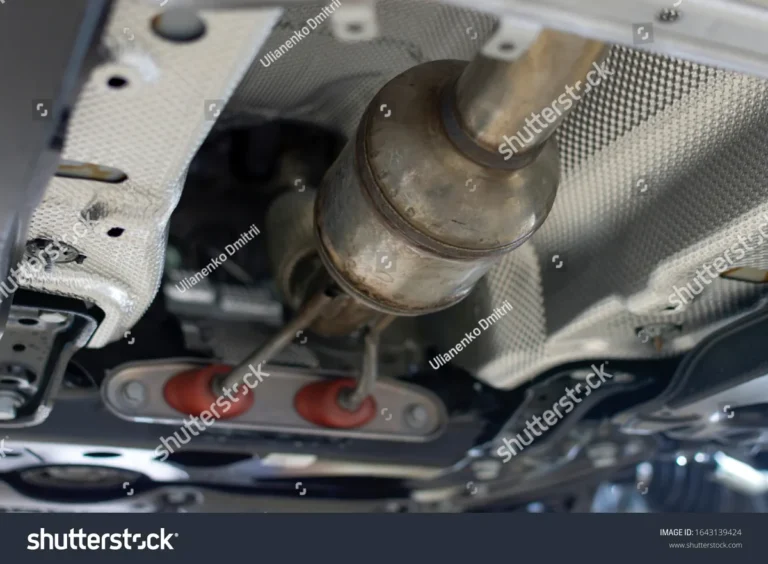
If you’re unsure about your converter, check underneath your car. Look for numbers and letters stamped into the metal. If you see anything, write it down and keep a photo.
That simple step can make the difference between a legal part and a legal problem.
We’ve covered more details about vehicle documentation in our blog, but let’s keep moving through the specifics here.
Who Is Affected – Car Owners, Scrap Dealers, and Repair Shops
This law hits three main groups. If you fall into any of them, you need to pay attention.
Car owners. If you replace your catalytic converter, the old one becomes a piece of scrap you might want to sell. That is where the trouble starts. Without a bill of sale from the repair shop or a photo of the original converter with its serial number, you cannot prove it came from your car.
The scrap yard may be forced to report you or refuse the purchase. And if you store the old converter in your garage, you are technically in possession of an unmarked part. Keep your paperwork.
Scrap metal dealers and recyclers. The law gives you an exemption, but only if you follow the rules. You must keep detailed records of every converter you buy: the seller’s name, address, driver’s license number, date, and a description of the converter. You also need to verify that the converter is not stolen by checking its markings.
If you skip any of these steps, you can be charged just like anyone else.
Auto repair shops. When you replace a customer’s converter, you are usually safe because you have the work order. But if you take in a used converter from a customer without documenting it, you are now holding an unmarked part. Many shops have started taking photos and logging serial numbers before accepting any returns.
It’s a good habit.
If you do a lot of your own vehicle maintenance at home, you might also run into situations where you need to wash your car safely afterward, but that’s a different topic. The main point is documentation.
Benefits & Drawbacks of the Law
No law is perfect, and this one has both strong upsides and real downsides.
Benefits.
- The biggest win is deterrence. Since the law passed, catalytic converter theft in Arkansas has dropped noticeably in several counties. Thieves know that if they get caught with an unmarked converter, it’s a felony, not a slap on the wrist.
- Law enforcement has a clear, simple tool. They don’t have to prove you stole the converter, just that you possessed it without documentation. That makes convictions easier and faster.
- Honest scrap dealers get a level playing field. Shady buyers who ignored records are now forced to comply or face charges.
Drawbacks.
- The biggest risk is for innocent car owners. If you lose your receipt, you could be charged even if you did nothing wrong. Proving you bought a converter six months ago without a paper trail is hard.
- Small recyclers face a paperwork burden. A single missing entry can lead to a criminal charge, not just a fine. Some have stopped buying converters altogether because it’s too risky.
- The law can be unevenly enforced. Urban areas see more attention, while rural counties may have fewer checks. That creates a patchwork of risk.
Overall, the law is well‑intentioned, but it puts a lot of responsibility on the individual to keep records. If you are proactive, it’s manageable. If you wait until you need to sell, it’s too late.
Step-by-Step Guide – How to Legally Possess an Unmarked Converter in Arkansas
If you have a converter without markings or you are buying one used, follow these steps to stay out of legal trouble.
Photograph the converter while it is still on the vehicle. Before you remove it, take clear pictures showing the converter attached to the exhaust system. Include a shot of the vehicle’s license plate or VIN in the same frame. This ties the part to your car.
Note any visible markings. Even if the converter seems unmarked, look closely. Stamps can be faint or hidden. If you find a serial number, write it down and take a close‑up photo. That number is your proof.
Keep the repair receipt. If a shop replaces your converter, they should give you an invoice that lists the part. Keep that receipt with your vehicle records. Do not throw it away.
When selling a used converter, bring documentation. If you sell it to a scrapyard, hand over a copy of the repair receipt and the photo. The dealer can then record the markings and your ID. You walk away clean.
If you are buying a used converter from someone, do not accept it without a bill of sale. The seller must provide a written statement that includes the converter’s markings and their contact info. Keep that paper with the part.
VIN etch your converter for extra safety. Many police departments and auto shops offer VIN etching events. A small charge etches your vehicle’s VIN into the converter shell. That makes it “marked” under the law forever. It also deters thieves because the part becomes traceable.

The most important takeaway: treat every unmarked converter as a potential legal risk until you have documentation. If you can, get it marked. If you can’t, keep the paper trail tight.
Mistakes to Avoid / Common Errors
Even careful people slip up. Here are the most common mistakes Arkansas car owners make with this law.
- Assuming possession alone is fine. You can be charged just for having an unmarked converter in your garage. The law does not require you to be selling it.
- Throwing away receipts. That piece of paper from the repair shop is your only proof. Once it’s gone, you are at risk.
- Buying a used converter from a stranger without paperwork. Even if the price is good, refuse the deal without a signed bill of sale. Otherwise you are holding stolen property.
- Not checking if your converter is marked before heading to a scrapyard. If you show up with an unmarked converter and no receipt, the dealer must report you. You could be charged on the spot.
- Skipping the VIN etch. It costs little and saves you from ever having to prove ownership again. It is the single best protection.
Real Scenarios / Case Examples
Let’s look at four real-world situations so you can see how the law applies in practice.
Scenario 1: You replace your converter at a shop. John takes his truck to a mechanic. The old converter is swapped for a new one. The mechanic hands John a receipt that lists the part number.
John throws the receipt in the glovebox. Six months later, he tries to sell the old converter. The scrap yard asks for proof.
John pulls out the receipt, and the yard records the part number. Easy.
Scenario 2: You find a used converter for sale online. Sarah sees a listing on a marketplace site. The seller says it came from his car. Sarah buys it with cash, no receipt.
A week later, police trace the converter to a theft ring. Sarah is charged with unauthorized possession. She has no paperwork to prove she didn’t steal it.
She faces a felony.
Scenario 3: A scrap dealer buys an unmarked converter without ID. A man walks into a recycling yard with a converter. The dealer does not ask for ID or a receipt. The converter is stolen.
When police audit the dealer’s records, they find the missing entry. The dealer is charged alongside the thief.
Scenario 4: Law enforcement stops you with a converter in your truck bed. You are driving home from a friend’s garage. An officer sees the converter. Without proof of ownership, you are detained.
Even if you are innocent, you will spend hours at the station while they investigate. That is stress you can avoid with a simple receipt.

Frequently Asked Questions
What exactly counts as an unmarked catalytic converter?
It means the converter has no serial number, no VIN etching, and no manufacturer stamp. If you cannot find any identifying mark on the metal, the law treats it as unmarked. This applies to both OEM and aftermarket units.
Do I need to mark my converter myself?
No, the law does not require you to mark it. But if you ever sell it, you must prove ownership. VIN etching is the easiest way to make the converter permanently marked and traceable to your vehicle.
What if my converter was stolen and I have no serial number?
File a police report immediately. The report serves as your documentation. Without it, you cannot prove the converter came from your car.
A repair shop invoice from when it was installed also helps.
Can I be charged if I bought a used converter from someone without knowing it was stolen?
Yes. The law does not require intent. If you possess an unmarked converter and cannot show proof of legal purchase, you may be charged.
Ignorance is not a defense under Arkansas Code § 5-36-125.
What happens if I get charged?
You face a Class D felony. That can mean up to six years in prison and fines up to $10,000. A conviction also stays on your record and can affect jobs, housing, and professional licenses.
Is there a way to check if my converter is already marked?
Get under your car with a flashlight. Look for numbers and letters stamped into the metal shell. Compare them to your vehicle’s VIN and your repair receipts.
If you find a match, you are set.
Safety / Legal / Compliance – Warnings You Can’t Ignore
This law carries real consequences. Do not treat it lightly. Here are the key legal facts every Arkansas car owner should know.
- Penalty for a first offense: Class D felony, up to 6 years in prison, fines up to $10,000.
- Enhanced penalties: If you have a prior theft conviction, the charge may become a Class C felony, which carries up to 10 years.
- Statute of limitations: For felony theft, the state has three years to file charges.
- Scrap dealer record retention: Dealers must keep transaction records for at least two years and make them available to law enforcement.
- Exemption scope: Only applies to licensed scrap metal dealers and vehicle dismantlers operating within the course of business. You as a private citizen do not qualify for any exemption.
If you are ever questioned by law enforcement about a catalytic converter, do not lie. But do not volunteer information either. Politely state you want a lawyer present before answering questions.
That is your right, and it protects you.
Expert Tips / Pro Advice
Based on our research and conversations with Arkansas auto theft investigators, here is what the pros recommend.
- Use a permanent marker to write your VIN on the converter yourself. It is not as good as a professional etch, but it gives a starting point for identification.
- Keep a digital folder with photos of your converter, your repair receipts, and your vehicle registration. Store it on your phone and in cloud backup.
- If you sell a car, remove the old converter and keep it with the paperwork. Do not leave it attached to the car or throw it away.
- For scrapyards, use a standardized form for every transaction. Some dealers use a photocopy of the seller’s driver’s license plus a signed statement of origin.
- Join a local VIN etching event. Many police departments and auto clubs host them for free or a small donation. It takes ten minutes and protects you for life.
For more on keeping your vehicle in proper shape and avoiding surprises, our blog covers a wide range of practical car ownership topics. You’re already doing the smart thing by learning about this law, now just make sure your paperwork matches your parts.
Final Recommendation / Decision Guide
Here is your simple decision guide for staying legal with catalytic converters in Arkansas.
- If you have a converter on your car right now: Check for markings. Photograph them. Write down any serial numbers.
- If you plan to replace your converter: Keep the repair receipt. Do not lose it.
- If you want to sell an old converter: Bring the receipt and the photo to the scrapyard. Do not go without proof.
- If you are offered a cheap used converter: Walk away unless the seller gives you a signed bill of sale with identifying marks.
- If you want the strongest protection: Get your converter VIN etched. It is cheap, fast, and permanent.
The bottom line is simple. Arkansas treats unmarked catalytic converters as stolen property until you prove otherwise. Carry your proof.
Keep your records. And if you ever have doubt, treat every converter like a loaded weapon. The law is not guessing, and neither should you.