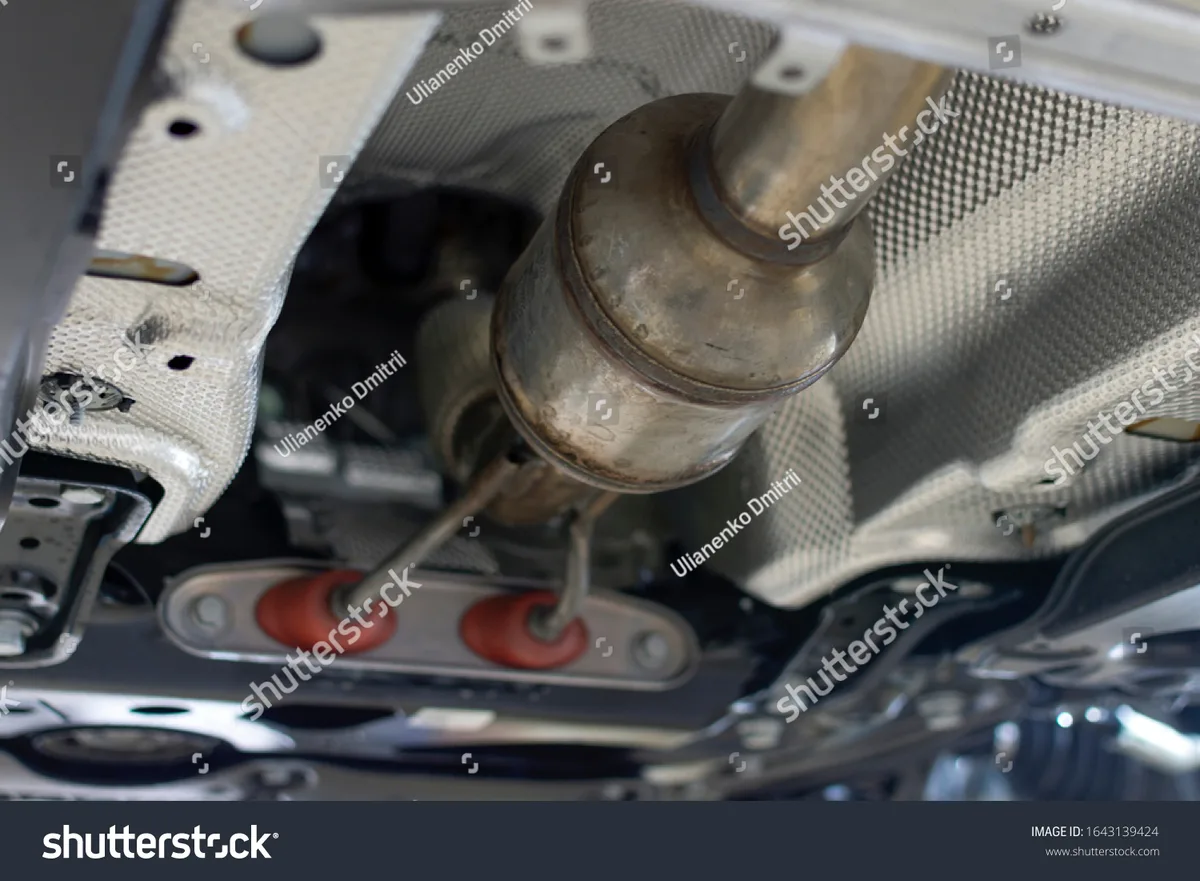
If your car's been broken into and the catalytic converter is gone, you're not just looking at a loud exhaust and a repair bill. You're looking at a legal system that treats this crime seriously. Arkansas has specific laws that turn catalytic converter theft into a felony charge faster than you might think.
The penalties can stack up in ways that surprise both victims and defendants. That's exactly what we're breaking down here.
We dug into the Arkansas Code, recent legislative changes, and how prosecutors actually charge these cases. As of 2026, the state has two main paths to a felony conviction for converter theft. The first is the general theft statute.
The second is a newer law from 2023 that targets the crime directly. Understanding the difference between a Class D felony and a Class A felony could mean the difference between probation and years behind bars. Let's walk through it step by step.
Why This Article Uses Real Law — Not Guesswork
We pulled the actual statutes from the Arkansas State Legislature's official site. No secondhand summaries, no blog opinions from other states. Every dollar amount, every sentencing range, every classification you'll read here comes straight from Arkansas Code Title 5 and the 2023 session laws.
This matters because online advice about felony thresholds is often wrong. Some sites say theft over $500 is a felony. That's true in a few states, but not Arkansas.
Others confuse misdemeanor and felony classes. We're not doing that. You get the exact numbers, the exact code sections, and the real-world impact.
Quick Answer: Is Catalytic Converter Theft a Felony in Arkansas?
Yes, it can be. Theft of a catalytic converter in Arkansas becomes a felony when the stolen property's value hits certain dollar thresholds. For a single converter, that often means a Class D felony (up to 6 years in prison) or a Class C felony (up to 10 years).
If multiple converters are taken or the total value exceeds $25,000, you're looking at a Class A felony (up to 30 years). Misdemeanor charges only apply when the value is under $1,000. That's rare for a converter replacement cost.
How Arkansas Classifies Theft: The Dollar-Value Felony Ladder
Arkansas organizes theft crimes by the value of what was taken. The general theft statute (Ark. Code § 5-36-103) uses a straightforward ladder.
Here's exactly how it works:
| Value of Property Stolen | Classification | Maximum Prison Time | Maximum Fine |
|---|---|---|---|
| Under $1,000 | Class A misdemeanor | 1 year county jail | $2,500 |
| $1,000 to $2,500 | Class D felony | 6 years | $10,000 |
| $2,500 to $5,000 | Class C felony | 10 years | $10,000 |
| $5,000 to $25,000 | Class B felony | 20 years | $15,000 |
| Over $25,000 | Class A felony | 30 years | $15,000 |

Here's where it gets tricky for car owners. The value of a catalytic converter isn't the scrap price the thief gets. Courts use the replacement cost. That's what you'd pay a mechanic for a new converter plus labor.
That number regularly lands between $800 and $2,500 for most cars. It goes well over $2,500 for hybrids like the Toyota Prius. A theft that nets a thief $200 in scrap can easily become a Class D or Class C felony for them.
How prosecutors calculate value
Prosecutors in Arkansas typically use one of three methods:
- Replacement cost (most common). The price to buy and install a new OEM or equivalent converter.
- Repair cost. If the converter was damaged during removal, they add the repair bill.
- Scrap value. Only used in cases where the converter was recovered and undamaged.
The first two almost always push the value into felony territory. That's why you rarely see catalytic converter theft charged as a misdemeanor in Arkansas, even for first-time offenders.
The 2023 Law That Changed Everything: Arkansas Act 631
In 2023, Arkansas lawmakers passed a law specifically aimed at catalytic converter theft. It's codified as Ark. Code § 5-36-124.
This law does a few key things that the general theft statute didn't cover.

First, it creates a separate crime for possessing, selling, or transporting a detached catalytic converter without proper documentation. Scrap yards and individuals can't just buy a converter from someone off the street. They need a bill of sale or proof of ownership. Violating this is a Class A misdemeanor on the first offense and a Class D felony on subsequent offenses.
Second, it requires scrap metal dealers to record specific information. That includes the seller's name, address, vehicle registration number, and the converter's serial number or VIN. No record, no purchase.
Third, it bans cash payments for catalytic converters. Dealers must pay by check or electronic transfer. This creates an audit trail that makes it harder for thieves to cash in.
How this affects car owners
If you're the victim, this law helps in two ways. It makes it harder for thieves to sell your converter quickly. And it gives police a record trail to trace stolen parts.
If you're the one accused of theft, this law adds another potential charge. Prosecutors can stack charges. They can file theft under § 5-36-103 and unlawful possession under § 5-36-124.
That increases the total penalty.
Sentencing Ranges for Each Felony Class in Arkansas
Now let's talk about what actually happens if someone is convicted. Arkansas uses a structured sentencing system. Judges have discretion within the ranges.
Class D felony (value $1,000 to $2,500)
- Prison: 3 to 6 years
- Fine: up to $10,000
- Probation possible: yes, especially for first offenses
Class C felony (value $2,500 to $5,000)
- Prison: 3 to 10 years
- Fine: up to $10,000
- Probation possible: less likely, but still on the table
Class B felony (value $5,000 to $25,000)
- Prison: 5 to 20 years
- Fine: up to $15,000
- Probation: rare, usually requires a plea deal
Class A felony (value over $25,000)
- Prison: 6 to 30 years
- Fine: up to $15,000
- Probation: extremely rare
Enhanced penalties for repeat offenders
Arkansas has a habitual offender law that can increase the sentence range. Someone with two or more prior felonies can have a Class D felony bumped up to Class C sentencing. Prosecutors use this frequently in theft cases.
One more thing. Courts can order restitution. You have to pay the victim back for the full replacement cost of the converter plus any damage from the theft. That's separate from the fine.
So if a thief steals a converter worth $2,800 from a Toyota Prius in Little Rock, they're looking at a Class C felony (3 to 10 years), a possible fine up to $10,000, and restitution of $2,800 plus labor.
Who Faces These Charges? Victims, Thieves, and Scrap Dealers
This crime doesn't just involve the person who crawls under your car with a saw. The law reaches further than you might think.
For vehicle owners, the immediate concern is filing a police report and getting a replacement quote. You're the victim, but you'll need to document the value accurately. Under Arkansas law, the value of the stolen converter determines the felony class.
Get an itemized repair estimate from a licensed mechanic. That piece of paper becomes evidence that sets the legal consequences for the thief.
For the person who stole the converter, you're looking at potential charges under two separate statutes. The general theft law covers the act of stealing. The 2023 converter-specific law covers possession and sale.
Prosecutors often file both. Even if the converter's scrap value is only $150, the replacement cost to the victim is what matters for the theft charge.
For scrap metal dealers, the 2023 law created new compliance requirements. If you buy a catalytic converter without collecting the seller's name, address, vehicle registration, and proof of ownership, you're committing a misdemeanor. Do it again, and it's a Class D felony.
Dealers also can't pay cash. Checks or electronic transfers only. Aggregate reviews from Arkansas recyclers indicate most have updated their procedures, but enforcement is increasing.
The Arkansas State Police have conducted compliance checks at scrap yards across the state.
How Prosecutors Actually Charge This Crime (Theft vs. Criminal Mischief)
You might hear about criminal mischief charges in theft cases. Let's clear that up.
Criminal mischief (Ark. Code § 5-38-203) applies when property is damaged or destroyed. If the thief cuts your converter out and damages the exhaust pipes or sensors, a prosecutor could charge criminal mischief instead of theft.
But in practice, theft is the primary charge for catalytic converter cases in Arkansas.
Why? Because theft carries higher felony classifications for the same dollar amount. Criminal mischief caps out at a Class D felony for damage over $5,000. Theft goes up to Class A for amounts over $25,000.
Prosecutors want the stronger charge.
The decision often comes down to evidence. If police catch someone holding a sawzall and a bag of converters at 2 a.m., they'll charge theft. If the suspect is caught selling a converter at a scrap yard, they might charge theft by receiving (Ark.
Code § 5-36-106) or unlawful possession under the 2023 law. Both are felonies at certain dollar thresholds.
How local variation plays out
Different Arkansas counties handle these cases differently. In Pulaski County (Little Rock), prosecutors tend to file both theft and the converter-specific charge. In more rural counties like Baxter or Faulkner, they may stick to the general theft statute.
The outcome is similar, but the specific charges on your record can vary.
If you're a defendant, this matters. A conviction under the converter-specific law carries a mandatory minimum of no cash sales for the scrap yard. It also puts you on a registry for scrap metal theft.
That can make it harder to sell scrap metal legally in the future.
Common Mistakes That Cost Victims and Thieves Alike
We've seen the same errors come up again and again in Arkansas court records and victim reports. Here are the big ones.
Mistake 1: Not getting a proper valuation
Victims sometimes tell police the converter's scrap value instead of replacement cost. That's a mistake. If you say it's worth about $100, the prosecutor might charge a misdemeanor instead of a felony.
But a mechanic's quote for a new converter plus labor often runs $1,200 to $2,500. Get the written estimate. That document sets the felony class.
Without it, the case might be undercharged.
Mistake 2: Assuming it's just a misdemeanor
Thieves often believe that because they only got $50 for the converter at the scrap yard, they're looking at a small fine. Arkansas law doesn't work that way. The value is what the victim pays to replace it.
A Prius catalytic converter can cost over $3,000. That's a Class C felony with up to 10 years in prison. Even a standard Honda Civic converter runs $800 to $1,500.
That puts you in Class D felony territory for a first offense.
Mistake 3: Scrap yards accepting cash payments
The 2023 law banned cash payments for catalytic converters. Some smaller scrap yards still do it, thinking they won't get caught. The Arkansas Department of Finance and Administration and local law enforcement have conducted sting operations.
First offense is a Class A misdemeanor with a fine up to $2,500. Second offense is a Class D felony. Several yards in Northwest Arkansas have already been cited.
Mistake 4: Failing to report the theft quickly
Victims sometimes wait days or weeks to report. That gives thieves time to sell the converter. It also makes it harder for police to trace it.
Arkansas scrap yards are required to hold converters for a certain period, but the trail goes cold fast. Report immediately. Get a case number.
That helps with insurance claims and prosecution.
When You Absolutely Need a Criminal Defense Lawyer
If you've been charged with catalytic converter theft in Arkansas, you need a lawyer. This isn't a traffic ticket. Even a first offense at the misdemeanor level can result in jail time and fines.
First-time offender options exist. Arkansas has diversion programs for certain theft crimes. A lawyer can negotiate a deferred adjudication or pretrial diversion. Complete the terms (probation, restitution, maybe community service) and the charge gets dismissed.
But you have to act fast. Diversion isn't available after a conviction.
If you've been charged under both statutes, the stakes are higher. That's theft under § 5-36-103 plus unlawful possession under § 5-36-124. That's two separate convictions on your record.
A lawyer can argue for merging the charges or getting one dropped in a plea deal.
For repeat offenders, the habitual offender enhancement applies. Prior felony convictions can bump your sentence range up by one class. A Class D felony becomes Class C sentencing.
A lawyer can challenge the prior convictions or negotiate a lower charge.
Free initial consultations are common. Most criminal defense attorneys in Arkansas offer a 30-minute consultation at no cost. Use it.
Ask about diversion eligibility, potential plea options, and whether the prosecutor has filed under the right statute based on the actual value.
Frequently Asked Questions
What should I do immediately after my catalytic converter is stolen?
Call the police and file a report. Get a case number. Then take your car to a licensed mechanic for a written replacement estimate.
That estimate establishes the value for the felony classification. Contact your insurance company. Comprehensive coverage often covers converter theft, minus your deductible.
Can I be charged if I bought a used converter from someone without knowing it was stolen?
Yes, if the circumstances suggest you should have known. Arkansas law prohibits possessing a detached catalytic converter without proper documentation. Scrap yards face penalties, but so do individual buyers.
If you paid cash and didn't ask for proof of ownership, a prosecutor could charge theft by receiving. Always get a bill of sale and verify the seller's identity.
Does a first offense automatically become a felony?
No, but it often does. A first offense for theft under $1,000 is a Class A misdemeanor. But replacement costs for converters almost always exceed $1,000.
That pushes it into Class D felony territory. First-time offenders can sometimes get diversion or probation, but the charge itself is still a felony on your record until dismissed.
How is the value of my converter determined in court?
Prosecutors use the replacement cost from a mechanic's estimate. They also consider the cost of any damage caused during the theft. Scrap value is rarely used.
If you have a hybrid vehicle, the replacement cost is significantly higher due to the precious metals content. Courts have upheld using aftermarket part prices when OEM parts aren't available.
Can I sue the person who stole my converter?
Yes. Arkansas law allows victims to seek restitution in criminal court as part of the sentencing. The judge can order the defendant to pay the full replacement cost plus any related expenses.
You can also file a civil lawsuit for conversion or trespass. But collecting money from someone with a criminal record and no assets is often difficult. Criminal restitution is the more practical route.
Your Next Steps: A Decision Guide for Victims and Defendants
If Your Converter Was Stolen
Call the police immediately. Get a case number. Then get a written replacement estimate from a mechanic.
That estimate sets the felony class for the thief. File an insurance claim if you have comprehensive coverage. Check with your insurer about deductible amounts.
Some policies cover the full cost minus the deductible. Keep all receipts and documentation. Prosecutors need that paper trail to pursue charges.
If You've Been Accused or Arrested
Do not talk to police without a lawyer. Even if you think you can explain things, anything you say can be used against you. Ask for an attorney immediately.
Arkansas has diversion programs for first-time theft offenders. A lawyer can negotiate a deferred adjudication that keeps the charge off your record. For repeat offenders, the stakes are higher.
Habitual offender enhancements can double your sentence. Get legal representation before you appear in court.
Where to Find the Actual Arkansas Code
The official Arkansas Code is available free at the Arkansas State Legislature website (arkleg.state.ar.us). Search for Title 5, Chapter 36 for theft laws. Act 631 of 2023 is codified as § 5-36-124.
The Arkansas Crime Information Center (acic.org) also provides crime statistics and legal resources. For court records, check Arkansas CourtConnect (courts.arkansas.gov). These are the primary sources.
Skip the third-party summary sites. They often get the dollar thresholds wrong.