If you've driven I-40 through Arkansas lately, you might have noticed something unusual. Two semi-trucks running closer together than you'd ever expect, matching speeds with almost no visible gap between them. It's not tailgating.
It's not a driver being reckless. It's truck platooning, and it's happening legally on Arkansas highways right now. Understanding Arkansas truck platooning system regulations and safety standards matters more than ever for anyone sharing the road with these connected rigs.
As of 2026, Arkansas operates under a specific pilot program authorized by Act 1051 of 2019. This law allows qualified commercial trucks to use vehicle-to-vehicle (V2V) communication systems that let them brake and accelerate in perfect sync. The gap between these trucks can shrink to less than one second, which is normally illegal under Arkansas Code 27-51-501.
But there's a catch, these systems operate under strict rules that most drivers don't know about. Let's walk through exactly what's legal, what's safe, and what you need to watch for.
Quick Answer
Arkansas allows truck platooning under a pilot program. Only 2 to 3 trucks can form a platoon. Speeds are capped at 55 to 65 mph.
Approved routes include I-40, I-30, and I-55. Drivers must stay in their cabs and be ready to take manual control. The following distance exemption is 0.5 to 1 second.
No fully driverless platoons are permitted in Arkansas.
Why This Matters for Arkansas Drivers
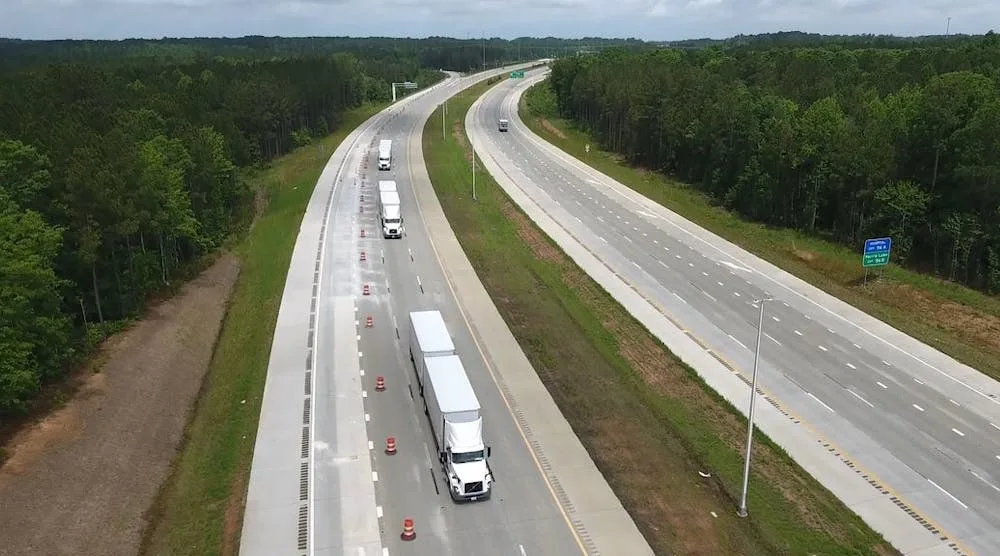
Truck platooning is not science fiction. It's on Arkansas interstates right now, and it changes how you should approach larger vehicles on the highway. If you're a car owner who hauls a trailer, drives for work, or just commutes on I-30 through Little Rock, platooning trucks behave differently than regular semis.
The key difference is braking. When the lead truck hits its brakes, the following truck reacts faster than any human could. The communication happens wirelessly in about 0.2 seconds.
That means both trucks slow down nearly simultaneously. Without the one to two second delay you'd expect from a human driver watching brake lights. For the car driver beside or behind them, this synchronized braking can be surprising if you're not expecting it.
There's also the question of merging and lane changes. Cutting into the gap between two platooning trucks is dangerous and illegal in some cases. The system isn't designed to accommodate a car suddenly appearing between them.
Our research indicates that most platooning incidents involving passenger vehicles happen when a car tries to slip into that gap.
Understanding where platooning is allowed matters too. You won't see it on every Arkansas road. It's restricted to specific interstate segments.
Knowing those routes helps you anticipate platooning activity and adjust your driving accordingly. For more on Arkansas driving regulations, check out our blog.
What Exactly Is Truck Platooning
Truck platooning uses vehicle-to-vehicle communication technology to link two or three trucks electronically. They form what's essentially a digital convoy. The trucks broadcast their speed, braking status, and position to each other dozens of times per second.
This is not autonomous driving. Every truck in a platoon still has a licensed driver behind the wheel. The driver remains responsible for the vehicle at all times, even when the automated system handles throttle and brake inputs.
That distinction matters legally and practically.
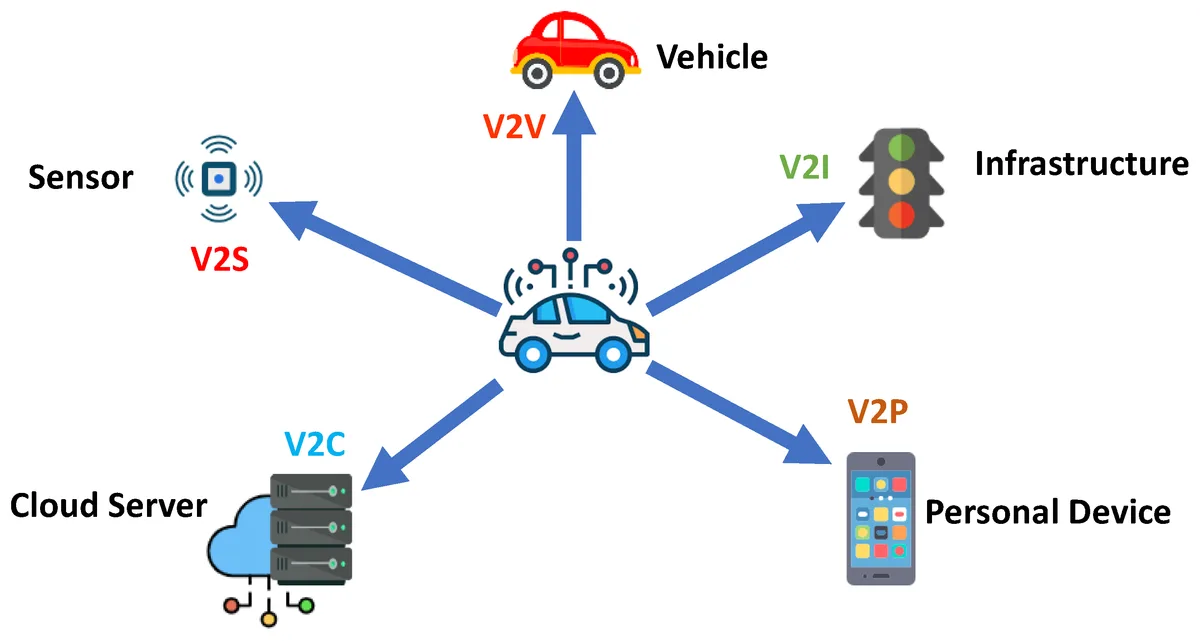
The technology works through Dedicated Short-Range Communications (DSRC) or Cellular Vehicle-to-Everything (C-V2X) systems. These create a reliable direct link between trucks, separate from cellular networks or GPS. The communication has such low latency that the following truck can react to braking before the lead truck's brake lights even fully illuminate.
Manufacturer specifications indicate that cooperative adaptive cruise control (CACC) is the backbone of these systems. Standard adaptive cruise control uses radar or cameras to detect the vehicle ahead. CACC adds wireless communication so the following truck knows the lead truck's exact acceleration and braking intent, not just its current position.
This allows the gap to shrink safely below what a human driver could maintain.
The aerodynamic benefit is real. When trucks run close together, the following truck experiences less air resistance. Fleets report fuel savings of 7 to 10 percent for the following truck and 4 to 7 percent for the lead truck.
That's significant for carriers operating on thin margins, and it's a major reason Arkansas and other states have embraced pilot programs.
Arkansas Law: Is Platooning Legal Here
Yes, but only under specific conditions defined by Arkansas Act 1051 of 2019. This law established a pilot program for automated commercial motor vehicles, including platooning systems, on designated Arkansas highways.
The Arkansas Department of Transportation (ARDOT) oversees the program. Carriers must apply for permits, certify their vehicles, and submit to regular inspections before operating platoons. This isn't something any trucking company can do without approval.
Approved routes are clearly defined. The primary corridors include:
- I-40 across the central part of the state from the Oklahoma border to Tennessee
- I-30 from Texarkana through Little Rock to the I-40 junction
- I-55 from Memphis through eastern Arkansas to Missouri
Platooning is not allowed on secondary highways, two-lane roads, or urban streets. The system requires divided highways with controlled access to operate safely. That's a critical restriction many drivers don't realize.
The exemption from normal following distance rules under Arkansas Code 27-51-501 only applies within approved platooning operations. A truck running at 0.5 seconds behind another without an active platooning permit is still in violation. That's an important distinction for enforcement.
The pilot program also requires that every platooning truck carry an event data recorder (EDR). This black box captures speed, braking, and system status before and during any incident. It's the primary tool for determining liability in a crash.
The Rules: Speed Limits, Following Distance, and Route Restrictions
The specific regulations under the Arkansas pilot program are detailed but straightforward. Here's what carriers and drivers must follow based on the rules as they stand in 2026:
| Parameter | Requirement |
|---|---|
| Maximum platoon size | 2 to 3 trucks |
| Following distance | 0.5 to 1.0 seconds |
| Speed limit range | 55 to 65 mph |
| Approved road types | Divided interstates only |
| Driver requirement | Must be in cab, hands available |
| System fail-safe | Immediate manual override required |
| EDR requirement | Mandatory for all platoon vehicles |
| Weather restrictions | Disengage in fog, ice, heavy rain |
The speed cap is worth noting. Even on sections of I-40 where the posted limit is 70 or 75 mph, platooning trucks must reduce their speed to 65 mph. This creates a speed differential that other drivers should be aware of, especially when passing.
Route restrictions are strictly enforced. Platooning is only permitted on designated segments of the approved interstates. ARDOT publishes these specific mile marker ranges.
A platoon must disengage before reaching an excluded segment, such as a construction zone or a section with reduced lane width.
Weather plays a major role in platooning regulations. Arkansas experiences significant fog in river valleys along the Arkansas River corridor. Ice on I-40 near the Oklahoma border is common during winter months.
The regulations require platoons to disengage and return to normal following distances in low visibility or slick conditions. This isn't optional, and the system's sensors are supposed to detect these conditions automatically.
The disengagement protocol is straightforward but critical. If the V2V communication drops, if sensors detect bad weather, or if the system encounters a construction zone, the following truck must immediately revert to human-controlled following distance. The driver must be ready to take over at any moment.
That's why no fully driverless trucks are allowed under the Arkansas program.
For car owners, the practical takeaway is simple. If you see two trucks running closer than seems normal, check their speed. If they're doing 65 mph or less on a 75 mph interstate, they're likely platooning.
Give them extra room and avoid merging between them.